
Home
Services
About us
Blog
Contacts
Estimate project
EN

OpenClaw: Where to Try the Hottest AI Agent Framework Without Installing a Single Thing (And When to Call the Pros)

If you have been anywhere near the AI conversation in early 2026, you have almost certainly stumbled upon OpenClaw. This open-source AI agent framework has exploded from a niche developer tool to over 163,000 GitHub stars, more than 5,700 community-built skills, and integrations with over 50 messaging and service channels. OpenClaw is not just another chatbot wrapper. It is a full autonomous agent platform that can run 24/7, remember context across sessions, execute real tasks, and connect to virtually any external service you use in daily business operations.
1. OpenClaw Without Installing.jpg

But here is the thing. Not every business needs to spin up a VPS, configure Docker containers, and wrestle with API keys to understand what OpenClaw can do. A growing ecosystem of hosted platforms now lets you test-drive OpenClaw without touching a command line. And once you realize the potential of this technology for your specific business case, that is exactly where custom development comes in.

At A-Bots.com, we have spent years building custom mobile applications, web platforms, chatbots, and IoT solutions for businesses across the globe. With more than 70 completed projects, a technology stack spanning React Native, Node.js, Python, Django, and deep expertise in AI agent integration, our team is uniquely positioned to take OpenClaw from a fascinating experiment to a production-grade business tool tailored to your exact needs. Whether you are a boutique hotel chain looking to automate guest data analysis or a restaurant group seeking intelligent CRM workflows, A-Bots.com builds the kind of custom solutions that off-the-shelf OpenClaw deployments simply cannot match.

Most of our clients have been working with us for at least 1.5 years, and some partnerships stretch beyond 5 years. That kind of long-term trust does not happen by accident. It happens because we treat every project as a unique engineering challenge, not a template to be copied. And when it comes to testing your existing OpenClaw setup or any AI-powered application, our QA specialists bring the same rigorous, detail-oriented approach that has earned us a 98% recommendation rate from the executives and companies we have worked with.

So let us explore what OpenClaw actually is, where you can try it right now without any installation headaches, and how it can transform CRM data analysis for hotels and restaurants. Then we will talk about why the smartest move is often to bring in a team like A-Bots.com to build exactly what your business needs.

What Exactly Is OpenClaw and Why Should You Care?

OpenClaw is an open-source autonomous AI agent framework originally created by Austrian developer Peter Steinberger. The project went through a few name changes — from Clawdbot to Moltbot to its current name — and landed on a lobster as its mascot, because apparently every great technology needs an aquatic identity. OpenClaw connects large language models like Claude, GPT, or local models to your filesystem, shell, email, calendar, messaging platforms, and basically anything else through a Node.js runtime that you control.

What makes OpenClaw different from a regular AI chatbot is simple: it does not just answer questions. OpenClaw executes tasks. It can write and send emails, run shell commands, open pull requests on GitHub, control smart home devices, make phone calls, browse the web, process documents, and chain together operations that would otherwise take hours of manual clicking. You interact with OpenClaw through messaging platforms like Telegram, WhatsApp, Slack, Discord, Signal, or even iMessage. You text it like you would text a colleague, and it gets things done.

"I asked OpenClaw to organize my inbox before breakfast. It organized my inbox, reorganized my kitchen cabinets, and booked me a dentist appointment I forgot about three months ago. At this point, I am afraid to ask it what it thinks about my life choices." — Anonymous OpenClaw enthusiast

The OpenClaw ecosystem includes ClawHub, a skill registry with over 13,700 community-built skills covering everything from CRM integrations and hotel booking tools to code review and social media management. The framework runs on your own hardware by default, meaning your data stays under your control. OpenClaw supports multiple LLM providers and can switch between them without rewriting your agent configuration.

For businesses, OpenClaw represents something genuinely significant: the shift from AI that talks to AI that works. And that shift is exactly why companies in hospitality, restaurant management, and dozens of other industries are paying close attention to what OpenClaw can do with their existing data.
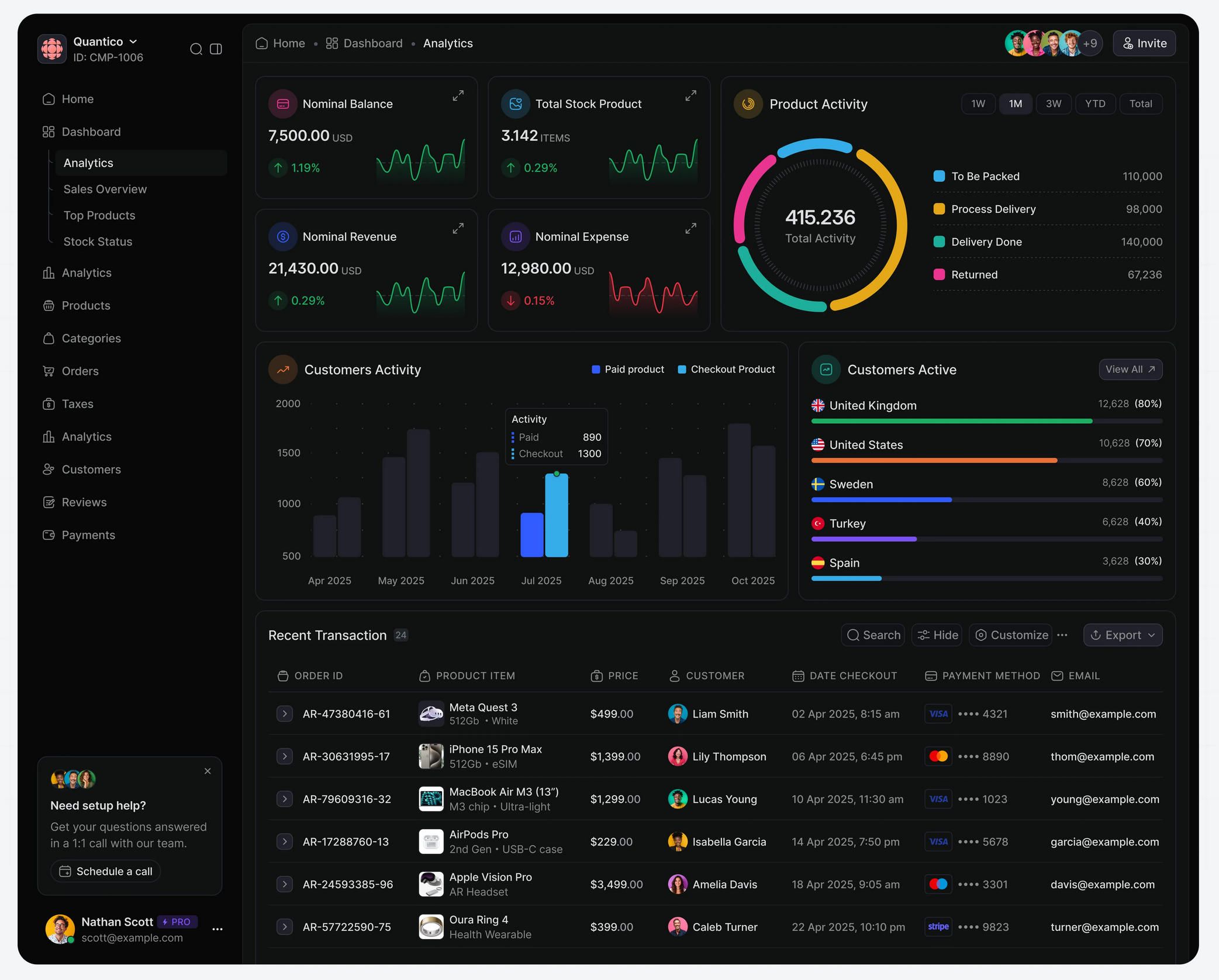
openclaw-agent-dashboard-interface-2026.jpg

Hosted OpenClaw Platforms: Try Before You Deploy

One of the biggest barriers to experimenting with OpenClaw has always been the installation process. You need a server (or a dedicated machine), Node.js, an LLM API key, SSH configuration, security hardening, and enough technical comfort to navigate potential pitfalls. For many business owners and managers, that is a non-starter.

Fortunately, a growing number of hosted platforms now offer OpenClaw-as-a-service, allowing you to experience the full power of the framework without configuring a single thing.

OpenClawCloud (open.claw.cloud) is the most straightforward hosted OpenClaw experience available today. Built on Claw.Cloud's VPS infrastructure, OpenClawCloud gives every user a dedicated virtual machine with a complete OpenClaw installation. You sign in, and your AI assistant is ready to go. The platform supports BYOK (Bring Your Own Key) mode, so you can use your existing API keys for various LLM providers. OpenClawCloud handles all infrastructure, including model access, automatic updates, and enterprise-grade security with encrypted session data. The platform even has a referral program where you can earn free compute time by inviting friends.

Amazon Lightsail launched its own OpenClaw offering in March 2026, providing one-click deployment with built-in security controls. Every Lightsail OpenClaw instance comes with sandboxing for session isolation, one-click HTTPS access, device pairing authentication, and automatic backup snapshots. Amazon Bedrock serves as the default model provider, and you can connect OpenClaw to Slack, Telegram, WhatsApp, and Discord right out of the box. For businesses already running AWS infrastructure, this is a natural fit.

Volcano Engine's ArkClaw is a cloud SaaS version of OpenClaw developed by ByteDance's cloud division, launched in March 2026. ArkClaw is designed specifically for users who want OpenClaw capabilities without environment setup, computing power purchases, or API management. It deeply integrates with multiple LLM providers including the Doubao-Seed-2.0 series, Kimi K2.5, and others. ArkClaw runs 24/7 on cloud infrastructure, meaning your agent keeps working even when you close your laptop.

DigitalOcean offers a 1-Click Application for OpenClaw through its Droplet platform. This option includes hardened firewall rules, Docker container isolation, and private direct message pairing. DigitalOcean's interface makes it easy to create snapshots of your setup, so if an OpenClaw update causes issues, you can restore everything in minutes.

Cognio Labs provides a managed OpenClaw setup service for $499, handling professional configuration, security hardening, Telegram integration, Google Services connection, and ongoing support. For businesses that want a hands-off deployment with expert guidance, this is a solid middle ground between full DIY and building a custom solution.

"Cloud-hosted OpenClaw is like renting a sports car for the weekend. You get the thrill without the maintenance bills. But if you actually want to win races, you will need your own pit crew." — A wise product manager somewhere in Silicon Valley

These hosted platforms are excellent for exploration and proof-of-concept work. They let you understand what OpenClaw can do, test specific workflows, and evaluate whether the framework fits your business needs. However, hosted OpenClaw solutions come with inherent limitations. You are working within the boundaries of a general-purpose agent. The skills available through ClawHub are community-built and may not match your specific industry requirements. Security considerations are real — Gartner has explicitly warned about the cybersecurity risks of misconfigured OpenClaw instances, and CrowdStrike has published detailed analyses of prompt injection vulnerabilities.

This is precisely where the distinction between experimenting with OpenClaw and deploying it in production becomes critical. And it is precisely where a custom development partner like A-Bots.com makes all the difference.
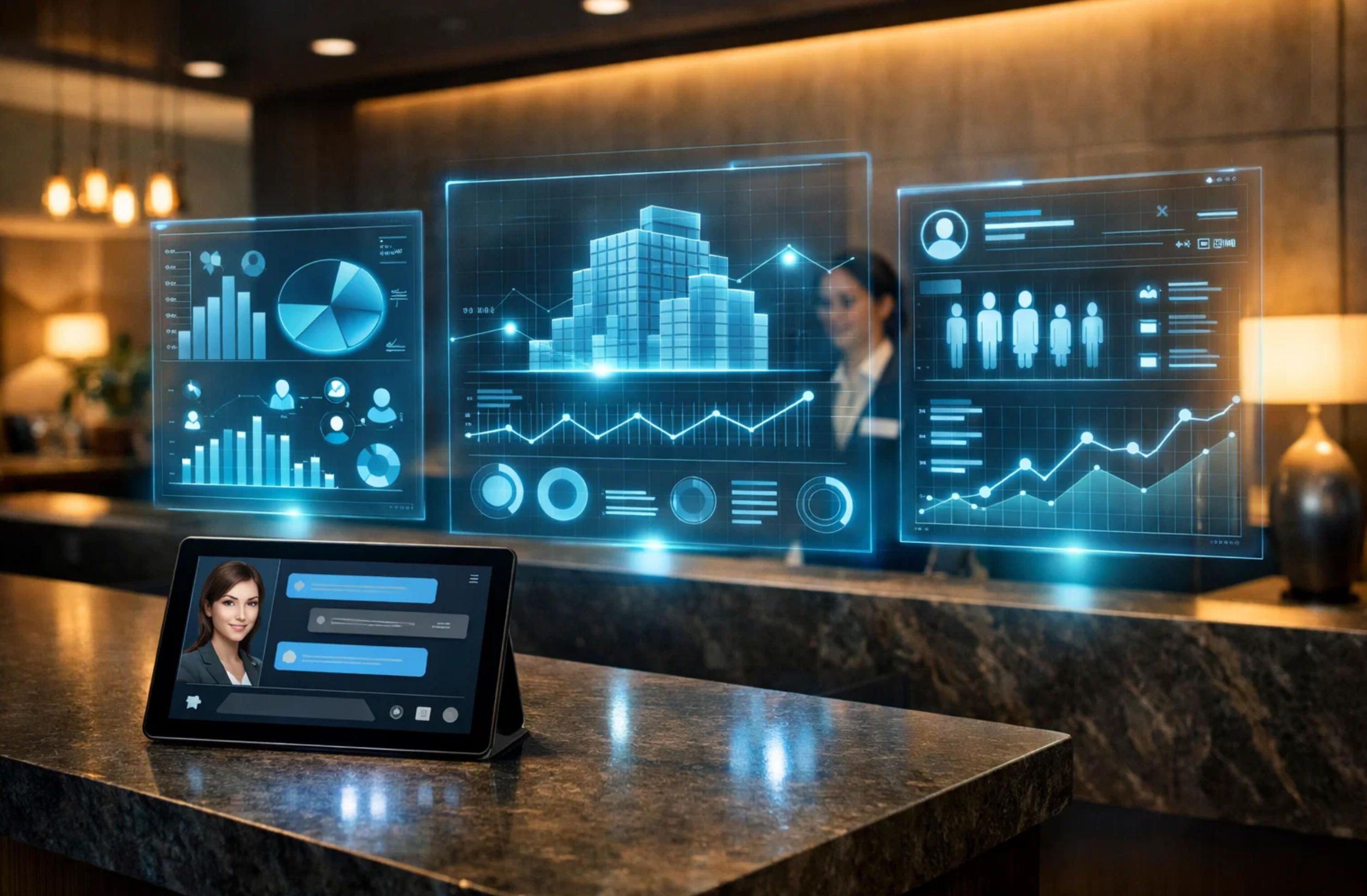
smart-hotel-crm-openclaw-data-visualization.jpg

OpenClaw for Hotel CRM Data Analysis: Turning Guest Data Into Revenue

The hotel industry sits on mountains of data that most properties barely scratch the surface of. Property management systems, CRM platforms, revenue management tools, guest feedback systems, loyalty programs, and booking engines each hold pieces of a puzzle that, when assembled correctly, can transform how a hotel operates. Industry research from IDC predicts that by 2030, 30% of all travel bookings will be executed by AI agents, and the hotels that prepare their data infrastructure now will have a massive competitive advantage.

OpenClaw is uniquely suited to hotel CRM analysis because of its ability to connect to multiple data sources simultaneously and perform autonomous multi-step tasks. Here is how OpenClaw can work with hotel CRM data in practice.

Guest Behavior Pattern Recognition. An OpenClaw agent connected to your hotel CRM can analyze booking histories, stay durations, amenity usage, and spending patterns across thousands of guest profiles. Instead of manually running reports in your CRM dashboard, you can tell your OpenClaw agent in plain language: "Analyze all returning business travelers from the last 12 months, identify their most common room preferences, and flag anyone who has not booked in the last 90 days." The agent pulls the data, processes it, and delivers a structured summary, all through a Telegram or WhatsApp message. Hotels using AI-powered analytics tools with CRM integration have reported improvements in group revenue by nearly 19% through better displacement decisions alone.

Predictive Hospitality and Personalization. When hotel CRM data flows through an OpenClaw agent, it becomes possible to shift from reactive service to predictive hospitality. The agent can cross-reference a returning guest's historical preferences — room temperature, pillow firmness, minibar selections, dining reservations — with current availability and pricing data to pre-load a personalized experience before the guest even arrives. As one hospitality technology expert noted, "CRM knows the email. RMS knows the rate. Marketing knows the click. And no one knows the person." OpenClaw can become the bridge that connects these dots.

Review Sentiment Aggregation. OpenClaw can monitor and aggregate guest reviews from multiple platforms, analyze sentiment trends, and alert hotel management to emerging issues. Major hotel chains like IHG already use AI-based sentiment engines to track reviews and social media across properties. With an OpenClaw agent, even independent hotels can achieve similar capabilities by connecting the agent to review APIs and their internal CRM guest feedback data.

Revenue Management Intelligence. By connecting OpenClaw to your hotel's revenue management system and CRM simultaneously, the agent can perform real-time competitive pricing analysis, demand forecasting, and occupancy optimization. It can pull competitor rates, cross-reference them with your historical demand data, and recommend pricing adjustments, all autonomously and all reported through your preferred messaging channel.

The key insight for hotel operators is that OpenClaw provides a powerful foundation, but the real magic happens when that foundation is customized to your specific property management ecosystem. Every hotel chain uses a different combination of PMS, CRM, and booking systems. Generic OpenClaw skills may connect to popular platforms, but they cannot handle the nuanced integrations, security requirements, and data privacy regulations that enterprise hospitality demands. That is a custom development challenge, and it is exactly the kind of challenge that A-Bots.com solves every day.
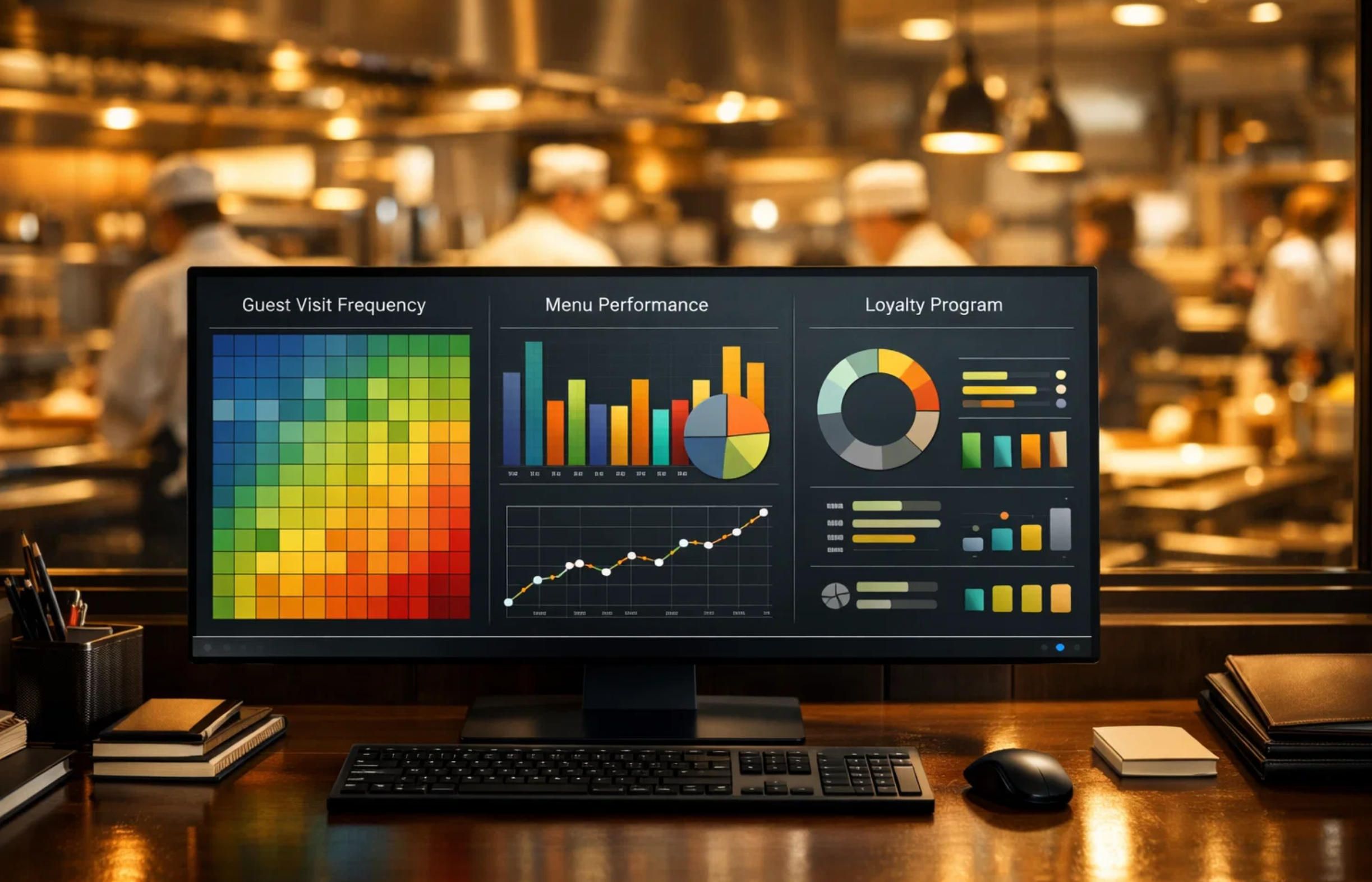
restaurant-data-analysis-openclaw-agent.jpg

OpenClaw for Restaurant CRM Data Analysis: From Raw Data to Actionable Intelligence

The restaurant industry is undergoing its own AI transformation. According to Popmenu's 2026 research, 69% of restaurant operators are now adopting AI tools, while 81% are increasing their digital marketing investment. Average weekly restaurant spending fell to approximately $90 in early 2026, forcing operators to become more precise and efficient in attracting, converting, and retaining guests. In this environment, CRM data analysis is not a luxury — it is a survival tool.

OpenClaw offers restaurants a powerful way to break down data silos and create unified customer intelligence across their entire operation.

Unified Guest Profile Analysis. Restaurant CRM data typically lives scattered across POS systems, loyalty platforms, online ordering providers, third-party marketplaces, and marketing tools. OpenClaw can act as an intelligent aggregator, pulling data from all these sources and creating a comprehensive guest behavior profile. One restaurant operator at Humble Grape described using an AI bot that pulls information from SevenRooms, Harri, and Lightspeed to compile everything into a single actionable report. OpenClaw can do this and more, autonomously and on schedule.

Menu Optimization Through Data. By analyzing POS transaction data alongside CRM guest preferences and seasonal trends, an OpenClaw agent can identify which menu items drive the highest margins, which dishes correlate with repeat visits, and which items should be rotated or retired. The agent can flag trends like "guests who order the seafood tower on their first visit have a 40% higher return rate" — insights that would take hours of manual analysis to uncover.

Automated Campaign Intelligence. OpenClaw connected to a restaurant CRM can manage email campaigns, experiment with messaging tactics, and track performance automatically. One user reported running daily campaigns for 2,400 subscribers using OpenClaw with Supabase CRM and the Resend email API. The agent experimented with different messaging approaches, tracked open rates and conversions, and adjusted strategy autonomously.

Churn Prediction and Win-Back Automation. Perhaps the most valuable application of OpenClaw in restaurant CRM analysis is churn prediction. The agent can monitor guest visit frequency, identify customers whose visit patterns are declining, and trigger personalized win-back campaigns before the guest is lost entirely. Research shows that loyalty program members visit restaurants 20% more and spend 20% more than non-members, making retention through intelligent CRM analysis a direct revenue driver.

Real-Time Operational Decisions. OpenClaw can analyze CRM data alongside real-time operational metrics to help restaurant managers make better staffing, inventory, and marketing decisions. With 41% of restaurant operators saying they are extremely likely to adopt AI-powered forecasting tools, and 24% already using them, the appetite for this kind of intelligent automation is clearly growing.

"We connected OpenClaw to our restaurant CRM and asked it to find our most loyal customers. It came back with a list of names, their favorite dishes, their preferred seating, and a polite suggestion that we really should fix the squeaky chair at table seven. The customers noticed too — they just never said anything." — A restaurant manager who wishes to remain anonymous

The challenge for restaurant operators, just as for hotel operators, is that OpenClaw out of the box can only do so much. Restaurant technology stacks are notoriously fragmented. Your POS system speaks one language, your loyalty platform speaks another, and your delivery partners speak a third. Building an OpenClaw agent that seamlessly bridges all of these systems requires custom integration work that goes far beyond installing a ClawHub skill.

openclaw-cloud-hosted-platform-server.jpg

Why Hosted OpenClaw Is Just the Beginning (And Why Custom Development Wins)

Let us be clear about what hosted OpenClaw platforms are and what they are not. They are excellent laboratories. They give you a taste of what autonomous AI agents can do for your business. They let you experiment with CRM connections, test data analysis workflows, and explore the rapidly growing OpenClaw ecosystem without significant upfront investment.

But they are not production-grade, enterprise-ready solutions tailored to your specific business logic.

Here is why. Every hotel has a unique combination of property management systems, booking engines, CRM platforms, and guest communication tools. Every restaurant chain runs its own mix of POS systems, loyalty programs, delivery integrations, and marketing platforms. The connections between these systems — the data pipelines, the security protocols, the compliance requirements — are unique to each business. OpenClaw provides the engine, but the custom bodywork, the precision tuning, and the safety features all need to be built.

This is exactly where A-Bots.com excels. Our team has deep experience building custom integrations across complex technology ecosystems. We specialize in:

Custom OpenClaw Agent Development. We build purpose-built OpenClaw agents that connect to your specific business systems, follow your data governance policies, and execute exactly the workflows your operation needs. No generic skills, no community plugins with unknown security profiles — just clean, tested, production-ready code.

CRM Integration Engineering. Whether your hotel runs on Opera, Mews, or Cloudbeds, or your restaurant uses Toast, Square, SevenRooms, or a proprietary system, our team builds the connectors that make OpenClaw truly useful for your specific CRM data.

Mobile and Web Interfaces. OpenClaw agents are powerful, but most businesses also need custom dashboards, mobile applications, and web interfaces to visualize the insights their agents produce. With our expertise in React Native mobile development and modern web frameworks, we build the front-end experiences that make AI agent data accessible to every stakeholder in your organization.

Quality Assurance and Security Testing. Given the documented security concerns around OpenClaw deployments — from prompt injection vulnerabilities to exposed API keys — rigorous testing is not optional. Our QA specialists test every OpenClaw integration against known attack vectors, validate data privacy compliance, and ensure that your deployment meets enterprise security standards.

Ongoing Support and Iteration. AI agents are not set-and-forget tools. They need monitoring, updating, and refinement as your business evolves. Our long-term client relationships exist precisely because we stay engaged through the entire lifecycle of every solution we build.
openclaw-autonomous-agent-laptop-setup.jpg

The Bottom Line on OpenClaw in 2026

OpenClaw represents a genuine paradigm shift in how businesses interact with AI. The framework has moved from developer curiosity to mainstream adoption faster than almost any open-source project in history — NVIDIA CEO Jensen Huang himself called it "one of the most important software releases of our time." For hotels and restaurants specifically, OpenClaw's ability to connect to CRM systems, analyze guest data, automate campaigns, and execute multi-step business workflows makes it an incredibly powerful tool.

The hosted platforms — OpenClawCloud, Amazon Lightsail, ArkClaw, DigitalOcean, and others — make it easier than ever to experiment with OpenClaw and understand its capabilities. Start there. Explore. See what resonates with your business needs.

But when you are ready to move from experiment to execution, when you need an OpenClaw-powered solution that is secure, scalable, integrated with your existing systems, and built for your specific use case, that is when you need a development partner who understands both the technology and the business.

A-Bots.com has been building exactly these kinds of custom solutions for years. With more than 70 completed projects, expertise in AI, chatbots, mobile development, and IoT integration, and a client satisfaction rate that speaks for itself, we are ready to turn your OpenClaw vision into a production reality. Whether you need a custom AI agent for hotel CRM analysis, a restaurant data intelligence platform, or comprehensive testing of your existing OpenClaw deployment, our team has the skills, the experience, and the long-term commitment to make it happen.
openclaw-ai-framework-terminal-workspace.jpg

Ready to explore what OpenClaw can do for your business? Contact the A-Bots.com team today and let us build something extraordinary together.

✅ Hashtags

#OpenClaw
#AIAgent
#HotelCRM
#RestaurantTech
#OpenClawCloud
#AIAutomation
#HospitalityAI
#CustomAppDevelopment

Other articles

ecobee3 Lite Smart Thermostat: Full Review of Features, Installation, and Energy Savings The ecobee3 lite smart thermostat combines accessible pricing with genuine intelligence — ENERGY STAR-certified energy savings of up to 23% per year, five eco+ optimization features, and seamless integration with Apple HomeKit, Amazon Alexa, and Google Assistant. This guide covers everything from installation nuances and C-wire compatibility to the mechanics of Time of Use pricing, occupancy detection, and SmartSensor-based multi-room control. You will also find current smart thermostat market data, an honest look at device limitations, and an overview of what it takes to build a custom HVAC application at this level of sophistication.

Smart Thermostat Honeywell: Full Lineup Review Honeywell Home controls a significant share of the smart thermostat market — but understanding what their devices actually do requires looking past the feature list. This article reviews the full current lineup, from the Matter-certified $79.99 X2S to the professionally integrated T10 Pro, with a detailed breakdown of how Smart Response, geofencing, room sensor logic, and utility demand response work mechanically. It also covers the real limitations users encounter — app fragmentation, C-wire dependency, no self-learning schedule — and explains what is technically required to build a custom HVAC mobile application for use cases that mass-market thermostats cannot serve.

App Controlled Space Heater - 7 Smart Models Reviewed Smart space heaters are no longer judged only by watts and oscillation - the mobile app is the real control surface. This review compares 7 app-controlled models by what actually matters in daily use: onboarding speed, scheduling logic, stability on 2.4 GHz Wi-Fi, safety notifications, and what the app cannot do (including the Dyson HP07 heating-control limitation in the US). You will also see how ecosystem choices (Smart Life - Tuya vs proprietary apps) change long-term reliability, plus a hard safety lesson from the Govee H7130 recall tied to wireless-control features. If your product needs this level of app rigor, A-Bots.com builds custom IoT mobile experiences.

OpenClaw Complete Guide 2026: Installation, Databases, Use Cases, and Troubleshooting OpenClaw became the fastest-growing open-source project in GitHub history with over 200,000 stars in early 2026. This expert-level guide walks you through every stage of deploying your own OpenClaw instance — from system requirements and installation on virtual machines, dedicated servers, and personal computers to connecting databases like SQLite, MySQL, and PostgreSQL with pgvector. The article covers the most common OpenClaw errors with tested solutions, explains the memory architecture and search backends, details practical use cases including DevOps automation, browser control, IoT integration, and custom mobile app development, and provides Docker deployment and security hardening best practices for production environments.

MemU Complete Guide 2026: Proactive AI Memory Framework for Always-On Agents MemU is an open-source memory framework by NevaMind-AI that gives AI agents persistent, evolving memory for 24/7 proactive operation. With over 12,000 GitHub stars and 92.09% accuracy on the Locomo benchmark, memU organizes knowledge into a three-layer hierarchical system and uses dual-mode retrieval to cut LLM token costs by approximately 10x. This expert guide covers installation with PostgreSQL and pgvector, the complete memory architecture including the upcoming Intention Layer, real-world use cases from financial monitoring and DevOps to AI companions and counter-drone defense systems, six practical lifehacks for optimizing performance, and comparisons with Mem0 and LangChain Memory. Includes integration patterns for OpenClaw, LangGraph, n8n, and custom mobile applications.

Top stories

  • food delivery app development

    food ordering startups

    custom food ordering app

    food delivery startups

    Food Delivery and Food Ordering Mobile App Development

    A-Bots.com offers custom food delivery and food ordering mobile app development for startups and restaurants. From UI/UX to testing, we build scalable apps with real-time tracking, secure payments, and AI personalization.

  • apple watch for seniors

    iOS app development company

    apple watch healthcare apps

    watchOS app development

    senior apple watch app

    Apple Watch for Seniors: Custom Apps and Elder-Care Solutions

    Explore how Apple Watch for seniors transforms elder care. Learn how custom watchOS and iOS app development improves safety, health, and independence.

  • unitree G1 programming

    custom software for unitree G1

    humanoid robot

    unitree G1 control

    unitree G1 SDK

    Custom Unitree G1 Programming and Unitree G1 SDK App Development

    Bespoke Unitree G1 programming, SDK integrations and app development. A-Bots.com creates custom robotics software for advanced humanoid solutions.

  • drones show app development company

    app development for swarm of drones

    software development for drones show

    IoT app development company

    Swarm of Drones and Drones Show Software Development Company

    A-Bots.com is a drones show app development company delivering app development for swarm of drones: orchestration servers, ArduPilot Mission Planner workflows, operator-grade mobile apps, safety-first timing, and scalable IoT integrations.

  • farmer app development company

    agritech app development company

    bespoke agriculture application development

    agriculture app development company

    bespoke agro apps

    Farmer App Development Company - Smart Farming Apps and Integrations

    A-Bots.com - farmer app development company for offline-first smart farming apps. We integrate John Deere, FieldView & Trimble to deliver the best farmer apps and compliant farming applications in the US, Canada and EU.

  • counter-drone software

    drone detection and tracking

    LiDAR drone tracking

    AI counter drone (C-UAV)

    Counter-Drone (C-UAV) Visual Tracking and Trajectory Prediction

    Field-ready counter-drone perception: sensors, RGB-T fusion, edge AI, tracking, and short-horizon prediction - delivered as a production stack by A-Bots.com.

  • pet care application development

    custom pet-care app

    pet health app

    veterinary app integration

    litter box analytics

    Custom Pet Care App Development

    A-Bots.com is a mobile app development company delivering custom pet care app development with consent-led identity, behavior AI, offline-first routines, and seamless integrations with vets, insurers, microchips, and shelters.

  • agriculture mobile application developmen

    ISOBUS mobile integration

    smart farming mobile app

    precision farming app

    Real-Time Agronomic Insights through IoT-Driven Mobile Analytics

    Learn how edge-AI, cloud pipelines and mobile UX transform raw farm telemetry into real-time, actionable maps—powered by A-Bots.com’s agriculture mobile application development expertise.

  • ge predix platform

    industrial iot platform

    custom iot app development

    industrial iot solutions

    industrial edge analytics

    predictive maintenance software

    GE Predix Platform and Industrial IoT App Development

    Discover how GE Predix Platform and custom apps from A-Bots.com enable real-time analytics, asset performance management, and scalable industrial IoT solutions.

  • industrial iot solutions

    industrial iot development

    industrial edge computing

    iot app development

    Industrial IoT Solutions at Scale: Secure Edge-to-Cloud with A-Bots.com

    Discover how A-Bots.com engineers secure, zero-trust industrial IoT solutions— from rugged edge gateways to cloud analytics— unlocking real-time efficiency, uptime and compliance.

  • eBike App Development Company

    custom ebike app development

    ebike IoT development

    ebike OEM app solution

    ebike mobile app

    Sensor-Fusion eBike App Development Company

    Unlock next-gen riding experiences with A-Bots.com: a sensor-centric eBike app development company delivering adaptive pedal-assist, predictive maintenance and cloud dashboards for global OEMs.

  • pet care app development company

    pet hotel CRM

    pet hotel IoT

    pet hotel app

    Pet Hotel App Development

    Discover how A-Bots.com, a leading pet care app development company, builds full-stack mobile and CRM solutions that automate booking, feeding, video, and revenue for modern pet hotels.

  • DoorDash drone delivery

    Wing drone partnership

    drone delivery service

    build drone delivery app

    drone delivery software development

    Explore Wing’s and DoorDash drone delivery

    From sub-15-minute drops to FAA-grade safety, we unpack DoorDash’s drone playbook—and show why software, not rotors, will decide who owns the sky.

  • drone mapping software

    adaptive sensor-fusion mapping

    custom drone mapping development

    edge AI drone processing

    Drone Mapping and Sensor Fusion

    Explore today’s photogrammetry - LiDAR landscape and the new Adaptive Sensor-Fusion Mapping method- see how A-Bots.com turns flight data into live, gap-free maps.

  • Otter AI transcription

    Otter voice meeting notes

    Otter audio to text

    Otter voice to text

    voice to text AI

    Otter.ai Transcription and Voice Notes

    Deep guide to Otter.ai transcription, voice meeting notes, and audio to text. Best practices, automation, integration, and how A-Bots.com can build your custom AI.

  • How to use Wiz AI

    Wiz AI voice campaign

    Wiz AI CRM integration

    Smart trigger chatbot Wiz AI

    Wiz AI Chat Bot: Hands-On Guide to Voice Automation

    Master the Wiz AI chat bot: from setup to smart triggers, multilingual flows, and human-sounding voice UX. Expert guide for CX teams and product owners.

  • Tome AI Review

    Enterprise AI

    CRM

    Tome AI Deep Dive Review

    Explore Tome AI’s architecture, workflows and EU-ready compliance. Learn how generative decks cut prep time, boost sales velocity and where A-Bots.com adds AI chatbot value.

  • Wiz.ai

    Voice Conversational AI

    Voice AI

    Inside Wiz.ai: Voice-First Conversational AI in SEA

    Explore Wiz.ai’s rise from Singapore startup to regional heavyweight, its voice-first tech stack, KPIs, and lessons shaping next-gen conversational AI.

  • TheLevel.AI

    CX-Intelligence Platforms

    Bespoke conversation-intelligence stacks

    Level AI

    Contact Center AI

    Beyond Level AI: How A-Bots.com Builds Custom CX-Intelligence Platforms

    Unlock Level AI’s secrets and see how A-Bots.com engineers bespoke conversation-intelligence stacks that slash QA costs, meet tight compliance rules, and elevate customer experience.

  • Offline AI Assistant

    AI App Development

    On Device LLM

    AI Without Internet

    Offline AI Assistant Guide - Build On-Device LLMs with A-Bots

    Discover why offline AI assistants beat cloud chatbots on privacy, latency and cost—and how A-Bots.com ships a 4 GB Llama-3 app to stores in 12 weeks.

  • Drone Mapping Software

    UAV Mapping Software

    Mapping Software For Drones

    Pix4Dmapper (Pix4D)

    DroneDeploy (DroneDeploy Inc.)

    DJI Terra (DJI Enterprise)

    Agisoft Metashape 1.9 (Agisoft)

    Bentley ContextCapture (Bentley Systems)

    Propeller Pioneer (Propeller Aero)

    Esri Site Scan (Esri)

    Drone Mapping Software (UAV Mapping Software): 2025 Guide

    Discover the definitive 2025 playbook for deploying drone mapping software & UAV mapping software at enterprise scale—covering mission planning, QA workflows, compliance and data governance.

  • App for DJI

    Custom app for Dji drones

    Mapping Solutions

    Custom Flight Control

    app development for dji drone

    App for DJI Drone: Custom Flight Control and Mapping Solutions

    Discover how a tailor‑made app for DJI drone turns Mini 4 Pro, Mavic 3 Enterprise and Matrice 350 RTK flights into automated, real‑time, BVLOS‑ready data workflows.

  • Chips Promo App

    Snacks Promo App

    Mobile App Development

    AR Marketing

    Snack‑to‑Stardom App: Gamified Promo for Chips and Snacks

    Learn how A‑Bots.com's gamified app turns snack fans into streamers with AR quests, guaranteed prizes and live engagement—boosting sales and first‑party data.

  • Mobile Apps for Baby Monitor

    Cry Detection

    Sleep Analytics

    Parent Tech

    AI Baby Monitor

    Custom Mobile Apps for AI Baby Monitors | Cry Detection, Sleep Analytics and Peace-of-Mind

    Turn your AI baby monitor into a trusted sleep-wellness platform. A-Bots.com builds custom mobile apps with real-time cry detection, sleep analytics, and HIPAA-ready cloud security—giving parents peace of mind and brands recurring revenue.

  • wine app

    Mobile App for Wine Cabinets

    custom wine fridge app

    Custom Mobile App Development for Smart Wine Cabinets: Elevate Your Connected Wine Experience

    Discover how custom mobile apps transform smart wine cabinets into premium, connected experiences for collectors, restaurants, and luxury brands.

  • agriculture mobile application

    farmers mobile app

    smart phone apps in agriculture

    Custom Agriculture App Development for Farmers

    Build a mobile app for your farm with A-Bots.com. Custom tools for crop, livestock, and equipment management — developed by and for modern farmers.

  • IoT

    Smart Home

    technology

    Internet of Things and the Smart Home

    Internet of Things (IoT) and the Smart Home: The Future is Here

  • IOT

    IIoT

    IAM

    AIoT

    AgriTech

    Today, the Internet of Things (IoT) is actively developing, and many solutions are already being used in various industries.

    Today, the Internet of Things (IoT) is actively developing, and many solutions are already being used in various industries.

  • IOT

    Smart Homes

    Industrial IoT

    Security and Privacy

    Healthcare and Medicine

    The Future of the Internet of Things (IoT)

    The Future of the Internet of Things (IoT)

  • IoT

    Future

    Internet of Things

    A Brief History IoT

    A Brief History of the Internet of Things (IoT)

  • Future Prospects

    IoT

    drones

    IoT and Modern Drones: Synergy of Technologies

    IoT and Modern Drones: Synergy of Technologies

  • Drones

    Artificial Intelligence

    technologi

    Inventions that Enabled the Creation of Modern Drones

    Inventions that Enabled the Creation of Modern Drones

  • Water Drones

    Drones

    Technological Advancements

    Water Drones: New Horizons for Researchers

    Water Drones: New Horizons for Researchers

  • IoT

    IoT in Agriculture

    Applying IoT in Agriculture: Smart Farming Systems for Increased Yield and Sustainability

    Explore the transformative impact of IoT in agriculture with our article on 'Applying IoT in Agriculture: Smart Farming Systems for Increased Yield and Sustainability.' Discover how smart farming technologies are revolutionizing resource management, enhancing crop yields, and fostering sustainable practices for a greener future.

  • Bing

    Advertising

    How to set up contextual advertising in Bing

    Unlock the secrets of effective digital marketing with our comprehensive guide on setting up contextual advertising in Bing. Learn step-by-step strategies to optimize your campaigns, reach a diverse audience, and elevate your online presence beyond traditional platforms.

  • mobile application

    app market

    What is the best way to choose a mobile application?

    Unlock the secrets to navigating the mobile app jungle with our insightful guide, "What is the Best Way to Choose a Mobile Application?" Explore expert tips on defining needs, evaluating security, and optimizing user experience to make informed choices in the ever-expanding world of mobile applications.

  • Mobile app

    Mobile app development company

    Mobile app development company in France

    Elevate your digital presence with our top-tier mobile app development services in France, where innovation meets expertise to bring your ideas to life on every mobile device.

  • Bounce Rate

    Mobile Optimization

    The Narrative of Swift Bounces

    What is bounce rate, what is a good bounce rate—and how to reduce yours

    Uncover the nuances of bounce rate, discover the benchmarks for a good rate, and learn effective strategies to trim down yours in this comprehensive guide on optimizing user engagement in the digital realm.

  • IoT

    technologies

    The Development of Internet of Things (IoT): Prospects and Achievements

    The Development of Internet of Things (IoT): Prospects and Achievements

  • Bots

    Smart Contracts

    Busines

    Bots and Smart Contracts: Revolutionizing Business

    Modern businesses constantly face challenges and opportunities presented by new technologies. Two such innovative tools that are gaining increasing attention are bots and smart contracts. Bots, or software robots, and blockchain-based smart contracts offer unique opportunities for automating business processes, optimizing operations, and improving customer interactions. In this article, we will explore how the use of bots and smart contracts can revolutionize the modern business landscape.

  • No-Code

    No-Code solutions

    IT industry

    No-Code Solutions: A Breakthrough in the IT World

    No-Code Solutions: A Breakthrough in the IT World In recent years, information technology (IT) has continued to evolve, offering new and innovative ways to create applications and software. One key trend that has gained significant popularity is the use of No-Code solutions. The No-Code approach enables individuals without technical expertise to create functional and user-friendly applications using ready-made tools and components. In this article, we will explore the modern No-Code solutions currently available in the IT field.

  • Support

    Department Assistants

    Bot

    Boosting Customer Satisfaction with Bot Support Department Assistants

    In today's fast-paced digital world, businesses strive to deliver exceptional customer support experiences. One emerging solution to streamline customer service operations and enhance user satisfaction is the use of bot support department assistants.

  • IoT

    healthcare

    transportation

    manufacturing

    Smart home

    IoT have changed our world

    The Internet of Things (IoT) is a technology that connects physical devices with smartphones, PCs, and other devices over the Internet. This allows devices to collect, process and exchange data without the need for human intervention. New technological solutions built on IoT have changed our world, making our life easier and better in various areas. One of the important changes that the IoT has brought to our world is the healthcare industry. IoT devices are used in medical devices such as heart rate monitors, insulin pumps, and other medical devices. This allows patients to take control of their health, prevent disease, and provide faster and more accurate diagnosis and treatment. Another important area where the IoT has changed our world is transportation. IoT technologies are being used in cars to improve road safety. Systems such as automatic braking and collision alert help prevent accidents. In addition, IoT is also being used to optimize the flow of traffic, manage vehicles, and create smart cities. IoT solutions are also of great importance to the industry. In the field of manufacturing, IoT is used for data collection and analysis, quality control and efficiency improvement. Thanks to the IoT, manufacturing processes have become more automated and intelligent, resulting in increased productivity, reduced costs and improved product quality. Finally, the IoT has also changed our daily lives. Smart homes equipped with IoT devices allow people to control and manage their homes using mobile apps. Devices such as smart thermostats and security systems, vacuum cleaners and others help to increase the level of comfort

  • tourism

    Mobile applications for tourism

    app

    Mobile applications in tourism

    Mobile applications have become an essential tool for travelers to plan their trips, make reservations, and explore destinations. In the tourism industry, mobile applications are increasingly being used to improve the travel experience and provide personalized services to travelers. Mobile applications for tourism offer a range of features, including destination information, booking and reservation services, interactive maps, travel guides, and reviews of hotels, restaurants, and attractions. These apps are designed to cater to the needs of different types of travelers, from budget backpackers to luxury tourists. One of the most significant benefits of mobile applications for tourism is that they enable travelers to access information and services quickly and conveniently. For example, travelers can use mobile apps to find flights, hotels, and activities that suit their preferences and budget. They can also access real-time information on weather, traffic, and local events, allowing them to plan their itinerary and make adjustments on the fly. Mobile applications for tourism also provide a more personalized experience for travelers. Many apps use algorithms to recommend activities, restaurants, and attractions based on the traveler's interests and previous activities. This feature is particularly useful for travelers who are unfamiliar with a destination and want to explore it in a way that matches their preferences. Another benefit of mobile applications for tourism is that they can help travelers save money. Many apps offer discounts, deals, and loyalty programs that allow travelers to save on flights, hotels, and activities. This feature is especially beneficial for budget travelers who are looking to get the most value for their money. Mobile applications for tourism also provide a platform for travelers to share their experiences and recommendations with others. Many apps allow travelers to write reviews, rate attractions, and share photos and videos of their trips. This user-generated content is a valuable resource for other travelers who are planning their trips and looking for recommendations. Despite the benefits of mobile applications for tourism, there are some challenges that need to be addressed. One of the most significant challenges is ensuring the security and privacy of travelers' data. Travelers need to be confident that their personal and financial information is safe when using mobile apps. In conclusion, mobile applications have become an essential tool for travelers, and their use in the tourism industry is growing rapidly. With their ability to provide personalized services, real-time information, and cost-saving options, mobile apps are changing the way travelers plan and experience their trips. As technology continues to advance, we can expect to see even more innovative and useful mobile applications for tourism in the future.

  • Mobile applications

    logistics

    logistics processes

    mobile app

    Mobile applications in logistics

    In today's world, the use of mobile applications in logistics is becoming increasingly common. Mobile applications provide companies with new opportunities to manage and optimize logistics processes, increase productivity, and improve customer service. In this article, we will discuss the benefits of mobile applications in logistics and how they can help your company. Optimizing Logistics Processes: Mobile applications allow logistics companies to manage their processes more efficiently. They can be used to track shipments, manage inventory, manage transportation, and manage orders. Mobile applications also allow on-site employees to quickly receive information about shipments and orders, improving communication between departments and reducing time spent on completing tasks. Increasing Productivity: Mobile applications can also help increase employee productivity. They can be used to automate routine tasks, such as filling out reports and checking inventory. This allows employees to focus on more important tasks, such as processing orders and serving customers. Improving Customer Service: Mobile applications can also help improve the quality of customer service. They allow customers to track the status of their orders and receive information about delivery. This improves transparency and reliability in the delivery process, leading to increased customer satisfaction and repeat business. Conclusion: Mobile applications are becoming increasingly important for logistics companies. They allow you to optimize logistics processes, increase employee productivity, and improve the quality of customer service. If you're not already using mobile applications in your logistics company, we recommend that you pay attention to them and start experimenting with their use. They have the potential to revolutionize the way you manage your logistics operations and provide better service to your customers.

  • Mobile applications

    businesses

    mobile applications in business

    mobile app

    Mobile applications on businesses

    Mobile applications have become an integral part of our lives and have an impact on businesses. They allow companies to be closer to their customers by providing them with access to information and services anytime, anywhere. One of the key applications of mobile applications in business is the implementation of mobile commerce. Applications allow customers to easily and quickly place orders, pay for goods and services, and track their delivery. This improves customer convenience and increases sales opportunities.

  • business partner

    IT company

    IT solutions

    IT companies are becoming an increasingly important business partner

    IT companies are becoming an increasingly important business partner, so it is important to know how to build an effective partnership with an IT company. 1. Define your business goals. Before starting cooperation with an IT company, it is important to define your business goals and understand how IT solutions can help you achieve them. 2. Choose a trusted partner. Finding a reliable and experienced IT partner can take a lot of time, but it is essential for a successful collaboration. Pay attention to customer reviews and projects that the company has completed. 3. Create an overall work plan. Once you have chosen an IT company, it is important to create an overall work plan to ensure effective communication and meeting deadlines.

  • Augmented reality

    AR

    visualization

    business

    Augmented Reality

    Augmented Reality (AR) can be used for various types of businesses. It can be used to improve education and training, provide better customer service, improve production and service efficiency, increase sales and marketing, and more. In particular, AR promotes information visualization, allowing users to visually see the connection between the virtual and real world and gain a deeper understanding of the situation. Augmented reality can be used to improve learning and training based on information visualization and provide a more interactive experience. For example, in medicine, AR can be used to educate students and doctors by helping them visualize and understand anatomy and disease. In business, the use of AR can improve production and service efficiency. For example, the use of AR can help instruct and educate employees in manufacturing, helping them learn new processes and solve problems faster and more efficiently. AR can also be used in marketing and sales. For example, the use of AR can help consumers visualize and experience products before purchasing them.

  • Minimum Viable Product

    MVP

    development

    mobile app

    Minimum Viable Product

    A Minimum Viable Product (MVP) is a development approach where a new product is launched with a limited set of features that are sufficient to satisfy early adopters. The MVP is used to validate the product's core assumptions and gather feedback from the market. This feedback can then be used to guide further development and make informed decisions about which features to add or remove. For a mobile app, an MVP can be a stripped-down version of the final product that includes only the most essential features. This approach allows developers to test the app's core functionality and gather feedback from users before investing a lot of time and resources into building out the full app. An MVP for a mobile app should include the core functionality that is necessary for the app to provide value to the user. This might include key features such as user registration, search functionality, or the ability to view and interact with content. It should also have a good UI/UX that are easy to understand and use. By launching an MVP, developers can quickly gauge user interest and feedback to make data-driven decisions about which features to prioritize in the full version of the app. Additionally, MVP approach can allow quicker time to market and start to gather user engagement. There are several benefits to using the MVP approach for a mobile app for a company: 1 Validate assumptions: By launching an MVP, companies can validate their assumptions about what features and functionality will be most valuable to their target market. Gathering user feedback during the MVP phase can help a company make informed decisions about which features to prioritize in the full version of the app. 2 Faster time to market: Developing an MVP allows a company to launch their app quickly and start gathering user engagement and feedback sooner, rather than spending months or even years developing a full-featured app. This can give a company a competitive advantage in the market. 3 Reduced development costs: By focusing on the most essential features, an MVP can be developed with a smaller budget and with less time than a full version of the app. This can help a company save money and resources. 4 Minimize the risk: MVP allows to test the market and customer interest before spending a large amount of resources on the app. It can help to minimize risk of a failure by testing the idea and gathering feedback before moving forward with a full-featured version. 5 Better understanding of user needs: Building MVP can also help a company to understand the customer's real needs, behaviors and preferences, with this knowledge the company can create a much more effective and efficient final product. Overall, the MVP approach can provide a cost-effective way for a company to validate their product idea, gather user feedback, and make informed decisions about the development of their mobile app.

  • IoT

    AI

    Internet of Things

    Artificial Intelligence

    IoT (Internet of Things) and AI (Artificial Intelligence)

    IoT (Internet of Things) and AI (Artificial Intelligence) are two technologies that are actively developing at present and have enormous potential. Both technologies can work together to improve the operation of various systems and devices, provide more efficient resource management and provide new opportunities for business and society. IoT allows devices to exchange data and interact with each other through the internet. This opens up a multitude of possibilities for improving efficiency and automating various systems. With IoT, it is possible to track the condition of equipment, manage energy consumption, monitor inventory levels and much more. AI, on the other hand, allows for the processing of large amounts of data and decision-making based on that data. This makes it very useful for analyzing data obtained from IoT devices. For example, AI can analyze data on the operation of equipment and predict potential failures, which can prevent unexpected downtime and reduce maintenance costs. AI can also be used to improve the efficiency of energy, transportation, healthcare and other systems. In addition, IoT and AI can be used together to create smart cities. For example, using IoT devices, data can be collected on the environment and the behavior of people in the city. This data can be analyzed using AI to optimize the operation of the city's infrastructure, improve the transportation system, increase energy efficiency, etc. IoT and AI can also be used to improve safety in the city, for example, through the use of AI-analyzed video surveillance systems. In general, IoT and AI are two technologies that can work together to improve the operation of various systems and devices, as well as create new opportunities for business and society. In the future, and especially in 2023, the use of IoT and AI is expected to increase significantly, bringing even more benefits and possibilities.

Estimate project

Keep up with the times and automate your business processes with bots.

Estimate project

Copyright © Alpha Systems LTD All rights reserved.
Made with ❤️ by A-BOTS

EN