
Home
Services
About us
Blog
Contacts
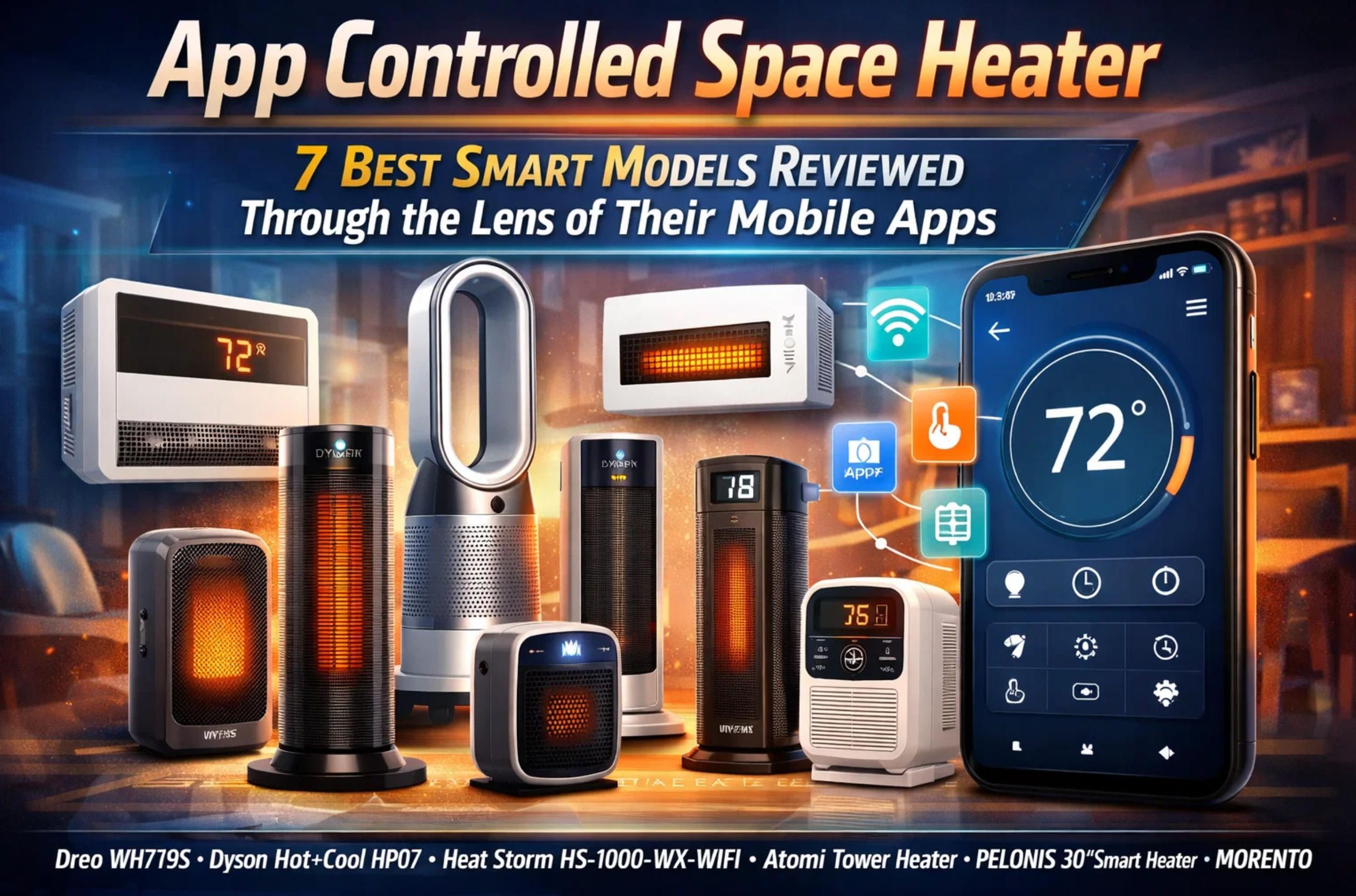
App Controlled Space Heater: 7 Best Smart Models Reviewed Through the Lens of Their Mobile Apps
Managing home comfort from a smartphone is no longer a luxury reserved for tech enthusiasts with six-figure home automation budgets. The app controlled space heater has quietly become one of the fastest-growing segments in the smart home industry, and for good reason. When you can preheat your bedroom from the couch, schedule your home office to warm up before your morning coffee, or shut off a forgotten heater from across town, the value proposition becomes immediately clear.
According to Research and Markets, the smart electric heater market reached $1.88 billion in 2025 and is expanding at a 12.2% compound annual growth rate, projected to hit $3.34 billion by 2030. Mordor Intelligence reports that North America commands nearly 40% of the global smart room heater market, driven by widespread smart-speaker ecosystems and utility rebates for energy-efficient devices. The message from the market is unmistakable: consumers want their heaters connected, controllable, and intelligent.
But here is the reality that most buyers discover only after unboxing: the hardware is only half the product. The companion app — its responsiveness, reliability, scheduling capabilities, and integration with voice assistants — determines whether a smart heater actually feels smart or just feels like a regular heater with a frustrating Wi-Fi setup process.
"I bought a smart heater so I could control it from my phone. Now I spend more time troubleshooting the Wi-Fi connection than I ever spent walking across the room to press a button." — a sentiment shared across thousands of user reviews on Amazon and Best Buy.
This review examines seven popular app controlled space heater models available in the United States, evaluated specifically through the quality and usability of their companion mobile applications. We will look at what each app does well, where it falls short, and what the overall experience tells us about the state of smart heating in 2025 and beyond.
Why the App Matters More Than the Wattage
Every portable electric space heater sold in the US market operates within the same fundamental constraint: a standard 120V/15A household circuit limits output to approximately 1,500 watts. This means the actual heating performance between competing models at the same price point is remarkably similar. The differentiator is not raw thermal output but rather the intelligence layer built on top of it.
A well-designed companion app transforms a basic heater into an energy management tool. Features like ECO mode algorithms, adaptive scheduling, geofencing triggers, and real-time energy consumption tracking can reduce heating costs by 20-30% compared to running a heater manually at full power, according to data from multiple manufacturers including Heat Storm and Dreo.
The companion app also plays a critical role in safety. The U.S. Consumer Product Safety Commission (CPSC) reports that space heaters are involved in approximately 1,700 home fires annually. Smart features like remote shutoff, automated timers, tip-over notifications pushed directly to a smartphone, and open-window detection are not just convenience features. They are genuine safety mechanisms that depend entirely on software quality and reliable connectivity.
With that context established, let us evaluate the seven models.
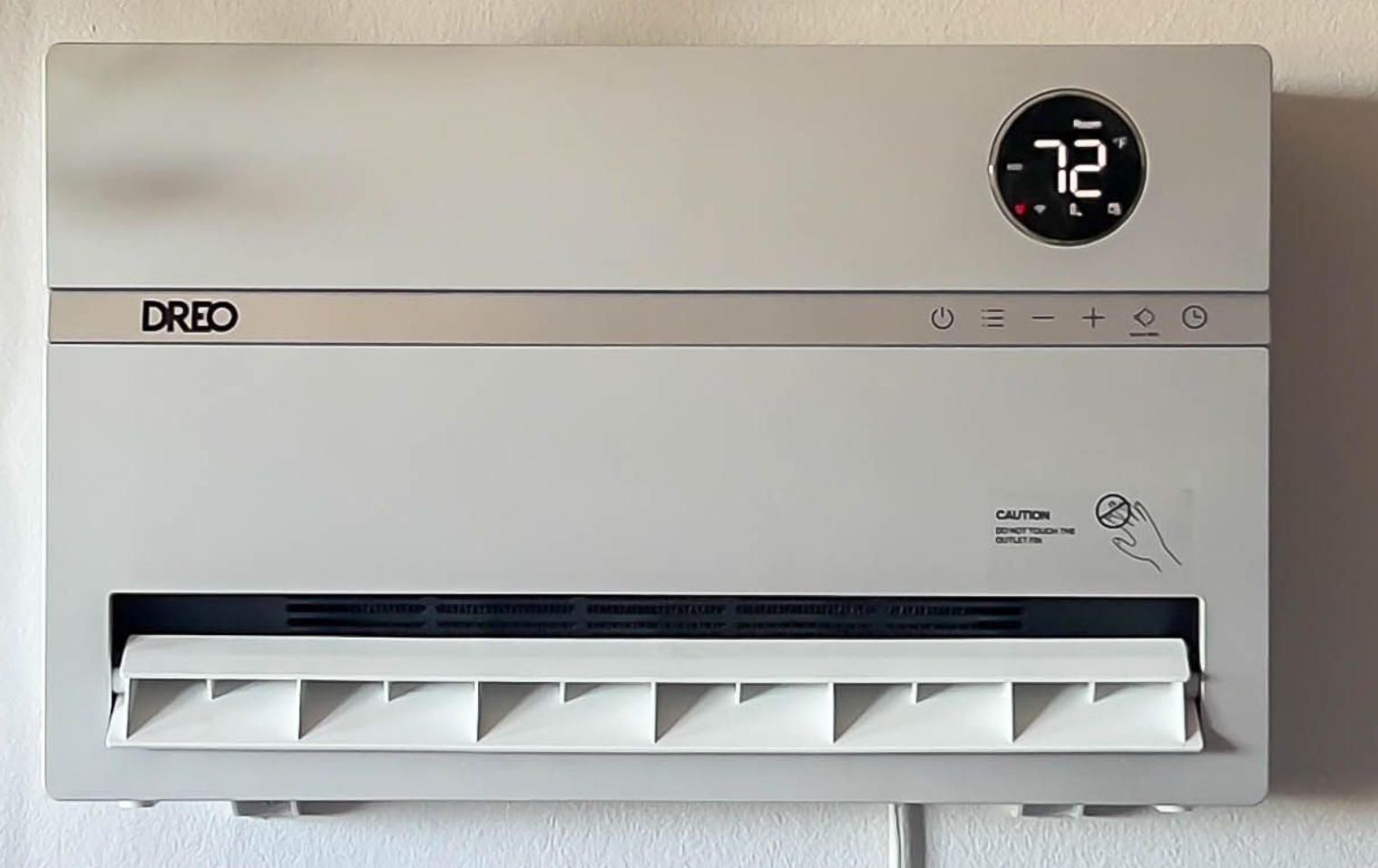
1. Dreo Smart Wall Heater WH719S — Best App Experience Overall
The Dreo WH719S earned widespread praise from reviewers at Tom's Guide, TechRadar, Bob Vila, and Yahoo Tech, and the consistent theme across all these reviews centers on one thing: the Dreo app simply works.
The heater itself delivers 1,500W of PTC ceramic heat with 120-degree vertical oscillation, covering up to 200 square feet as a primary heat source or 750 square feet as supplemental. It mounts on the wall in approximately four minutes using the included drill template with a built-in bubble level. The hardware is solid, but it is the software that sets this model apart.
App: Dreo (iOS and Android)
The Dreo app discovered the WH719S immediately upon power-up during most reviewer tests. Connection uses standard 2.4GHz Wi-Fi, and the onboarding process guides users through each step without requiring technical knowledge. The main control screen displays the current room temperature, heating status, and power mode in a clean, uncluttered interface.
Key app features include scheduling with multiple daily time blocks, ECO mode with precise thermostat control from 41°F to 95°F in 1°F increments, child lock activation, and a unique Open Window Detection feature that sends an alert if a sudden temperature drop is detected. The app also supports Amazon Alexa and Google Assistant integration, enabling voice control for all primary functions.
Rick Broida from Yahoo Tech noted in his review that the physical remote's icons are somewhat cryptic, making the app the preferred method of daily control. Tom's Guide confirmed reliable remote operation from upstairs, across town, and even from several states away.
Where the App Falls Short: Some users report that the initial Wi-Fi pairing can require the physical Wi-Fi button on the device to be pressed before the app can discover it, which adds an unnecessary step. The app also lacks energy consumption tracking, a feature that would be particularly valuable for a wall-mounted unit intended for daily use.
Price: Approximately $100-$120 on Amazon and Dreo's website.
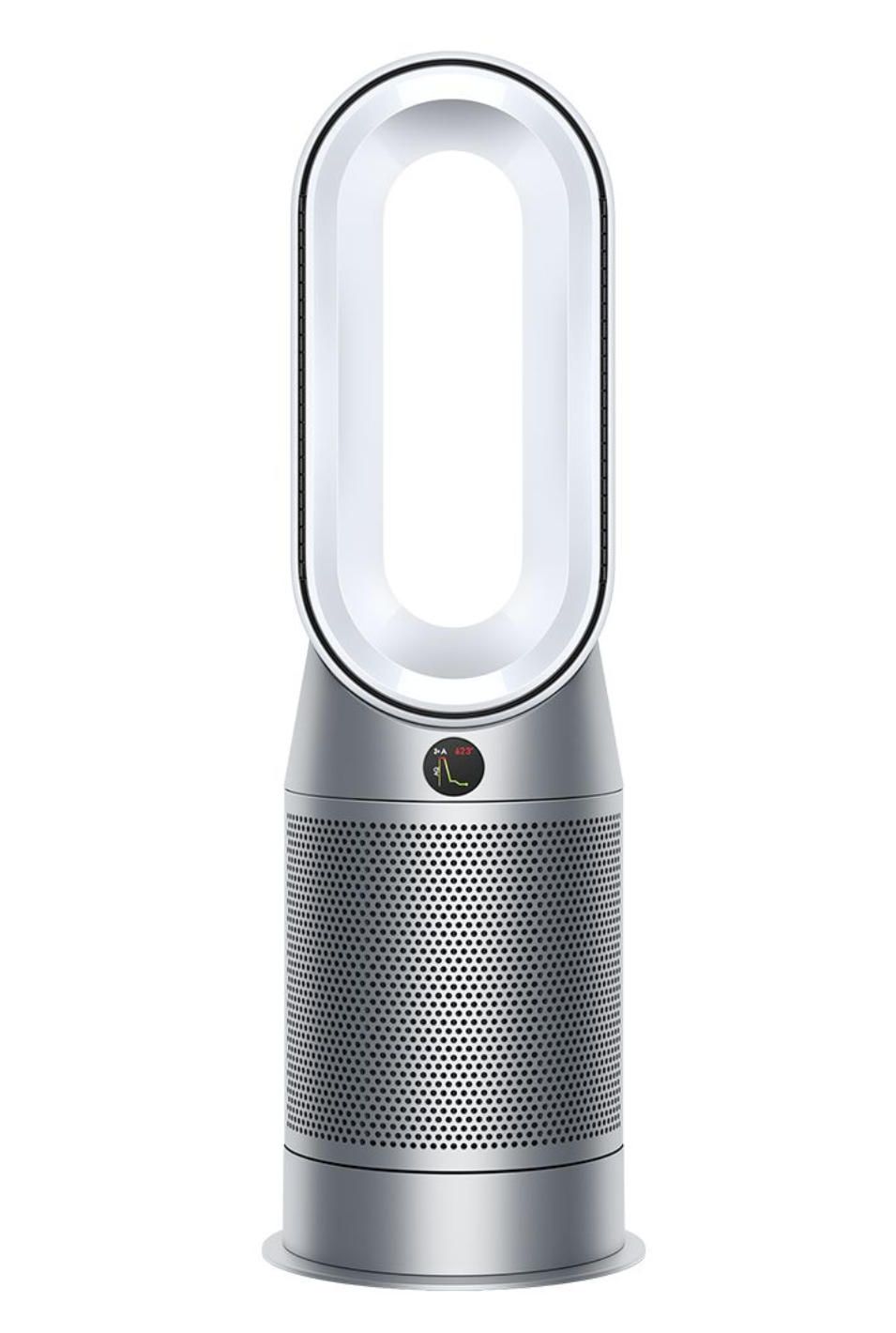
2. Dyson Purifier Hot+Cool HP07 — Premium Hardware, Complicated App Story
The Dyson HP07 is the most expensive device on this list by a significant margin, typically retailing at $599-$649. It is also the only true 3-in-1 device, combining a HEPA 13 air purifier, a cooling fan, and a space heater in Dyson's signature bladeless tower design.
The heating performance is adequate for small to medium rooms. Tom's Guide measured an 8°F temperature increase in a 150 square foot room on the highest setting, with notably even heat distribution. The Android Authority review documented a 200 square foot room warming from 15°C to 22°C in approximately 20 minutes. The real-time air quality monitoring, with readings for PM2.5, PM10, VOCs, and NO2, adds genuine functional value beyond heating.
App: MyDyson (iOS and Android)
Here is where the HP07 becomes a complicated recommendation. The MyDyson app provides excellent air quality monitoring, displaying detailed historical data, real-time pollutant levels, and filter life tracking. For purification and fan functions, the app works reliably and offers full remote control.
However, multiple user reviews on Best Buy and Home Depot — and confirmed by Dyson's own customer support representatives — reveal a significant limitation: the heat function cannot be controlled through the app in many markets, including the United States. One Dyson support representative explicitly stated in a Home Depot review response that heat control via the app is not available for the HP07. This means the heater-specific functions (temperature setting, heat mode activation) must be managed using the physical remote control.
"I paid $650 for a smart heater that requires me to find the remote every time I want to turn on the heat. My $80 heater has better app control." — paraphrased from multiple verified purchaser reviews.
Where the App Falls Short: The inability to control the heating function remotely largely defeats the purpose of an app controlled space heater for users whose primary goal is convenient heat management. The app excels at purification monitoring and fan control, but the heating gap is a dealbreaker for many buyers at this price point.
Price: $599-$649 from Dyson and major retailers.
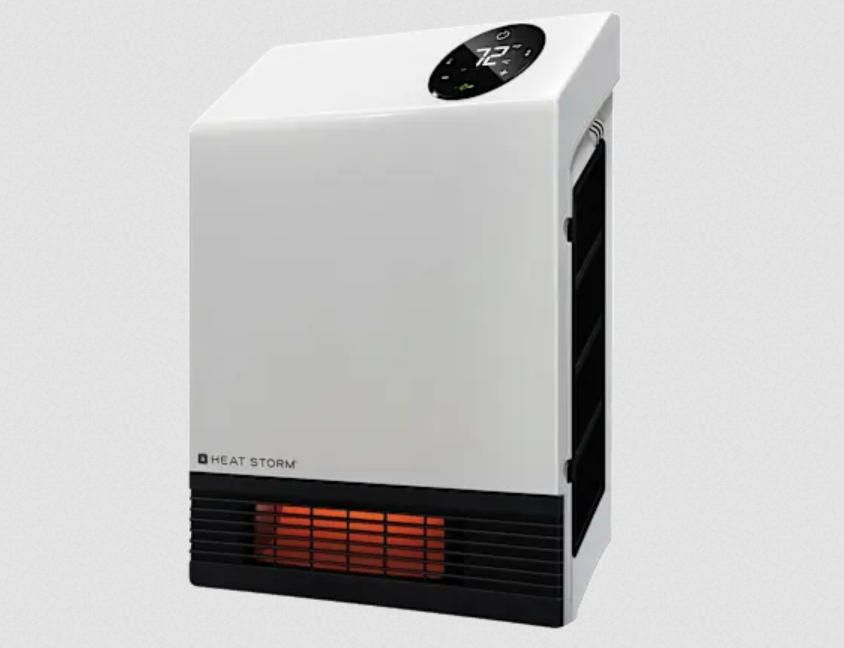
3. Heat Storm HS-1000-WX-WIFI — Best Budget Wall-Mount App Experience
Heat Storm's WiFi-enabled wall heater occupies a unique position in the market. At approximately $73-$95, it offers genuine Wi-Fi app control in a wall-mounted infrared heater, making it one of the most affordable app controlled space heaters available.
The unit delivers 1,000 watts (3,400 BTU) of infrared heat using quartz elements, covering up to 100 square feet as a primary source or 500 square feet as supplemental. Unlike ceramic fan heaters, infrared technology warms objects directly rather than heating air, which means the warmth persists longer after the heater cycles off. The wall-mount design with built-in cord management keeps floor space clear and eliminates tip-over risks entirely.
App: Smart Life (iOS and Android)
Heat Storm uses the Smart Life app (also branded as Tuya Smart), which is a widely adopted IoT platform used by hundreds of smart home device manufacturers. The advantage of this approach is maturity: the Smart Life ecosystem has been refined over years of development and supports robust scheduling, timer functions, and integration with both Alexa and Google Assistant.
Through the app, users can power the heater on and off remotely, adjust the target temperature, set the child lock, and create scheduled heating intervals. The app supports managing multiple Heat Storm units from a single dashboard, which is particularly valuable for users who zone-heat multiple rooms.
Best Buy reviewers highlighted the scheduling feature as the standout, allowing pre-set warm-up times so rooms are comfortable upon arrival. Home Depot reviews praised the Google Assistant integration, enabling voice-activated control from any room with a smart speaker.
Where the App Falls Short: The Smart Life app is generic by design, and the Heat Storm integration within it lacks the polish of purpose-built apps like Dreo's. The thermostat calibration can be inaccurate, with some users reporting displayed temperatures that differed from actual room temperature by as much as 8-10°F. The infrared heating element also produces audible fan noise that some users find disruptive despite marketing claims of quiet operation.
Price: Approximately $73-$95 at Home Depot, Best Buy, and Amazon.
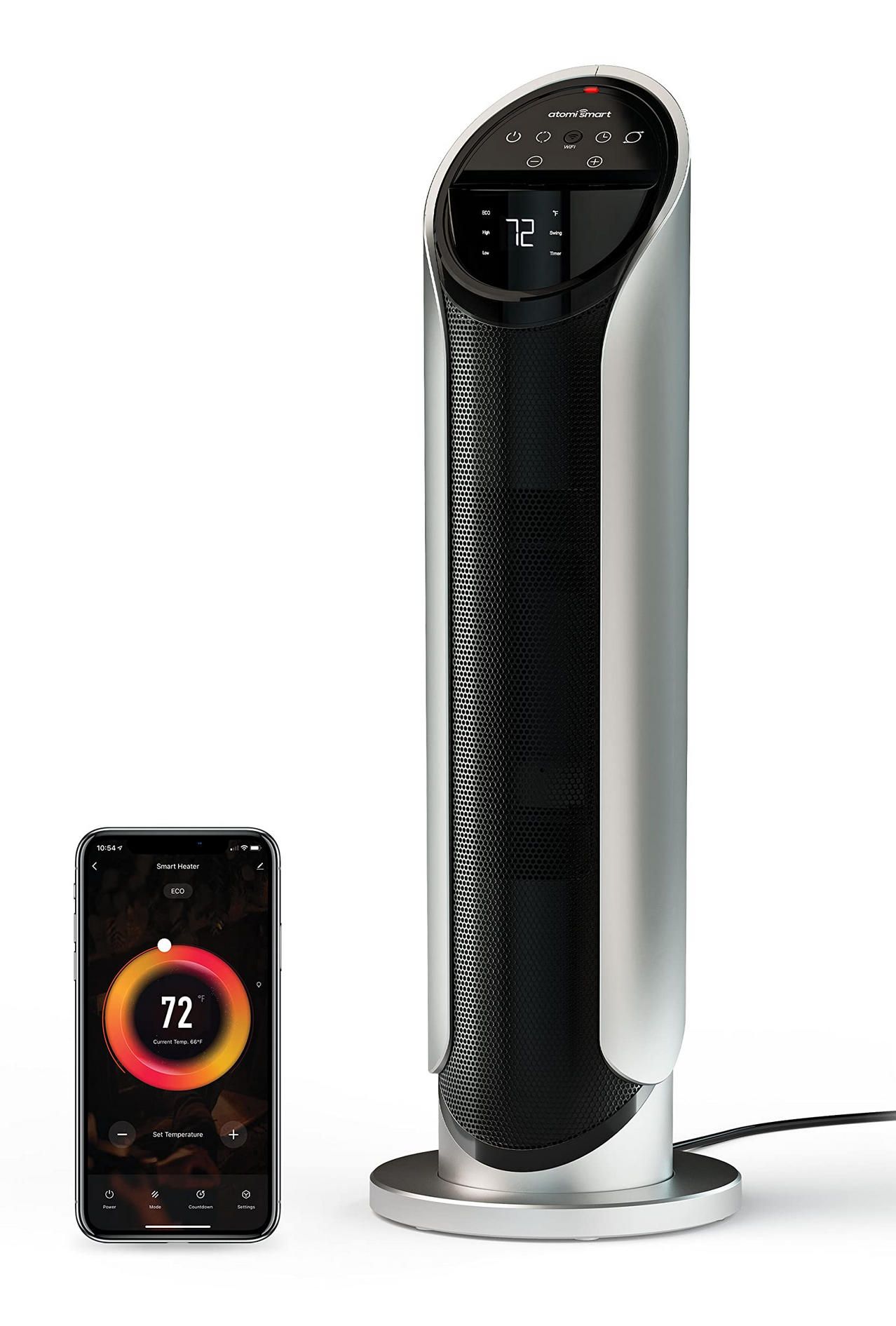
4. Atomi Smart WiFi Tower Heater (3rd Gen) — Best Smart Safety Notifications
Atomi Smart has built its reputation on combining Wi-Fi connectivity with thoughtful safety engineering, and the 3rd generation tower heater represents the most refined version of that philosophy.
The 25-inch tower delivers 1,500W of PTC ceramic heat with wide-angle oscillation, covering rooms up to 750 square feet. It features three heating modes (High, Low, and ECO), a large LED touchscreen display, and a wobble-free base designed for stability on both hard floors and carpet. The unit is ETL certified and carries a 5-year limited warranty, the longest in this review.
App: Atomi Smart (iOS and Android)
The Atomi Smart app provides full remote control of all heater functions: power, temperature adjustment from 41°F to 95°F, oscillation toggle, mode selection, and timer scheduling. The app interface centers on a large temperature readout that is immediately understandable.
What distinguishes Atomi's app from competitors is its safety notification system. If the heater is tipped over — by a pet, a child, or an accidental bump — the electronic tip-over switch immediately shuts the heater off and simultaneously sends a push notification to every phone connected to the heater via the app. The system is intelligent enough to distinguish between a genuine tip-over and an intentional repositioning, avoiding false alarms when moving the heater from room to room.
Users on Home Depot and Amazon consistently praise the scheduling capability, particularly for pre-warming rooms before arrival. One frequently cited use case involves turning on a basement office heater remotely 15-30 minutes before heading downstairs.
Where the App Falls Short: Wi-Fi setup requires a 2.4GHz network, and users with mesh routers or combined dual-band networks occasionally report connection difficulties. The app's user interface, while functional, feels dated compared to Dreo's more modern design. Some users also report an annoying 24-hour safety reminder notification that must be manually dismissed, which becomes tedious for always-on applications like greenhouses.
Price: Approximately $90-$110 on Amazon and at Home Depot.
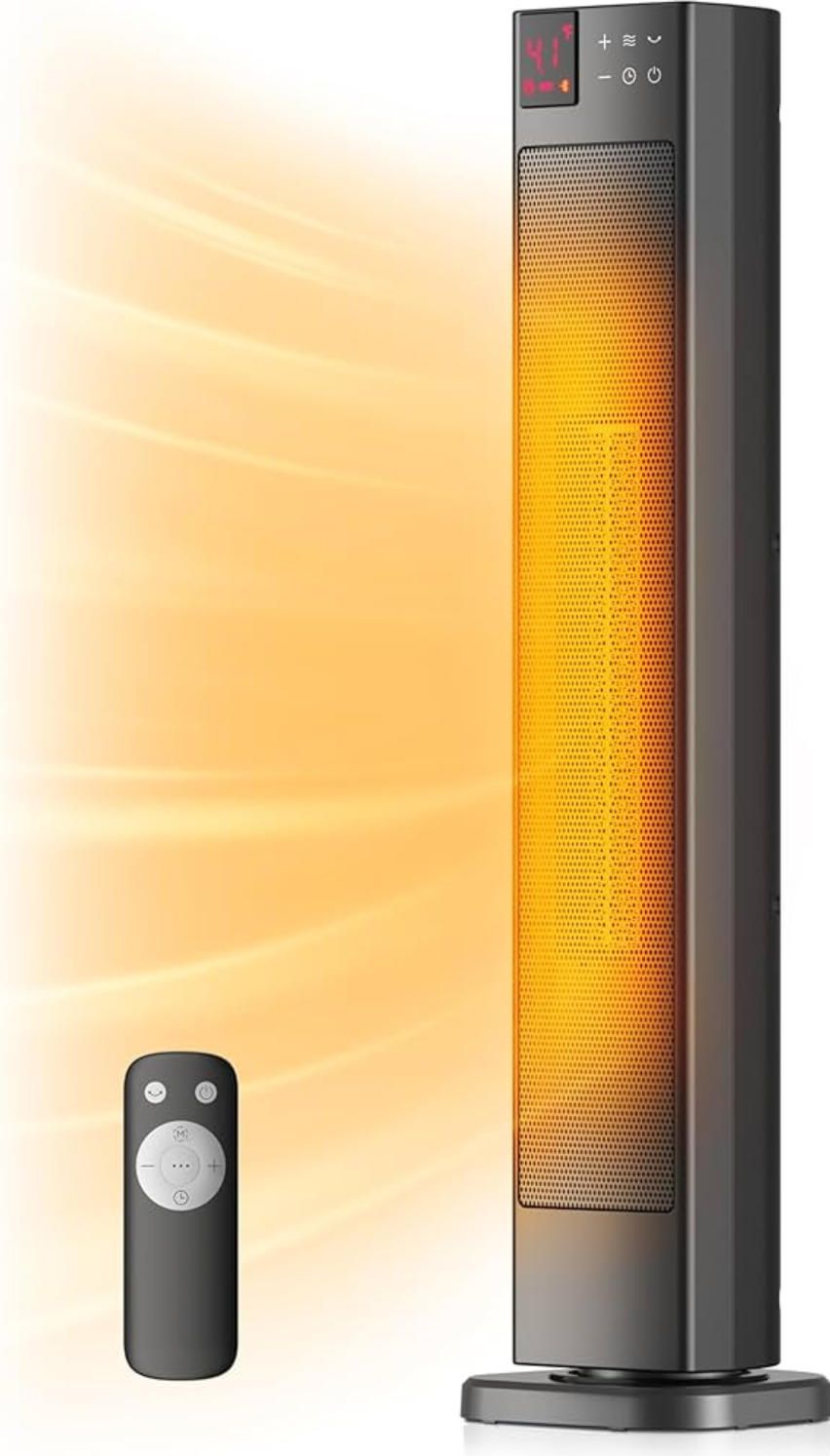
5. PELONIS 30-Inch Smart Tower Heater — Best App for Large Rooms
The PELONIS 30-inch tower heater targets users who need to heat larger spaces without sacrificing smart control. Its enlarged 308mm PTC ceramic element and 75-degree oscillation are designed to push warm air across areas up to 300 square feet as a primary heat source.
The unit offers five operating modes (H1, H2, H3, ECO, and Fan Only), a 24-hour timer, and temperature control from 41°F to 95°F. The tall tower design and wide oscillation arc make it particularly effective in open-plan living spaces and larger bedrooms where smaller heaters struggle to distribute warmth evenly.
App: SmartHome App (iOS and Android)
PELONIS uses the SmartHome App platform, which provides Wi-Fi connectivity and integration with both Alexa and Google Assistant. The app allows full control over all heating modes, temperature settings, oscillation, and scheduling.
The scheduling feature is the highlight for large-room applications. Users can create multiple daily heating windows — for example, warming a living room during morning hours, switching to fan-only during midday, and resuming heating in the evening. The ECO mode algorithm monitors room temperature and cycles the heater to maintain the setpoint, which is particularly effective in larger spaces where maintaining consistent temperature requires intelligent power management.
In March 2025, Pelonis showcased its 2.0 series of Wi-Fi-enabled heaters at industry events, featuring enhanced eco-modes and expanded SmartHome App integration, signaling continued investment in the software side of their product line.
Where the App Falls Short: The SmartHome App occasionally requires manual firmware updates that are not clearly communicated to users. Initial setup has been described by some reviewers as slightly tricky for those unfamiliar with smart device onboarding. The app also shares the generic feel common to Tuya-based platforms rather than offering a uniquely branded PELONIS experience.
Price: Approximately $70-$90 on Amazon.
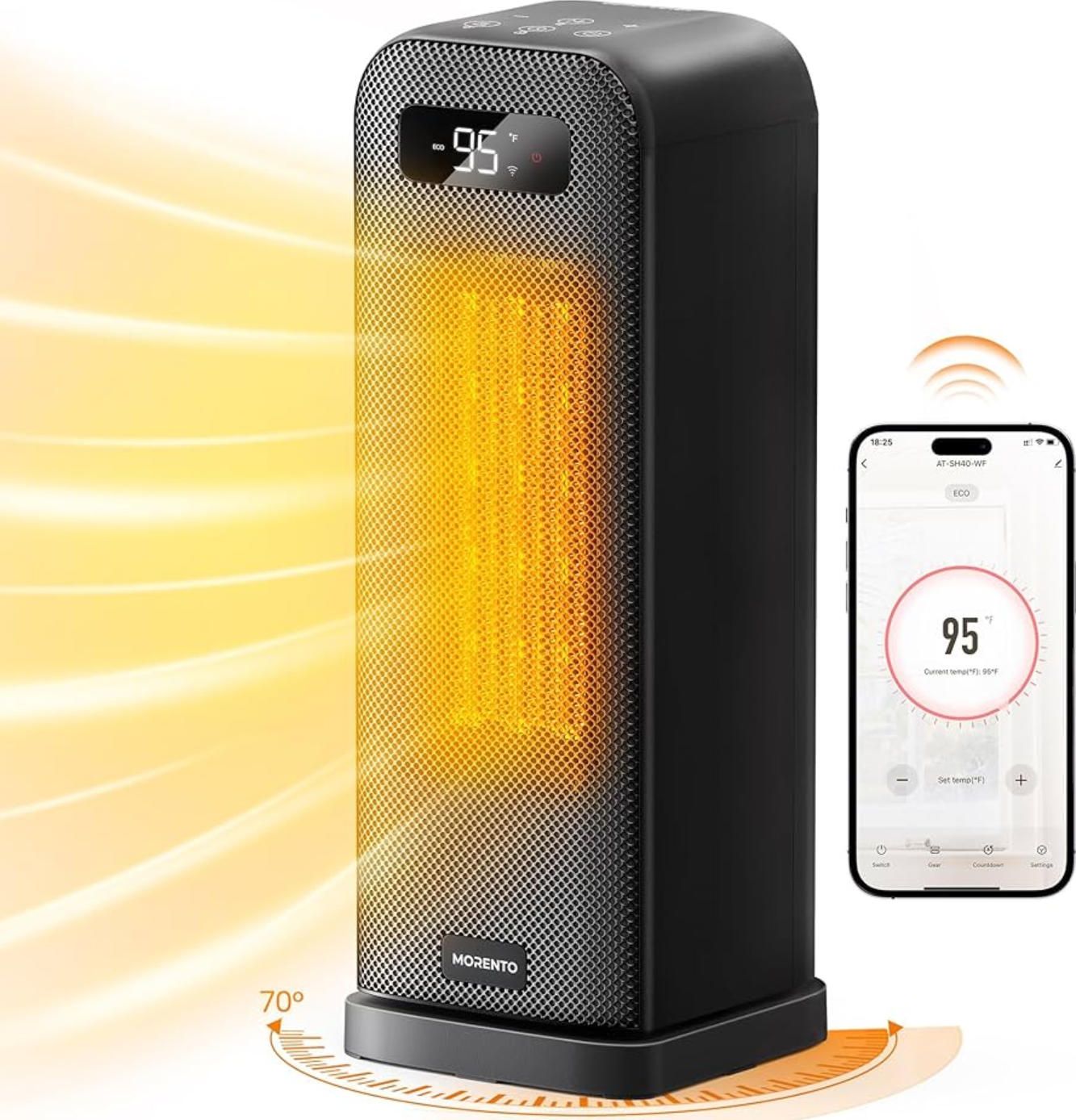
6. MORENTO Smart Space Heater — Quietest Smart Heater with Solid App
For users who prioritize silent operation — particularly in bedrooms and home offices — the MORENTO smart space heater delivers some of the lowest noise levels in the smart heater category at just 36 dB, roughly equivalent to a quiet library.
The 1,500W PTC ceramic heater offers 70-degree oscillation, four operating modes (1500W, 900W, ECO, and Fan Only), and a 12-hour timer. The body is constructed from V0 grade flame-retardant material, and safety features include overheat protection, anti-tip protection, dual internal fuses, and a child lock. The LED display can be turned off for sleep mode, and the unit can be fully muted.
App: Havaworks (iOS and Android)
MORENTO uses the Havaworks app, built on the Tuya IoT platform by a company called Ecodot. While the third-party app arrangement may raise eyebrows, Tom's Guide found that the practical experience is solid. The app provides full control over temperature, modes, oscillation, timer, and child lock settings.
The standout feature for bedroom use is the combination of app-controlled muting and LED blackout. Users can schedule the heater to warm the bedroom before sleep, set a timer to shut off after a few hours, mute all operational sounds, and disable the LED display entirely — all controlled from the phone without getting out of bed.
Alexa and Google Home compatibility works reliably for basic on/off and temperature commands. Users on Amazon report stable Wi-Fi connections over extended periods, with one reviewer noting uninterrupted connectivity for over a month.
"My smart heater is so quiet that I forgot it was on for three days. My electricity bill did not forget." — adapted from a common user sentiment.
Where the App Falls Short: The Havaworks app is not a household name, and users may be hesitant to create an account on an unfamiliar platform. The 2.4GHz-only Wi-Fi requirement is standard but occasionally problematic for users whose routers default to 5GHz. The app lacks advanced features like energy consumption tracking or geofencing.
Price: Approximately $50-$70 on Amazon.
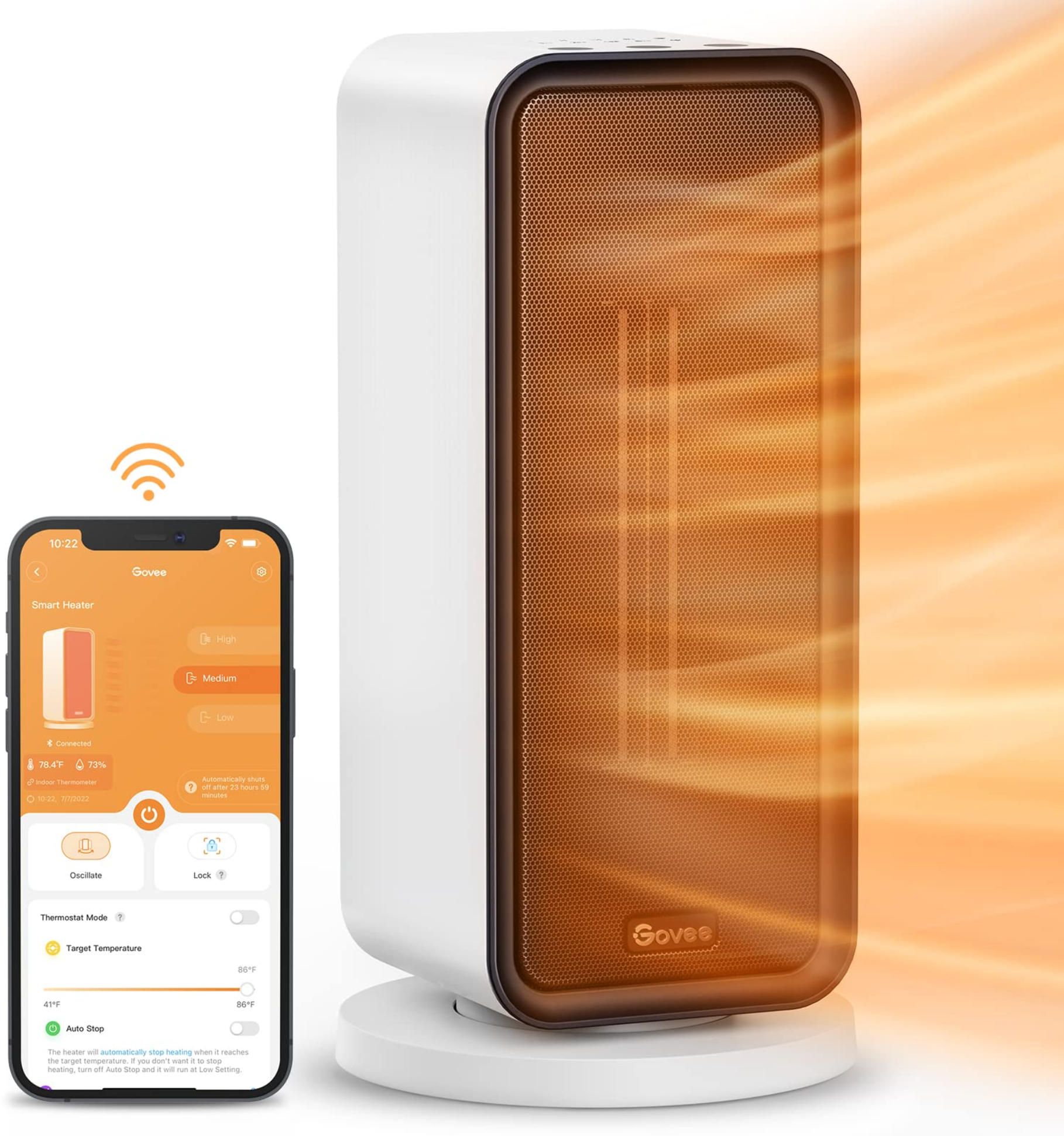
7. Govee Smart Space Heater (H7130 Series) — A Cautionary Tale About App-Driven Safety
The Govee smart space heater series was, for several years, one of the most popular and highly rated app controlled space heaters on Amazon. The Govee Home app offered a polished interface with Wi-Fi and Bluetooth dual connectivity, thermostat integration with external Govee temperature sensors, Alexa and Google Assistant support, and IFTTT compatibility. The app experience was widely considered among the best in the category.
Then, in November 2024, reality intervened.
The Recall
The U.S. Consumer Product Safety Commission (CPSC) issued a recall covering approximately 512,500 GoveeLife and Govee smart electric space heaters in the United States and an additional 48,600 units in Canada. The affected models included H7130, H7131, H7132, H7133, H7134, and H7135 — essentially the entire smart heater product line.
The reason was damning: testing determined that the heaters did not comply with the voluntary industry safety standard UL 1278, specifically posing an overheating and fire risk from wireless control features. The CPSC documented 113 reports of overheating, including seven fires and one minor burn injury. Consumer Reports quoted a senior policy analyst who stated that the manufacturer put hundreds of thousands of people at risk because it failed to meet broadly accepted safety standards.
Consumers were instructed to immediately stop using the recalled heaters, cut the power cord, and submit photographic proof of destruction in exchange for refunds ranging from $31.80 to $106.63.
The Lesson for the Smart Heater Industry
The Govee recall is not just a product failure story. It is a case study in what happens when the software control layer — the very feature that makes a smart heater "smart" — is not properly validated against safety standards. The CPSC specifically cited wireless control features as the source of the overheating risk. This means the app-driven functionality that made Govee heaters appealing was directly implicated in the safety failure.
This incident underscores a critical truth about app controlled appliances: the software must be as rigorously tested as the hardware. A beautiful app interface means nothing if the underlying firmware and wireless communication protocols can cause the heating element to run unsafely.
What to Look for When Choosing an App Controlled Space Heater
Based on our review of these seven models, here are the key factors that separate a genuinely smart heater from a frustrating one.
Wi-Fi Reliability and Setup Simplicity. The single biggest source of negative reviews across every model is Wi-Fi connectivity. Look for heaters that support straightforward 2.4GHz onboarding with clear in-app instructions. Dreo and Atomi consistently receive the best marks in this area.
Scheduling Depth. Basic on/off timers are not enough. The best apps allow multiple daily heating windows, weekday/weekend differentiation, and ECO mode integration that maintains target temperatures without running at full power continuously.
Safety Certifications and Notifications. ETL or UL certification is non-negotiable. Beyond that, look for app-driven safety features like tip-over push notifications (Atomi), open-window detection (Dreo), and remote emergency shutoff capability. The Govee recall demonstrates that wireless control features themselves must comply with UL 1278.
Voice Assistant Integration. Alexa and Google Assistant compatibility is standard across most models, but the depth of integration varies. Some heaters support only on/off commands, while others allow temperature adjustment and mode changes through voice.
Thermostat Accuracy. Multiple models in this review receive complaints about inaccurate built-in thermostats. The best apps compensate with calibration options or integration with external temperature sensors.
ECO Mode Intelligence. An effective ECO mode does more than cycle the heater on and off. It should monitor ambient temperature continuously and modulate power output to maintain the setpoint with minimal energy waste. PELONIS and Dreo offer particularly effective implementations.
Why Custom App Development Matters for Smart Heating Products
The seven heaters reviewed above represent the consumer market as it exists today. But for hardware manufacturers, HVAC companies, and IoT startups looking to enter or expand in the smart heating space, off-the-shelf solutions like the Tuya/Smart Life platform have clear limitations.
Generic IoT platforms provide rapid time-to-market but sacrifice brand differentiation, deep hardware integration, and the ability to implement proprietary energy optimization algorithms. The Govee recall further illustrates the risks of insufficient software-hardware validation in safety-critical appliances.
This is where custom mobile application development becomes a strategic advantage. A purpose-built companion app can deliver branded user experiences that build customer loyalty, proprietary control algorithms optimized for specific hardware configurations, advanced safety validation that meets or exceeds UL 1278 and similar standards, integration with utility demand-response programs and time-of-use pricing, predictive maintenance capabilities using sensor data and machine learning, and seamless firmware update delivery that keeps devices secure and compliant.
A-Bots.com specializes in exactly this type of development. With over 70 completed projects and client relationships spanning more than five years, A-Bots has deep expertise in IoT mobile application development, including Bluetooth and Wi-Fi device communication, real-time sensor data processing, cloud infrastructure for remote device management, and cross-platform app development for iOS and Android.
Whether a manufacturer needs a complete companion app built from scratch, wants to migrate from a generic IoT platform to a custom-branded solution, or requires comprehensive testing and quality assurance for an existing smart appliance app, A-Bots delivers the technical depth and reliability that safety-critical connected products demand.
The smart heater market is projected to nearly double by 2030. The companies that will lead that growth are the ones that recognize the app is not an accessory to the product. The app is the product. The heater is just the hardware that makes it warm.
"The best space heater app is the one you never have to think about. It just works — like your heater should, but smarter."
Frequently Asked Questions
Are app controlled space heaters safe to use?
Yes, when they carry proper safety certifications such as ETL or UL listing. Look for features like tip-over protection, overheat shutoff, and cool-touch exteriors. The 2024 Govee recall (512,500 units) demonstrates the importance of verifying that wireless control features themselves comply with safety standards like UL 1278. Always purchase from manufacturers who invest in rigorous software and hardware testing.
Do smart space heaters use more electricity than regular heaters?
No. The Wi-Fi module and control electronics consume negligible additional power. In fact, smart heaters with effective ECO modes typically use less electricity overall because they cycle intelligently based on room temperature rather than running continuously at full power. Heat Storm claims up to 30% energy savings in auto eco-mode, and most manufacturers report similar efficiency gains.
Can I control my app controlled space heater when I am away from home?
Yes, all models reviewed here support remote control via Wi-Fi when connected to your home network. The Dreo app, for example, was tested and confirmed functional from across town and even from different states. You do need an active internet connection on both your phone and the heater's home network.
What smart home ecosystems work with app controlled space heaters?
Most models support Amazon Alexa and Google Assistant. Apple HomeKit support is still rare in this category. Some heaters, like the Govee models (prior to recall), also supported IFTTT for advanced automation. The emerging Matter protocol is expected to standardize smart heater connectivity across all major platforms in coming years.
Why do most smart heaters only work on 2.4GHz Wi-Fi?
The 2.4GHz frequency offers longer range and better wall penetration compared to 5GHz, which is important for devices that may be installed in rooms far from the router. The trade-off is lower bandwidth, but space heaters transmit minimal data, so the slower speed is inconsequential. If your router broadcasts a combined network, you may need to temporarily separate the bands during initial setup.
What is the typical coverage area for an app controlled space heater?
Most 1,500W ceramic heaters effectively cover 150-300 square feet as a primary heat source. As supplemental heating, coverage can extend to 500-750 square feet depending on insulation and ambient temperature. The Atomi Smart tower heater claims coverage up to 750 square feet, while the smaller Heat Storm HS-1000-WX covers approximately 100 square feet as a primary source at its lower 1,000W rating.
How does A-Bots.com help smart heater manufacturers?
A-Bots.com develops custom IoT mobile applications for hardware manufacturers who need branded, secure, and fully tested companion apps. Services include native iOS and Android development, Bluetooth/Wi-Fi device communication protocols, cloud backend infrastructure, real-time data processing, and comprehensive QA testing to ensure compliance with safety and performance standards. A-Bots works with companies at any stage, from initial concept to improving existing products.
✅ Hashtags
#AppControlledSpaceHeater
#SmartSpaceHeater
#SpaceHeaterApp
#SmartHomeHeating
#WiFiHeater
#TuyaSmartLife
#HomeSafetyTech
#IoTAppDevelopment
Other articles
LG InstaView Door-in-Door vs Samsung Family Hub - Smart Fridge Ecosystems Compare LG InstaView Door-in-Door and Samsung Family Hub in real-life use - food access workflows, ecosystem value, app experience, and long-term ownership. Learn which smart fridge approach fits families, meal-preppers, and smart-home users. The article also explains how a custom mobile app can make connected refrigerators genuinely smarter: low-friction inventory intelligence, freshness insights, energy optimization, predictive maintenance, and service workflows - with privacy-by-design. For appliance brands and product teams, A-Bots.com can build the mobile app, cloud backend, and device API layer that turns hardware into a durable ecosystem.
Samsung Bespoke AI WF53BB8700AT vs LG WM6700HBA: Samsung Bespoke AI WF53BB8700AT and LG WM6700HBA are two leading smart front-load washers competing for dominance in the rapidly growing connected laundry market. This expert comparison examines their AI wash systems, drum capacity, speed cycles, automatic detergent dispensing, companion mobile apps, noise performance, energy efficiency, warranty coverage, and long-term reliability backed by real service call data. The article also explores how companion apps like SmartThings and ThinQ are reshaping the appliance industry and how A-Bots.com helps manufacturers build custom IoT mobile applications for connected home devices.
App Controlled Thermostat Smart thermostats have moved far beyond simple temperature control. Today, an app controlled thermostat learns your schedule, detects when you leave home, and adjusts the climate automatically — all managed through a smartphone. This article explores how smart smartphone thermostats work, what leading brands like Honeywell and ecobee have built, where consumer products fall short for businesses, and why hotels, property developers, and commercial facilities are investing in custom thermostat app solutions. Whether you need a new IoT application built from scratch or professional QA testing for an existing system, A-Bots.com delivers expert mobile development tailored to your business requirements.
ecobee3 Lite Smart Thermostat: Full Review of Features, Installation, and Energy Savings The ecobee3 lite smart thermostat combines accessible pricing with genuine intelligence — ENERGY STAR-certified energy savings of up to 23% per year, five eco+ optimization features, and seamless integration with Apple HomeKit, Amazon Alexa, and Google Assistant. This guide covers everything from installation nuances and C-wire compatibility to the mechanics of Time of Use pricing, occupancy detection, and SmartSensor-based multi-room control. You will also find current smart thermostat market data, an honest look at device limitations, and an overview of what it takes to build a custom HVAC application at this level of sophistication.
Smart Thermostat Honeywell: Full Lineup Review Honeywell Home controls a significant share of the smart thermostat market — but understanding what their devices actually do requires looking past the feature list. This article reviews the full current lineup, from the Matter-certified $79.99 X2S to the professionally integrated T10 Pro, with a detailed breakdown of how Smart Response, geofencing, room sensor logic, and utility demand response work mechanically. It also covers the real limitations users encounter — app fragmentation, C-wire dependency, no self-learning schedule — and explains what is technically required to build a custom HVAC mobile application for use cases that mass-market thermostats cannot serve.
Top stories

Copyright © Alpha Systems LTD All rights reserved.
Made with ❤️ by A-BOTS