
Home
Services
About us
Blog
Contacts
Elderly Care App Development 2026: Building Digital Tools That Keep Seniors Safe, Connected, and Independent
The global population is getting older faster than most health systems can keep up. According to the World Health Organization, by 2030, one in six people worldwide will be aged 60 or over, with that cohort growing from 1 billion in 2020 to 1.4 billion. The United Nations projects that by the late 2070s, the population aged 65 and older will reach 2.2 billion, eventually surpassing the number of children under 18. These are not distant forecasts — they describe a shift already underway in every developed economy and increasingly in emerging markets.
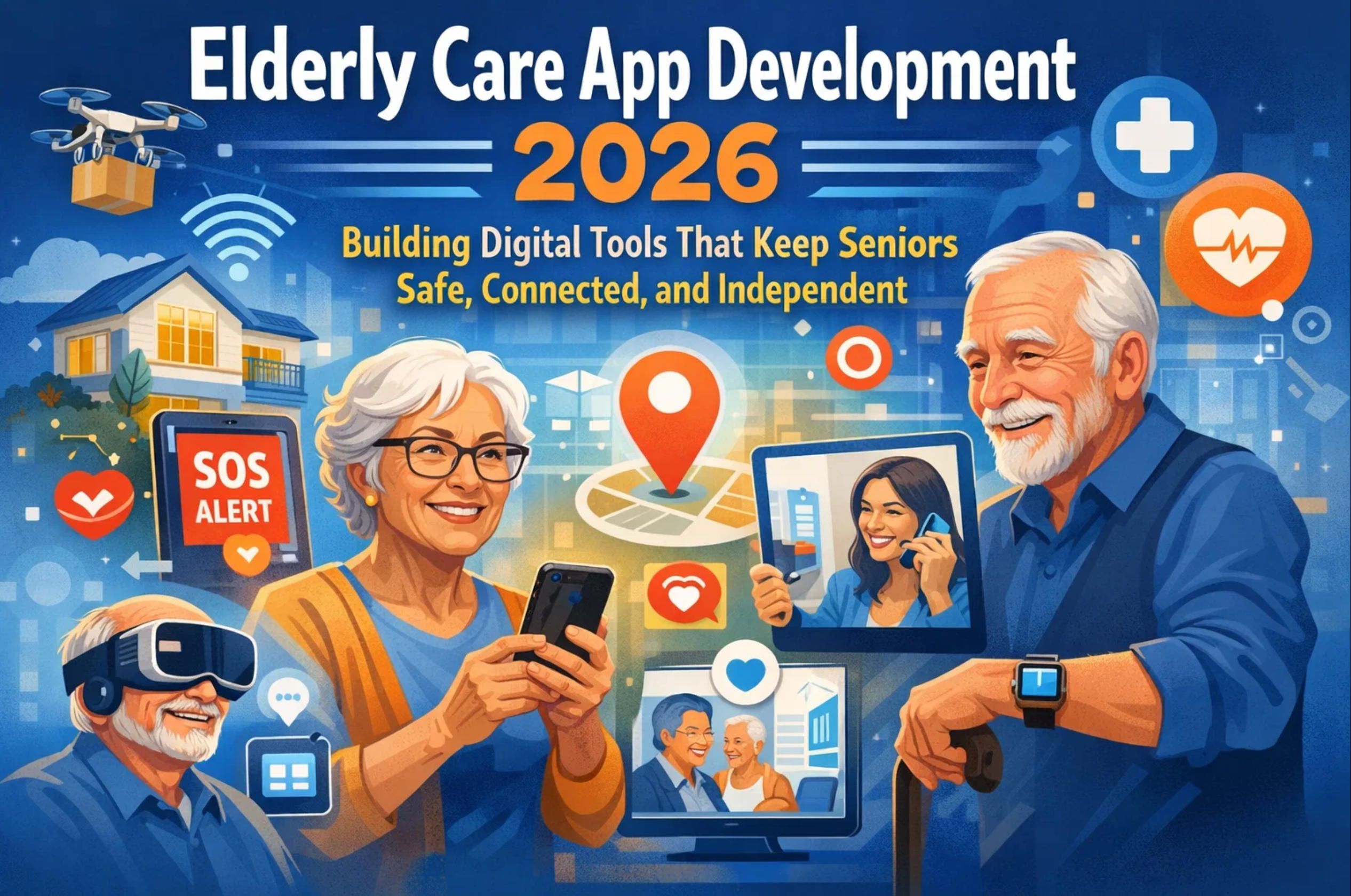
For software development companies, this demographic wave represents both an urgent need and a significant opportunity. Elderly care app development sits at the intersection of healthcare, IoT, artificial intelligence, and mobile technology — areas where A-Bots.com has built deep expertise across more than 70 completed projects. With a technology stack spanning React Native, Flutter, Node.js, Python, and Django, and proven experience in IoT integration (including smart home device control applications), A-Bots.com is positioned to deliver custom elderly care solutions that go well beyond what off-the-shelf apps can offer.
The company's track record in building connected device applications — such as the Shark Clean mobile app for controlling robotic vacuum cleaners — demonstrates exactly the kind of hardware-software integration that elderly care apps demand. From wearable health monitors to smart home sensors and emergency alert systems, elderly care app development requires a team that understands both the mobile interface and the connected devices behind it.
Whether a healthcare startup needs a purpose-built senior wellness platform, a hospital network wants to extend its patient monitoring capabilities, or an existing elderly care app requires rigorous QA testing to ensure reliability for a vulnerable user base, A-Bots.com brings the full-cycle development approach these projects demand.
Why the Market Cannot Wait
The elderly care apps market was valued at approximately $4.58 billion in 2024 and is projected to reach $16.87 billion by 2033, growing at a compound annual growth rate of about 13.92%, according to Business Research Insights. Meanwhile, AI-powered solutions for aging and elderly care represent an even larger addressable market — InsightAce Analytic valued it at $56.78 billion in 2025, with projections reaching $387.52 billion by 2035 at a 21.30% CAGR.
What is driving these numbers? Several forces are converging simultaneously.
First, the caregiver shortage is real and worsening. Countries including the United States, Japan, and South Korea face an extreme shortage of healthcare workers trained in geriatric care. Technology is not replacing human caregivers — it is extending their reach and reducing the burden of routine monitoring tasks.
Second, seniors themselves are increasingly digital. According to a 2024 Pew Research Center analysis, 76% of adults aged 65 and older in the United States now own a smartphone, a significant increase from 61% just a couple of years prior. The AARP reported in 2024 that 89% of adults aged 50 and older own at least one cell phone, and on average, this age group owns seven tech devices. The stereotype of the technophobic senior is fading rapidly.
Third, the economics of preventive care favor digital solutions. Remote patient monitoring can reduce hospital admissions for patients with chronic conditions. Health monitoring apps that track vitals, medication adherence, and early warning signs cost a fraction of a single emergency room visit. For healthcare systems under increasing financial pressure, elderly care app development is not a luxury — it is a cost management strategy.
"My grandmother has three doctors, two pharmacists, and zero idea which pills to take on Tuesday. She needs an app, not another paper chart." — Anonymous caregiver forum post that captures the daily reality for millions of families.

Core Features That Define a Quality Elderly Care App
Not every elderly care app needs every feature. But understanding the full spectrum of capabilities helps development teams and their clients make informed decisions about scope. The most impactful apps in this space typically address several interconnected needs.
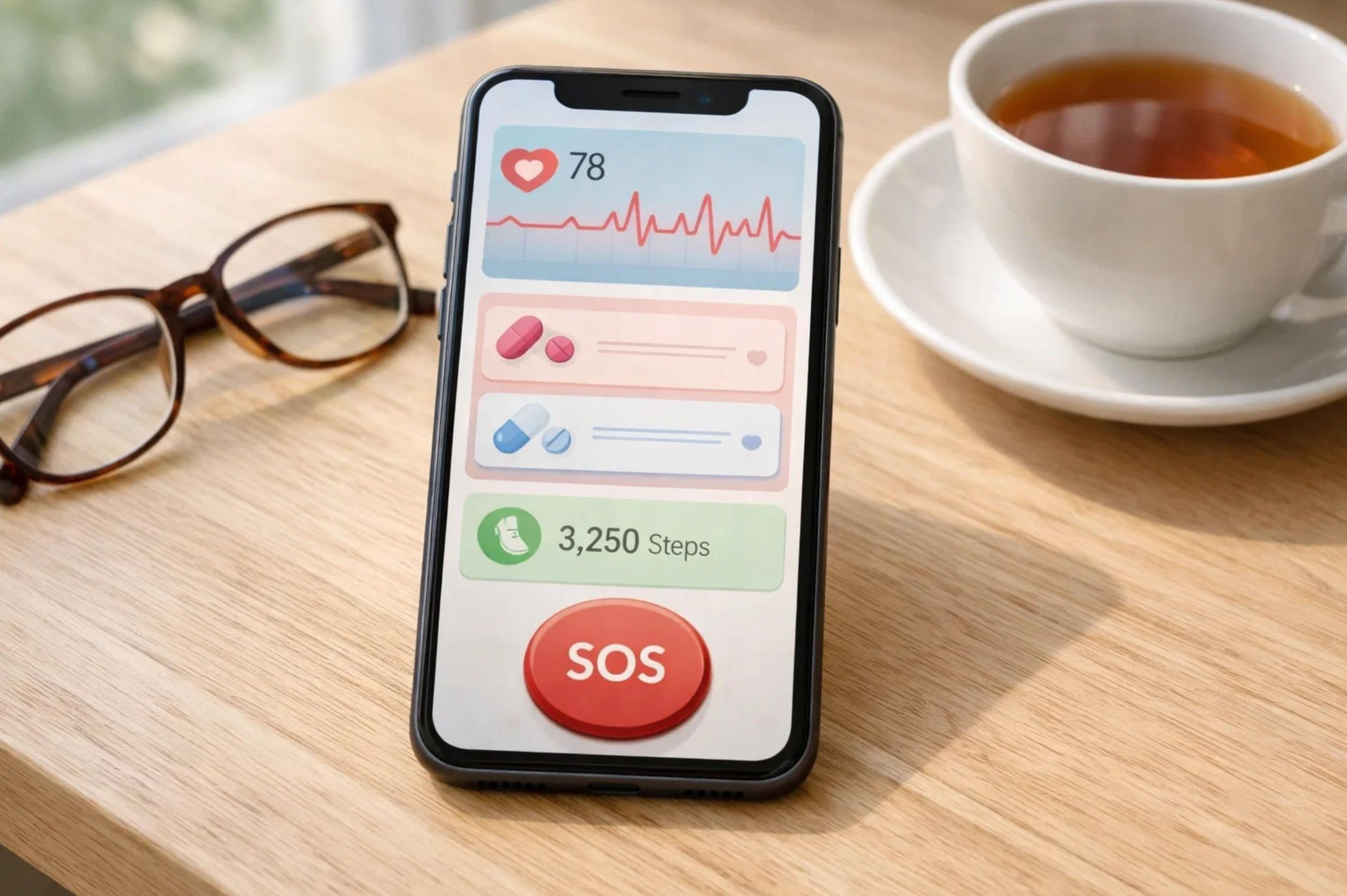
Medication management remains the single most requested feature in elderly care app development. Apps like Medisafe have demonstrated strong adoption rates, with 55% daily engagement among senior users and drug interaction warnings that have helped flag over 200,000 potentially harmful combinations. A well-built medication management module includes dosage scheduling, refill reminders, caregiver notifications for missed doses, and integration with pharmacy databases.
Health monitoring and vital sign tracking connects the app to wearable devices and IoT sensors. Blood pressure readings, heart rate data, blood glucose levels, sleep patterns, and physical activity metrics can be logged automatically and shared with healthcare providers. This is where elderly care app development intersects heavily with IoT — the app must communicate reliably with Bluetooth-enabled devices, process real-time data streams, and present the information in formats that are meaningful to both seniors and their care teams.
Fall detection and emergency alerts are among the most technically demanding features. Modern implementations use a combination of smartphone accelerometers, dedicated wearable sensors, and machine learning algorithms trained on fall-pattern datasets. When a fall is detected, the app triggers an automated sequence: alerting designated family contacts, sharing GPS location, and optionally connecting to emergency services. The margin for error in this feature is effectively zero — a false negative could be life-threatening.
Telehealth integration has moved from experimental to essential. As of 2024, 25% of Medicare fee-for-service users had a telehealth visit, and nearly 3 million Medicare beneficiaries used telehealth in the first quarter of that year alone. For seniors, virtual consultations reduce transportation barriers, minimize exposure to infectious diseases in waiting rooms, and enable more frequent check-ins with specialists who may be located far from the patient's home.
Social connectivity and emotional wellness tools address what the CDC has identified as one of the biggest health threats for aging adults: isolation. Loneliness is linked to increased risks of heart disease, cognitive decline, and depression. Features like simplified video calling, family group updates, shared photo albums, and daily mood check-ins help maintain the emotional connections that directly impact physical health outcomes.
Care coordination dashboards serve the often-overlooked needs of the caregiver network. Adult children, home health aides, visiting nurses, and primary care physicians all need access to overlapping but distinct information sets. A well-designed elderly care app provides role-based access, task assignment, shared calendars, and secure messaging — turning a fragmented care team into a coordinated one.
Designing for the User Who Was Not Considered
Here is an uncomfortable truth about most mobile apps: they are designed by people in their twenties and thirties, tested by people in their twenties and thirties, and evaluated by metrics that prioritize the behavior of people in their twenties and thirties. Elderly care app development requires a fundamentally different design philosophy.
Font sizes that seem "clean" on a designer's Retina display become illegible for a user with age-related macular degeneration. Touch targets optimized for a 25-year-old's fine motor control become frustrating obstacles for hands affected by arthritis. Color contrast ratios that pass basic accessibility checks may still fail for users with cataracts or color vision deficiency.
The design principles for senior-facing apps are well established but frequently ignored. Text should default to at least 16px with easy options to increase further. Touch targets should be a minimum of 48x48 density-independent pixels, and ideally larger. Navigation should be shallow rather than deep — seniors perform better with fewer levels of hierarchy and more items visible per screen. Voice input and voice output should be first-class features, not afterthoughts.
"If your app requires a tutorial longer than 30 seconds, you have already lost half your senior users. The best elderly care apps feel obvious — and that 'obvious' quality takes more engineering effort than complexity ever does." — UX principle frequently cited in geriatric technology research.
One critical mistake in elderly care app development is treating accessibility as a compliance checkbox rather than a core design driver. The Web Content Accessibility Guidelines (WCAG) provide a solid foundation, but truly senior-friendly design goes further. It means testing with actual older adults, not just running automated accessibility scans. It means understanding that a 78-year-old retired mechanic and an 82-year-old former professor have different mental models, different comfort levels with technology, and different reasons for using the app.
The Technology Architecture Behind Reliable Care
Building an elderly care app that works in a demo environment is straightforward. Building one that works reliably when a 79-year-old with congestive heart failure depends on it for medication reminders and vital sign monitoring is a different engineering challenge entirely.
Offline-first architecture is non-negotiable. Seniors living in rural areas, assisted living facilities with unreliable Wi-Fi, or simply in rooms with poor cellular reception cannot afford to lose functionality when connectivity drops. The app must queue data locally, synchronize when a connection is available, and never lose a medication reminder because the server was unreachable.
Battery optimization matters more for elderly users than for the general population. Many seniors charge their phones irregularly or forget entirely. An app that drains the battery through constant Bluetooth scanning or background location tracking undermines its own purpose. Efficient power management — using techniques like batched sensor reads, adaptive polling intervals, and optimized Bluetooth Low Energy (BLE) protocols — is a core architectural requirement.
Data security and HIPAA compliance (or equivalent regulations outside the United States) are foundational. Elderly care apps handle protected health information, and the consequences of a breach extend beyond regulatory fines. The architecture must include end-to-end encryption for data in transit and at rest, secure authentication that balances security with usability (biometric login is often preferable to complex passwords for this demographic), and granular access controls for the care team.
Cross-platform development using frameworks like React Native or Flutter makes economic sense for most elderly care app development projects. The senior population is split across iOS and Android, and maintaining two separate native codebases doubles the development and testing effort without providing proportional benefits. A shared codebase with platform-specific modules for native device integration — camera, Bluetooth, accelerometer — offers the best balance of development efficiency and user experience quality.
IoT and Wearable Integration: Where Software Meets the Physical World
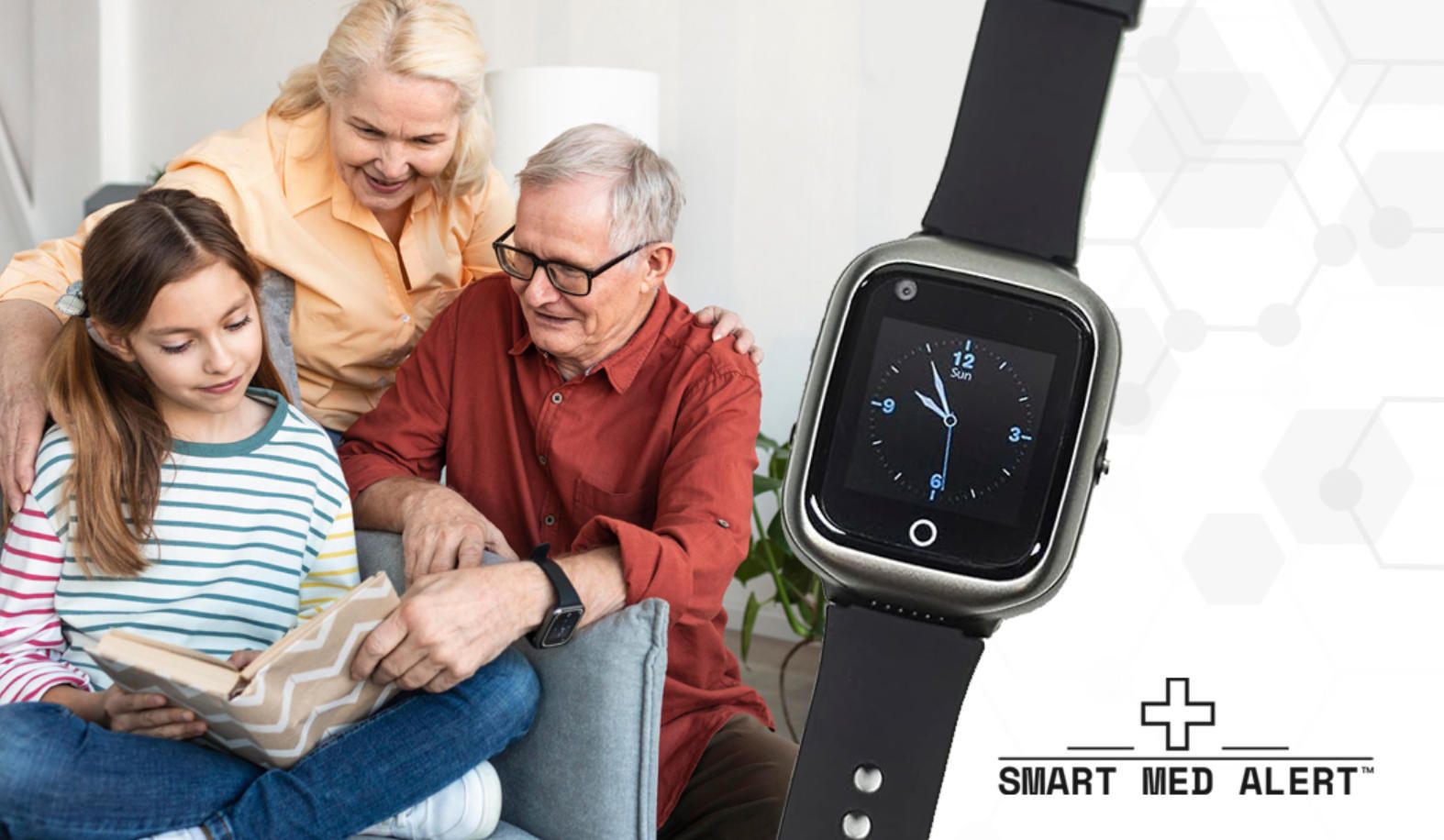
The most effective elderly care apps do not live in isolation on a smartphone screen. They serve as the central hub for an ecosystem of connected devices: smartwatches that monitor heart rhythm, bed sensors that track sleep quality, smart pillboxes that confirm medication was taken, motion sensors that detect unusual patterns of inactivity, and personal emergency response devices worn as pendants or wristbands.
According to Mordor Intelligence, the pet tech market — another IoT-heavy consumer segment — already demonstrates the viability of consumer-facing connected device ecosystems built around mobile apps. The elderly care technology space follows a similar architecture pattern but with higher stakes: the GPS tracker on a dog collar is a convenience, while the GPS tracker on a dementia patient's wearable is a safety necessity.
Integrating these devices requires expertise in multiple communication protocols (BLE, Wi-Fi, Zigbee, Z-Wave), familiarity with health device data standards like IEEE 11073, and the ability to process heterogeneous data streams into a unified health profile. This is not a generic mobile development challenge — it is the specific kind of IoT integration work that requires a development team with hands-on connected device experience.
The smart home integration angle is particularly promising. The number of smart homes worldwide is projected to exceed 500 million by 2026, according to Market Data Forecast. For elderly care app development, this means the app can integrate with existing smart home infrastructure — voice assistants for hands-free interaction, smart lighting that adjusts to prevent falls at night, connected door sensors that alert caregivers to unusual exit patterns, and thermostat controls that maintain safe temperatures for seniors with impaired thermoregulation.
AI and Predictive Health: From Reactive to Proactive Care
The most significant technological shift in elderly care app development is the transition from reactive monitoring to predictive intervention. Traditional health apps wait for something to go wrong and then alert someone. AI-powered elderly care apps analyze patterns in health data and flag risks before they become emergencies.
Machine learning models trained on longitudinal health data can identify subtle changes in activity patterns, sleep quality, vital signs, and medication adherence that precede hospitalizations. A decline in daily step count combined with increased sleep duration and a slight elevation in resting heart rate might, individually, mean nothing. Together, analyzed across weeks of baseline data for a specific patient, they might indicate the early stages of a urinary tract infection — one of the most common causes of hospitalization among seniors.
Natural language processing enables conversational interfaces that can conduct daily wellness check-ins, assess cognitive function through simple dialogue-based tests, and escalate concerns to human caregivers when responses suggest confusion or distress. For seniors who find touchscreen interfaces challenging, a voice-based AI assistant can serve as the primary interaction layer.
The integration of AI into elderly care apps does raise important ethical questions around data privacy, algorithmic bias (particularly regarding underrepresented populations in training datasets), and the appropriate boundary between automated intervention and human clinical judgment. These are not reasons to avoid AI — they are reasons to implement it thoughtfully, with transparent data practices and clear escalation protocols to human caregivers and clinicians.
Testing Elderly Care Apps: Why QA Cannot Be an Afterthought
Quality assurance in elderly care app development carries a weight that it simply does not carry in most consumer app categories. A bug in a social media feed is an annoyance. A bug in a medication reminder system could result in a missed dose of blood thinners. A false negative in fall detection could leave a person lying on the floor for hours.
QA testing for elderly care apps must cover several dimensions beyond standard functional testing. Usability testing with actual seniors — not proxy users — is essential. Real-world network condition testing simulates the spotty connectivity environments where these apps operate. Battery endurance testing verifies that the app can run background processes reliably over multi-day periods. BLE device compatibility testing ensures that the app works correctly with the specific wearables and sensors it supports, across firmware versions and device generations.
Regulatory compliance testing verifies adherence to HIPAA, GDPR, and any applicable medical device software regulations. Depending on the app's functionality, it may fall under FDA oversight as a Software as a Medical Device (SaMD), which imposes additional documentation and testing requirements.
Load testing and failover testing ensure that the backend infrastructure — which handles real-time health data streams from potentially thousands of concurrent users — degrades gracefully under stress rather than failing silently. When a server goes down, medication reminders still need to fire from the local device. When it comes back up, queued data needs to synchronize correctly without duplication or loss.
For organizations that already have an elderly care app in production, independent QA testing by an external team can identify issues that internal developers have become blind to. Fresh eyes, combined with structured testing methodologies and experience across multiple projects, often reveal accessibility gaps, edge case failures, and performance bottlenecks that the original team missed.
The Regulatory Landscape: Compliance as a Feature
Elderly care app development exists within a complex regulatory environment that varies by jurisdiction. In the United States, HIPAA governs the handling of protected health information. In the European Union, GDPR sets strict standards for personal data processing. In both regions, apps that provide clinical functionality may be classified as medical devices, triggering additional regulatory requirements.
Rather than viewing compliance as a burden, experienced development teams treat it as a feature — one that differentiates a serious healthcare application from a consumer wellness toy. Proper data encryption, audit logging, consent management, and data portability are not just regulatory requirements; they are trust signals for healthcare organizations evaluating potential technology partners.
The regulatory environment also creates a natural moat for well-built applications. A startup that invests in proper compliance architecture from day one gains a competitive advantage over those that try to retrofit it later — a process that is invariably more expensive and more disruptive than building it correctly from the start.
Building the Right App with the Right Partner
Elderly care app development is not a typical mobile development project. It demands a team that understands healthcare data flows, IoT device integration, accessibility-first design, AI-driven analytics, and the regulatory frameworks that govern it all. It requires developers who can write BLE communication protocols and designers who can empathize with a user whose fingers no longer move with precision.
A-Bots.com brings this combination of capabilities to every project. With more than 70 completed projects spanning IoT applications, mobile platforms, chatbot development, and complex web systems, the company has built the cross-domain expertise that elderly care app development demands. Client relationships averaging 1.5 to over 5 years reflect a development partner that stays engaged through the full lifecycle — from initial product definition and strategy through development, deployment, testing, and ongoing iteration.
Whether the goal is to build a custom elderly care application from scratch, integrate AI-powered health monitoring into an existing platform, develop a companion chatbot for daily senior wellness check-ins, or conduct comprehensive QA testing on a live elderly care product, A-Bots.com provides the technical depth and project management discipline these high-stakes applications require. The company's full-cycle approach — strategy, design, development, testing, and support — ensures that no critical phase is outsourced to a team unfamiliar with the project's context and requirements.
The aging population is not a future problem. It is a present reality reshaping healthcare systems, insurance markets, and family dynamics across the globe. The apps that serve this population will need to be more reliable than a social media platform, more secure than a banking app, and more intuitive than anything most users have encountered before. Building them well is both a technical challenge and a meaningful one.
Sources referenced in this article:
- World Health Organization — Ageing and Health
- United Nations — Global Issues: Ageing
- Pew Research Center — Demographics of Mobile Device Ownership
- Business Research Insights — Elderly Care Apps Market
- InsightAce Analytic — AI in Aging and Elderly Care Market
- Frontiers in Medicine — Addressing Barriers to Equitable Telehealth for Older Adults
✅ Hashtags
#ElderlyCareAppDevelopment
#SeniorCareApp
#ElderCareTechnology
#HealthcareAppDevelopment
#IoTElderCare
#SeniorWellnessApp
#MobileHealthSeniors
#AgingInPlaceTechnology
#TelehealthForSeniors
Other articles
App Controlled Space Heater - 7 Smart Models Reviewed Smart space heaters are no longer judged only by watts and oscillation - the mobile app is the real control surface. This review compares 7 app-controlled models by what actually matters in daily use: onboarding speed, scheduling logic, stability on 2.4 GHz Wi-Fi, safety notifications, and what the app cannot do (including the Dyson HP07 heating-control limitation in the US). You will also see how ecosystem choices (Smart Life - Tuya vs proprietary apps) change long-term reliability, plus a hard safety lesson from the Govee H7130 recall tied to wireless-control features. If your product needs this level of app rigor, A-Bots.com builds custom IoT mobile experiences.
OpenClaw Complete Guide 2026: Installation, Databases, Use Cases, and Troubleshooting OpenClaw became the fastest-growing open-source project in GitHub history with over 200,000 stars in early 2026. This expert-level guide walks you through every stage of deploying your own OpenClaw instance — from system requirements and installation on virtual machines, dedicated servers, and personal computers to connecting databases like SQLite, MySQL, and PostgreSQL with pgvector. The article covers the most common OpenClaw errors with tested solutions, explains the memory architecture and search backends, details practical use cases including DevOps automation, browser control, IoT integration, and custom mobile app development, and provides Docker deployment and security hardening best practices for production environments.
MemU Complete Guide 2026: Proactive AI Memory Framework for Always-On Agents MemU is an open-source memory framework by NevaMind-AI that gives AI agents persistent, evolving memory for 24/7 proactive operation. With over 12,000 GitHub stars and 92.09% accuracy on the Locomo benchmark, memU organizes knowledge into a three-layer hierarchical system and uses dual-mode retrieval to cut LLM token costs by approximately 10x. This expert guide covers installation with PostgreSQL and pgvector, the complete memory architecture including the upcoming Intention Layer, real-world use cases from financial monitoring and DevOps to AI companions and counter-drone defense systems, six practical lifehacks for optimizing performance, and comparisons with Mem0 and LangChain Memory. Includes integration patterns for OpenClaw, LangGraph, n8n, and custom mobile applications.
OpenClaw without installation in 2026: Best Hosted Platforms, Hotel and Restaurant CRM Use Cases OpenClaw has become the fastest-growing open-source AI agent framework of 2026, surpassing 163,000 GitHub stars and powering autonomous workflows across industries. This expert guide reviews the top hosted platforms — OpenClawCloud, Amazon Lightsail, ArkClaw by ByteDance, and DigitalOcean — that let businesses test OpenClaw without complex installation. The article explores practical applications of OpenClaw for hotel and restaurant CRM data analysis, from guest behavior prediction and revenue optimization to menu intelligence and churn prevention. It also explains why production-grade deployments demand custom development, and how A-Bots.com delivers tailored AI agent solutions with proven expertise across 70+ projects.
Drone Detection 2026: Expert Guide to Modern Methods for Middle East This comprehensive guide examines every major drone detection method available in 2026, with a specific focus on detecting fixed-wing attack drones threatening the Middle East and Persian Gulf countries. From radar and acoustic sensor networks to 5G cellular detection and aerostat surveillance walls, the article provides detailed technical specifications, coverage ranges, real-world performance data, and deployment considerations for Saudi Arabia, the UAE, Qatar, Bahrain, Kuwait, and other regional nations. Based on current conflict data and expert analysis from CSIS, Carnegie Endowment, and defense industry sources, this is an essential resource for anyone seeking to understand modern drone detection technology.
Top stories

Copyright © Alpha Systems LTD All rights reserved.
Made with ❤️ by A-BOTS