
Home
Services
About us
Blog
Contacts
Dyson WashG1 vs Tineco Floor One S7 Pro - Wet Floor Cleaning Performance, App Experience, and What a Better Companion App Could Look Like
1. Dyson WashG1 vs Tineco Floor One S7 Pro - two different product philosophies in one category
2. Cleaning hardware, usability, and maintenance - where the real ownership experience is decided
3. Dyson vs Tineco app experience - and why this category needs better custom software
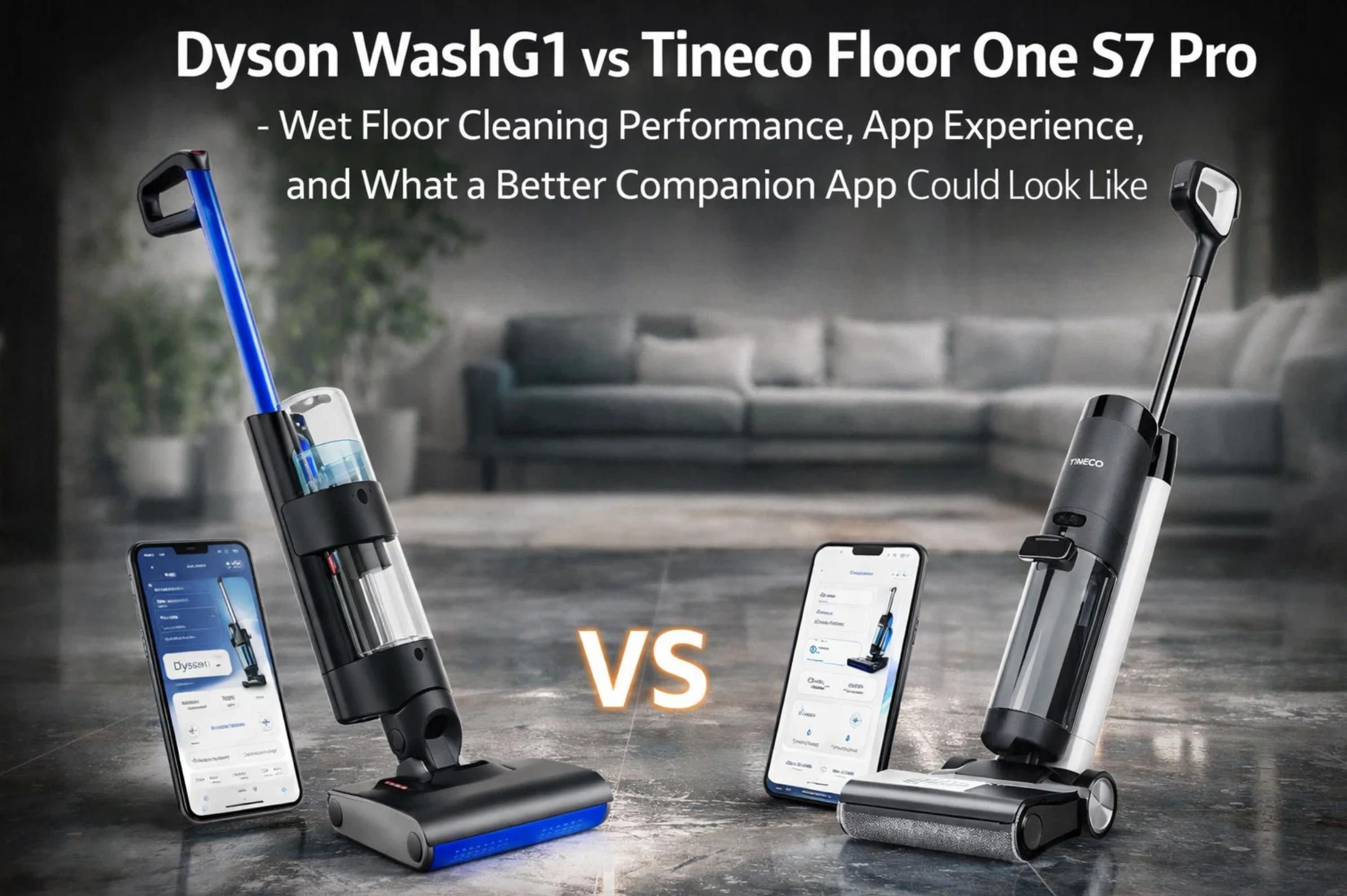
Dyson WashG1 vs Tineco Floor One S7 Pro - two different product philosophies in one category
At first glance, Dyson WashG1 and Tineco Floor One S7 Pro appear to occupy the same shelf in the same modern-cleaning conversation. Both are cordless hard-floor cleaning machines designed to wash sealed surfaces, remove wet messes, and make the old mop-and-bucket ritual feel a little prehistoric. But once you move past the headline features, the difference becomes much more interesting: these are not just two competing products - they are two different theories of what a premium wet floor cleaner should be. Dyson frames WashG1 as its first dedicated wet floor cleaner for hard floors, while Tineco positions the S7 Pro as a smart, effortless, sensor-led floor washer. That difference in language is not cosmetic; it reflects two distinct product philosophies. (Dyson)
Dyson’s philosophy is fundamentally engineering-first. The company presents WashG1 as a purpose-built machine that washes hard floors properly, removes wet and dry debris at the same time, and does so without requiring pre-vacuuming for typical hard-floor messes. The emphasis is on the machine’s physical cleaning architecture: two motorized counter-rotating microfiber rollers, a system that separates wet and dry debris, and a clean-water-led washing process rather than traditional suction-led vacuum logic. In other words, Dyson is not trying to sell WashG1 as a gadget with extra digital sparkle. It is trying to sell it as a re-engineered cleaning mechanism - a better tool, not a more talkative one. (Dyson)
That matters because Dyson has a long history of competing through visible mechanical differentiation. The company likes products that can be explained with diagrams, fluid paths, roller geometry, and “why this component exists” storytelling. WashG1 fits that pattern neatly. Even its core promise sounds like a hardware thesis: cleaner hydration, debris separation, and consistent floor washing from start to finish. This is a product worldview where performance begins in the machine’s internal design, and software - when present - plays a supporting role. The center of gravity is the appliance itself. (Dyson)
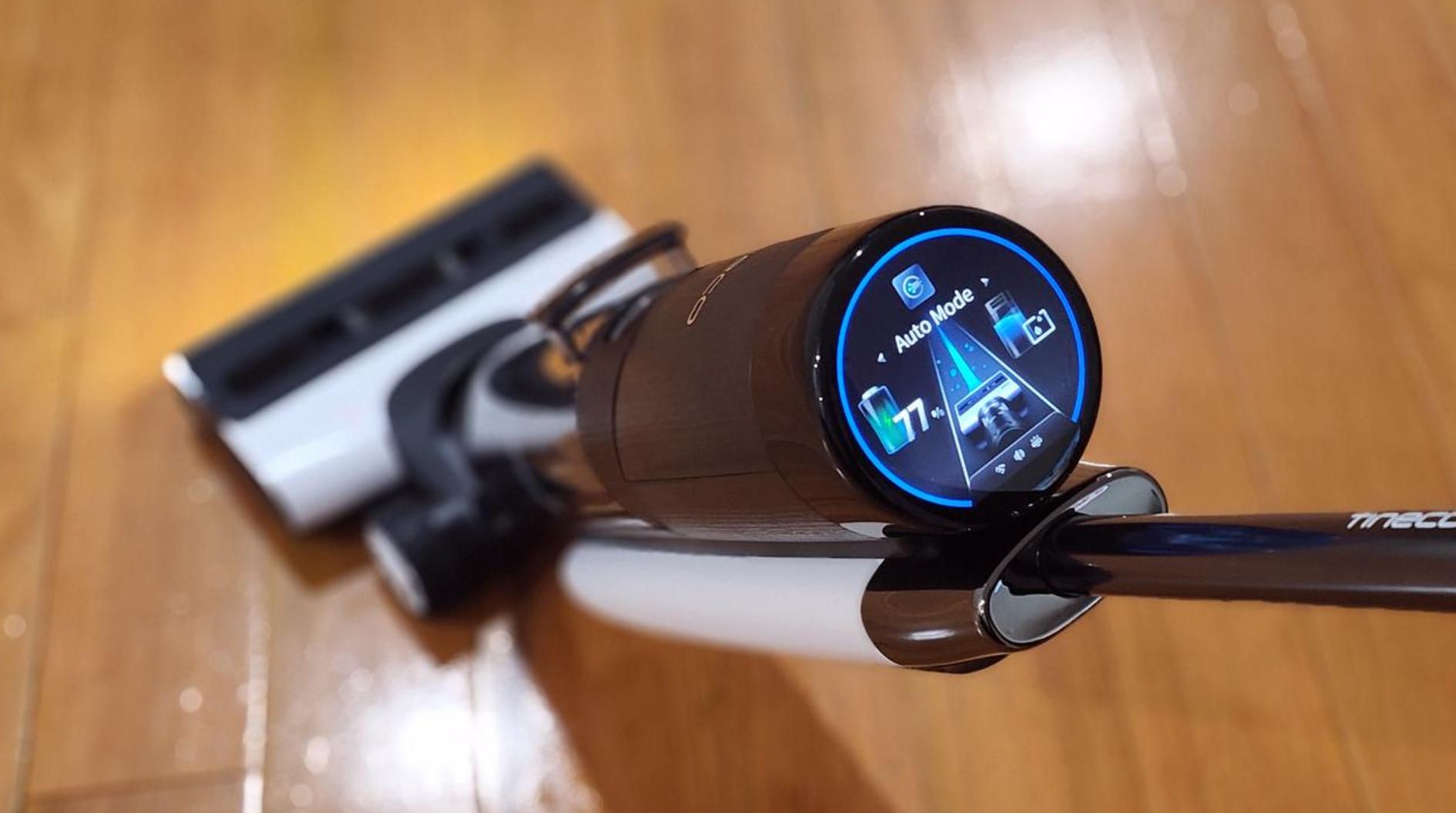
Tineco approaches the category from a different angle. With Floor One S7 Pro, the company leans heavily into the idea that floor care should feel adaptive, assisted, and smart in real time. On its official product materials, Tineco highlights iLoop Smart Sensor technology, MHCBS technology, self-cleaning, and up to 40 minutes of runtime. The wording is revealing: Dyson talks like an industrial design lab refining a cleaning mechanism; Tineco talks like a connected consumer-tech brand trying to reduce effort, guide behavior, and make cleaning feel more intelligent and less manual. (Tineco)
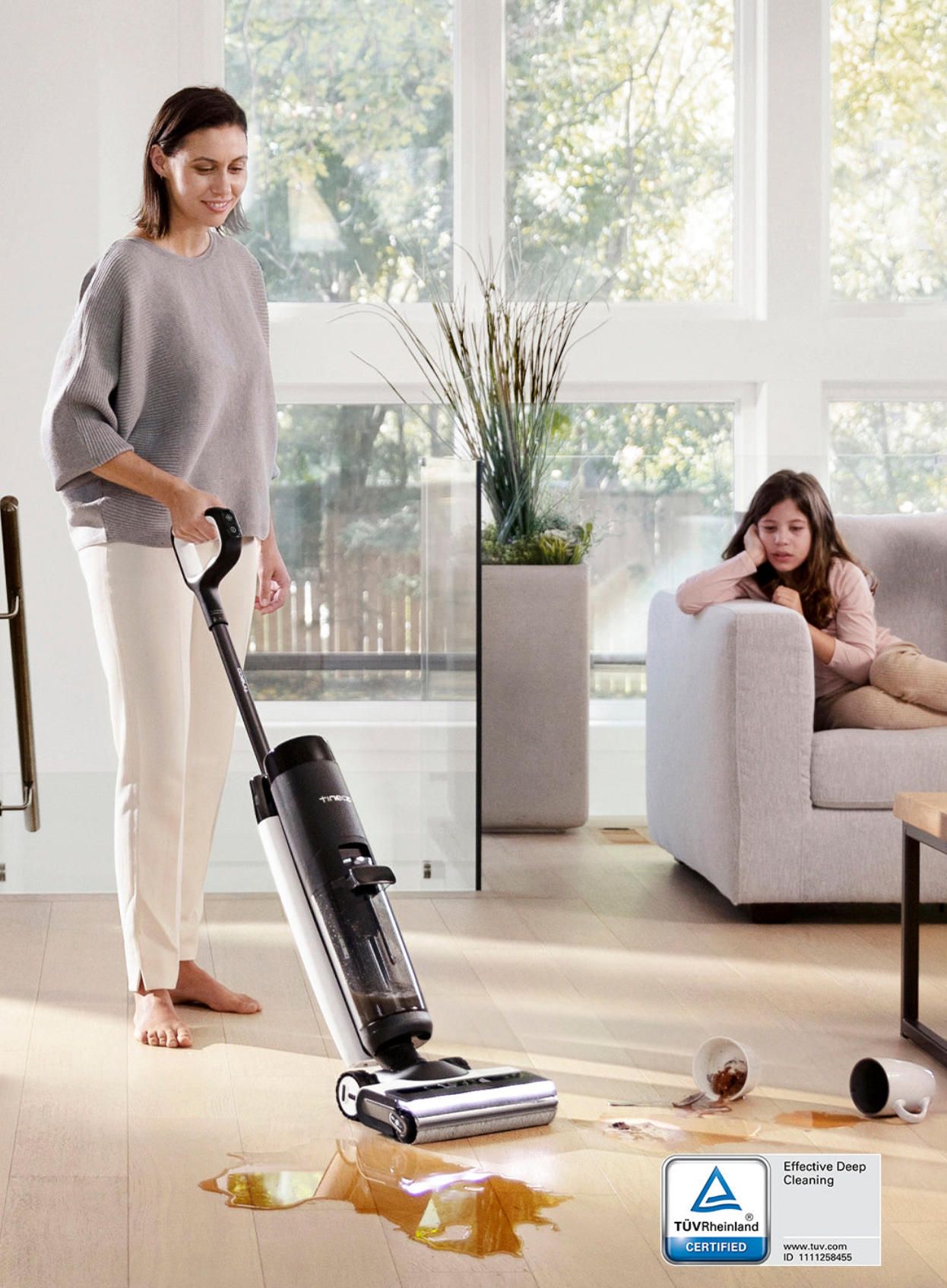
This makes the S7 Pro less of a pure appliance statement and more of a system experience. Tineco is selling not just floor washing, but a kind of assisted cleaning workflow. Sensor-driven adjustment, guided maintenance, app infrastructure, and a more explicitly digital support layer all point in the same direction. The product is not only supposed to clean well; it is supposed to behave like a modern smart device that interprets conditions, communicates status, and becomes easier to live with through software. That is a very different promise from Dyson’s “we engineered the washing mechanism better” approach. (Tineco)
Another way to frame the contrast is this: Dyson treats the category as a hardware problem that deserves a premium mechanical answer, while Tineco treats it as a hardware-plus-software problem that deserves a more interactive answer. Neither strategy is inherently wrong. In fact, both are rational responses to what consumers now expect from high-end home technology. Some buyers want a machine that feels robust, refined, and physically well thought out. Others want a machine that feels smart, responsive, and digitally enhanced. The overlap between those audiences is real, but not complete - and that is exactly why this comparison is commercially interesting. (Dyson)
The app layer quietly reinforces the philosophical split. Dyson officially supports WashG1 through the MyDyson app, but the brand’s own getting-started flow presents that app mainly as a place for registration, tailored support, expert guides, upgrade information, reminders, and service-related benefits. That is useful, but it is also revealing: Dyson’s software story here is largely post-purchase support and ecosystem management. It extends ownership, but it does not appear to redefine the core behavior of the machine. (Dyson)
Tineco’s software posture looks more central to the product experience. Its official support ecosystem for Floor One S7 Pro includes dedicated app download pages and app-connection troubleshooting, which signals that device connectivity is not an optional afterthought but part of the expected ownership journey. Even before we get into detailed app comparisons later in the article, that alone tells us something important about category direction: in Tineco’s worldview, a premium floor washer is not just a cleaner with a battery - it is a connected product. (Tineco)
This philosophical difference also shapes how each brand defines convenience. For Dyson, convenience comes from reducing the need for extra steps: no separate pre-vacuum for typical hard-floor messes, no complicated accessory logic, and a machine architecture designed to keep dirty and clean elements apart during the wash cycle. For Tineco, convenience comes from adaptive intelligence and guided ease: sensors, assisted handling, and a broader smart-device mindset. One brand tries to simplify life by perfecting the tool. The other tries to simplify life by making the tool more aware. (Dyson)
That is why comparing these models is more valuable than a simple feature checklist. This is not only a contest of runtime, tanks, edge cleaning, or self-cleaning cycles. It is a comparison between two product strategies that appliance brands across the smart-home market are still trying to balance: engineering depth versus digital depth, mechanical confidence versus connected intelligence, appliance logic versus companion-software logic. WashG1 and S7 Pro sit in the same category, but they point toward two different futures for it. (Dyson)
From a market perspective, that makes this category especially important. Wet floor cleaners are no longer judged only by whether they remove spills and footprints. As the segment matures, users increasingly evaluate the full ownership experience - setup, maintenance clarity, cleaning feedback, consumables management, and the feeling that the device is either intuitively self-explanatory or intelligently assisted. In that environment, Dyson and Tineco are effectively testing two different routes to premium positioning. Dyson says, “Trust the machine.” Tineco says, “Trust the system.” Both messages are powerful. Only one may feel more future-ready depending on how much software consumers come to expect from household hardware. (Dyson)
And that is what makes the rest of this comparison worth reading. The real question is not simply which cleaner is “better.” It is which philosophy creates the stronger real-world product experience: a highly engineered wet floor cleaner with a lighter digital layer, or a smart floor washer that more openly treats software as part of the value proposition. Once that question is on the table, Dyson WashG1 vs Tineco Floor One S7 Pro becomes more than a buying guide - it becomes a case study in where the category is headed next. (Dyson)
Cleaning hardware, usability, and maintenance - where the real ownership experience is decided
If Section 1 is about philosophy, Section 2 is where that philosophy has to survive contact with real life: kitchen splashes, hair around chair legs, sticky footprints, dried-on residue, awkward corners, and the low-grade annoyance of having to clean the cleaner after cleaning the floor. This is where Dyson WashG1 and Tineco Floor One S7 Pro stop being brand stories and start becoming household systems. And in this part of the comparison, what matters is not only raw cleaning ability, but how much friction each machine removes - or creates - over weeks and months of ownership.
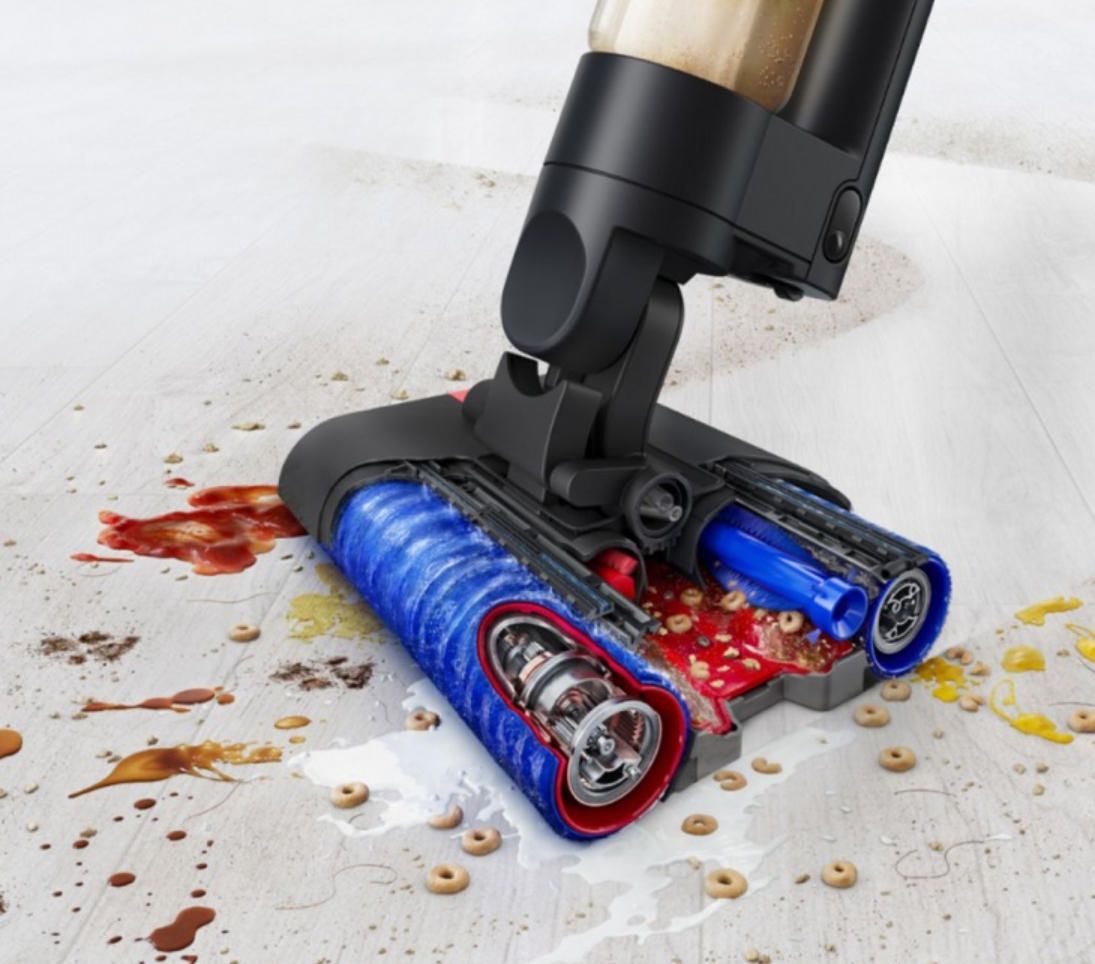
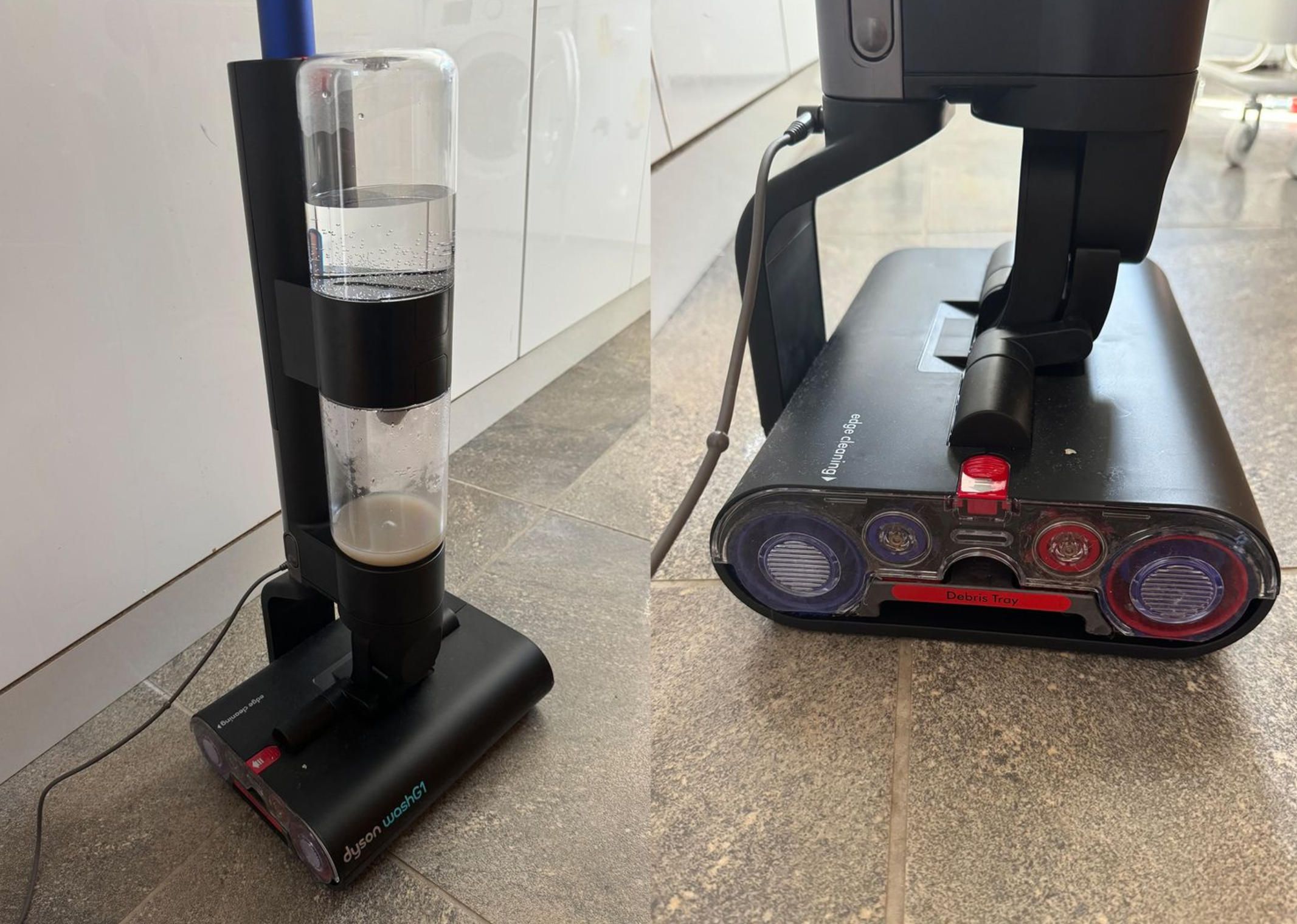
Dyson WashG1 enters this comparison with a very clear mechanical proposition. Dyson describes it as a dedicated wet floor cleaner for hard floors that can pick up both wet and dry debris without requiring pre-vacuuming for typical hard-floor messes. The product’s core architecture centers on counter-rotating microfiber rollers, separation of solid debris from waste liquid, three cleaning modes, and a full-system self-clean cycle that flushes the machine in about 140 seconds while it charges. Dyson also lists up to 35 minutes of runtime, 0.26-gallon clean water capacity, 0.21-gallon dirty water capacity, and roughly 3,000 square feet of coverage on a charge on its U.S. product materials. (Dyson)
Those details translate into a specific kind of user experience. WashG1 is built to reduce task fragmentation. Instead of asking the user to vacuum first and wash second, Dyson’s promise is that the machine can deal with fine dust, hair, small debris, splashes, and even heavier kitchen-style messes in one pass-oriented workflow. That sounds simple, but it is strategically important. A lot of cleaning products lose their premium aura the moment they introduce extra steps. Dyson is explicitly trying to position WashG1 as a machine that compresses the process and preserves a feeling of momentum. From an ownership perspective, that can matter as much as absolute cleaning performance. (Dyson)
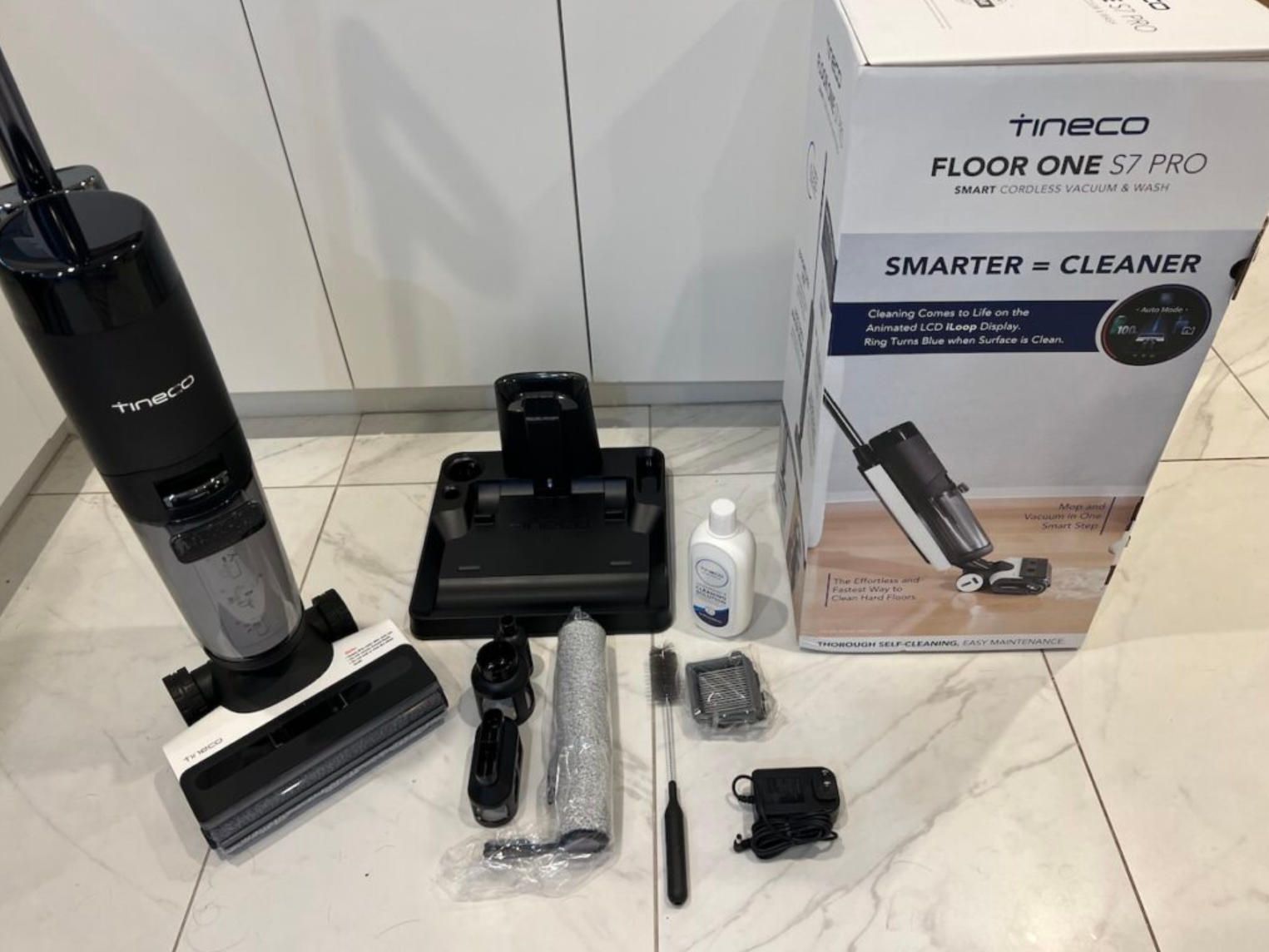
Tineco Floor One S7 Pro approaches usability from another direction. Its official specifications emphasize iLoop Smart Sensor technology, MHCBS fresh-water cleaning, dual-sided edge cleaning, LED screen guidance, and up to 40 minutes of runtime. Tineco lists a 0.85-liter clean water tank, a 0.72-liter dirty water tank, and positions the machine as a cordless floor washer designed to adapt while you clean rather than simply execute a fixed mechanical routine. In other words, Dyson tries to simplify the job by engineering the wash system itself; Tineco tries to simplify the job by making the machine more responsive and assistive during use. (Tineco)
That distinction becomes most visible in handling and day-to-day comfort. On paper, Dyson’s hardware story is about controlled washing, debris separation, and efficient coverage. Tineco’s is about adaptive assistance and guided operation. The result is that WashG1 looks optimized for people who want a premium appliance that feels purposeful and physically well resolved, while S7 Pro looks optimized for people who want the machine to behave more like a smart assistant with cleaning hardware attached. Neither framing is trivial. In premium home tech, the difference between “powerful tool” and “helpful system” often shapes satisfaction more than one extra minute of runtime ever will. Dyson’s listed weight is 10.8 lb, while Tineco lists S7 Pro at 11.46 lb, so the comparison is less about dramatic size difference and more about how each machine distributes effort through design philosophy. (Dyson)
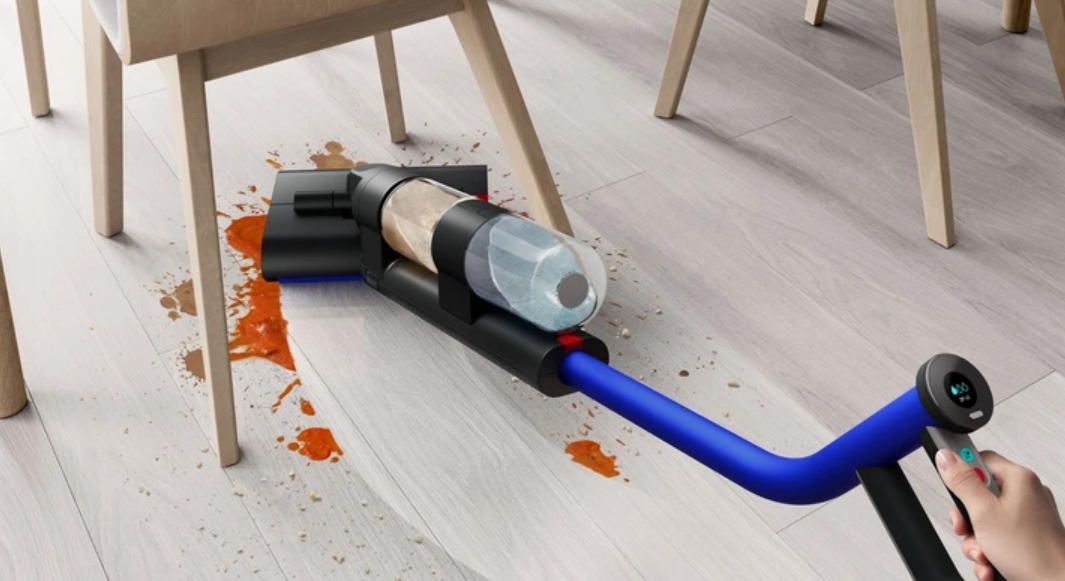
Maintenance is where many wet-cleaning products quietly win or lose the long game. Consumers rarely complain that a machine failed to clean one dramatic spill; they complain that ownership became mildly irritating. Dyson appears to understand that problem well. Its self-clean cycle, debris tray, no-touch disposal direction, and separated dirty-liquid path are all part of a maintenance story designed to feel hygienic and controlled. Dyson’s support and editorial materials repeatedly emphasize keeping clean and dirty water apart, minimizing manual cleanup after use, and making washable parts easy to remove and rinse. That is not just engineering theater. It is an attempt to reduce one of the most common psychological barriers in the category: the feeling that a floor washer is itself a messy object to live with. (Dyson)
Tineco answers the maintenance question through a different stack of ideas. MHCBS is positioned as a fresh-water cleaning approach, the machine includes a docking/self-clean workflow, and the broader product presentation leans into continuous cleanliness rather than only end-of-session cleanup. The official materials also foreground dual-sided edge cleaning and sensor-led operation, which suggests that Tineco is trying to improve the experience not only after the clean, but during it - fewer missed strips near edges, fewer moments where the user has to second-guess whether the machine is responding correctly to the mess under it. That creates a different kind of ownership value: less interpretive burden on the user. (Tineco)
The tank sizes tell an interesting story too. Dyson’s U.S. product page states 0.26 gallons clean and 0.21 gallons dirty, while Dyson’s owner guidance in metric terms presents that as approximately 1 liter clean and 0.8 liters dirty. Tineco lists 0.85 liters clean and 0.72 liters dirty for S7 Pro. In practical terms, both machines are positioned for meaningful whole-area hard-floor cleaning rather than quick spot wiping, but Dyson more aggressively emphasizes large-area coverage in its official messaging. Tineco, by contrast, places more visible emphasis on smart-cleaning behavior and runtime balance than on a single “coverage” headline. That difference again reflects product worldview: Dyson sells scale and system architecture; Tineco sells intelligent operation. (Dyson)
There is also a subtle but important difference in what each brand treats as the hardest cleaning problem. Dyson talks a lot about mixed messes - solids plus liquids, hair plus spills, dried food plus fine dust - and builds its message around separation technology and hydration control. Tineco talks more in the language of smart adaptation, edge completeness, and responsive cleaning. That suggests Dyson is especially focused on making the wet-cleaning act itself mechanically robust, while Tineco is focused on making the machine feel clever and easy while handling ordinary domestic variability. One is trying to make the wash mechanism more capable; the other is trying to make the operator’s experience more assisted. (Dyson)
From a buyer’s perspective, that creates two very different ownership fantasies. The Dyson fantasy is: “I want a premium hard-floor cleaner that feels engineered, hygienic, and highly competent with real mess.” The Tineco fantasy is: “I want a smart floor washer that senses, guides, adapts, and reduces decision fatigue.” In both cases, the appeal is convenience. But the path to convenience is different. Dyson tries to eliminate friction by building a better cleaning machine. Tineco tries to eliminate friction by building a cleaner that behaves more like a smart device. (Dyson)
That is why this section matters more than a generic spec roundup. Wet floor cleaners live or die not only on launch-day demos, but on whether the owner still likes using them on an ordinary Tuesday night after dinner. Runtime, tanks, self-cleaning cycles, edge behavior, and handling are not boring details - they are the architecture of repeat use. And when you compare Dyson WashG1 with Tineco Floor One S7 Pro through that lens, the category becomes much more interesting. You are no longer asking only which machine cleans the floor. You are asking which machine creates the lower-friction ownership loop. That is the real battleground in premium floor care now, and it is exactly where hardware design begins to overlap with software experience. (Dyson)
Dyson vs Tineco app experience - and why this category needs better custom software
If the hardware comparison tells us how these machines clean, the app comparison tells us how these brands think about ownership after the unboxing moment. And here the difference between Dyson WashG1 and Tineco Floor One S7 Pro becomes even more revealing. Both brands have a mobile app layer. Both operate in the U.S. market. Both understand that premium home appliances are no longer judged only by motors, tanks, rollers, and runtime. But they do not use software in the same way. Dyson treats the app primarily as an ownership-support layer, while Tineco treats the app much more like a built-in part of the product ecosystem. (Dyson)
With Dyson WashG1, the official MyDyson flow is clear and fairly restrained. Dyson’s support page for the model tells users to register the machine in the MyDyson app and explicitly frames the value around tailored support, reminders for roller changes, expert guides, machine upgrades, priority access, warranty benefits, exclusive offers, and 24/7 support. That is useful software. In fact, for many appliance owners it is genuinely valuable software. But it is not the same thing as a deeply interactive companion app that transforms how the cleaner behaves, adapts, or reports on cleaning performance day to day. The app extends ownership; it does not appear to redefine the cleaning experience itself. (Dyson)
That distinction matters because it reveals Dyson’s product hierarchy. The center of value remains the machine - its rollers, separation logic, hydration modes, and cleaning architecture. The app sits around that hardware as a service shell. It helps with onboarding, maintenance reminders, documentation, and brand ecosystem continuity. In strategic terms, Dyson is saying: the core innovation lives in the appliance, and software should make ownership smoother, not become the main event. That approach is coherent, premium, and very “Dyson” - but it also leaves visible headroom for deeper digital differentiation. (Dyson)
Tineco’s software posture feels more central. On the U.S. support page for Floor One S7 Pro, “App Downloads” is built directly into the product’s support framework, and the same model page groups app-related access with troubleshooting, manuals, product care, and FAQs. Tineco also maintains a dedicated U.S. app download page with Android and iOS install paths for the TINECO App. That may sound like a small operational detail, but it signals something bigger: for Tineco, app usage is not a side note after registration. It is an expected part of the product journey. (Tineco)
The rest of Tineco’s product messaging supports that interpretation. Floor One S7 Pro is presented as a smart floor washer with iLoop Smart Sensor, MHCBS fresh-water cleaning, and a more visibly digital, guided ownership style. Even where the official product page focuses on cleaning hardware, the overall framing is unmistakably system-oriented: sensors, status visibility, docking logic, and an app-backed support environment all point to a brand that sees software as part of the value proposition, not just the owner’s manual with better branding. (Tineco)
This is exactly where the comparison becomes interesting for a B2B audience - especially for appliance manufacturers, smart-home brands, and product teams planning the next generation of wet floor cleaners. The problem is not that Dyson lacks an app or that Tineco lacks hardware sophistication. The problem is that the category as a whole still leaves too much software value on the table. Today’s floor washer apps often solve the basics: registration, downloads, support, some troubleshooting, and brand account continuity. But a truly competitive companion app for this category could do much more than that. (Dyson)
A stronger app layer could turn a floor washer from a one-time appliance purchase into an evolving household system. Imagine a companion app that understands floor material, room type, home size, pet hair levels, and cleaning frequency patterns. Imagine maintenance intelligence that does more than issue a generic reminder - it could estimate roller wear based on actual use patterns, warn about suboptimal cleaning-fluid routines, surface self-clean compliance data, and predict when performance degradation is likely to become noticeable. Instead of merely telling the owner to clean the machine, the software could explain why, when, and with what impact on hygiene and results. That would be meaningful product differentiation, not just nice UX polish. This is an inference based on the current, more limited support-oriented app implementations shown by Dyson and Tineco’s official materials. (Dyson)
There is also a personalization gap in the category. Wet floor cleaners are used in very different contexts: family kitchens, pet-heavy households, open-plan apartments, rentals with delicate surfaces, homes with children, or light commercial environments. Yet most app experiences in this space do not appear to treat cleaning as a data-rich, habit-driven workflow. A better software layer could support room-based cleaning profiles, recurring routines, consumables dashboards, guided first-use flows, service history, multi-user household access, and context-aware recommendations. A device that already senses, washes, separates debris, self-cleans, and docks itself should not feel digitally shallow after the first week of ownership. This again is a product-strategy inference from the official feature sets and support structures currently exposed by both brands. (Dyson)
This is where A-Bots.com enters the conversation naturally. A-Bots.com is not competing with Dyson or Tineco as a hardware brand. The opportunity is different and, in many ways, more commercially urgent: building the custom software layer that helps appliance manufacturers move from “good hardware with an app” to “a differentiated connected product ecosystem.” In categories like wet floor cleaners, floor washers, and smart cleaning appliances, that software layer can become the reason a brand improves retention, lowers support friction, increases accessory revenue, strengthens product reviews, and creates more defensible customer loyalty over time. That is a real business lever, not just a UX upgrade. (Dyson)
For a manufacturer in this segment, the wishlist is already visible. A custom companion app could include intelligent onboarding, live maintenance status, cleaning history, filter and roller lifecycle prediction, push alerts that are actually useful, household-level user profiles, support diagnostics, warranty integration, spare-parts ordering, and optional smart-home integrations. It could also create a more coherent bridge between hardware telemetry and customer support, reducing the classic support burden of connected devices: users do not know what went wrong, service teams do not know what the device experienced, and both sides lose time. Dyson and Tineco show that the market already accepts the idea of an app in this category. The next step is to make that app strategically deeper. (Dyson)
That is why the app comparison in this article matters beyond these two products. Dyson WashG1 and Tineco Floor One S7 Pro are not just two floor cleaners with different mobile layers. They are evidence that wet floor care is moving into the same competitive territory already familiar in robot vacuums, smart kitchen devices, and connected climate products: hardware still matters, but software increasingly shapes perceived intelligence, ease of ownership, and long-term brand value. Dyson currently looks more hardware-led with a support-oriented app wrapper. Tineco looks more openly app-integrated and system-led. The winning future product may combine both - elite cleaning hardware with a genuinely excellent companion app. (Dyson)
And that is the real takeaway for brands watching this category. The next battleground in wet floor cleaners is not only suction, self-cleaning cycles, tank capacity, or edge performance. It is software architecture - onboarding, personalization, maintenance UX, service intelligence, and the companion app ecosystem around the machine. That is exactly the kind of digital product layer A-Bots.com can design and build for appliance brands that want their next floor washer to feel not just cleaner, but smarter, easier to own, and harder to replace. (Dyson)
FAQ
1. Does Dyson WashG1 have a mobile app?
Yes. Dyson WashG1 works with the MyDyson app, but its role appears to be more support-oriented than deeply operational. The app is mainly positioned around registration, guidance, maintenance reminders, and support access rather than advanced floor-washing control.
2. Does Tineco Floor One S7 Pro have a mobile app?
Yes. Tineco Floor One S7 Pro has a dedicated app layer that is more clearly integrated into the ownership experience. Based on the brand’s support structure, the app is part of setup, connectivity, and product support, making it feel more central to the product ecosystem.
3. Which device is more app-focused: Dyson WashG1 or Tineco Floor One S7 Pro?
Tineco Floor One S7 Pro appears more app-focused. Dyson offers a useful mobile layer, but Tineco presents connectivity and app interaction as a more native part of the product journey.
4. Is Dyson WashG1 a vacuum and mop in one?
Not in the traditional vacuum-mop sense. Dyson WashG1 is positioned as a dedicated wet floor cleaner for hard floors that can pick up wet and dry debris in one cleaning workflow, but its design philosophy is different from a classic dry vacuum.
5. What kind of floors are these machines designed for?
Both products are designed for sealed hard floors. They are built for surfaces such as tile, laminate, vinyl, and sealed wood, where wet floor cleaning is appropriate.
6. Which model seems more hardware-driven?
Dyson WashG1 is the more hardware-driven product. Its positioning is heavily built around cleaning architecture, counter-rotating rollers, debris separation, hydration control, and the mechanics of floor washing.
7. Which model seems more software-driven?
Tineco Floor One S7 Pro is the more software-driven product. Its smart sensor messaging, app presence, and connected-product framing make it feel closer to a modern smart appliance ecosystem.
8. Is the Dyson WashG1 vs Tineco S7 Pro comparison mainly about cleaning power?
No. Cleaning performance matters, but the more interesting comparison is broader: product philosophy, ownership experience, maintenance friction, app quality, and how much intelligence each brand builds around the appliance.
9. Why does the app matter for a wet floor cleaner?
Because premium appliances are no longer judged only by hardware. The app can improve onboarding, maintenance reminders, consumables tracking, troubleshooting, personalization, and the overall ownership experience after purchase.
10. What could a better app for floor washers include?
A stronger companion app could offer room-based cleaning profiles, maintenance analytics, roller and filter lifecycle tracking, cleaning history, push alerts, self-diagnostic tools, service integration, consumables ordering, and smarter onboarding flows.
11. What is the business opportunity for brands in this category?
The opportunity is to move beyond “good hardware with a basic app” and build a more differentiated connected product. In this category, software can improve customer retention, reduce support friction, increase accessory sales, and strengthen long-term brand loyalty.
12. How can A-Bots.com help manufacturers of wet floor cleaners?
A-Bots.com can design and build custom companion apps and connected software ecosystems for floor washers, wet floor cleaners, and other smart home appliances. That includes mobile apps, user onboarding flows, maintenance logic, device connectivity UX, analytics dashboards, and broader product software strategy.
✅ Hashtags
#DysonWashG1
#TinecoFloorOneS7Pro
#WetFloorCleaner
#FloorWasher
#SmartCleaningAppliances
#CompanionAppDevelopment
#ABotsCom
Other articles
Elderly Care App Development 2026: Features, Tech Stack & Market Trends The global population aged 60 and over will reach 1.4 billion by 2030, driving unprecedented demand for digital elderly care solutions. This article examines the technical and design requirements behind elderly care app development, covering core features such as medication management, fall detection, telehealth integration, and AI-driven predictive health monitoring. It explores the challenges of designing for senior users, building reliable offline-first architecture, integrating IoT wearables and smart home devices, and navigating HIPAA and GDPR compliance. With the elderly care apps market projected to reach $16.87 billion by 2033, the article outlines what development teams and healthcare organizations need to know to build apps that genuinely serve an aging population.
Custom Branded App for Veterinary Clinic | Build and Scale Your Practice The veterinary software market is projected to exceed $3 billion by 2030, and clinics without mobile tools risk losing clients to digitally equipped competitors. This guide explains how a custom branded app for veterinary clinic operations improves client retention, reduces no-show rates by up to 65%, and opens new revenue streams through telemedicine. It covers essential features including online appointment scheduling, automated reminders, electronic medical records, secure messaging, and in-app payments. The article compares custom development against generic off-the-shelf platforms, presents market data from Grand View Research, APPA, and Mordor Intelligence, and shows how A-Bots.com builds scalable solutions for practices ranging from a single clinic to a multi-location veterinary network.
App for Window Cleaning Company | Custom Software Guide for New York 2026 Managing a window cleaning company requires coordinating field crews, tracking safety certifications, handling client relationships, and processing payments across dozens of job sites every week. This guide explores every essential feature of a purpose-built app for window cleaning company operations, from CRM and smart scheduling to OSHA compliance tracking and AI-powered route optimization. Using real market data from Fortune Business Insights and MarketsandMarkets, alongside a detailed look at how established NYC operator Big Apple Window Cleaning manages complex high-rise operations, the article demonstrates why custom software built by A-Bots.com outperforms generic off-the-shelf field service tools.
App for Dentist: Custom Dental Practice Software Guide 2026 Dental practices in 2026 face mounting operational challenges — staffing shortages, rising no-show rates, insurance claim denials, and growing patient expectations for digital convenience. A purpose-built app for dentist addresses these pain points by automating appointment scheduling, sending multi-channel reminders, streamlining billing, and integrating AI-powered diagnostics. The global dental practice management software market is projected to exceed USD 6.7 billion by 2033, reflecting rapid adoption across solo clinics, multi-provider practices, and dental support organizations. This guide covers essential features, market trends, AI capabilities, and the advantages of choosing custom development with A-Bots.com over generic off-the-shelf platforms.
How to Build a WhatsApp Clone App in 2026 and WhatsApp Clone review The instant messaging market is projected to exceed USD 70 billion by 2034, and demand for custom communication platforms continues to accelerate. This guide covers everything businesses need to know about building a WhatsApp clone app: from core features like end-to-end encryption, real-time messaging, and voice/video calling to the full technology stack powering modern messenger app development. The article reviews six emerging messenger platforms — Bitchat, Session, SimpleX Chat, Element, Threema, and Olvid — analyzing their architecture, privacy models, and market traction. It also details how A-Bots.com, a full-cycle development company with 70+ projects, handles messenger development from strategy through launch, scaling, and QA testing. Cost estimates, common mistakes, monetization strategies, and industry-specific use cases round out the guide.
Top stories

Copyright © Alpha Systems LTD All rights reserved.
Made with ❤️ by A-BOTS