
Home
Services
About us
Blog
Contacts
Custom Branded App for Veterinary Clinic: The Complete Guide to Building Your Practice's Digital Future
When pet owners search for a veterinary clinic today, they expect more than a phone number and a parking lot. They expect digital convenience — online booking, instant messaging, medical records on their phone, and push notifications for vaccination reminders. That is exactly the kind of solution that A-Bots.com builds from scratch for businesses across healthcare, IoT, and service industries. With more than 70 completed projects and client relationships stretching from 1.5 to over 5 years, A-Bots.com specializes in full-cycle mobile app development using React Native, Flutter, Node.js, and Python/Django. Whether a veterinary practice needs a custom branded app for veterinary clinic operations, a telemedicine module, or a complete multi-location management platform, A-Bots.com delivers purpose-built solutions tailored to the way each clinic actually works.
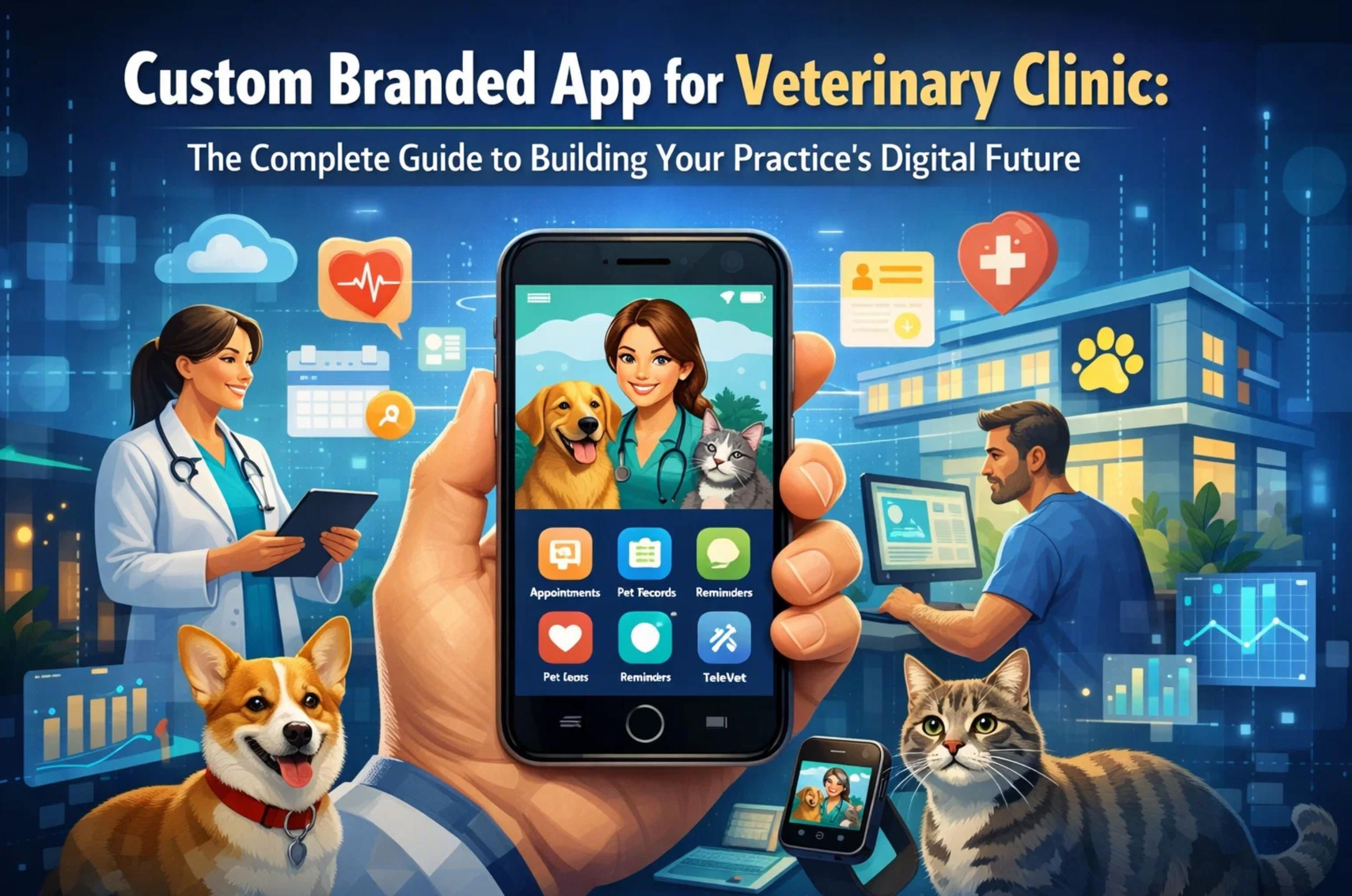
A-Bots.com is not a template shop. The team takes each project from strategy and product definition through development and launch, building apps that carry the clinic's own brand identity, match its internal workflows, and scale with its growth. For practices that already use third-party software, A-Bots.com also offers comprehensive QA testing services — helping clinics identify bugs, performance issues, and security vulnerabilities in their existing applications before those problems reach pet owners.
The veterinary industry is going through a digital transformation that is impossible to ignore, and a custom branded app for veterinary clinic management has become one of the strongest tools available. This guide explains why it matters, what features to prioritize, how much it can realistically improve your bottom line, and why the difference between a generic off-the-shelf solution and a purpose-built application is often the difference between a clinic that grows and one that gets left behind.
Why the Veterinary Industry Is Betting on Mobile Technology
The global veterinary software market is expanding at a pace that reflects just how urgently the industry needs better digital tools. According to Grand View Research, the global veterinary software market was valued at approximately $1.44 billion in 2024 and is projected to reach $3.01 billion by 2030, growing at a compound annual growth rate of 13.21%. Mordor Intelligence estimates the broader veterinary software market at $1.85 billion in 2025, forecasting it will reach $2.48 billion by 2030. Coherent Market Insights reports that practice management software alone accounts for 55.3% of the total veterinary software market, and cloud-based delivery models hold a dominant 62.4% market share in 2025.
These numbers are not abstract. They reflect a reality where clinics that lack digital infrastructure are losing clients to those that have it. For any practice evaluating its technology roadmap, a custom branded app for veterinary clinic engagement is no longer a future consideration — it is a present-day necessity.
The demand side tells an equally compelling story. According to APPA's 2025 State of the Industry Report, 94 million U.S. households now own at least one pet — up from 82 million in 2023. Total U.S. pet industry expenditures reached $152 billion in 2024, with projections of $157 billion for 2025. Dog ownership has grown to 68 million households, cat ownership to 49 million, and Gen Z is driving a 43.5% increase in pet-owning households year over year.
More pet owners means more veterinary visits, more medication refills, more vaccination schedules to track, and more administrative complexity. A custom branded app for veterinary clinic practice management is not a luxury — it is operational infrastructure.
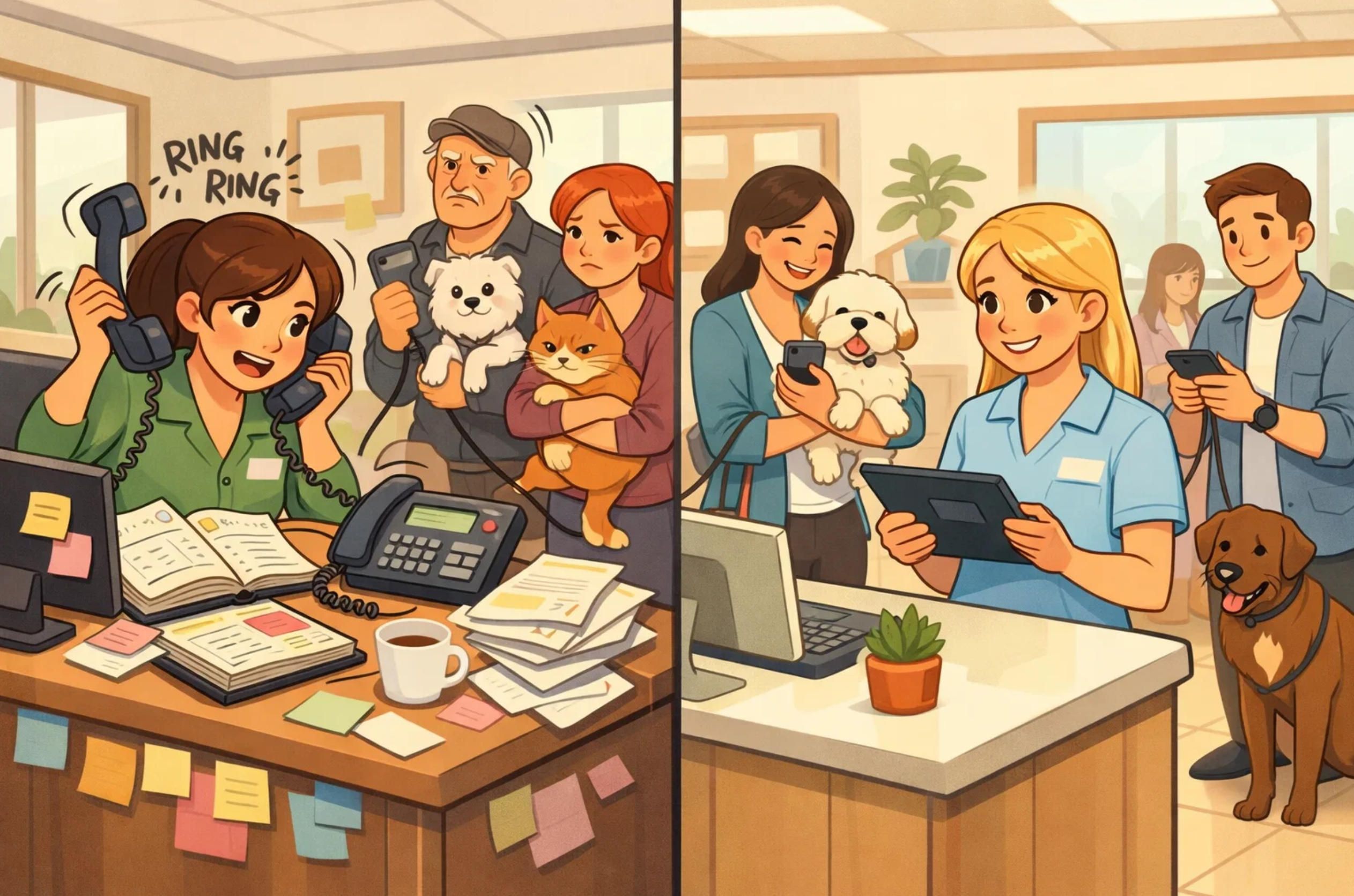
"My dog's vet sends me appointment reminders by mail. Actual mail. My dog gets more physical letters than I do." — Anonymous pet owner on Reddit
What Exactly Is a Custom Branded App for Veterinary Clinic?
A custom branded app for veterinary clinic operations is a mobile application designed and built specifically for one practice or clinic network. Unlike off-the-shelf platforms such as PetDesk or Vetstoria that serve thousands of clinics with the same interface and feature set, a custom app carries your clinic's branding, follows your specific workflows, and includes only the features your team actually needs — along with any specialized functionality that generic platforms simply cannot offer.
Think of the difference this way: a generic scheduling app is a rental apartment. A custom branded app for veterinary clinic use is a house you built to your own specifications. Both provide shelter, but only one has the exact floor plan your family needs.
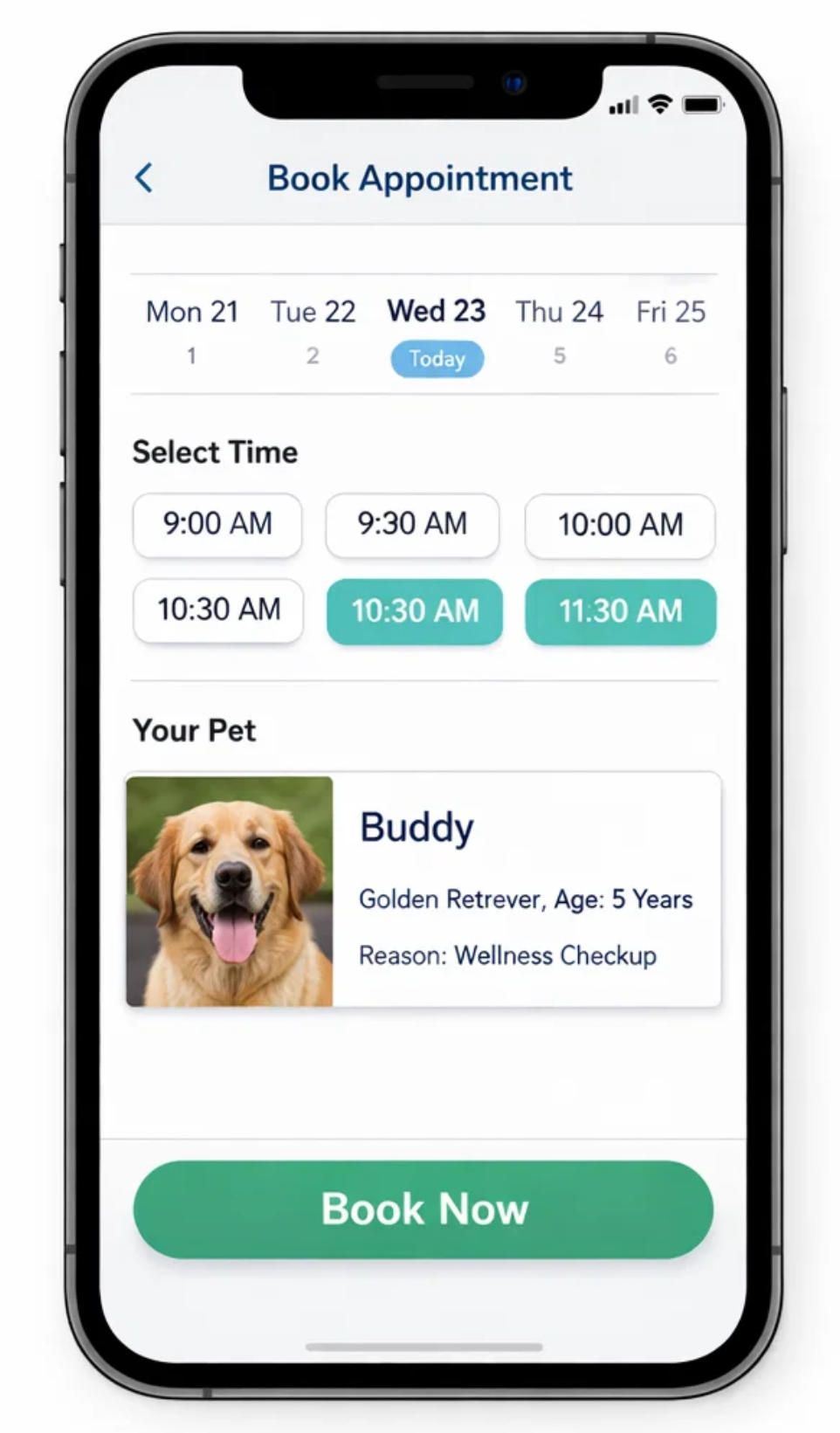
A well-designed custom branded app for veterinary clinic practice typically includes a client-facing mobile interface for pet owners and an administrative dashboard for the clinic team. The client side handles appointment booking, medical record access, push notification reminders, prescription refill requests, and secure messaging. The clinic side handles schedule management, patient records, billing integration, inventory tracking, analytics, and staff coordination.
The critical distinction is ownership. When you invest in a custom branded app for veterinary clinic operations, you own the product. You control the data. You decide when and how features are updated. And your clinic's brand — not a software vendor's logo — is what pet owners see every time they open their phone.

Features That Define a Great Veterinary Clinic App
Building a custom branded app for veterinary clinic needs requires careful feature selection. Overloading the app with unnecessary tools creates confusion; leaving out essential functions creates frustration. Here is what the most effective veterinary apps include.
Online Appointment Scheduling is the single most impactful feature. Research from PetDesk and Vetstoria consistently shows that 42% of online veterinary appointments are booked outside regular office hours. A custom branded app for veterinary clinic scheduling gives pet owners 24/7 access to book, reschedule, or cancel appointments without calling the front desk. For the clinic, this reduces phone volume and frees staff to focus on patients in the building.
Automated Reminders and Notifications directly address one of the biggest operational problems in veterinary practice — no-shows. Documented case studies from PetDesk show that automated reminders can reduce no-show rates from 23% to 8%. When these reminders are built into a custom branded app for veterinary clinic communication, push notifications for upcoming vaccinations, annual checkups, and medication refills keep pet owners engaged between visits and ensure animals receive consistent care.
Electronic Medical Records Access allows pet owners to view their pet's health history, lab results, and treatment notes directly in the app. This is one of the most requested features in any custom branded app for veterinary clinic use, as it reduces calls to the front desk asking for records and gives owners the information they need to make informed decisions about their pet's care.
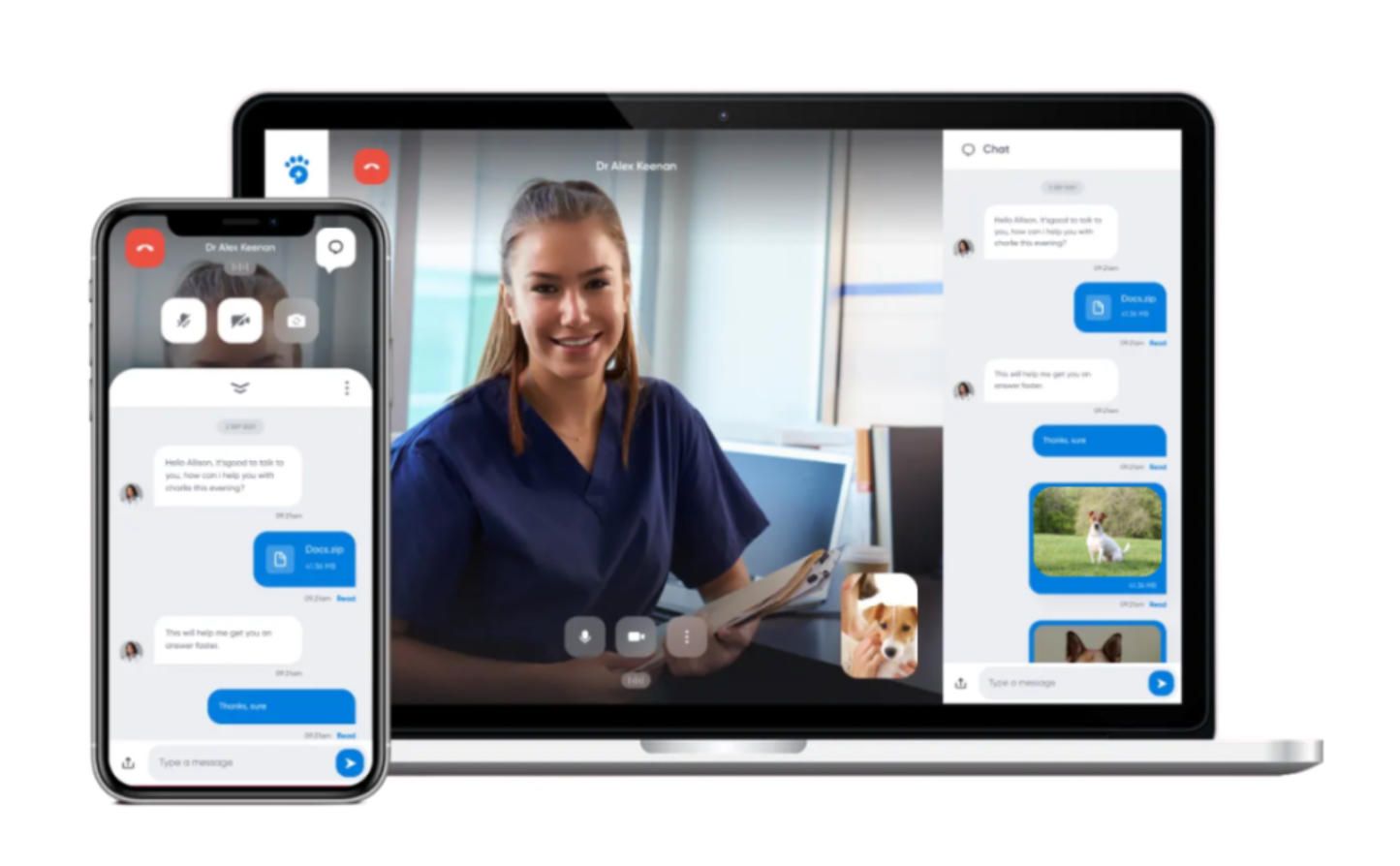
Secure Two-Way Messaging replaces the endless phone tag that frustrates both clinic staff and pet owners. Clients can send photos of a wound healing after surgery, ask quick questions about medication dosage, or report symptoms — all within the app. The clinic team can respond when appropriate, triaging messages by urgency.
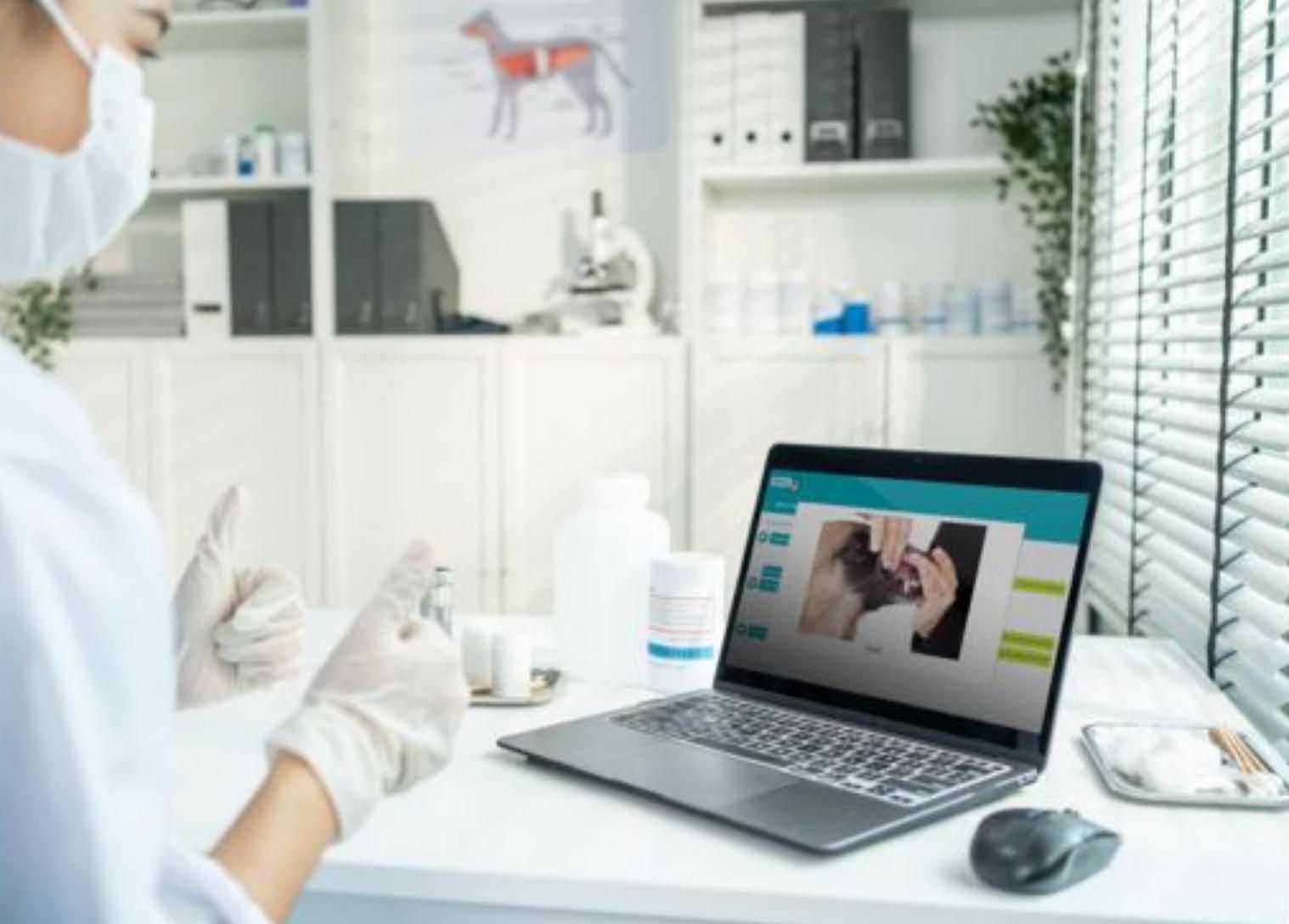
Telemedicine and Video Consultation capabilities are becoming standard expectations. According to Future Market Insights, the veterinary telemedicine market is projected to grow from $170.8 million in 2025 to $569.6 million by 2035 at a CAGR of 12.8%. A custom branded app for veterinary clinic telemedicine allows practices to offer follow-up consultations, behavioral assessments, and triage sessions without requiring the pet owner to drive to the clinic.
In-App Payments and Billing streamlines the checkout process and enables clinics to collect deposits at booking, reducing financial losses from cancellations. Integrated invoicing and payment history give pet owners a clear view of their expenses while keeping the clinic's accounting organized.
Loyalty Programs and Promotional Tools help clinics build long-term client relationships. A custom branded app for veterinary clinic marketing can include reward points for regular visits, referral bonuses for bringing in new clients, and targeted promotional offers based on pet type or visit history.
Multi-Pet Profiles allow families with more than one animal to manage all their pets from a single account — viewing separate medical histories, separate appointment schedules, and separate medication logs without confusion. Given that APPA data shows multi-pet households are increasing (households with three or more cats alone grew by 36% since 2018), this feature is becoming essential in any custom branded app for veterinary clinic serving modern pet families.
Off-the-Shelf Software vs. a Custom Branded App for Veterinary Clinic
Generic veterinary software platforms do many things competently. Products like PetDesk, ezyVet, Digitail, and Vetstoria offer scheduling, communication, and record management tools that work for a wide range of practices. They are a sensible starting point for clinics that want to digitize basic operations quickly and affordably.
But there are real limitations. The constraints of generic platforms become especially apparent when compared to what a custom branded app for veterinary clinic workflow can deliver.
Off-the-shelf platforms are designed for the broadest possible audience. That means every clinic using the same platform gets the same interface, the same feature set, and the same user experience. Your clinic's app looks and functions exactly like your competitor's app across town. There is no differentiation, no competitive advantage in the digital experience you offer — which is precisely why a custom branded app for veterinary clinic branding becomes a strategic asset.
A custom branded app for veterinary clinic operations solves this problem by giving your practice a unique digital presence. Your logo, your color palette, your tone of voice, your specific services — all reflected in an app that feels like an extension of your clinic rather than a third-party tool.
More importantly, a custom app can include features that off-the-shelf products simply do not support. Perhaps your clinic specializes in exotic animal care and needs species-specific intake forms. Perhaps you operate a mobile veterinary service and need GPS-based dispatching. Perhaps you manage boarding facilities alongside clinical practice and need integrated kennel management. A custom branded app for veterinary clinic operations handles all of this because it is built around your practice, not around a one-size-fits-all template.
"I asked my vet if they have an app. They said, 'We have a Facebook page.' That is like asking for a stethoscope and getting a paper towel roll." — @PetParentProblems
From One Clinic to a Network: Scaling with Custom Technology
One of the most significant advantages of investing in a custom branded app for veterinary clinic management is scalability. A single-location practice has different needs than a five-clinic network, and a regional chain of twenty locations has different needs again. Generic platforms often struggle with multi-location management — shared scheduling across branches, centralized patient records, location-specific promotional campaigns, and consolidated analytics.
A custom branded app for veterinary clinic networks can be architected from the ground up to support multi-location operations. Each branch can maintain its own schedule and staff profiles while the central management team accesses unified dashboards showing performance metrics, client engagement data, and financial reporting across all locations.
This is exactly the kind of project where A-Bots.com excels. The company's experience with complex, multi-component mobile applications — from IoT-connected device management to CRM systems for car dealerships — translates directly into building scalable veterinary platforms. Whether a veterinary entrepreneur is launching their first clinic and wants a custom branded app for veterinary clinic management from day one, or a growing network needs to replace fragmented legacy systems with a unified platform, A-Bots.com has the development stack and project management experience to deliver.
The technology stack matters here. When building a custom branded app for veterinary clinic at scale, A-Bots.com uses cross-platform mobile development with React Native, ensuring that both iOS and Android users get a native-quality experience from a single codebase. Backend infrastructure built on Node.js or Python/Django provides the performance and flexibility needed to handle growing user bases, complex data relationships, and real-time synchronization across multiple clinic locations.
The Business Case: Return on Investment
Investing in a custom branded app for veterinary clinic operations is a business decision that needs to show returns. The data supports it strongly.
PetDesk's documented case studies show that one veterinary practice increased annual revenue by over $225,000 within the first year of implementing a mobile app platform. That revenue came from reduced no-shows, increased appointment volume through 24/7 online booking, and improved client retention through better communication.
Research published by PetDesk's 2025 Pet Parent Research Report found that 31% of pet owners say they are likely to switch clinics if their digital expectations are not met, and that number rises to 40% among younger pet owners. Meanwhile, 57% of pet owners report difficulty booking appointments with their veterinary clinic. A custom branded app for veterinary clinic appointment management directly addresses both of these pain points, turning potential client losses into retained revenue.
Staff efficiency also improves dramatically. Practices that adopt a custom branded app for veterinary clinic operations have reported saving more than five hours per day for their staff — time previously spent answering phone calls, manually sending reminders, and looking up records for clients. Five hours per day, across a five-day work week, equals 25 hours of reclaimed staff productivity. Multiply that by average staff hourly costs, and the savings become substantial.
The veterinary telemedicine angle adds another revenue stream. Clinics can charge for virtual consultations that previously would have been free phone calls or would not have happened at all. A custom branded app for veterinary clinic telemedicine captures this revenue within a branded ecosystem rather than redirecting clients to third-party telehealth platforms.
Client Experience: Meeting Modern Expectations
Today's pet owners — particularly Millennials and Gen Z, who now represent the largest and fastest-growing segments of pet ownership — expect a digital-first experience from every service provider, including their veterinarian. According to APPA's 2025 report, Gen Z pet-owning households grew by 43.5% in a single year, and this generation discovers services primarily through social media and mobile platforms.
A custom branded app for veterinary clinic client engagement meets these expectations head-on. It provides the kind of convenience that younger pet owners consider non-negotiable: booking an appointment in thirty seconds, receiving a push notification when lab results are ready, messaging the vet team with a photo of a suspicious rash, and paying the bill without standing in line.
For older demographics who may be less tech-savvy, a well-designed custom branded app for veterinary clinic interaction still offers value through simplicity. Large buttons, clear navigation, and thoughtful onboarding tutorials ensure that every pet owner — regardless of their comfort with technology — can use the app effectively.
Security, Compliance, and Data Ownership
Veterinary clinics handle sensitive information — client contact details, payment information, pet medical histories, and in some jurisdictions, controlled substance prescription records. A custom branded app for veterinary clinic data management must be built with security as a foundational priority, not an afterthought.
Custom development allows clinics to implement encryption standards, secure authentication methods, and data storage practices that meet their specific regulatory requirements. Unlike off-the-shelf solutions where data lives on the vendor's servers under the vendor's terms, a custom branded app for veterinary clinic infrastructure gives the clinic full ownership and control over its data.
This is also where A-Bots.com's QA testing services become valuable for clinics that already use existing software. Comprehensive security audits, penetration testing, and performance load testing can reveal vulnerabilities that put client data at risk. A-Bots.com can evaluate any existing veterinary application and deliver a detailed assessment of its security posture, helping clinics make informed decisions about whether to patch, migrate, or replace their current systems.
How A-Bots.com Builds Your Custom Branded App for Veterinary Clinic
A-Bots.com follows a structured, full-cycle development process that takes a custom branded app for veterinary clinic from concept to launch and beyond. The process begins with Strategy and Product Definition, where the A-Bots.com team works with the clinic to define goals, map out user journeys, and build a detailed product roadmap.
From there, the project moves into design and development. A-Bots.com develops mobile applications for both iOS and Android using React Native or Flutter, ensuring broad device compatibility without duplicating development costs. Backend systems are built on Node.js or Python/Django depending on the project's requirements, with cloud infrastructure that supports real-time data synchronization, scalable storage, and third-party integrations.
The company's experience across industries gives it a unique advantage in building any custom branded app for veterinary clinic of any complexity. Building IoT applications for connected devices like robot vacuum cleaners taught the team how to handle real-time data streams. Developing CRM systems for automotive dealerships demonstrated expertise in complex multi-user workflows. Creating chatbot solutions sharpened skills in natural language processing and automated communication — directly applicable to veterinary client messaging features.
Throughout the process, A-Bots.com maintains close communication with clients. Most A-Bots.com client relationships last 1.5 years or more — and some exceed 5 years — because the company treats each project as a long-term partnership rather than a one-time transaction. Post-launch support, iterative improvements, and feature expansions are part of the standard engagement model.
For veterinary clinics at any scale — from a single practitioner wanting their first custom branded app for veterinary clinic management to a multi-state network requiring enterprise-level infrastructure — A-Bots.com provides the technical depth and project management discipline to build exactly what is needed. You can explore the company's full range of services and completed projects at a-bots.com.
The Smartest Investment Your Clinic Can Make
The veterinary industry is entering a period where digital tools are not optional. Pet ownership is at record levels. Client expectations are shaped by the same apps they use for banking, food delivery, and healthcare. Clinics that meet those expectations with a polished, functional, custom branded app for veterinary clinic operations will attract more clients, retain them longer, and run more efficiently. Every practice that delays this decision risks falling behind competitors who have already made the investment in a custom branded app for veterinary clinic growth.
Generic platforms offer a starting point. But for practices that want to stand out, scale confidently, and own their digital future, a custom branded app for veterinary clinic management is the answer. And for building that solution — from a single clinic's first app to an enterprise platform managing dozens of locations — A-Bots.com has the experience, the technology stack, and the long-term commitment to make it happen. Reach out at a-bots.com to start the conversation.
✅ Hashtags
#VeterinaryApp
#CustomBrandedApp
#VetClinicSoftware
#PetCareApp
#VeterinaryTelemedicine
#MobileAppDevelopment
Other articles
Custom Pet Care App Development This article maps how a mobile app development company like A-Bots.com approaches custom pet care app development as a platform, not a pile of features. We start with a Pet Identity Graph and Consent Ledger, layer multimodal Behavior AI from litter, feeders, wearables, and cameras, and then ship adaptive routines that keep working offline. Finally, we wire in the unglamorous but essential interoperability—FHIR bundles for clinics, claim-ready artifacts for insurers, AAHA-aligned microchip workflows, and shelter handoffs—so caregivers aren’t forced to be couriers. If you need custom pet care app development that’s trustworthy, explainable, and resilient in real life, this is the blueprint.
OpenClaw Complete Guide 2026: Installation, Databases, Use Cases, and Troubleshooting OpenClaw became the fastest-growing open-source project in GitHub history with over 200,000 stars in early 2026. This expert-level guide walks you through every stage of deploying your own OpenClaw instance — from system requirements and installation on virtual machines, dedicated servers, and personal computers to connecting databases like SQLite, MySQL, and PostgreSQL with pgvector. The article covers the most common OpenClaw errors with tested solutions, explains the memory architecture and search backends, details practical use cases including DevOps automation, browser control, IoT integration, and custom mobile app development, and provides Docker deployment and security hardening best practices for production environments.
MemU Complete Guide 2026: Proactive AI Memory Framework for Always-On Agents MemU is an open-source memory framework by NevaMind-AI that gives AI agents persistent, evolving memory for 24/7 proactive operation. With over 12,000 GitHub stars and 92.09% accuracy on the Locomo benchmark, memU organizes knowledge into a three-layer hierarchical system and uses dual-mode retrieval to cut LLM token costs by approximately 10x. This expert guide covers installation with PostgreSQL and pgvector, the complete memory architecture including the upcoming Intention Layer, real-world use cases from financial monitoring and DevOps to AI companions and counter-drone defense systems, six practical lifehacks for optimizing performance, and comparisons with Mem0 and LangChain Memory. Includes integration patterns for OpenClaw, LangGraph, n8n, and custom mobile applications.
OpenClaw without installation in 2026: Best Hosted Platforms, Hotel and Restaurant CRM Use Cases OpenClaw has become the fastest-growing open-source AI agent framework of 2026, surpassing 163,000 GitHub stars and powering autonomous workflows across industries. This expert guide reviews the top hosted platforms — OpenClawCloud, Amazon Lightsail, ArkClaw by ByteDance, and DigitalOcean — that let businesses test OpenClaw without complex installation. The article explores practical applications of OpenClaw for hotel and restaurant CRM data analysis, from guest behavior prediction and revenue optimization to menu intelligence and churn prevention. It also explains why production-grade deployments demand custom development, and how A-Bots.com delivers tailored AI agent solutions with proven expertise across 70+ projects.
Drone Detection 2026: Expert Guide to Modern Methods for Middle East This comprehensive guide examines every major drone detection method available in 2026, with a specific focus on detecting fixed-wing attack drones threatening the Middle East and Persian Gulf countries. From radar and acoustic sensor networks to 5G cellular detection and aerostat surveillance walls, the article provides detailed technical specifications, coverage ranges, real-world performance data, and deployment considerations for Saudi Arabia, the UAE, Qatar, Bahrain, Kuwait, and other regional nations. Based on current conflict data and expert analysis from CSIS, Carnegie Endowment, and defense industry sources, this is an essential resource for anyone seeking to understand modern drone detection technology.
Elderly Care App Development 2026: Features, Tech Stack & Market Trends The global population aged 60 and over will reach 1.4 billion by 2030, driving unprecedented demand for digital elderly care solutions. This article examines the technical and design requirements behind elderly care app development, covering core features such as medication management, fall detection, telehealth integration, and AI-driven predictive health monitoring. It explores the challenges of designing for senior users, building reliable offline-first architecture, integrating IoT wearables and smart home devices, and navigating HIPAA and GDPR compliance. With the elderly care apps market projected to reach $16.87 billion by 2033, the article outlines what development teams and healthcare organizations need to know to build apps that genuinely serve an aging population.
Top stories

Copyright © Alpha Systems LTD All rights reserved.
Made with ❤️ by A-BOTS