
Home
Services
About us
Blog
Contacts
Australian Breakthrough Startups 2026: Why Software Is Moving Into the Physical World
For a long time, the global startup economy told one dominant story: software was eating the world. The phrase became useful because it explained how digital platforms could replace old intermediaries, automate workflows, scale distribution, and turn entire industries into user interfaces. A bank became an app. A marketplace became an app. A classroom, a meeting room, a store, a taxi dispatch system, a design studio, and even parts of healthcare became software experiences.
But the most interesting Australian startup signal in 2026 suggests something different. Software is no longer only eating the world from the outside. It is moving deeper into the physical world itself.
It is becoming the layer that helps autonomous machines navigate when GPS is unreliable. It is becoming part of a national launch capability, where rockets, satellites, telemetry, manufacturing, safety systems, and regulatory processes must operate as one integrated stack. It is becoming the intelligence layer that lets utilities understand how power grids behave under stress before poles fail, wires sag, fires spread, floods rise, or new energy demand overwhelms old infrastructure.
That is why Advanced Navigation, Gilmour Space, and Neara matter. They are not simply three successful Australian technology companies. They represent a larger shift in the country’s innovation economy: from screen-first software toward software for physical, regulated, capital-intensive, infrastructure-heavy systems.
This is not the old SaaS story with a more technical vocabulary. It is a different kind of product logic. The customer is not only asking whether the interface is clean, the workflow is fast, or the subscription is affordable. The customer is asking whether a vehicle can keep moving when satellite signals disappear, whether a nation can launch payloads from its own soil, whether a utility can safely unlock hidden grid capacity without waiting years for new infrastructure.
The stakes are different. The feedback loops are slower and more expensive. The software cannot live in a clean digital abstraction. It must speak to sensors, hardware, geography, weather, physics, regulation, field teams, supply chains, and safety constraints.
Australia is a particularly interesting place to watch this shift because its geography makes physical-world technology unavoidable. The country has vast distances, remote operations, mining sites, agricultural regions, coastal infrastructure, defence priorities, climate exposure, renewable energy pressure, and a growing need for sovereign capability. In that environment, software that cannot leave the office is not enough.
The next frontier is not just software as a service. It is software as operational resilience.
Australia’s 2026 Startup Signal Is Not Just a Funding Rebound
The Australian startup ecosystem entered 2026 with a visible rebound in funding activity, but the more important story is where the capital went. The market did not simply return to the easy-growth software mood of earlier years. Investors became more selective, and larger cheques concentrated around companies with stronger defensibility, deeper technology, global ambition, and often a direct connection to physical infrastructure.
That distinction matters. A funding rebound by itself says little about the future. Capital can chase fashion, repeat old patterns, or inflate companies that happen to use the right buzzwords. But when major rounds move into navigation systems, rockets, energy infrastructure, robotics, sensors, defence, AI-enabled operations, and critical infrastructure, the signal becomes more meaningful.
It suggests that investors are beginning to value not only software scalability, but also software that can anchor itself inside difficult real-world systems.
The Australian startup market in 2026 is therefore not best understood as “SaaS is back.” A better interpretation is that software is becoming more physical. It is being embedded into machines, field operations, industrial assets, national infrastructure, and high-consequence decision environments.
That is exactly where Advanced Navigation, Gilmour Space, and Neara sit.
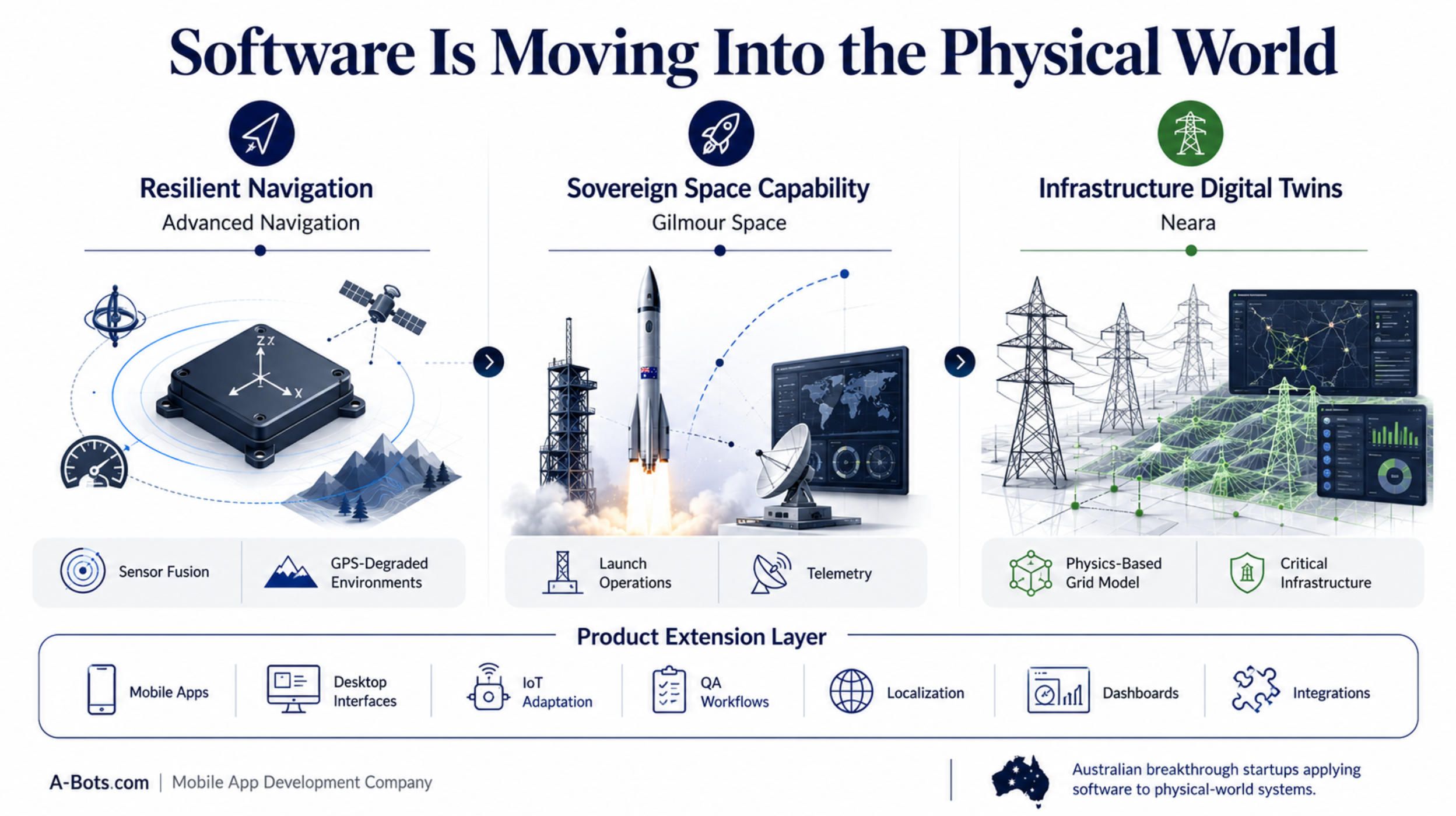
They are different companies in different sectors. One works on navigation and autonomous systems. One builds launch and satellite capability. One creates physics-enabled digital twins for critical infrastructure. But they are connected by a deeper pattern: each company is trying to reduce operational blindness.
Advanced Navigation reduces blindness in autonomous movement. Where am I? Can I trust my position? Can I keep operating when GPS fails?
Gilmour Space reduces blindness in national access to space. Can Australia build, test, launch, and operate space infrastructure from home soil rather than depending entirely on external launch systems?
Neara reduces blindness in power networks and infrastructure. What does the grid actually look like as a physical system? Where is the hidden capacity? What happens under heat, wind, flood, vegetation risk, new demand, or equipment stress?
The common thread is not navigation, space, or energy. The common thread is software that makes complex physical systems more measurable, more predictable, and more operable.

Advanced Navigation: The End of GPS as a Single Source of Truth
GPS is one of the invisible miracles of modern life. Most people rarely think about it because it usually works. It sits quietly behind maps, logistics, aviation, shipping, agriculture, mining, defence systems, smartphones, drones, emergency response, and industrial automation. For years, GPS felt like neutral infrastructure: always there, always precise enough, always dependable.
But the physical world is less stable than the consumer interface suggests.
Satellite navigation can be degraded, jammed, spoofed, blocked, or unavailable. Signals behave differently underwater, underground, indoors, in dense urban areas, in contested regions, or in environments where electronic warfare becomes part of the operating reality. The more the world depends on autonomous systems, the more dangerous it becomes to rely on any single positioning technology as the source of truth.
Advanced Navigation addresses that problem at the foundation layer of autonomy. The company is not simply building a better GPS accessory. It is building resilient navigation and autonomous systems for environments where GPS is unreliable or insufficient. Its approach combines high-precision inertial hardware, robotics, AI, photonic and quantum sensing, underwater acoustics, GPS antennas and receivers, and software fusion.
The key idea is layered resilience. A machine should not depend on one signal, one sensor, or one perfect operating condition. It should be able to combine multiple sources of information, cross-check them, adapt to the mission context, and continue operating when the environment becomes hostile or uncertain.
This is why Advanced Navigation is such a strong example of software moving into the physical world. Its software does not merely display location data. It interprets sensor reality. It helps vehicles, aircraft, ships, robots, and other systems understand where they are and how they should continue moving when the world stops giving them easy answers.
The company’s 2026 Series C round sharpened that signal. It raised US$110 million, led by Airtree Ventures, with strategic participation from Quadrant Private Equity and the National Reconstruction Fund Corporation. The context matters as much as the number. The round was framed around demand for alternative Positioning, Navigation, and Timing technologies at a moment when reliance on GPS is increasingly seen as a systemic vulnerability.
That phrase — systemic vulnerability — is important. It moves the conversation beyond technical performance. If navigation fails, the failure does not stay inside the navigation system. It can affect supply chains, aircraft, ships, defence operations, autonomous equipment, mining productivity, emergency response, infrastructure inspection, and space missions. In a world of autonomous systems, positioning is not a feature. It is a trust layer.
The company also demonstrates another important feature of the new Australian startup generation: global demand for locally developed deep technology. Advanced Navigation reports more than 100,000 systems deployed and a large share of revenue generated in the United States and Europe. That tells us something about the shape of the opportunity. Australian deep tech does not need to remain local if it solves a global infrastructure problem.
The product lesson is bigger than navigation. Autonomous systems are often discussed through the language of AI decision-making: perception models, robotics intelligence, path planning, mission autonomy. But before any machine can make intelligent decisions, it must answer a more primitive question: where am I, and can I trust that answer?
In consumer apps, the foundation of user experience is often speed, clarity, and convenience. In physical-world software, the foundation is environmental truth. The machine must know what is happening around it, even when the environment is noisy, incomplete, adversarial, or physically constrained.
That is the deeper significance of Advanced Navigation. It shows that the next generation of software infrastructure will not only live in cloud dashboards. It will live inside navigation modules, robotics systems, vehicles, maritime platforms, aerospace environments, and field equipment. It will be tested not only by users clicking buttons, but by heat, vibration, water, signal loss, interference, pressure, distance, and mission risk.
Around that kind of core technology, a large secondary software layer inevitably appears. Operators need dashboards. Field engineers need calibration tools. Customers need device configuration workflows. Support teams need diagnostics. Industrial buyers need documentation, reports, and integration layers. Global markets need localization. Hardware fleets need monitoring, remote updates, QA automation, and role-specific interfaces.
This is where the physical-world software economy becomes much larger than the core invention itself. The breakthrough may begin inside a navigation system, but the product ecosystem expands into mobile apps, desktop consoles, APIs, testing systems, data interfaces, and operational workflows.
Gilmour Space: Launch Capability as National Infrastructure
If Advanced Navigation shows software moving into autonomous movement, Gilmour Space shows software moving into sovereign infrastructure.
Space launch is easy to misunderstand because rockets attract spectacle. The image is dramatic: ignition, smoke, countdown, liftoff, acceleration, orbit. But a launch company is not only a rocket company. It is an operating system for aerospace complexity.
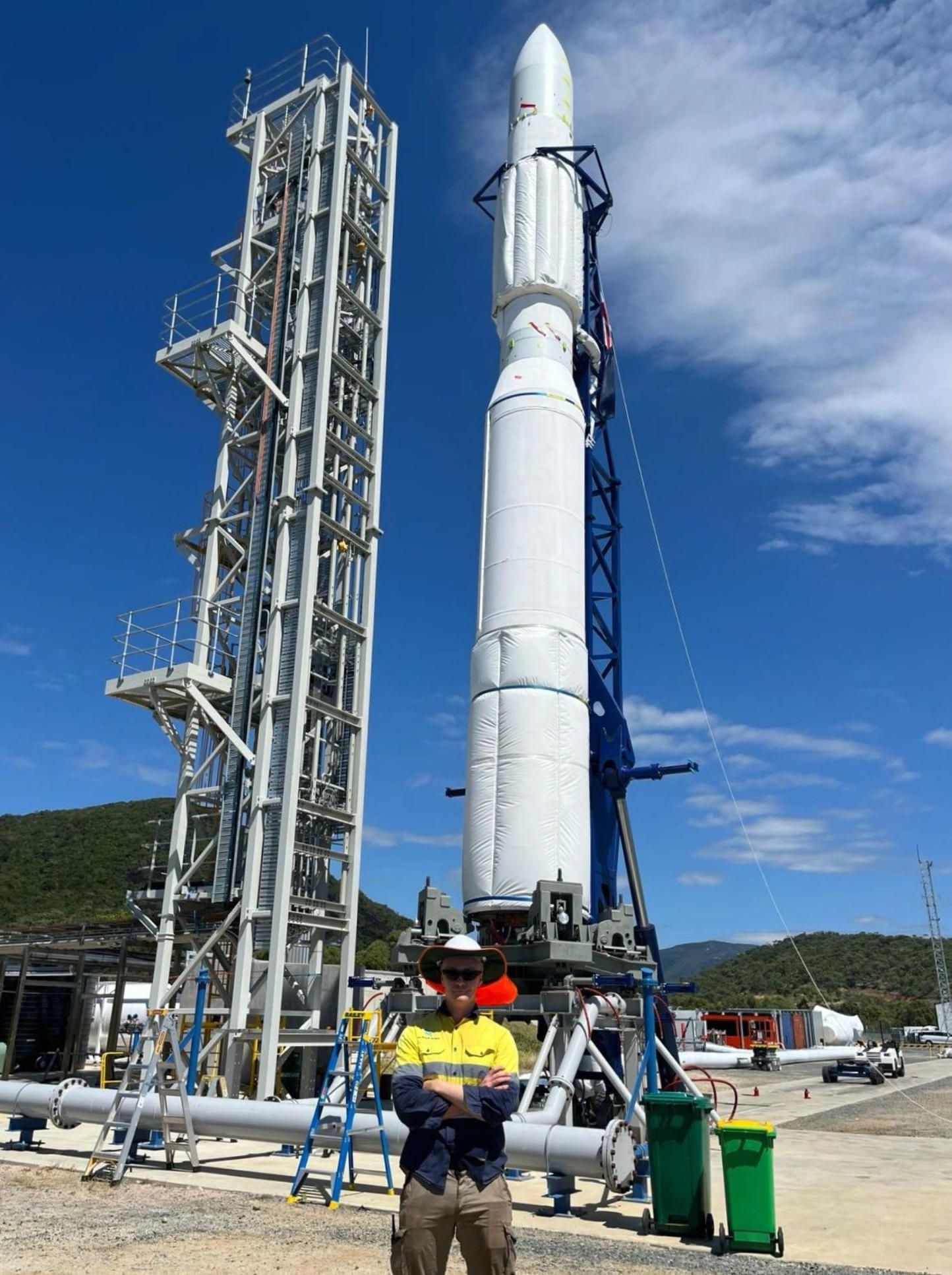
Gilmour Space is building an end-to-end Australian space capability spanning rocket design, manufacturing, testing, satellite platforms, launch infrastructure, and orbital services. Its 2026 funding round — $217 million, or about US$145 million, in private equity investment — was positioned around scaling Australia’s domestic space capability. The round was jointly led by the National Reconstruction Fund Corporation and Hostplus, with participation from major institutional and venture investors.
The phrase “sovereign space capability” can sound abstract, but its meaning is practical. Modern economies depend on satellites for communications, navigation, climate monitoring, environmental observation, disaster response, agriculture, logistics, defence, and security. If access to orbit depends entirely on other countries, commercial bottlenecks, or foreign launch schedules, then space is not simply a market opportunity. It becomes an infrastructure dependency.
Gilmour Space is trying to reduce that dependency.
The company’s milestones include Australia’s first sovereign orbital launch attempt from home soil, on-orbit operation of its ElaraSat satellite platform, and the establishment of the country’s first licensed commercial orbital launch facility in North Queensland. Its Eris orbital launch vehicle and Bowen Orbital Spaceport are not just products; they are parts of a national capability stack.
This is where the story becomes much more interesting than a simple “Australian rocket startup” headline. A launch company is a software-heavy organisation even when the most visible object is a rocket. Every launch campaign requires mission planning, payload integration, telemetry, ground systems, safety procedures, manufacturing traceability, simulation, testing, anomaly analysis, environmental approvals, regulatory coordination, customer communication, and operational discipline.
The rocket is physical. The company around the rocket is deeply digital.
Gilmour Space’s first Eris test launch in July 2025 is an important example of how physical-world product development differs from normal software development. The rocket lifted off from Bowen Orbital Spaceport and flew for about 14 seconds. As an orbital flight, it did not achieve the intended outcome. As an integrated system test, it still produced valuable data.
That distinction matters. In software, a failed release can often be rolled back quietly. In aerospace, learning is public, expensive, and physically dramatic. A test flight is not a marketing demo. It is an engineering event where propulsion, avionics, guidance, navigation, control, structure, telemetry, ground systems, launch infrastructure, and safety processes meet reality at the same time.
This makes Gilmour Space a powerful case for the article’s central thesis. Software moving into the physical world must accept physical-world feedback. There is no perfect abstraction layer that can protect a launch system from pressure, temperature, vibration, timing, combustion, weather, or regulatory constraint. The software has to live with the physics.
In 2026, the company’s story continues beyond the orbital launch program. Gilmour Space has also been preparing hypersonic testing capability through its Hyperflight service, intended to help researchers and defence customers test equipment in extreme flight environments. That adds another layer to the company’s strategic role. It is not only building a path to orbit; it is building a platform for aerospace experimentation, sovereign test capability, and high-speed systems research.
The product implication is again broader than rockets. If a country builds domestic launch capability, it also needs the surrounding digital ecosystem: mission enquiry workflows, payload review tools, customer portals, launch campaign software, manufacturing QA systems, telemetry interfaces, regulatory documentation, test-data dashboards, inspection apps, supplier coordination, and security-aware operational systems.
That is why space startups are not only hardware startups. They are also workflow companies, data companies, safety companies, and integration companies. The visible asset may be a launch vehicle, but the business depends on turning a sequence of high-risk physical events into repeatable operations.
This is also why comparing Gilmour Space too casually to foreign launch companies misses the point. The more precise story is not imitation. It is national infrastructure formation. Australia does not need a copy of another country’s launch ecosystem. It needs its own technical, geographic, regulatory, manufacturing, and customer stack.
Gilmour Space represents that ambition. It shows how software enters the physical world not by replacing hardware, but by coordinating it. The software layer makes the hardware testable, operable, documentable, repeatable, and eventually commercially scalable.
Neara: When Digital Twins Stop Being Pretty 3D Models
Neara completes the triangle by moving the article from movement and launch into infrastructure intelligence.
The phrase “digital twin” has been overused. In many business contexts, it has become almost decorative: a polished 3D model, a map with assets, a dashboard that looks impressive in a sales meeting. But the real value of a digital twin is not visual beauty. It is decision quality.
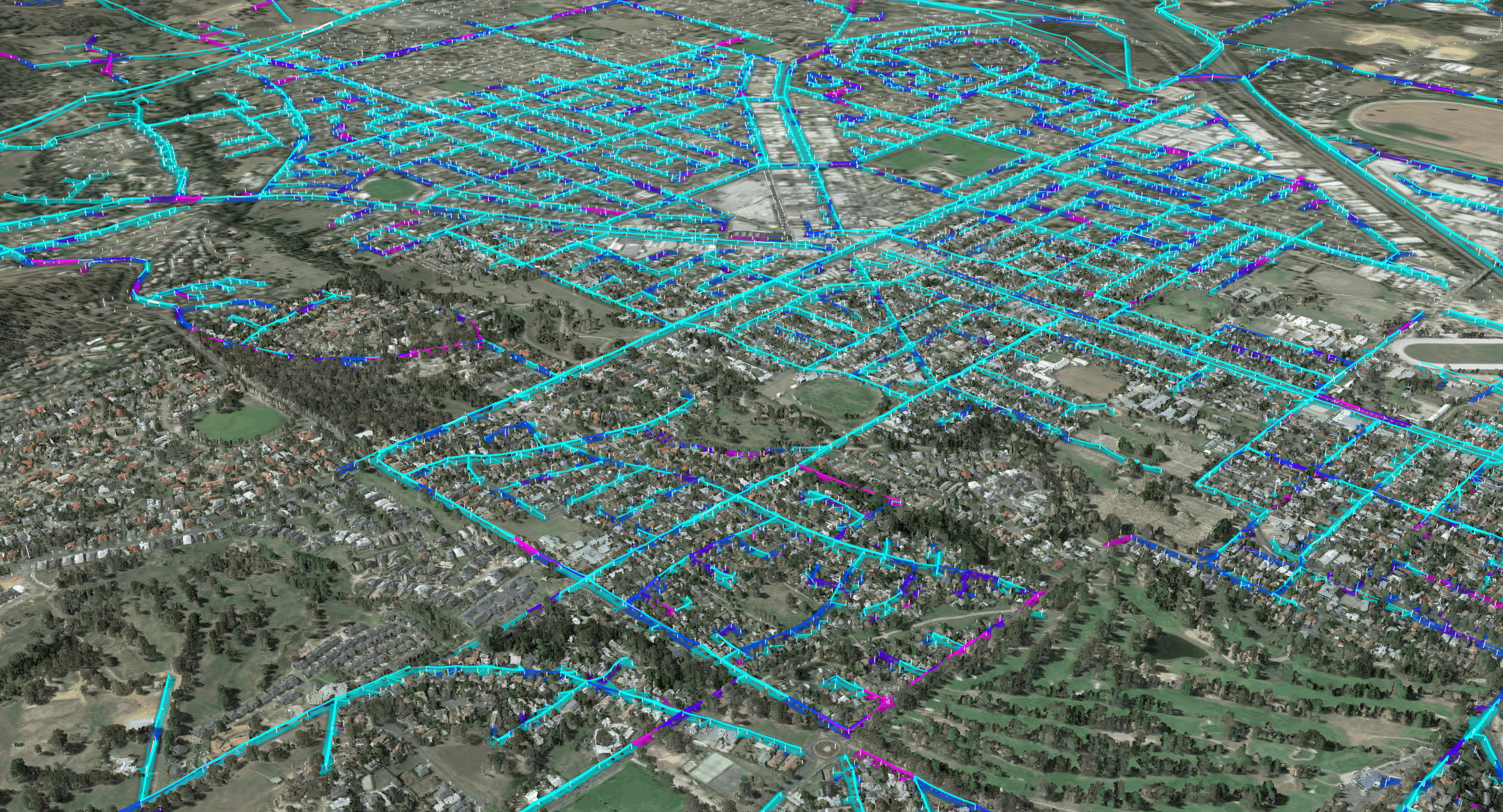
Neara’s significance comes from its physics-enabled approach to critical infrastructure. It creates geometrically accurate models of infrastructure networks and applies engineering-grade analysis to how those assets behave under real-world conditions. The company’s platform is designed for utilities and infrastructure operators that need to understand not just where assets are, but how they perform, fail, interact, and respond under stress.
That distinction is crucial. A static map can tell an operator where a pole, line, or asset is located. A physics-enabled model can help answer more operationally valuable questions: how will this line behave under heat? Where could vegetation create risk? What happens if floodwaters reach this span? Is there underused network capacity? Can a renewable generation project connect faster? Which maintenance decision reduces the most risk? Which investment is urgent, and which is merely visible?
Neara’s 2026 Series D round made the market signal explicit. The company raised AUD 90 million led by TCV, bringing total funds raised to approximately AUD 180 million. The round was tied to the growing pressure on global infrastructure: ageing grids, energy transition goals, AI compute, data centres, electrification, and the urgent need to unlock capacity without waiting years for conventional infrastructure expansion.
This is one of the most important physical-world software stories of 2026 because the grid is becoming a constraint on almost everything else.
AI needs electricity. Data centres need electricity. Electric vehicles need electricity. Renewable projects need grid connections. Heat pumps, industrial electrification, manufacturing expansion, and urban growth all need reliable power. At the same time, existing networks face ageing assets, vegetation risk, storms, fires, floods, regulatory pressure, and community expectations for resilience.
In that environment, the old approach to grid planning becomes too slow. Utilities cannot rely only on fragmented point solutions, manual inspections, conservative assumptions, and isolated datasets. They need a way to see the network as a living physical system.
Neara’s platform aims to provide that missing layer.
The company has reported work with major utilities across Australia, the United States, the United Kingdom, Ireland, Greece, and other markets. It has also stated that its technology has modelled millions of assets across millions of kilometres of infrastructure. Those numbers matter because a digital twin becomes valuable only when it reaches operational scale. A small simulation can be a proof of concept. A network-wide model can become a decision system.
Neara’s category is therefore not simply energy software. It is infrastructure intelligence. It helps operators move from reactive maintenance to scenario-based planning. It turns physical assets into computable systems. It creates a bridge between field reality and executive decision-making.
That bridge is becoming essential because infrastructure pressure is no longer linear. A grid operator cannot simply add one new variable at a time. AI data centres, renewable generation, electric demand, extreme weather, asset age, vegetation, regulation, and customer reliability expectations interact. They create compound stress.
Traditional software often simplifies the world to improve usability. Physical-world software has a different challenge: it must preserve enough complexity to make the decision real. If the model ignores physics, it may be easy to use but dangerous to trust. If the model includes physics without usable workflows, it may be accurate but operationally irrelevant. The breakthrough is not only modelling the infrastructure. The breakthrough is making that model usable by planners, engineers, asset managers, field teams, and executives.
This is why Neara fits so well beside Advanced Navigation and Gilmour Space. It is not moving software into the physical world as a decorative interface. It is moving software into the decision core of infrastructure.
Just as Advanced Navigation asks whether a machine can trust its position, and Gilmour Space asks whether a country can build its own access to orbit, Neara asks whether infrastructure operators can trust their understanding of the grid.
In all three cases, the answer depends on software that respects physics.
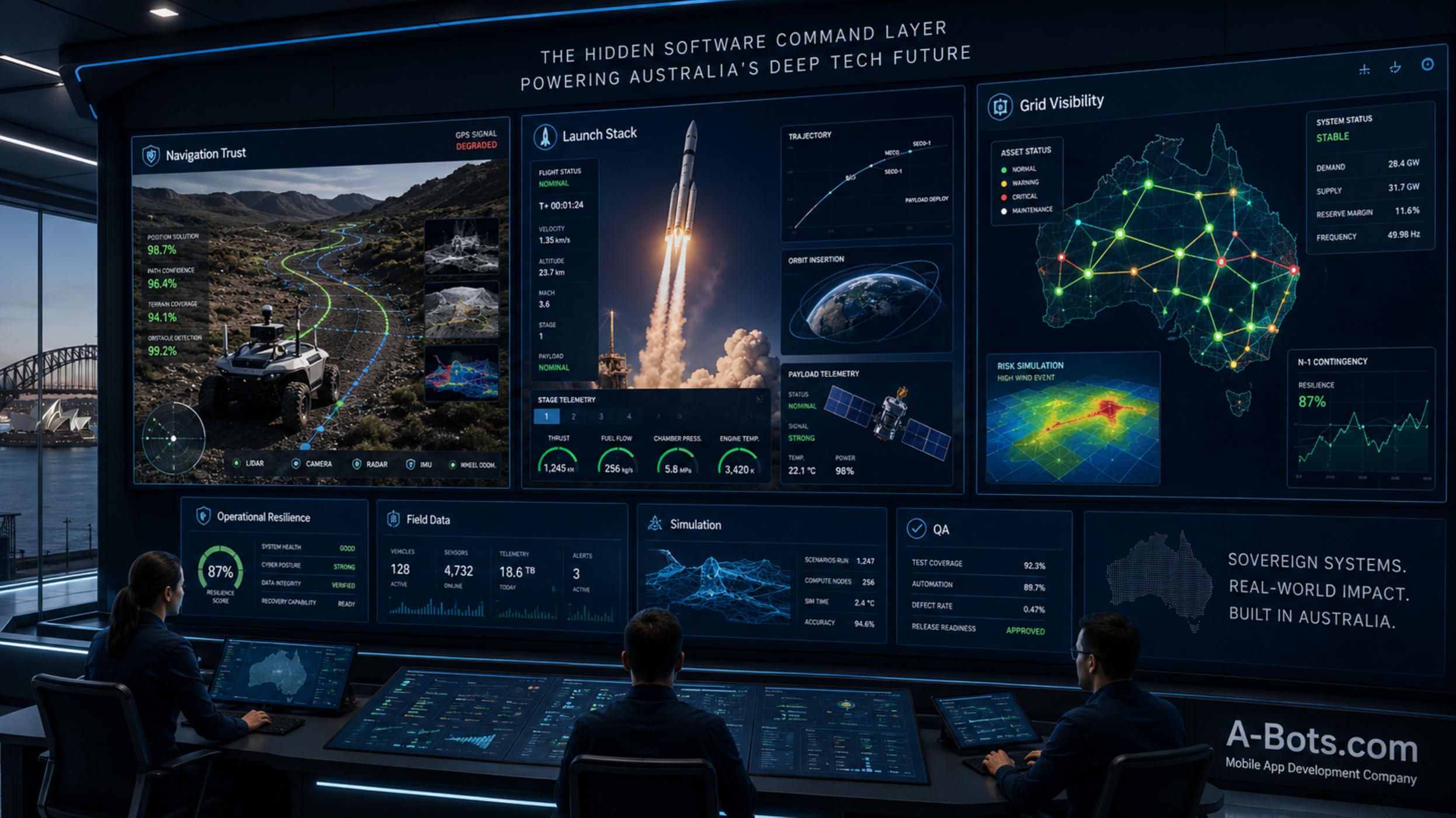
The Pattern: Software Is Becoming an Operational Layer for Reality
The deeper story is not that Australia has three impressive technology companies. The deeper story is that all three point toward the same product frontier.
Advanced Navigation, Gilmour Space, and Neara are not trying to escape the physical world. They are trying to make the physical world more understandable, reliable, and controllable.
That is a major departure from the logic of many digital-first startups. Earlier software waves often created value by removing friction from information flows: make booking easier, payments faster, collaboration smoother, analytics clearer, support cheaper, design more accessible, documents searchable, teams more connected. Those opportunities still matter. But they mostly lived in environments where failure could be contained inside a digital workflow.
Physical-world software has a different burden. It must operate in environments where failure can be costly, dangerous, delayed, regulated, or visible in public. A navigation error can send equipment off course. A launch anomaly can destroy hardware. A grid planning mistake can create outages, fire risk, wasted capital, or delayed energy connections.
That changes what good product development means.
It is no longer enough to build a clean interface over a messy system. The product must understand the system. It must ingest real data, model real constraints, communicate uncertainty, support field operations, preserve audit trails, and help humans make decisions under pressure.
This is why the phrase “software is moving into the physical world” is more than a metaphor. It describes a real change in where software value is created.
Software is moving into machines that need to navigate independently.
It is moving into launch campaigns where every component, supplier, test, approval, and telemetry signal matters.
It is moving into power networks that need to carry more demand, absorb more renewables, survive more extreme weather, and connect more critical load.
It is moving into operational environments where there is no clean line between digital and physical product.
For startups, this creates both opportunity and difficulty. The opportunity is defensibility. Physical-world software is harder to copy because it requires domain knowledge, data, hardware integration, customer trust, compliance awareness, and long-term deployment experience. The difficulty is that it cannot scale through code alone. It must scale through reliability, partnerships, field evidence, manufacturing capacity, certifications, integrations, and operational maturity.
That is exactly why Australia is an interesting ecosystem to watch. The country’s constraints are not disadvantages in this context. They are product forcing functions. Remote geography, infrastructure stress, energy transition, defence requirements, mining complexity, space ambition, and climate exposure all create demand for software that works outside comfortable digital environments.
The result is a startup market where the strongest companies may not look like conventional app businesses. They may look like navigation companies, space companies, infrastructure companies, robotics companies, energy companies, or industrial intelligence companies. But underneath the surface, they are building the next generation of software.
What This Means for Product Teams and Technology Partners
The rise of physical-world software does not mean every company must build rockets, sensors, or grid models. It means that more digital products will need to connect with operational reality.
A breakthrough navigation system needs more than its core sensor stack. It needs configuration tools, fleet dashboards, diagnostics, field testing workflows, partner documentation, customer support systems, and deployment interfaces.
A launch company needs more than a rocket. It needs mission planning tools, manufacturing traceability, telemetry dashboards, test-data environments, regulatory workflows, customer portals, and secure collaboration systems.
A digital twin company needs more than a simulation engine. It needs role-based interfaces, mobile field apps, data ingestion pipelines, GIS integrations, report generation, QA processes, localization, and workflow tools that translate engineering intelligence into operational decisions.
This secondary product layer is often less visible than the core breakthrough, but it is essential. It is where advanced technology becomes usable. It is where customers interact with complexity. It is where field teams, operators, engineers, executives, regulators, and partners need the right interface for the right context.
That is also where collaboration becomes valuable.
At A-bots.com, we see this shift as an invitation to work with ambitious product teams, startups, and technology companies building beyond conventional software. Breakthrough companies rarely need only one product layer. Around every advanced navigation system, launch platform, infrastructure model, IoT device, sensor network, or industrial AI product, there are mobile apps, desktop interfaces, QA workflows, localization needs, dashboards, integrations, documentation systems, and market-specific adaptations.
A-bots.com is open to collaboration with teams that need reliable engineering support to build, adapt, test, or localize digital products for specific devices, operational environments, and international markets.
The Australian startup signal in 2026 is clear: the next software wave is not limited to screens. It is entering machines, networks, launch facilities, field operations, and infrastructure systems.
The companies that understand this shift will not only build better apps. They will build the software layers that make the physical world more resilient.
✅ Hashtags
#AustralianStartups
#BreakthroughStartups
#StartupReview2026
#PhysicalWorldSoftware
#DeepTechStartups
#AdvancedNavigation
#GilmourSpace
#Neara
#CriticalInfrastructure
#AutonomousSystems
#SpaceTech
#MobileAppDevelopmentCompany
Other articles
Qwen Robot Suite, Qwen-RobotManip, Qwen-RobotWorld, Qwen-RobotNav Alibaba’s Qwen Robot Suite signals a major transition from conversational AI to machines that can perceive, predict, navigate, and act in physical environments. This expert analysis examines the three-model architecture behind the platform: Qwen-RobotNav for configurable spatial navigation, Qwen-RobotWorld for generating possible physical futures, and Qwen-RobotManip for generalizable robot manipulation. The article also compares Alibaba’s approach with NVIDIA Cosmos and Isaac GR00T, Google Gemini Robotics, Physical Intelligence, and Figure Helix. Beyond model benchmarks, it explores the harder questions of physical reliability, enterprise integration, safety controls, human approval, and the application infrastructure required to turn embodied intelligence into accountable business workflows.
Equipment Rental App Development: One Connected Workflow An asset shown as available in rental software may still be awaiting collection, inspection, cleaning, repair, or transfer. This article explains why equipment rental app development must connect the entire operational lifecycle rather than simply provide a booking catalogue. It examines availability forecasting, driver and yard workflows, offline inspections, damage evidence, customer self-service, telematics, maintenance, and ERP integration. The article also explores when off-the-shelf rental software is sufficient and when a custom mobile execution layer becomes justified. Its central concept—Commercial Asset Truth—helps rental companies recover rentable days, reduce disputes, expose revenue leakage, and make more reliable commitments to customers.
B2B Ordering App Development for Distributors and Manufacturers A B2B ordering app is not just a digital storefront. For distributors and manufacturers, it should act as a controlled ordering layer that connects customer-specific catalogs, negotiated pricing, inventory reality, approval rules, ERP data, and repeat purchasing workflows. This article explains why many sales teams become manual order desks, how self-service can reduce phone and email orders without weakening customer relationships, and why quick reorder, pricing accuracy, stock validation, product data, and ERP integration matter more than a beautiful catalog. It also explores when custom development makes sense and how A-bots.com can help build account-specific ordering workflows.
Last-Mile Delivery App Development: Driver App, POD and WMS/ERP Integration A last-mile delivery app is not just a driver tracker or route map. For retailers, distributors, pharmacies, spare parts suppliers, courier networks, and local delivery fleets, it should become a delivery execution layer that connects warehouse readiness, route dispatch, driver actions, customer notifications, proof of delivery, exceptions, and WMS/ERP synchronization. This article explains why many delivery failures are created before the driver reaches the door, how weak POD creates disputes, why customer notifications must come from real operational events, and when custom development makes more sense than forcing a standard delivery platform into a complex workflow.
Renovation Management App Development for Contractors, Site Managers, and Property Owners A custom renovation management app can turn apartment repairs, small commercial fit-outs, and property improvement projects into a transparent digital workflow. Instead of managing scope, budget, materials, approvals, photos, and rework through fragmented chats and spreadsheets, renovation teams can use one shared system for owners, site managers, and workers. This article explains how such a platform can structure trust, reduce disputes, document proof of work, control change orders, and improve project visibility. It also shows how A-bots.com can help define a detailed technical specification and develop a custom mobile and web system around real renovation operations.
Top stories

Copyright © Alpha Systems LTD All rights reserved.
Made with ❤️ by A-BOTS