
Home
Services
About us
Blog
Contacts
Australian AI Agent Startups 2026: From Chatbots to Regulated Workflow Automation
The first wave of generative AI made software conversational. The next wave will make software operational.
That distinction is more important than it sounds. A chatbot answers. An AI agent acts. A chatbot can explain a refund policy, summarize a document, draft an email, or answer a customer question. An AI agent can check eligibility, update a record, trigger a workflow, create a task, prepare a report, escalate a case, compare a care plan with recent notes, or operate across multiple systems on behalf of a person or team.
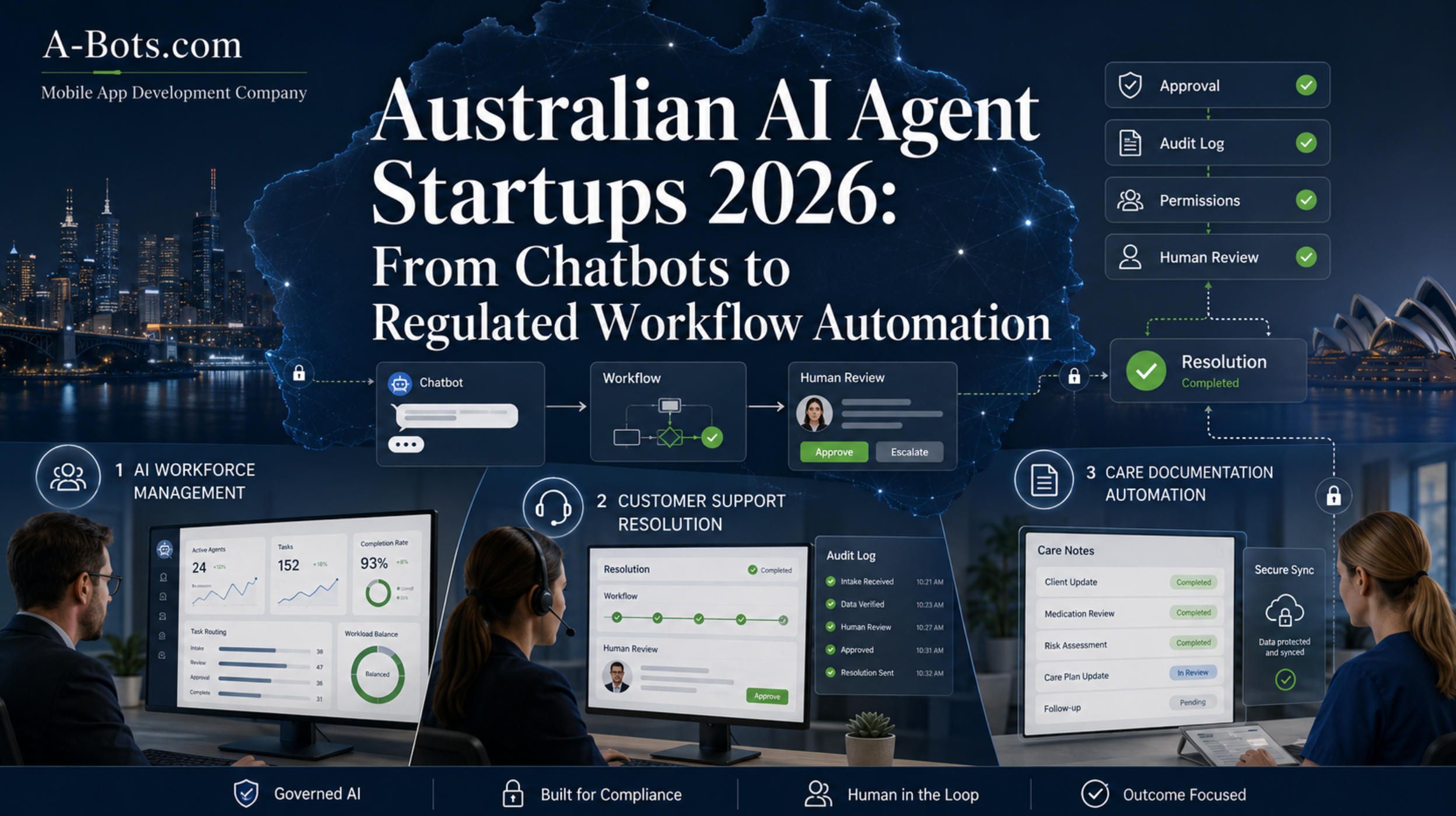
Once AI begins to act, the product challenge changes completely.
The question is no longer whether the model can generate fluent text. The question is whether an organization can trust the system enough to let it touch real workflows. Who gave the agent permission? What data can it access? Which actions are allowed? When must a human approve the decision? How is the action logged? How does the company test the agent before deployment? What happens when policy changes, customer context is incomplete, or a regulated process requires evidence?
That is why Australian AI agent startups in 2026 are so interesting. The strongest companies are not merely building smarter chat windows. They are building systems for governed work.
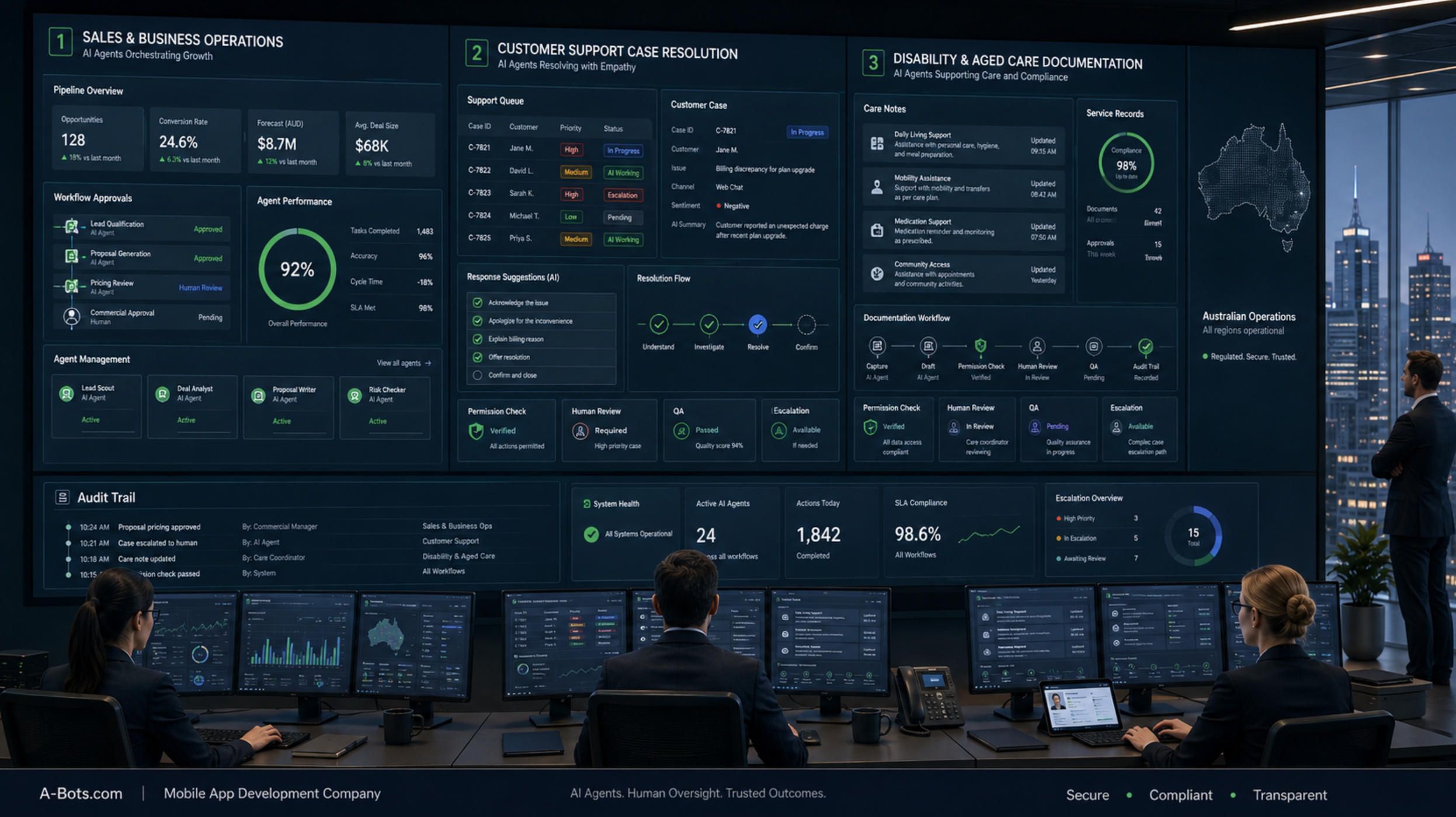
Relevance AI, Lorikeet, and Minikai represent three different faces of this shift. Relevance AI is building an AI workforce platform that lets companies create and manage teams of agents across business workflows. Lorikeet is moving customer support from simple chatbot answers toward AI concierges that can resolve complex cases across channels and regulated environments. Minikai is applying AI agents to disability and aged care, where documentation is not just administration, but part of safety, continuity, funding, compliance, and human dignity.
Together, they show a deeper change in the AI market. The next product frontier is not the chatbot. It is the controlled execution layer between foundation models and real operations.
Australia may not be the country building the largest foundation models in the world. But that does not mean it is irrelevant in AI. In fact, its opportunity may sit higher up the stack: in applied, trusted, domain-specific AI systems that turn general intelligence into usable workflow products. That is exactly where Relevance AI, Lorikeet, and Minikai belong.
They are not competing by saying “our AI can talk.” They are competing by asking a more serious question: can AI work?
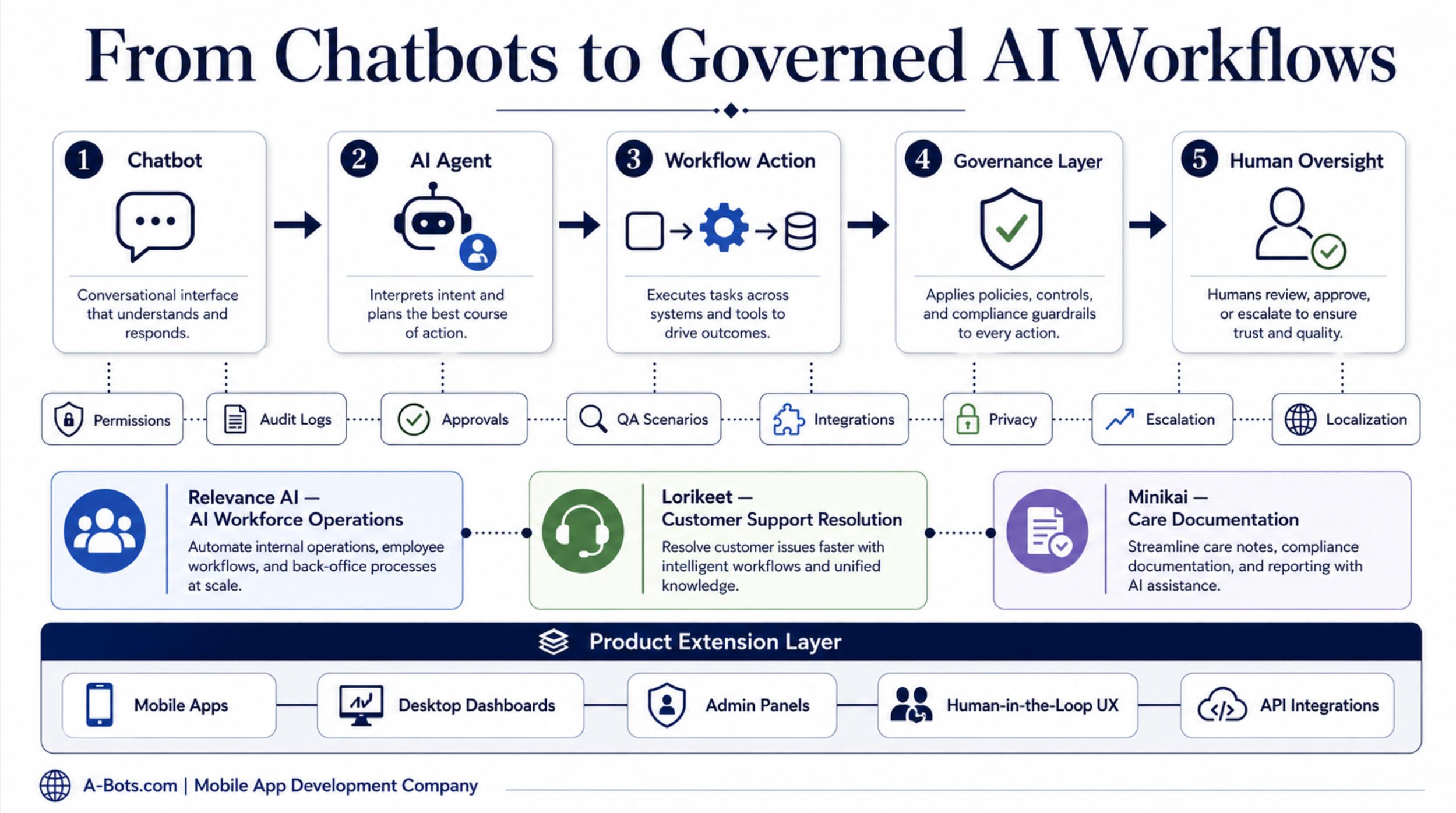
The Agent Era Starts When Software Gets Permission to Act
The word “agent” is becoming dangerously overused. In many product pages, an “AI agent” is simply a chatbot with a slightly more confident name. But the real agent transition is not cosmetic. It is architectural.
A true AI agent is not only a language interface. It has context, tools, permissions, memory, workflow awareness, and some ability to take action. It can use APIs, retrieve information, update systems, draft outputs, prepare decisions, trigger processes, and coordinate with humans. In other words, an agent is software that moves from conversation into execution.
This creates value because many business workflows are not blocked by a lack of information. They are blocked by coordination, repetitive decisions, fragmented systems, slow handovers, incomplete records, and administrative drag. A human worker does not only “know” what to do. They move between tools, check history, compare policy, update fields, send messages, create evidence, and make judgement calls under constraints.
That is why the agent market is becoming more serious than the chatbot market. Chatbots can reduce support volume or improve knowledge access. Agents can begin to restructure work.
But action creates risk. The moment an AI system can change something, send something, approve something, or record something, it becomes part of operational governance. In a sales process, a bad agent may damage pipeline quality. In customer support, it may create compliance exposure. In fintech, it may mishandle identity or eligibility. In healthcare or care services, it may misread human context or create poor documentation. In any regulated workflow, an ungoverned agent is not innovation. It is liability.
So the real question in 2026 is not “Can AI automate this?” The real question is “Can AI automate this under control?”
That is the idea connecting the three Australian startups in this article. Relevance AI focuses on the platform layer for agent workforces. Lorikeet focuses on customer operations where agents must resolve real cases, not merely answer FAQs. Minikai focuses on care environments where AI must reduce administrative burden while respecting privacy, evidence, safety, and human oversight.
This is a much more mature AI story than the first wave of generative tools. The market is moving from prompts to process, from demos to deployment, from chat to governed execution.
Relevance AI: From Automation Tools to Managed AI Workforces
Relevance AI is one of Australia’s most visible AI agent startups because it sits close to the centre of the agent economy. The Sydney and San Francisco company describes itself as building the home of the AI workforce: a platform where organizations can create, deploy, and manage AI agents for business work.
That positioning matters. Relevance AI is not simply offering a writing assistant or a chatbot builder. It is addressing a broader operational question: if a company wants many specialized AI agents working across sales, marketing, operations, research, revenue workflows, and internal processes, how should those agents be created, managed, monitored, and improved?
This is where older automation logic begins to break down.
Traditional automation tools were powerful when the process was predictable. If a lead enters a form, send an email. If a ticket is created, assign it to a queue. If a status changes, notify a manager. These workflows are useful, but they mostly depend on predefined logic. They work best when the path is known in advance.
AI agents enter a different kind of work. They are useful when tasks require interpretation, research, language, context, prioritization, synthesis, and tool use across messy business data. A sales agent might research accounts, enrich CRM data, prepare outreach, qualify prospects, and summarize buying signals. An operations agent might compare internal records, generate updates, route exceptions, and prepare reports. A marketing agent might analyze content, identify gaps, and coordinate campaign tasks.
The promise is not just automation. The promise is a new labour layer inside the company.
But that promise immediately creates a management problem. If every team starts building agents, who owns them? How are they tested? How do employees know which agent is reliable? How does a company prevent duplication, data leakage, low-quality outputs, or agents working outside approved processes? How do non-technical teams control agents without depending on engineers for every change?
Relevance AI’s product logic is built around that management problem. The company’s platform emphasizes no-code agent creation, connectors, triggers, monitoring, pre-deployment scenarios, production checks, and agent management by business operators rather than only software engineers. In that sense, the product is not just about building agents. It is about making agent work operationally manageable.
This is an important distinction. In the early generative AI phase, the demo was the product. A user typed a prompt, the model responded, and everyone could see the magic. In the agent phase, the demo is only the beginning. The harder problem is repeatability. A useful business agent must perform consistently across many cases, with appropriate permissions, clear ownership, and measurable outcomes.
Relevance AI is therefore best understood as an AI workforce operations platform.
The phrase “AI workforce” can sound provocative, but it captures a real shift. Companies are beginning to treat agents less like isolated tools and more like digital workers assigned to specific jobs. That does not mean humans disappear. It means humans increasingly design, supervise, and improve agentic workflows rather than manually performing every repetitive step.
This has major implications for product design. A company does not only need a prompt box. It needs agent roles, workflow maps, performance dashboards, quality checks, integration settings, escalation paths, permission structures, and deployment environments. It needs to know what the agent did, why it did it, which source it used, and whether a human should review the result.
In many organizations, this will create a new operational discipline: agent management.
The people responsible for this discipline may not be traditional engineers. They may be revenue operations leaders, customer operations managers, sales enablement teams, compliance managers, product operations teams, or internal automation specialists. That is why Relevance AI’s emphasis on subject-matter experts is significant. The people who understand the work should be able to shape the agent, not merely request tickets from a technical team.
The deeper lesson from Relevance AI is that the AI agent economy will not scale only through smarter models. It will scale through management layers. The model may be general, but the agent must be specific. It must know the company’s process, connect to the right tools, operate inside boundaries, and produce outputs that fit the workflow.
That is the move from AI as a capability to AI as an operating system for work.
For product teams, this is a rich area. Every AI workforce platform creates demand for supporting software: admin panels, agent testing environments, workflow visualisation, mobile approvals, CRM and ERP connectors, monitoring dashboards, custom reporting, localization, QA scenarios, security controls, and department-specific interfaces. The agent may perform the task, but the human organization still needs a product layer to manage, trust, and improve that task.
Relevance AI shows why the next AI winners may not simply be the companies with the largest models. They may be the companies that make agents usable inside real organizations.
Lorikeet: Customer Support AI That Does Not Stop at Answering Questions
Customer support is one of the clearest places to see the difference between a chatbot and an agent.
A chatbot can answer a question. A customer rarely wants only an answer. They want a problem solved.
They want the replacement card sent, the address changed, the refund processed, the subscription fixed, the eligibility checked, the appointment rescheduled, the disputed charge escalated, the missing item located, the account issue clarified, or the next step completed without repeating themselves across three departments.
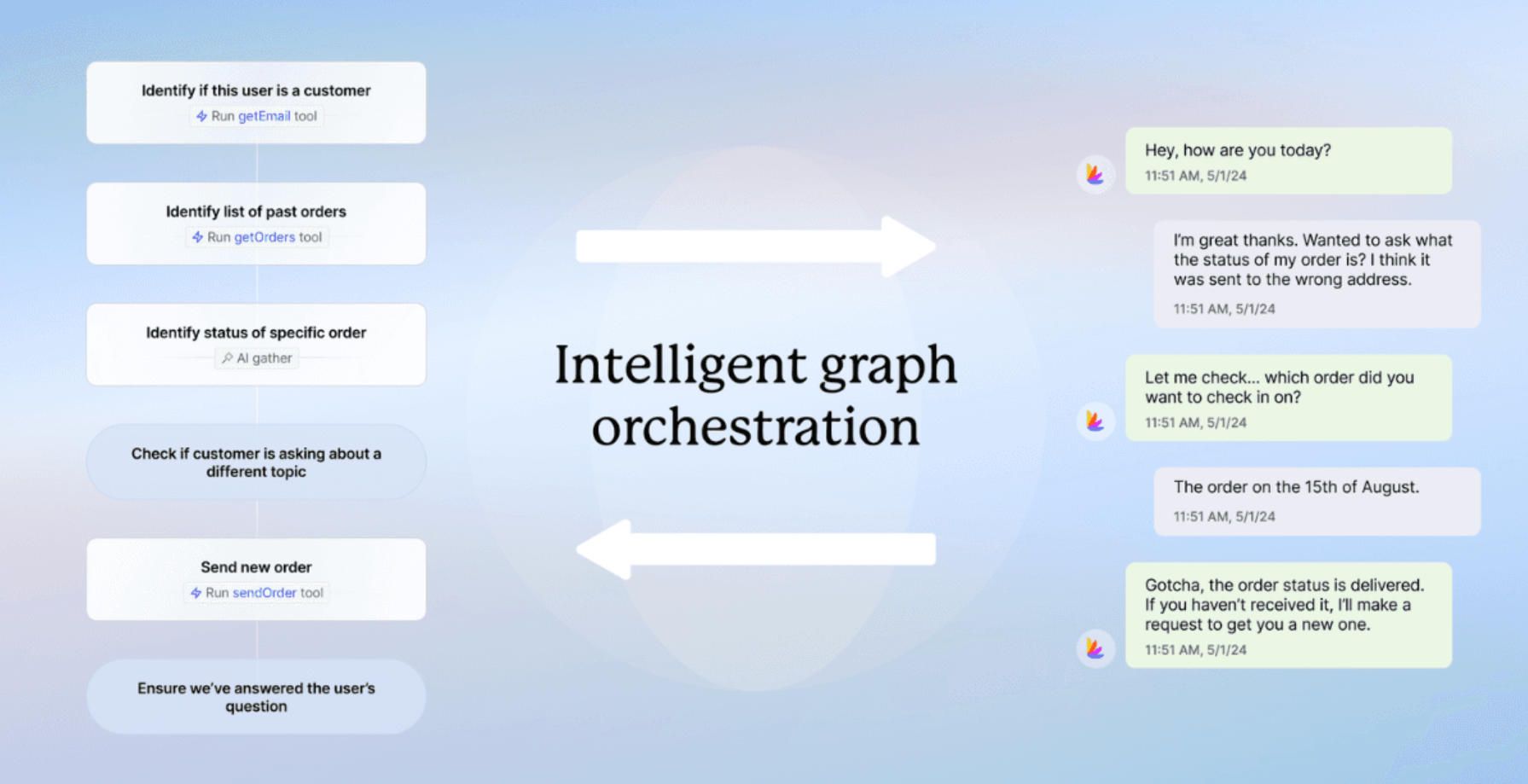
That is why Lorikeet is such a strong Australian AI agent company to study. The Sydney-based startup describes its product not as a basic support bot, but as an AI customer concierge for complex companies. Its focus is on resolving customer problems end-to-end across channels such as phone, SMS, chat, email, and WhatsApp.
This moves the support automation conversation into a more serious category.
The old support automation metric was often deflection: how many tickets can be prevented from reaching a human agent? That metric is useful, but it can also encourage shallow automation. If a bot gives a generic answer and the customer gives up, the company may count that as deflection even though the problem was not solved. The business saves labour in the short term, but trust erodes.
The better question is resolution: how many real customer problems can the system solve safely, accurately, and in line with policy?
Lorikeet’s product direction is built around that second question. The company positions its AI concierges as systems that can make judgement calls and take action, not merely repeat knowledge base content. This is especially important in complex sectors such as fintech, healthtech, and other regulated customer operations, where a support case may involve identity, eligibility, risk, customer history, compliance, and system changes.
Here the article’s central theme becomes very concrete. The moment AI support moves from “answer this question” to “solve this case”, the system needs governance.
It must know what actions are allowed. It must understand when human review is required. It must operate with granular permissions. It must leave an audit trail. It must handle edge cases. It must respect customer data. It must avoid overconfident action when policy, identity, or context is incomplete.
This is the difference between a bot and a controlled execution layer.
Lorikeet’s importance comes from taking that difference seriously. A customer support AI that can only answer simple questions becomes a narrow cost-saving tool. A customer support AI that can act safely inside complex workflows becomes part of the company’s operating model.
Consider a financial services example. If a customer reports a missing or stolen debit card, the support process may involve identity verification, eligibility checks, address confirmation, card replacement, fraud precautions, customer notifications, system updates, and possibly escalation. A simple bot can explain the process. A real AI concierge must perform the process within approved boundaries.
That is where product quality becomes more important than conversational polish. The AI system must not only sound helpful. It must be operationally correct.
For regulated companies, this is a major shift. Customer support is not merely a communication function. It is where policy meets human frustration. It is where compliance meets urgency. It is where the customer discovers whether the company’s internal systems are integrated or fragmented. AI can improve that experience only if it works with the process, not just the conversation.
Lorikeet is therefore not interesting because it belongs to the crowded “AI support” category. It is interesting because it points toward the future of customer operations: AI agents that resolve cases across systems while respecting risk controls.
That future will not be built through language models alone. It will require integrations with CRMs, helpdesks, payment systems, identity tools, knowledge bases, policy engines, product databases, voice systems, email systems, and escalation queues. It will require interfaces for compliance teams, support managers, human reviewers, and quality assurance. It will require localization because support tone, legal requirements, customer expectations, and regulated workflows differ by country.
This is also why Lorikeet fits the Australian AI story. Australia’s strongest AI companies do not need to win by building general models from scratch. They can win by turning AI into trusted operational products in sectors where the workflow is complex and the cost of failure is high.
The deeper product insight is that customer support is becoming less like a message inbox and more like an orchestration layer. The customer’s request may arrive through chat, voice, email, SMS, or WhatsApp, but the real work happens behind the scenes: eligibility, permissions, system updates, evidence, action, confirmation, and sometimes human escalation.
Lorikeet’s AI concierge concept sits in that hidden operational space.
That makes it much more than a chatbot company. It is part of the movement from conversational AI to accountable AI execution.
Minikai: AI Agents Where Paperwork Is Care Infrastructure
Minikai brings the most human dimension to this article.
It is one thing to automate sales tasks or customer support workflows. It is another to apply AI agents inside disability and aged care, where documentation, communication, privacy, continuity, and oversight are connected to the wellbeing of vulnerable people.
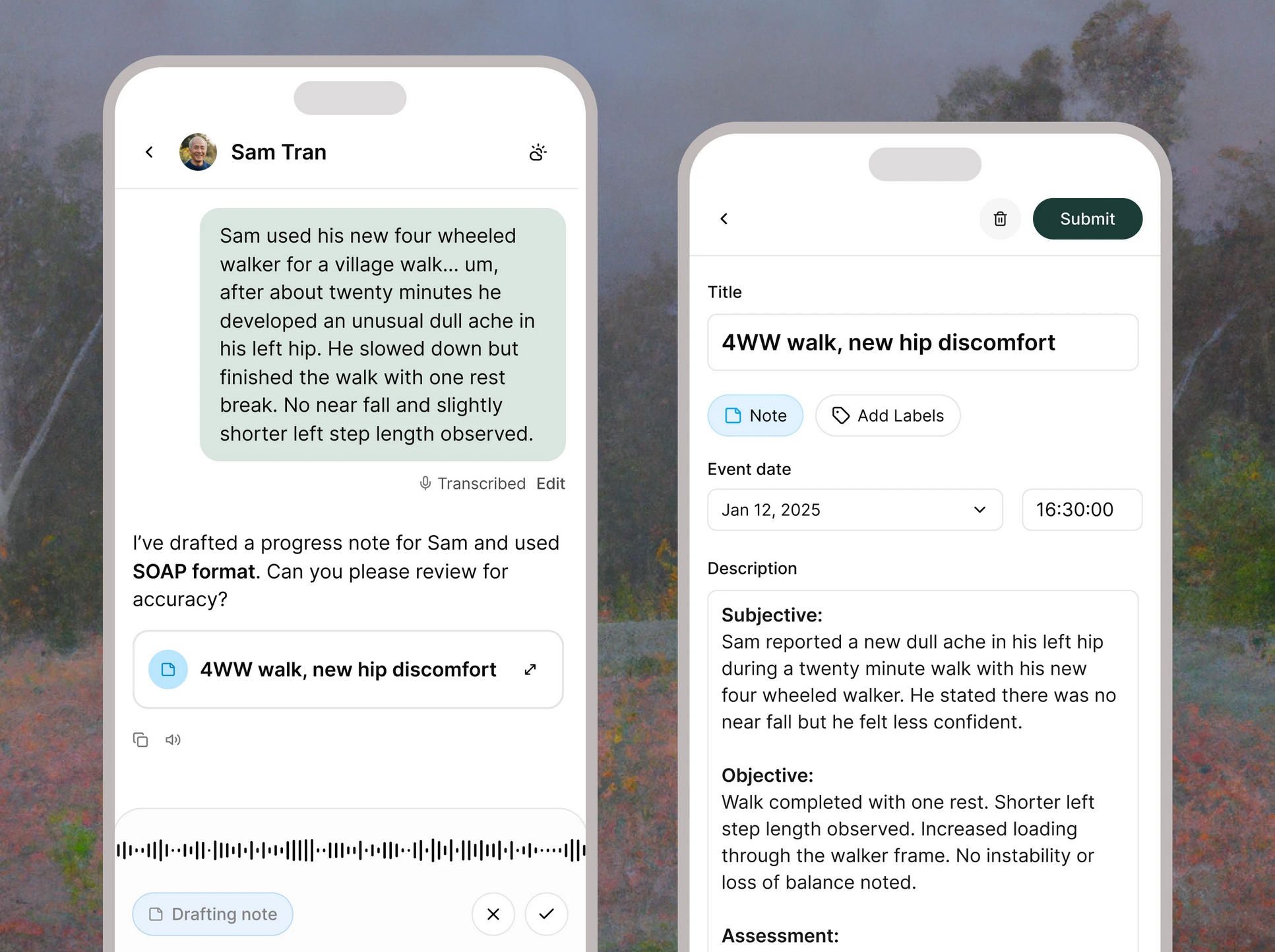
The Melbourne-based startup builds person-centred AI for disability and aged care. Its product concept is built around “Minis” — AI advocates or assistants that help care teams understand a person’s needs, history, records, changes, and documentation requirements. The goal is not to replace carers. The goal is to reduce administrative burden so workers can spend more time on care.
That distinction is essential.
In many industries, paperwork is treated as a necessary irritation. In care, paperwork is part of the service itself. Progress notes, incident reports, care plans, assessments, family communications, funding evidence, clinical observations, compliance records, and handover summaries are all part of how care quality is maintained over time.
When documentation is poor, the consequences are not abstract. A new staff member may not understand a person’s needs. A pattern of fatigue, mobility change, behavioural change, or medication concern may be missed. A provider may fail to produce evidence for funding or compliance. A family may not receive a meaningful update. A regulator may not see the full context. Most importantly, the person receiving care may become less visible to the system around them.
This is why Minikai is a powerful example of AI agents moving into regulated workflow automation. The problem is not “write notes faster” in a narrow productivity sense. The problem is how to preserve human context across a complex care environment.
Minikai’s platform is designed around capture, understanding, response, reporting, and audit. It helps teams create notes, generate summaries, compare recent information with care plans, identify data gaps, detect patterns, prepare reports, and support documentation workflows. It also emphasizes role-based access, privacy, security, and auditability, which are not optional in this sector.
This is a very different AI product culture from the generic chatbot. In disability and aged care, an AI agent must be cautious, evidence-aware, and human-in-the-loop. It must help the team see more clearly without pretending to replace professional judgement or lived human relationships.
That makes Minikai especially useful for understanding the mature AI agent market. The product cannot simply be “smart”. It must be appropriate.
Appropriateness in care means the right information goes to the right person at the right time. A support worker, nurse, manager, family liaison, administrator, and compliance officer may all need different views of the same underlying reality. A good AI system must respect those roles. It must not expose sensitive information casually. It must not invent context. It must preserve evidence. It must help identify gaps rather than hide them behind confident language.
This is why AI in care is not merely a technical challenge. It is a workflow design challenge.
Minikai’s focus also reveals something important about administrative burden. In many public discussions, administration is framed as waste. But in regulated care, administration often exists for good reasons: accountability, funding, safety, continuity, and legal responsibility. The problem is not that documentation exists. The problem is that documentation often consumes too much human time and mental energy, pulling frontline workers away from the person in front of them.
A well-designed AI agent can help by reducing the friction of documentation while preserving the purpose of documentation.
That is a subtle but important difference. The aim is not to erase the record. The aim is to make the record more complete, useful, searchable, timely, and connected to the person’s actual life.
This is where the phrase “person-centred AI” becomes meaningful. In many enterprise contexts, AI is designed around tasks. In care, the better design centre is the person. The agent must organize information around a human being’s needs, goals, history, preferences, risks, and changes over time. That makes the product more complex, but also more valuable.
For the wider AI agent market, Minikai demonstrates that some of the most important use cases will not be glamorous. They will live in difficult, document-heavy, emotionally serious sectors where workers are exhausted by administrative load and where better software can return time to human service.
That is exactly the kind of place where AI agents should be judged carefully. Not by how impressive a demo looks, but by whether the system improves the daily work of responsible people without weakening trust, privacy, or accountability.
What These Three Startups Reveal About Australia’s AI Opportunity
Relevance AI, Lorikeet, and Minikai are very different companies. But together they reveal a coherent Australian AI opportunity.
Australia may not lead the world by spending hundreds of billions of dollars on frontier foundation models. But it can build high-value AI products in the layer where models meet real work. That layer requires domain understanding, workflow design, governance, integrations, trust, and product execution.
This is not a second-class AI opportunity. It may be where much of the commercial value is actually created.
Foundation models are powerful, but they are general. Businesses need specificity. They need AI that understands their customer lifecycle, their compliance rules, their support policies, their care documentation, their CRM, their language, their approval process, their internal roles, their risk tolerance, and their local market. That specificity is not solved by the model alone. It is solved by product design.
This is why the three companies belong in the same article.
Relevance AI shows that companies will need platforms to build and manage teams of agents.
Lorikeet shows that customer-facing AI must move from generic answers into safe case resolution.
Minikai shows that AI agents can reduce administrative burden in sensitive regulated environments without removing humans from responsibility.
The common thread is governed work.
That phrase may become one of the defining ideas of the agent economy. AI agents become commercially important when they operate inside work, but they become deployable only when that work is governed. The winning products will combine intelligence with control. They will make action possible without making risk invisible.
This is why the next AI product wave will require much more than prompt engineering. It will require interface design, workflow architecture, permission systems, testing environments, audit logs, monitoring dashboards, integration layers, escalation mechanisms, localized language and compliance support, and mobile or desktop tools for the humans who supervise the agents.
The agent economy will not be built by models alone. It will be built by product systems around models.
That is the most important lesson from these Australian startups. They are not treating AI as a novelty interface. They are treating AI as a new operational layer for business and care.
Why This Matters for Product Teams
For startups and established technology companies, the practical implication is clear: building an AI agent product is not the same as adding AI chat to an existing application.
A useful agent product needs a full operating environment.
Users need to understand what the agent can and cannot do. Managers need visibility into performance. Compliance teams need evidence. Support teams need escalation paths. Field or frontline workers need low-friction interfaces. Customers need clear communication. Administrators need permissions. Developers need integrations. QA teams need test scenarios. Product leaders need analytics. International markets need localization.
This is especially true when agents work in regulated or sensitive environments. Fintech, healthcare, aged care, disability support, insurance, energy, public services, education, and legal workflows cannot rely on “black box” automation. They need explainability at the workflow level, not only at the model level.
That means the product layer becomes decisive.
A technically impressive agent can fail if users do not know when to trust it. A powerful model can create risk if permissions are poorly designed. A high-accuracy workflow can still break if it lacks integration with the systems people actually use. A strong English-language product may struggle in another country without localization, regulatory adaptation, and cultural understanding. A desktop workflow may fail for frontline workers who need mobile-first capture.
The real question is not simply “Can AI do this task?” It is “Can this AI-enabled product fit into the environment where the task happens?”
That environment may be a revenue operations team, a support centre, a care provider, a hospital, a field team, a customer mobile app, or a regulated back office. Each environment has different devices, permissions, interruptions, languages, documentation standards, and failure modes.
This is where collaboration becomes valuable.
At A-Bots.com, a Mobile App Development Company, we see the rise of AI agents as a product challenge, not only a model challenge. Once AI moves from answering questions to acting inside business workflows, companies need interfaces, dashboards, approval flows, QA scenarios, localization, integrations, mobile tools, desktop consoles, and human-in-the-loop design.
A-Bots.com is open to collaboration with startups, product teams, and technology companies that need reliable engineering support to build, adapt, test, or localize AI-enabled products for real markets, specific devices, and regulated operational environments.
The Australian AI agent signal in 2026 is clear. The future is not just a better chatbot. The future is software that can work — carefully, visibly, and under control.
✅ Hashtags
#AustralianStartups
#AIStartups
#AIAgents
#AIWorkflowAutomation
#RegulatedWorkflow
#AppliedAI
#RelevanceAI
#LorikeetAI
#Minikai
#CustomerSupportAI
#CareTech
#EnterpriseAI
#AIProductDevelopment
#MobileAppDevelopmentCompany
Other articles
Equipment Rental App Development: One Connected Workflow An asset shown as available in rental software may still be awaiting collection, inspection, cleaning, repair, or transfer. This article explains why equipment rental app development must connect the entire operational lifecycle rather than simply provide a booking catalogue. It examines availability forecasting, driver and yard workflows, offline inspections, damage evidence, customer self-service, telematics, maintenance, and ERP integration. The article also explores when off-the-shelf rental software is sufficient and when a custom mobile execution layer becomes justified. Its central concept—Commercial Asset Truth—helps rental companies recover rentable days, reduce disputes, expose revenue leakage, and make more reliable commitments to customers.
B2B Ordering App Development for Distributors and Manufacturers A B2B ordering app is not just a digital storefront. For distributors and manufacturers, it should act as a controlled ordering layer that connects customer-specific catalogs, negotiated pricing, inventory reality, approval rules, ERP data, and repeat purchasing workflows. This article explains why many sales teams become manual order desks, how self-service can reduce phone and email orders without weakening customer relationships, and why quick reorder, pricing accuracy, stock validation, product data, and ERP integration matter more than a beautiful catalog. It also explores when custom development makes sense and how A-bots.com can help build account-specific ordering workflows.
Last-Mile Delivery App Development: Driver App, POD and WMS/ERP Integration A last-mile delivery app is not just a driver tracker or route map. For retailers, distributors, pharmacies, spare parts suppliers, courier networks, and local delivery fleets, it should become a delivery execution layer that connects warehouse readiness, route dispatch, driver actions, customer notifications, proof of delivery, exceptions, and WMS/ERP synchronization. This article explains why many delivery failures are created before the driver reaches the door, how weak POD creates disputes, why customer notifications must come from real operational events, and when custom development makes more sense than forcing a standard delivery platform into a complex workflow.
Renovation Management App Development for Contractors, Site Managers, and Property Owners A custom renovation management app can turn apartment repairs, small commercial fit-outs, and property improvement projects into a transparent digital workflow. Instead of managing scope, budget, materials, approvals, photos, and rework through fragmented chats and spreadsheets, renovation teams can use one shared system for owners, site managers, and workers. This article explains how such a platform can structure trust, reduce disputes, document proof of work, control change orders, and improve project visibility. It also shows how A-bots.com can help define a detailed technical specification and develop a custom mobile and web system around real renovation operations.
Australian Breakthrough Startups 2026: Software Moves Into the Physical World Australia’s most interesting startup signal in 2026 is not another wave of ordinary SaaS. It is the rise of software built for the physical world: navigation systems that work beyond GPS, launch infrastructure for sovereign access to space, and digital twins that help utilities understand critical power networks before failure happens. This article reviews Advanced Navigation, Gilmour Space, and Neara as three breakthrough Australian startups showing how software is becoming a resilience layer for machines, infrastructure, energy systems, and high-consequence operations. For A-Bots.com, this shift opens new collaboration opportunities around mobile apps, desktop tools, IoT interfaces, QA, localization, and product adaptation.
Top stories

Copyright © Alpha Systems LTD All rights reserved.
Made with ❤️ by A-BOTS