
Home
Services
About us
Blog
Contacts
Samsung Bespoke AI WF53BB8700AT vs LG WM6700HBA: Which Smart Front Load Washer Delivers the Best App-Connected Laundry Experience?
The smart washing machine market is booming. According to Mordor Intelligence, this sector reached $11.72 billion in 2025 and is projected to hit $25.92 billion by 2030, growing at a 17.2% CAGR. Grand View Research reports that front-load washers captured 54.9% of the global smart washing machine revenue share in 2024, making them the dominant category in this rapidly expanding space.
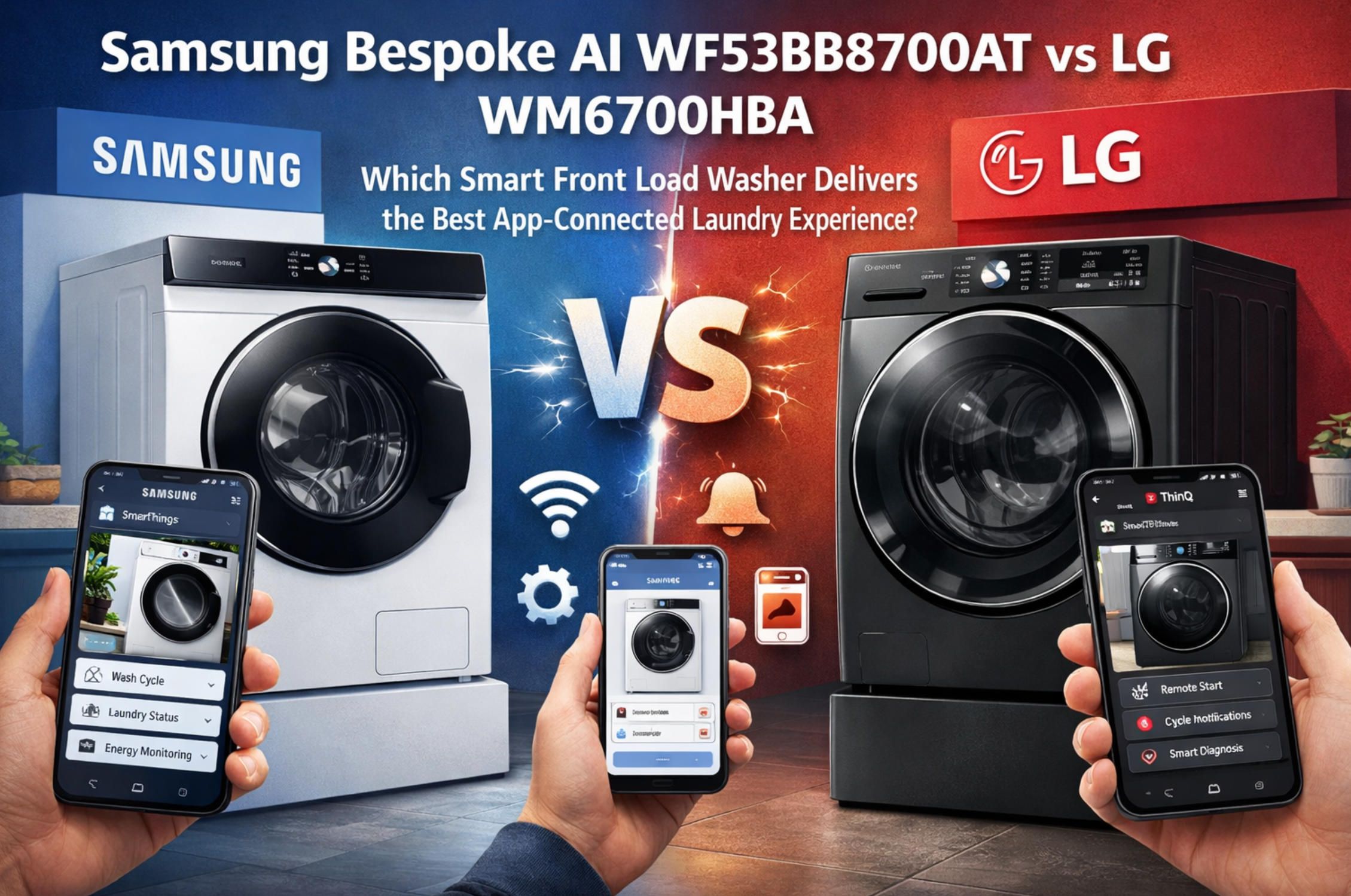
At the center of this growth are two South Korean tech giants — Samsung and LG — whose flagship front-load washers represent the cutting edge of what AI-powered laundry can do. The Samsung Bespoke AI WF53BB8700AT and the LG WM6700HBA are two of the most popular premium smart front-load washers in North America. Both machines feature AI-driven wash intelligence, Wi-Fi connectivity, companion apps, and generous drum capacities designed for busy families.
But which one truly earns its place in your laundry room? And more importantly, what do their mobile apps reveal about the future of connected appliance experiences?
At A-Bots.com, we have completed over 70 custom mobile app projects for clients across industries including IoT, smart home integration, and consumer electronics. Our development team specializes in building intelligent companion applications that connect hardware to software seamlessly — the exact kind of technology that powers modern smart washers. Whether you need a custom IoT companion app from scratch, a white-label smart home integration platform, or comprehensive QA testing for an existing appliance application, A-Bots.com brings deep technical expertise in React Native, Node.js, Python, cloud-based architectures, and real-time data processing. Several of our client partnerships have lasted over five years, a testament to the reliability and quality of our development process.
In this article, we provide a thorough, expert-level comparison of the Samsung WF53BB8700AT and LG WM6700HBA across every dimension that matters: design, washing performance, AI intelligence, mobile app ecosystems, noise, energy efficiency, reliability, and total cost of ownership. We also examine how companion mobile apps are transforming the laundry appliance industry — and what that means for manufacturers looking to build or improve their own smart home applications.
Design Philosophy and Build Quality
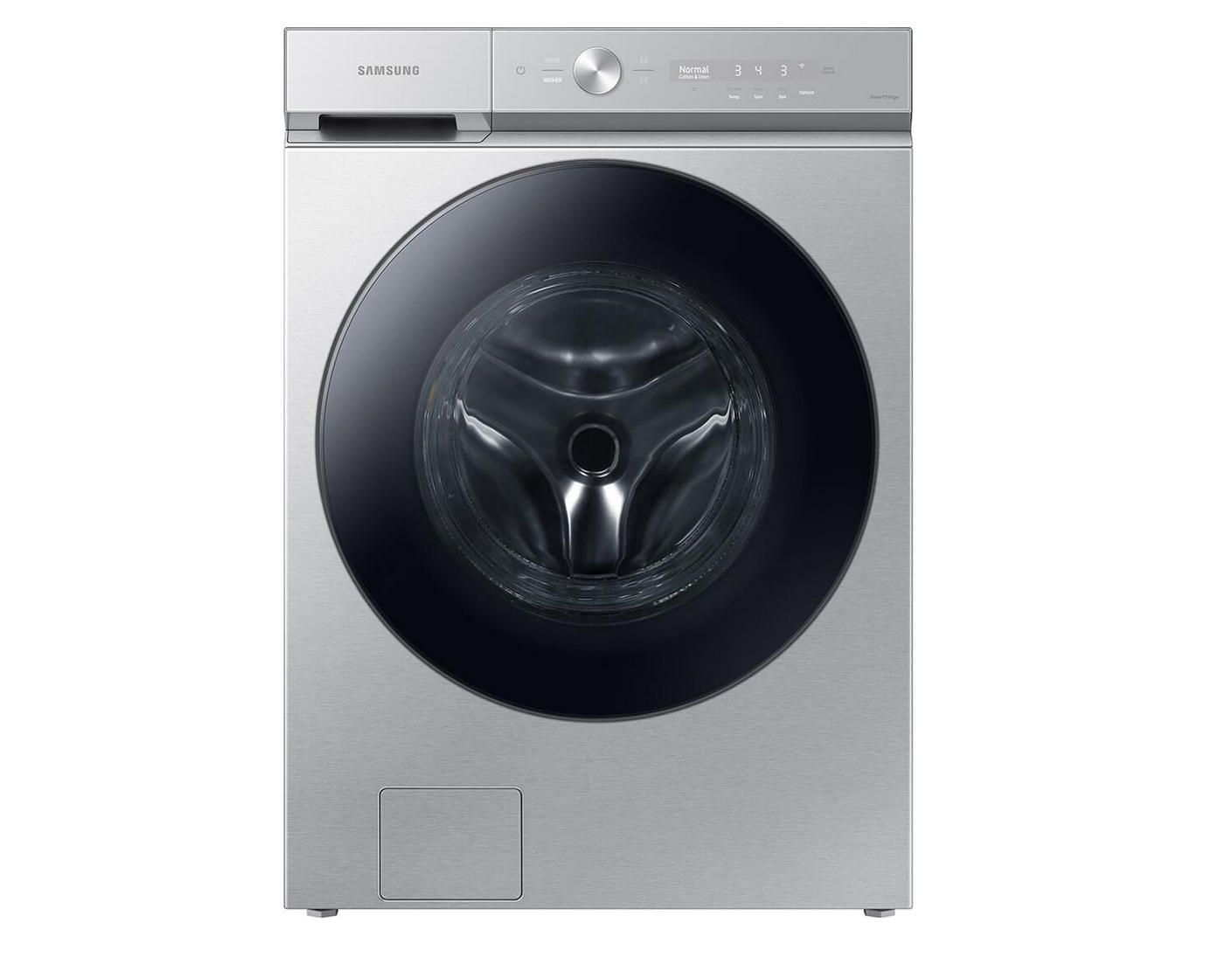
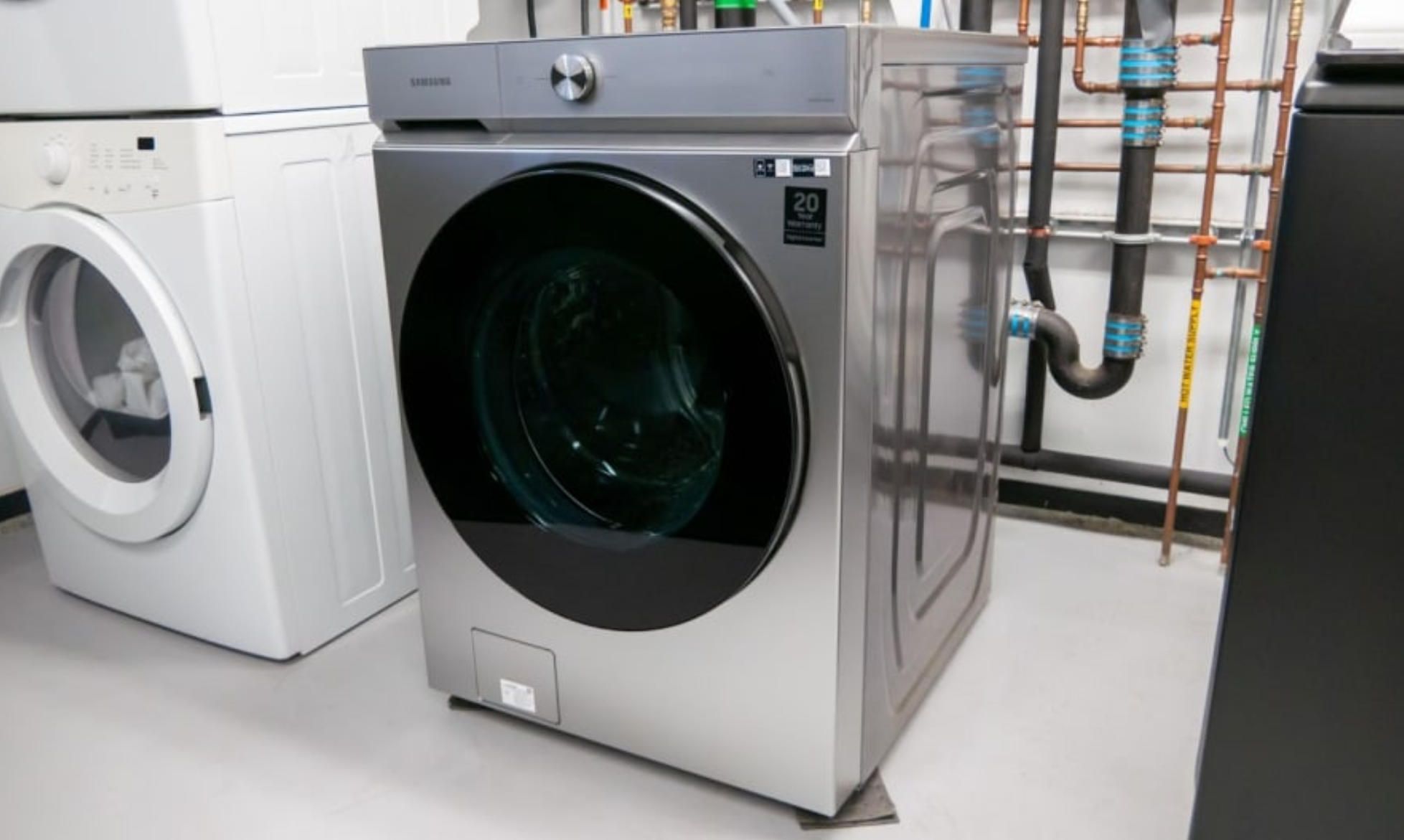
The Samsung Bespoke AI WF53BB8700AT belongs to Samsung's Bespoke design family, which emphasizes a clean, flat-panel aesthetic with scratch-resistant tempered glass doors. Available in Silver Steel and Brushed Black finishes, this washer looks more like a modern furniture piece than a traditional appliance. The flat-front design eliminates protruding knobs and handles, giving it a seamless look that integrates well into contemporary laundry rooms.
The dimensions are 27 inches wide, 38.75 inches high, and 34.5 inches deep. Samsung classifies it as closet-depth, designed to fit installations as shallow as 38 inches. The 5.3 cubic-foot drum makes it one of the largest-capacity front-load washers in the standard 27-inch-width class. According to Samsung's own documentation, this is the largest capacity front-load washer in its class among 27-inch-wide models. The Swirl+ interior drum pattern is engineered to extract more water during the rinse cycle while preventing fabric snagging.
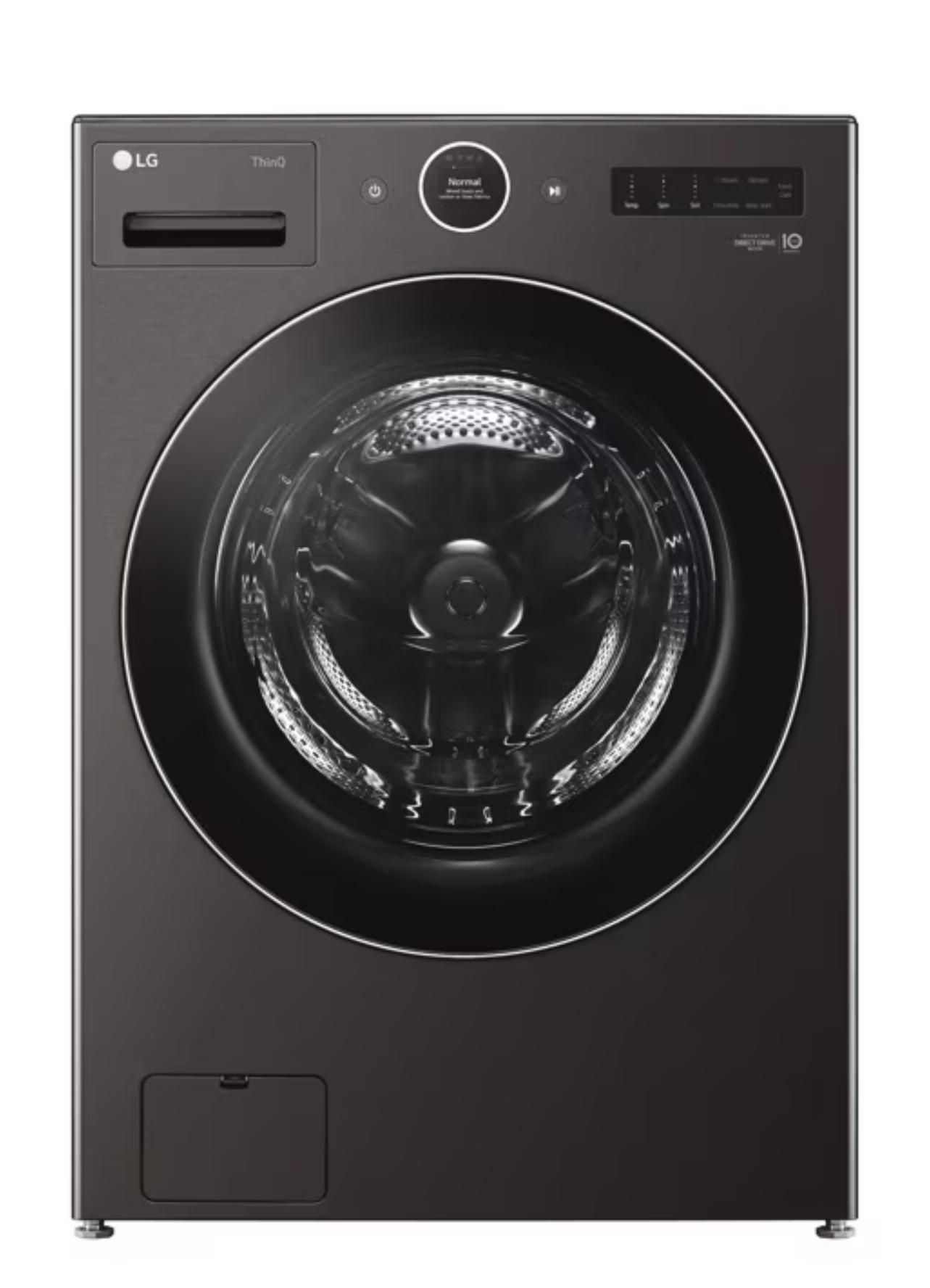
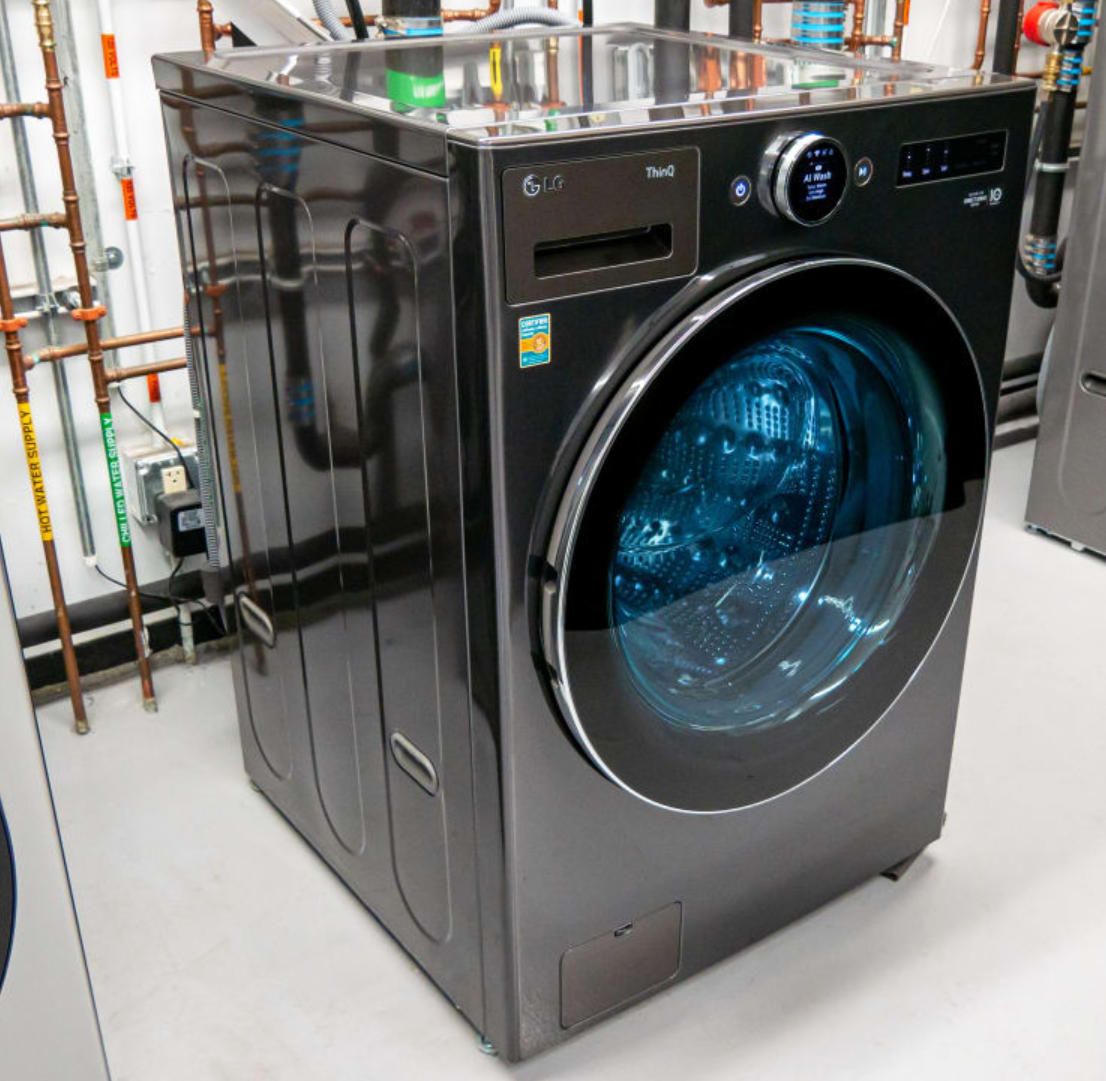
The LG WM6700HBA takes a different but equally striking approach. Finished in a glossy Black Steel, this washer has an unmistakably futuristic presence. Reviewed.com describes it as having aesthetics that can only be described as "shiny and new," with LED-illuminated controls and a bright blue-lit wash drum that makes laundry feel more like a tech experience.
LG's dimensions are 27 inches wide, 39 inches high, and 33.25 inches deep. The slightly shallower depth gives it an edge for closet installations, fitting about an inch closer to the wall than the Samsung. The 5.0 cubic-foot NeveRust stainless steel drum comes with a lifetime warranty from LG, meaning the company will cover replacement costs if the drum rusts at any point during the machine's life. This is a tangible confidence statement that few manufacturers match.
Both machines feature interior drum lighting for easier loading and unloading, tempered glass doors, and stackable designs compatible with their respective brand dryers. The Samsung supports MultiControl when stacked, allowing users to control the dryer from the washer's front panel — a practical advantage for shorter users. The LG is compatible with LG's SideKick Pedestal Washer, which adds a separate 1.0 cubic-foot drum underneath for running two different loads simultaneously.
AI Intelligence and Wash Technology
Both washers use proprietary AI systems to optimize every load, but their technical approaches differ significantly.
Samsung's AI Smart Dial is the machine's primary control interface. After 30 days of use, it begins learning your laundry habits — tracking which cycles you select, what time of day you run them, and other usage patterns. Over time, it recommends your favorite cycles and allows you to customize the cycle list through the SmartThings app. The dial simplifies what would otherwise be an overwhelming panel of 24 wash programs and 14 wash options into an intuitive, single-knob interface.
Samsung also incorporates AI Pattern recognition across multiple cycles, which adjusts water temperature, wash duration, and spin intensity based on detected load characteristics. The AI Energy mode, available through a SmartThings over-the-air update, can reduce energy consumption by up to 35% by minimizing heater usage across supported cycles including AI OptiWash, Super Speed, Small Load, Towels, Heavy Duty, and Power Rinse.
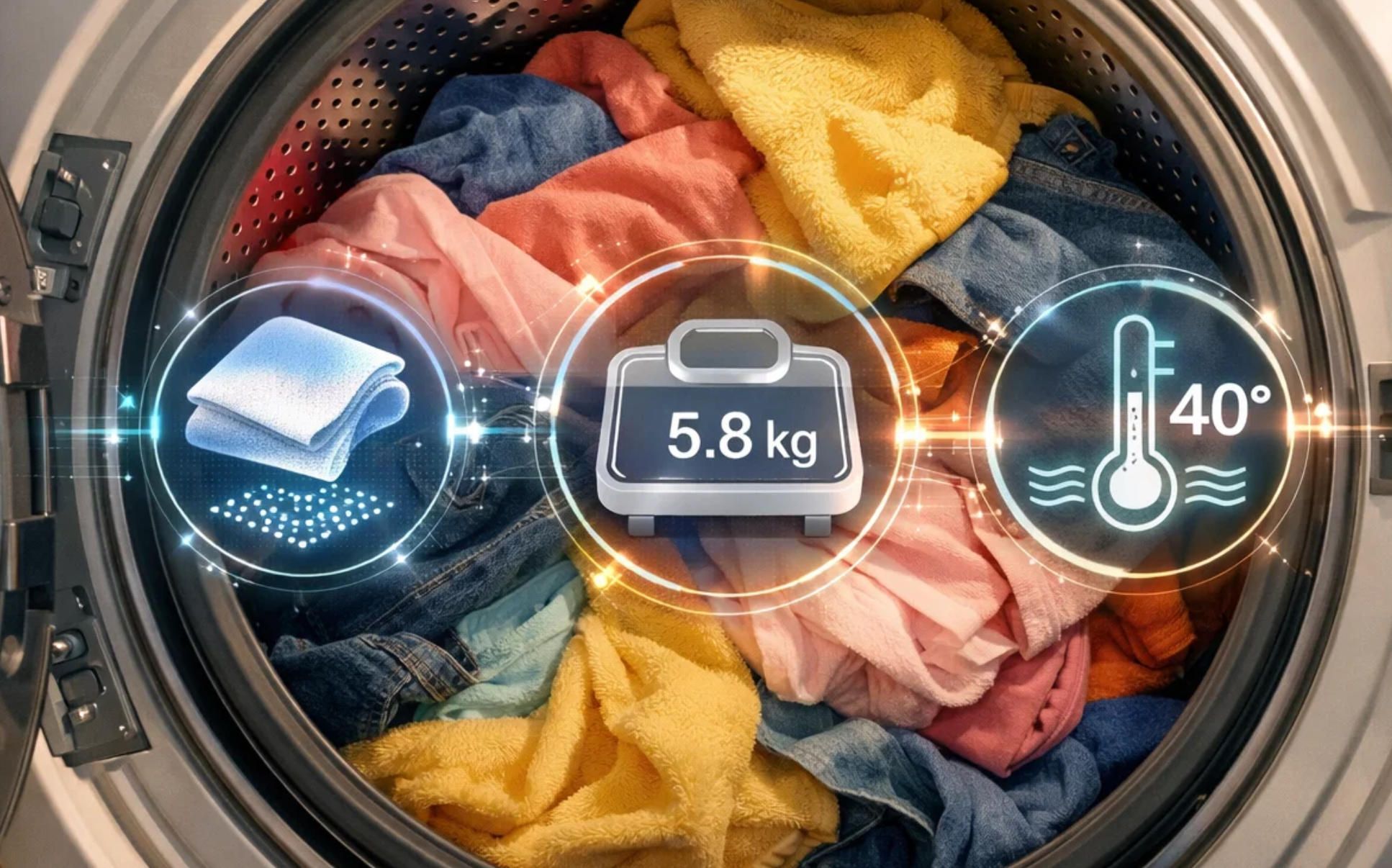
LG's approach centers on AI DD 2.0 (Artificial Intelligence Direct Drive), a sensor-based system that detects three critical load parameters: fabric texture, soil level, and load weight. Based on this analysis, it automatically selects the optimal combination of wash motions, temperatures, and cycle durations from a library of thousands of possible settings. This goes beyond simple load-sensing by actually analyzing the physical characteristics of your fabrics.
LG pairs AI DD 2.0 with its 6Motion Technology, which uses six distinct mechanical wash motions — stepping, filtration, scrubbing, tumbling, rolling, and swinging — to deliver fabric-specific cleaning that minimizes wear while maximizing stain removal. The Direct Drive Motor connects directly to the drum without belts or pulleys, reducing moving parts, noise, and long-term mechanical wear.
In lab testing by Reviewed.com, both machines outperformed the average front-load washer in stain removal. The Samsung WF53BB8700AT showed particularly impressive results on its Heavy Duty cycle, which scrubbed out significantly more stains than competing models. The LG WM6700HBA delivered fast cycle times with strong cleaning power, though its AI Wash cycle — while convenient — took longer than other cycles without proportionally better results.
Speed and Wash Cycle Options
For busy households, cycle speed can be a deciding factor. Both machines offer rapid-wash technologies, but execute them differently.
The Samsung WF53BB8700AT's headline feature is Super Speed Wash 2.0, which completes a full load in approximately 28 minutes based on an 8-pound load. When paired with Samsung's matching Super Speed dryer, a complete wash-and-dry cycle finishes in under an hour. The machine accomplishes this through a combination of high-pressure water spray that accelerates detergent penetration and a larger-diameter drum that increases cleaning force.
The Samsung offers an impressive 24 wash programs: Normal, Heavy Duty, Bedding, Permanent Press, Delicates, Activewear, Wool, Towels, Eco Cold, Rinse + Spin, Self Clean+, Small Load, Colors, Spin Only, Outdoor, Denim, Super Speed, Steam Sanitize, Steam Allergen, Steam Normal, Power Steam, Steam Whites, Steam Bulky, and Power Rinse. Users also have access to 14 additional wash options including Presoak, Extra Rinse, My Cycles, Delay End, Smart Control, and Child Lock.
The LG WM6700HBA responds with TurboWash 360° technology, which uses five high-pressure spray jets positioned at multiple angles to saturate clothes faster and more thoroughly. This enables the Normal cycle to finish in approximately 30 minutes with TurboWash engaged, while the Quick Wash cycle completes in just 15 minutes for lightly soiled smaller loads.
LG offers 25 wash programs: Normal, AI Wash, Bedding, Delicates, Towels, Quick Wash, Heavy Duty, Allergiene, Permanent Press, Tub Clean, Bright Whites, Sanitary, Rinse+Spin, Spin Only, Hand/Wool, Active Wear, Swimwear, Kids Wear, Jeans, Dresses, Color Care, Sweat Stains, Small Load, Large Load, and X Large Load. The machine also includes 19 cycle options such as TurboWash, Steam, Fresh Care, Pre-wash, Remote Start, ColdWash, and Cycle List Edit.
One notable LG advantage is the breadth of specialized cycles. Programs like Swimwear, Kids Wear, Sweat Stains, and Dresses address specific laundry scenarios that the Samsung handles through more general-purpose cycles. The Allergiene cycle, certified by the Asthma and Allergy Foundation of America (AAFA), uses steam to remove 95% of common allergens — a meaningful feature for allergy sufferers.
The Samsung counters with an extensive suite of steam-based programs. Six separate steam cycles (Steam Sanitize, Steam Allergen, Steam Normal, Power Steam, Steam Whites, and Steam Bulky) provide granular control over steam-assisted cleaning for different fabric types and soil levels.
Automatic Detergent Dispensing
Both washers include automatic detergent dispensing systems, eliminating the guesswork of measuring detergent for each load. However, the capacity differs significantly.
The Samsung WF53BB8700AT's auto-dispense reservoir holds enough detergent for approximately 32 loads. The system releases the precise amount of detergent based on load size and soil level, reducing oversudsing — which Yale Appliance notes is one of the most common causes of washer service calls.
The LG WM6700HBA's ezDispense system holds enough detergent and fabric softener for approximately 18 loads. It similarly calculates the optimal amount based on load characteristics, and sends a smartphone notification through the ThinQ app when reservoirs are running low.
The Samsung's larger reservoir is a practical advantage for high-volume households, reducing the frequency of refills by nearly 80% compared to LG. For a family doing 8-10 loads per week, the Samsung needs refilling roughly every 3-4 weeks, while the LG requires attention every 2 weeks.
Mobile App Experience: Samsung SmartThings vs LG ThinQ
The companion mobile apps represent the true software differentiator between these two washers — and the area where the future of smart laundry is being defined.
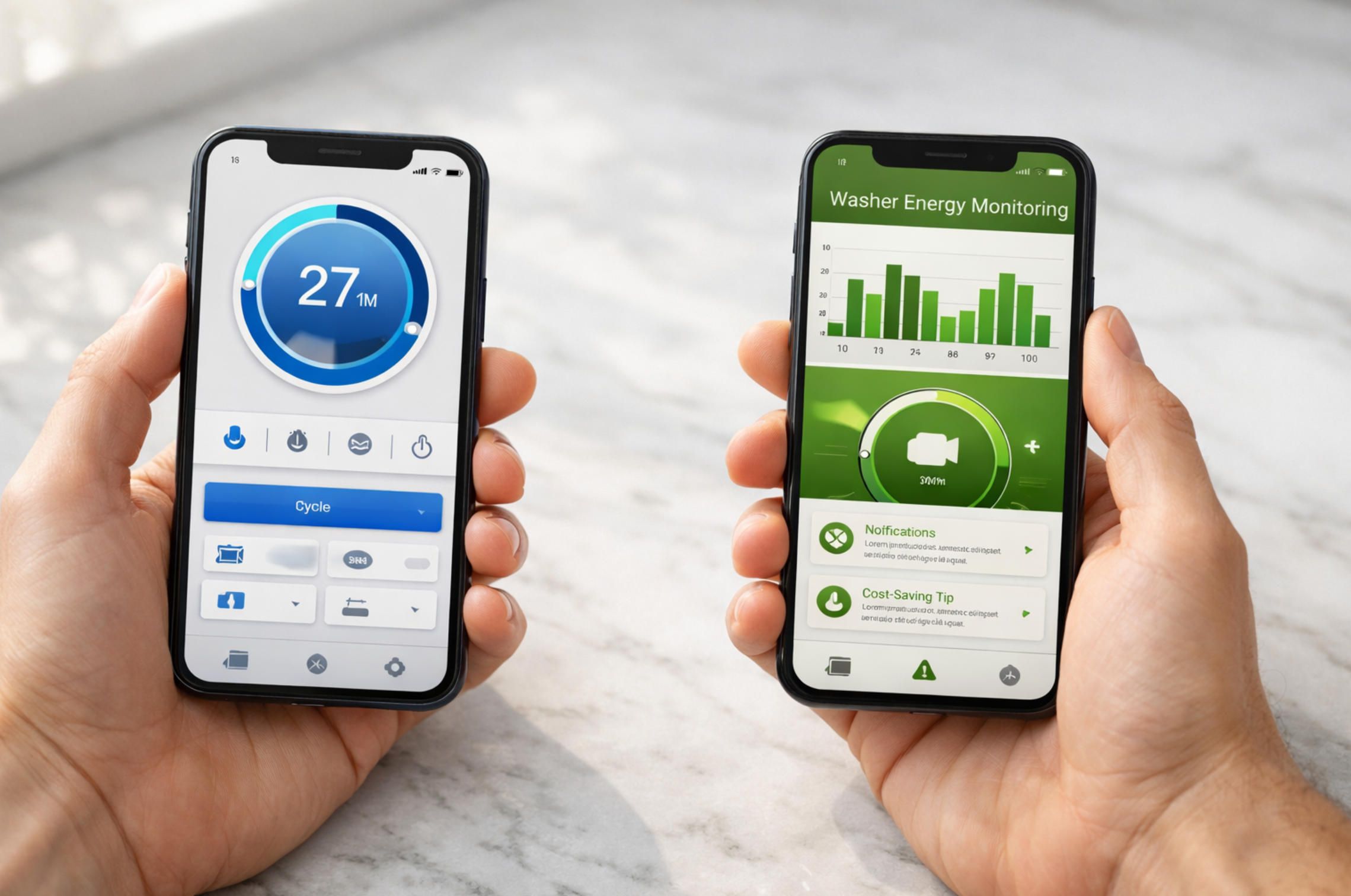
Samsung SmartThings is one of the most comprehensive smart home platforms available, supporting not only Samsung appliances but hundreds of third-party devices across categories. For the WF53BB8700AT, SmartThings provides remote start and stop, cycle scheduling, end-of-cycle notifications, energy usage monitoring and management, cycle recommendations based on soil level, AI Energy mode activation for up to 35% energy reduction, Laundry Recipe suggestions based on fabric type, and SmartThings Energy dashboard integration.
The app also supports Samsung's MultiControl feature for stacked units, allowing dryer control through the washer interface. SmartThings integrates with Amazon Alexa, Google Assistant, and Samsung's own Bixby for voice control. The broader SmartThings ecosystem means your washer can participate in home automation routines — for example, automatically adjusting thermostat settings when a long cycle starts, or dimming lights in the laundry room when a night cycle begins.
LG ThinQ takes a more appliance-focused approach, prioritizing reliability and simplicity over ecosystem breadth. For the WM6700HBA, ThinQ offers remote start, stop, and cycle monitoring, downloadable new wash cycles (such as specialized programs for gym clothes or swimwear), end-of-cycle notifications, Smart Diagnosis for remote troubleshooting, ThinQ Care with proactive maintenance alerts and usage recommendations, Smart Pairing with compatible LG dryers for automatic dryer cycle selection, energy consumption reports, and voice control through Amazon Alexa and Google Assistant.
LG's Smart Diagnosis deserves special attention. This feature allows the washer to transmit diagnostic data directly to a service technician, either through the app or by holding the phone's speaker near the machine. It can identify potential mechanical issues before they escalate, reducing the need for service visits. LG's Proactive Customer Care takes this further by monitoring usage patterns and sending preventive maintenance alerts through the ThinQ app.
From a pure usability standpoint, multiple industry reviews note that the ThinQ app tends to be more straightforward for day-to-day washer control, while SmartThings offers deeper customization and broader smart home integration. Users who already own multiple Samsung devices will find SmartThings particularly compelling, while those prioritizing reliability and simplicity may prefer ThinQ.
For appliance manufacturers evaluating their own companion app strategies, both platforms illustrate key design principles: contextual intelligence (recommending actions based on usage data), proactive communication (maintenance alerts and diagnostic capabilities), and ecosystem connectivity (integration with voice assistants and other smart home devices). These are exactly the types of IoT mobile applications that A-Bots.com specializes in building — from architecture design and prototyping through deployment, QA testing, and long-term maintenance.
Noise and Vibration Control
Laundry room location matters. Whether your washer sits in a closet near bedrooms, in an open-concept utility area, or in an apartment with shared walls, noise performance directly affects quality of life.
The Samsung WF53BB8700AT uses Vibration Reduction Technology Plus (VRT+), an advanced drum balancing system with dedicated sensors that Samsung claims reduces vibration by 40% compared to standard VRT. The Swirl+ drum pattern also contributes to smoother spin cycles by distributing water and laundry more evenly. Best Buy customer reviews consistently highlight quiet operation as a top positive attribute, though some users note the spin cycle can get loud on maximum settings.
The LG WM6700HBA employs a fundamentally different approach through its Direct Drive Motor, which eliminates the belt-and-pulley system used in conventional washers. Fewer moving parts means less mechanical noise and vibration at the source. LG pairs this with TrueBalance anti-vibration technology for additional stability. The maximum spin speed reaches 1,300 RPM, which effectively extracts more moisture from clothes and reduces drying time.
Industry experts generally give LG a slight edge in noise performance. Multiple comparison reviews describe LG front-load washers as operating at near whisper-level during normal cycles, while Samsung machines perform well but may be slightly louder under heavy loads. For laundry rooms adjacent to living spaces or bedrooms, this distinction could be meaningful.
Energy Efficiency and Operating Costs
Both washers carry ENERGY STAR certification, confirming they meet or exceed federal energy efficiency guidelines. However, their efficiency profiles differ in notable ways.
The Samsung WF53BB8700AT incorporates an AI Energy mode (available through a SmartThings OTA update) that reduces energy use by up to 35% across compatible cycles by minimizing heater operation. This mode may extend cycle time slightly, creating a user-defined tradeoff between speed and energy savings. The SmartThings Energy dashboard provides real-time monitoring and management of power consumption, with specific tips for reducing electricity bills.
The LG WM6700HBA features ColdWash technology, which uses cold water with enhanced wash motions to deliver cleaning results comparable to warm water cycles. This approach inherently reduces energy consumption for every cold-wash cycle without requiring an app update or mode activation. According to Trusted Reviews, the WM6700HBA costs approximately $0.21 per cycle to operate based on a standard 19.8-pound test load with warm water — a competitive figure for a machine of this capacity.
Both machines use high-efficiency (HE) detergent, and their auto-dispense systems help prevent overuse — a hidden energy cost, since excess detergent requires additional rinse cycles that consume more water and electricity.
For energy-conscious households, the LG's built-in ColdWash optimization provides passive savings without app interaction, while Samsung's AI Energy mode offers deeper savings for users willing to engage with the SmartThings app.
Reliability, Warranty, and Long-Term Support
Reliability data separates good appliances from great investments. Both brands offer strong warranty packages, but their track records diverge in important ways.
Samsung provides a comprehensive warranty that includes a 20-year limited warranty on the Digital Inverter Motor for washers assembled in the USA and purchased on or after July 1, 2022. The standard warranty covers parts and labor for the first year. Samsung was ranked first in Customer Satisfaction with Front Load Washers in the J.D. Power 2023-2024 U.S. Home Appliance Satisfaction Studies and earned Best in Class rankings for Dryers and Overall Customer Satisfaction from the 2025 ACSI Survey.
LG offers a 1-year parts and labor warranty, a 10-year limited warranty on the Direct Drive Motor, a 3-year warranty on the drum, and the lifetime warranty on the NeveRust stainless steel tub. Through the ThinQ app, LG also provides an extended 2-year warranty at no additional cost for qualifying products registered in the app — effectively doubling the base warranty period.
Where the real difference emerges is in service infrastructure and reliability data. Yale Appliance, which completed over 33,190 service calls in a single year, reports LG's service rate at just 2.7% over a 12-month period for front-load washers — the lowest of any brand they track. Yale Appliance recommends LG as the most reliable front-load washer brand available in 2026, based on actual service call data rather than customer reviews alone.
Samsung, while producing well-designed and feature-rich machines, relies more heavily on independent service providers rather than maintaining a direct service network comparable to LG's. Multiple industry sources note that Samsung's service and support infrastructure has room for improvement, particularly once machines are several years old.
As of 2025, LG and Samsung are the second and third most popular washing machine brands in the United States respectively, behind Whirlpool Corporation. Both brands have significantly disrupted the American appliance market with high-tech features and bold designs, but LG has earned a stronger reputation for long-term reliability.
Pricing and Value Proposition
Both washers occupy the premium segment of the front-load washer market.
The Samsung Bespoke AI WF53BB8700AT has a retail price of approximately $1,099 (Samsung.com MSRP), though street prices frequently range from $898 to $1,258 depending on the retailer, promotions, and color choice. Lowe's has listed it at $1,258, while other retailers offer competitive discounts.
The LG WM6700HBA carries a list price of approximately $1,699 (LG.com MSRP), with street prices commonly ranging from $1,149 to $1,298 after promotions and rebates. Lowe's has listed it at $1,298, and LG frequently offers bundle discounts when purchased with a matching dryer.
At typical selling prices, the Samsung often costs $200-$400 less than the LG, offering more capacity (5.3 vs 5.0 cubic feet), a larger auto-dispense reservoir (32 vs 18 loads), more steam cycles, and MultiControl compatibility. The LG counters with superior reliability data, better long-term service support, a lifetime drum warranty, TurboWash 360° for fast cycle times, AAFA-certified Allergiene cycle, and more specialized wash programs.
Both machines represent strong value within the premium segment, which Mordor Intelligence reports commanded a 50% share of the mid-range ($501-$1,000) smart washing machine market in 2024, with the premium tier (above $1,000) advancing at a 17.34% CAGR.
Smart Home Ecosystem Integration
The smart home integration capabilities of both washers extend well beyond their respective companion apps.
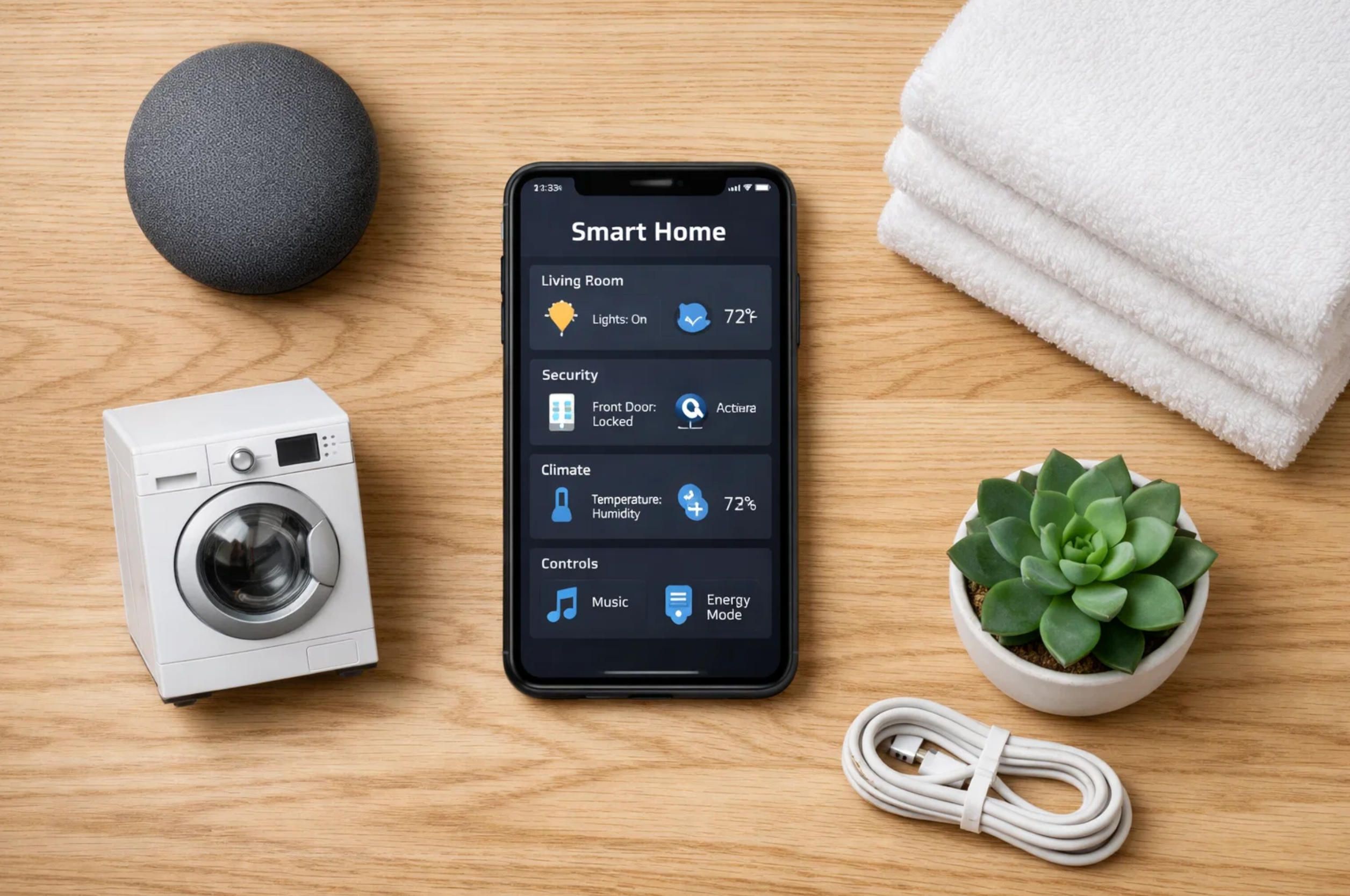
The Samsung WF53BB8700AT operates within the SmartThings ecosystem, which gained a major interoperability boost when the Matter 1.3 protocol, released in May 2024, formally added washing machine support. Matter allows a single appliance to communicate with Amazon Alexa, Google Home, Apple HomeKit, and other platforms through a unified standard. Samsung's adoption of Matter positions the WF53BB8700AT for broader compatibility with third-party smart home devices and routines.
SmartThings also supports geofencing triggers, automation routines, and scenes that include the washer alongside other Samsung and third-party devices. For example, a "Leaving Home" routine could start a delayed wash cycle, adjust the thermostat, and lock the doors — all from a single trigger.
The LG WM6700HBA integrates with the ThinQ ecosystem and supports voice control through Amazon Alexa and Google Assistant. LG's ThinQ UP platform enables over-the-air firmware updates that can add new features and cycles after purchase, extending the machine's capabilities over its lifespan. The Smart Pairing feature automatically communicates with compatible LG dryers to recommend the optimal drying cycle based on the wash just completed — eliminating user guesswork between the wash and dry phases.
Both platforms support 2.4 GHz Wi-Fi networks (the standard for IoT appliances), and both require their respective brand accounts for full functionality.
For manufacturers and startups developing smart home appliances, these ecosystem strategies highlight the critical importance of robust mobile app architecture, OTA update infrastructure, and cross-platform compatibility. Building these capabilities in-house requires significant engineering investment. Companies looking to accelerate their IoT companion app development can partner with experienced teams like A-Bots.com, which offers end-to-end mobile development services including IoT integration, real-time data dashboards, cloud backend infrastructure, and quality assurance testing for connected appliance applications.
Who Should Buy Which Washer?
Choose the Samsung Bespoke AI WF53BB8700AT if you:
- Want the largest drum capacity in a standard 27-inch front-load washer (5.3 cubic feet)
- Need the fastest wash cycle available (28 minutes with Super Speed 2.0)
- Value extensive steam cleaning options (six dedicated steam cycles)
- Already use Samsung SmartThings for your smart home
- Want a larger auto-dispense reservoir (32 loads vs 18)
- Prefer a lower purchase price in the premium segment
- Plan to stack with a Samsung dryer and want MultiControl convenience
- Appreciate Samsung's Bespoke design aesthetic with customizable color options
Choose the LG WM6700HBA if you:
- Prioritize long-term reliability backed by the lowest service rates in the industry
- Want AAFA-certified allergen removal for sensitive household members
- Need the quietest operation for laundry rooms near living areas
- Prefer specialized wash cycles for specific garment types (swimwear, kids wear, dresses)
- Value a lifetime warranty on the stainless steel drum
- Want proactive maintenance alerts through ThinQ Care and Smart Diagnosis
- Prefer a slightly shallower depth (33.25 inches) for tighter installations
- Plan to add an LG SideKick Pedestal Washer for dual-load capability
The Future of Smart Laundry: Why Mobile Apps Matter More Than Ever
The comparison between Samsung SmartThings and LG ThinQ illustrates a broader industry trend: the companion mobile app is becoming as important as the hardware itself. Consumers increasingly evaluate smart appliances not just by their physical specifications, but by the quality, intelligence, and long-term support of their software ecosystems.
Mordor Intelligence reports that residential applications accounted for 85% of the smart washing machine market in 2024, with online sales climbing at an 18.9% CAGR through 2030. As the connected appliance market expands, manufacturers face growing pressure to deliver mobile apps that provide genuine value — from real-time diagnostics and energy management to AI-driven cycle optimization and preventive maintenance.
Key trends shaping smart laundry app development include machine learning models that predict optimal wash settings based on historical usage and environmental data, integration with health platforms for allergen tracking and air quality correlation, predictive maintenance algorithms that schedule service before failures occur, energy optimization tied to utility demand-response programs (such as National Grid's ConnectedSolutions), multi-device management dashboards for households with multiple connected appliances, and conversational AI support for troubleshooting and user guidance.
These are precisely the capabilities that A-Bots.com builds for IoT and smart home clients. With over 70 completed projects and client relationships spanning more than five years, our team understands the full lifecycle of connected product development — from hardware-software integration architecture through user experience design, backend cloud infrastructure, API development, quality assurance, and post-launch iteration.
Whether you are an appliance manufacturer seeking to build a world-class companion app, a startup developing a new connected home device, or an established brand looking to modernize and test an existing mobile application, A-Bots.com delivers the technical depth and project reliability that IoT products demand. Contact our team at info@a-bots.com or visit https://a-bots.com/ to discuss your project.
Frequently Asked Questions
Is the Samsung WF53BB8700AT better than the LG WM6700HBA for large families?
Both washers excel for large families, but each has different strengths. The Samsung offers a larger 5.3 cubic-foot drum and a 28-minute Super Speed cycle, meaning you can wash more laundry faster per load. The LG's 5.0 cubic-foot drum is still very large, and its TurboWash 360° delivers a 30-minute full cycle. For families prioritizing raw throughput, the Samsung's larger drum and faster cycle may save more time overall. For families prioritizing reliability and specialized care (Kids Wear cycle, Allergiene for allergens), the LG is the stronger choice.
Can I control both washers from my phone?
Yes. The Samsung WF53BB8700AT connects to the Samsung SmartThings app (available on Android and iOS), while the LG WM6700HBA uses the LG ThinQ app (also available on both platforms). Both apps enable remote start and stop, cycle monitoring, end-of-cycle alerts, and energy tracking. Both washers require a 2.4 GHz Wi-Fi network and a brand account for full functionality.
Which washer is quieter?
Industry testing and user reviews generally give the LG WM6700HBA a slight edge in noise performance, particularly during normal cycles. LG's Direct Drive Motor has fewer moving parts than conventional belt-driven motors, which inherently reduces noise and vibration. The Samsung's VRT+ technology is effective but may produce more noticeable noise during high-speed spin cycles with heavy loads.
How do the warranties compare?
The Samsung offers a 20-year limited warranty on the Digital Inverter Motor (for US-assembled units purchased after July 2022) and 1-year parts and labor. The LG provides a 10-year limited warranty on the Direct Drive Motor, a 3-year drum warranty, a lifetime NeveRust tub warranty, and 1-year parts and labor. LG also offers a free 2-year extended warranty for products registered through the ThinQ app.
Which washer is more reliable in the long term?
Based on actual service call data, LG has a lower failure rate. Yale Appliance reports a 2.7% service rate for LG front-load washers over 12 months — the lowest of any brand they service. While Samsung makes reliable machines, their service infrastructure depends more on independent providers, which can result in inconsistent support experiences after the initial warranty period.
Are these washers compatible with smart home assistants?
Both washers support Amazon Alexa and Google Assistant for voice control. The Samsung additionally supports Samsung Bixby and the Matter 1.3 protocol for broader smart home interoperability. The LG focuses on Alexa and Google Assistant integration through the ThinQ platform.
Can a mobile app development company build a custom laundry appliance app?
Absolutely. Companies like A-Bots.com specialize in building custom IoT companion applications for smart home devices, including connected washers, dryers, and other household appliances. A custom app can include features like AI-driven cycle recommendations, real-time energy monitoring, predictive maintenance alerts, multi-appliance dashboards, integration with health and wellness platforms, and branded user experiences tailored to specific hardware capabilities.
Sources
- Samsung.com — Official product page and specifications for WF53BB8700AT
- LG.com — Official product page and specifications for WM6700HBA
- Reviewed.com — Samsung WF53BB8700AT review (December 2025)
- Reviewed.com — LG WM6700HBA review (December 2025)
- Reviewed.com — Samsung vs LG Washing Machines comparison (December 2025)
- Yale Appliance Blog — Best Front-Load Washers for 2026 (service data from 33,190 calls)
- Yale Appliance Blog — LG vs Samsung Front-Load Washers comparison
- Mordor Intelligence — Smart Washing Machine Market Size and Share Analysis (2025)
- Grand View Research — Smart Washing Machine Market Size report (2024)
- Consumer Reports — Samsung Bespoke WF53BB8700AT and LG WM6700HBA testing (December 2025)
- Trusted Reviews — LG WM6700HBA review (June 2023)
- Best Buy — Customer reviews for Samsung WF53BB8700AT
- J.D. Power — 2023-2024 U.S. Home Appliance Satisfaction Studies
- ACSI — 2025 American Customer Satisfaction Index Survey
- Family Handyman — LG vs Samsung Front-Load Washers comparison (September 2024)
- A-Bots.com — Company portfolio and IoT development services
✅ Hashtags
#SamsungVsLGWasher
#SamsungBespokeAI
#LGWM6700HBA
#SmartFrontLoadWasher
#AIWashingMachine
#SmartHomeLaundry
#FrontLoadWasherComparison
#IoTAppDevelopment
#CustomAppDevelopment
Other articles
App Development Christchurch: Custom Mobile Solutions for Canterbury Businesses Christchurch has emerged as New Zealand's innovation hub, with a tech sector contributing $2.4 billion to regional GDP. This comprehensive guide explores app development Christchurch opportunities across key industries including tourism, agriculture, healthcare, and technology. Learn about development costs ranging from $5,000 for simple apps to $300,000+ for complex solutions, platform selection strategies, and the structured development process from discovery to deployment. The article examines how Canterbury businesses leverage mobile applications to serve the region's 96% internet-connected population. A-Bots.com offers custom development and testing services backed by 70+ completed projects and long-term client partnerships spanning over five years.
App Development New Zealand: Build a Custom Mobile Product New Zealand's tech sector contributes NZ$23.8 billion to GDP, and mobile app usage among Kiwis exceeds 70%. This guide covers everything businesses need to know about app development New Zealand — from market data and user behavior to development costs, regulatory compliance under the Privacy Act 2020, and technology choices between native and cross-platform frameworks. Key industries driving mobile demand include agritech, fintech, healthtech, and tourism. A-Bots.com offers full-cycle development, QA testing, and strategic consulting backed by 70+ completed projects across mobile, web, IoT, chatbot, and blockchain solutions. The article includes cost breakdowns, emerging technology trends, and practical advice for launching a competitive mobile product in the New Zealand market.
Dyson TP09 vs Blueair Blue Pure 411i Max Choosing between the Dyson Purifier Cool Formaldehyde TP09 and the Blueair Blue Pure 411i Max means weighing premium multi-sensor intelligence against efficient, budget-friendly filtration. This in-depth comparison examines every critical factor: HEPA H13 and catalytic formaldehyde filtration versus HEPASilent electrostatic technology, four-sensor environmental monitoring versus single PM2.5 detection, MyDyson app dashboards versus Blueair's streamlined controls, noise performance, five-year ownership costs, and smart home integration. The article concludes with an expert analysis of how custom mobile app development by A-Bots.com can push air purifier technology further through predictive analytics, health platform integration, and multi-device management.
Litter-Robot 4 vs PETKIT Pura Max 2: Smart Litter Box Comparison Expert comparison of Litter-Robot 4 vs PETKIT Pura Max 2 using a practical decision framework: safety, odor control, reliability, and true total cost of ownership. Learn which model fits multi-cat homes, compact apartments, and owners who want fewer maintenance headaches. The article also explains how a custom mobile app can upgrade smart litter boxes with better alerts, multi-cat analytics, health trend detection, predictive maintenance, and a unified pet-device dashboard. Built for pet-tech brands and product teams seeking a competitive software layer from A-Bots.com.
LG InstaView Door-in-Door vs Samsung Family Hub - Smart Fridge Ecosystems Compare LG InstaView Door-in-Door and Samsung Family Hub in real-life use - food access workflows, ecosystem value, app experience, and long-term ownership. Learn which smart fridge approach fits families, meal-preppers, and smart-home users. The article also explains how a custom mobile app can make connected refrigerators genuinely smarter: low-friction inventory intelligence, freshness insights, energy optimization, predictive maintenance, and service workflows - with privacy-by-design. For appliance brands and product teams, A-Bots.com can build the mobile app, cloud backend, and device API layer that turns hardware into a durable ecosystem.
Top stories

Copyright © Alpha Systems LTD All rights reserved.
Made with ❤️ by A-BOTS