
Home
Services
About us
Blog
Contacts
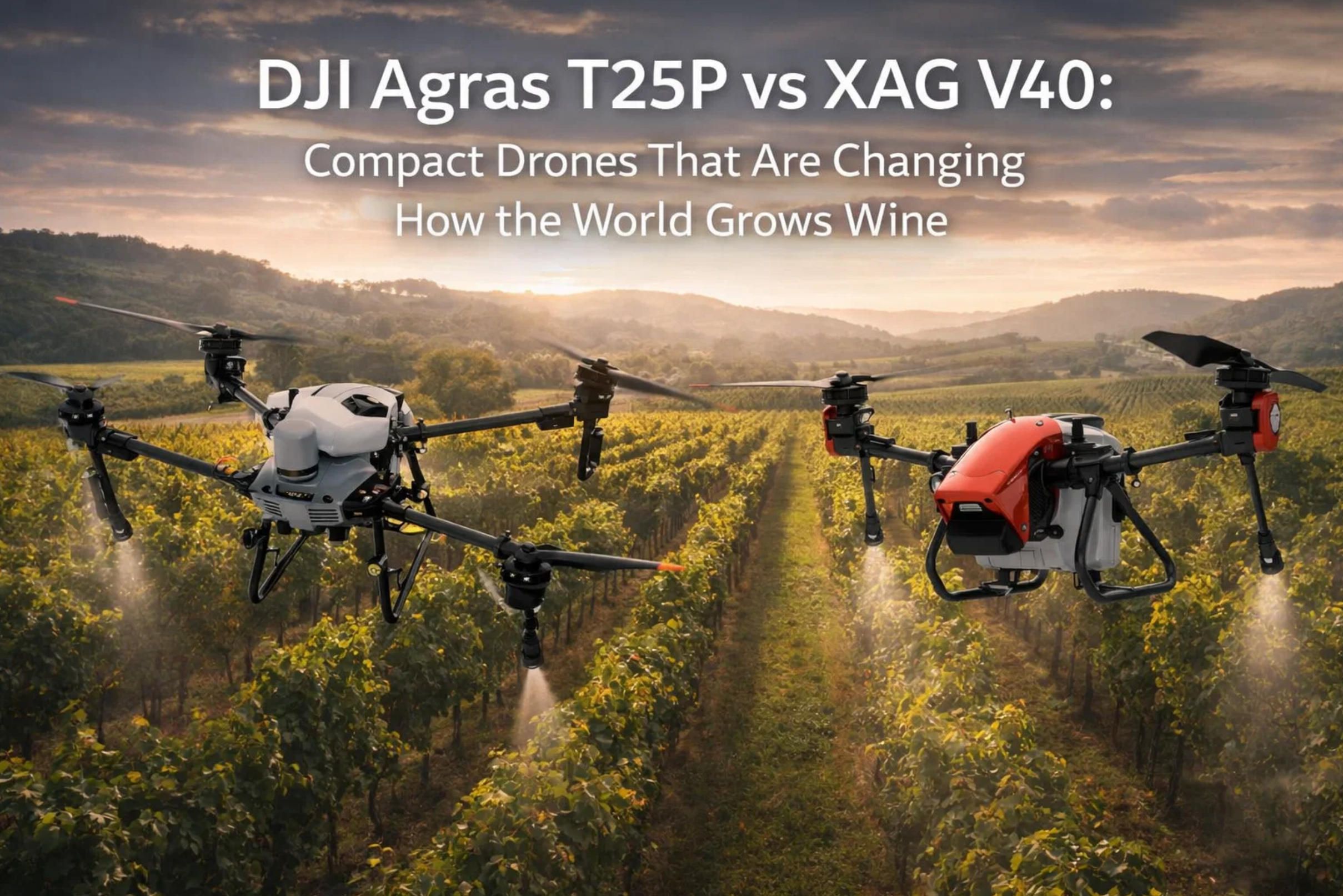
DJI Agras T25P vs XAG V40: Compact Drones That Are Changing How the World Grows Wine
Somewhere between the ancient art of winemaking and the bleeding edge of autonomous flight, a quiet revolution is underway. Across vineyards in Bordeaux, Napa Valley, Hawke's Bay, Chianti, and the steep hillsides of Baden-Württemberg, compact agricultural drones are replacing tractors on slopes too dangerous to drive, spraying fungicide on vines too dense to reach, and generating crop health maps so detailed that winemakers can now harvest different sections of the same block at different times to optimize flavor profiles.
The precision viticulture market is projected to reach USD 9.51 billion by 2032, growing at a CAGR of 14.4%, according to DataM Intelligence. Europe leads with a 36% market share, driven by rising labor costs, climate variability, and the premium wine industry's relentless pursuit of quality. Meanwhile, the broader agricultural drone market continues its explosive trajectory — MarketsandMarkets projects growth from USD 2.63 billion in 2025 to USD 10.76 billion by 2030.
At A-Bots.com, we see vineyard drone technology as a perfect intersection of our core competencies: IoT systems, mobile applications, real-time data processing, and custom software development. With over 70 delivered projects — including the Shark Clean IoT robotic vacuum controller and enterprise-grade platforms like BSSAuto — our team has deep experience building the kind of software that vineyard drone operations demand: flight planning interfaces optimized for row-based navigation, real-time telemetry dashboards, NDVI data visualization, and integration between aerial imagery and farm management systems.
Whether you need custom ground control software for vineyard-specific flight patterns, a mobile app that overlays drone health maps onto your block management system, or QA testing for existing precision viticulture software, A-Bots.com has the engineering team and the technology stack — React Native, Python, Django, Node.js, Java, Kotlin, Swift — to deliver it.
Now let us look at two compact drones that are perfectly sized for the vineyard: the DJI Agras T25P and the XAG V40.
"My grandfather used a mule to spray his vines. My father used a tractor. I use a drone. My son will probably just ask the drone to do it while he checks the wine cellar." — Anonymous Vineyard Owner, Tuscany
Why Vineyards Need Drones More Than Almost Any Other Crop
Vineyards present a unique set of challenges that make drone technology not just useful but often essential. Unlike flat broadacre crops where tractors operate efficiently, vineyards are frequently planted on steep hillsides where the best sun exposure and drainage produce the finest grapes — and where heavy ground equipment is either dangerous to operate or physically impossible to use.
In Germany's VDP estates, winemakers reported losing 60% of their grape harvest in 2021 because wet conditions prevented tractors from entering vineyards to spray fungicide in time. The vines needed protection from powdery mildew, but the soil was too saturated for ground equipment. Drones could have been above those vines within minutes, regardless of soil conditions.
Precision spraying in vineyards also delivers significant environmental benefits. Drones reduce chemical usage by 30–40% compared to traditional ground sprayers by targeting only the areas that need treatment. They eliminate soil compaction caused by tractor passes — protecting the soil biology that European winemakers increasingly view as critical to terroir expression. And they reduce worker exposure to pesticides, a meaningful safety improvement in an industry that still relies heavily on manual labor.
Beyond spraying, drones equipped with multispectral cameras generate NDVI (Normalized Difference Vegetation Index) maps that reveal vine vigor differences invisible to the naked eye. Winemakers at operations like Kendall-Jackson have used drone imagery since 2015 to identify stressed vines, optimize irrigation, and even select specific vineyard sections for premium wine production. In Italy's Bolgheri region, drone-generated vigor maps enabled selective harvesting — picking grapes from low-vigor zones (which concentrate more sugar) separately from high-vigor zones — to produce wines of measurably higher quality.
DJI Agras T25P: The Refined Solo Operator
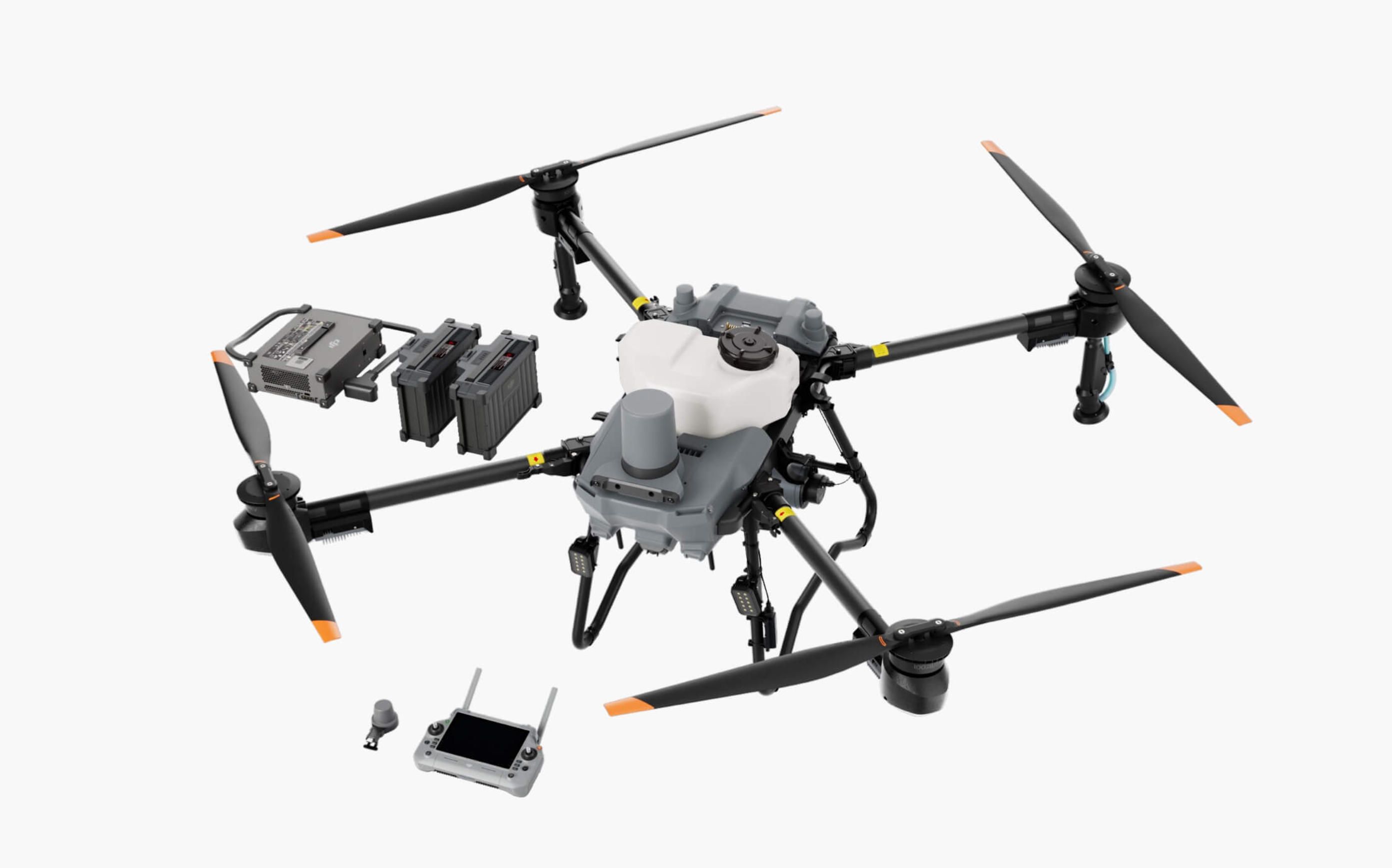
The DJI Agras T25P, launched globally in July 2025, is the latest evolution of DJI's compact agricultural drone line. It retains the foldable, lightweight design that made the T25 popular with solo operators while adding meaningful upgrades through the new Safety System 3.0 and an improved spreading mechanism.
The T25P carries a 20-liter spray tank with a maximum payload of 20 kg for liquids and 25 kg for granular materials using the upgraded screw feeder spreading system 4.0. The Dual Atomizing Spraying System delivers a flow rate of 16 L/min with two sprinklers, expandable to 24 L/min with the optional four-sprinkler kit. Droplet size is adjustable from 50 to 500 micrometers — a wide range that allows operators to fine-tune application for everything from dense vine canopies to open field crops.
For vineyard work specifically, the T25P's Orchard Mode is a standout feature. This specialized flight mode uses the drone's high-resolution FPV gimbal camera combined with RTK positioning to automatically identify fruit trees and obstacles, then generate precise 3D flight routes that follow tree rows. On slopes up to 20 degrees, the drone performs automated surveying with obstacle bypassing and terrain following, creating the mapping foundation for subsequent spray operations — all at the push of a button.
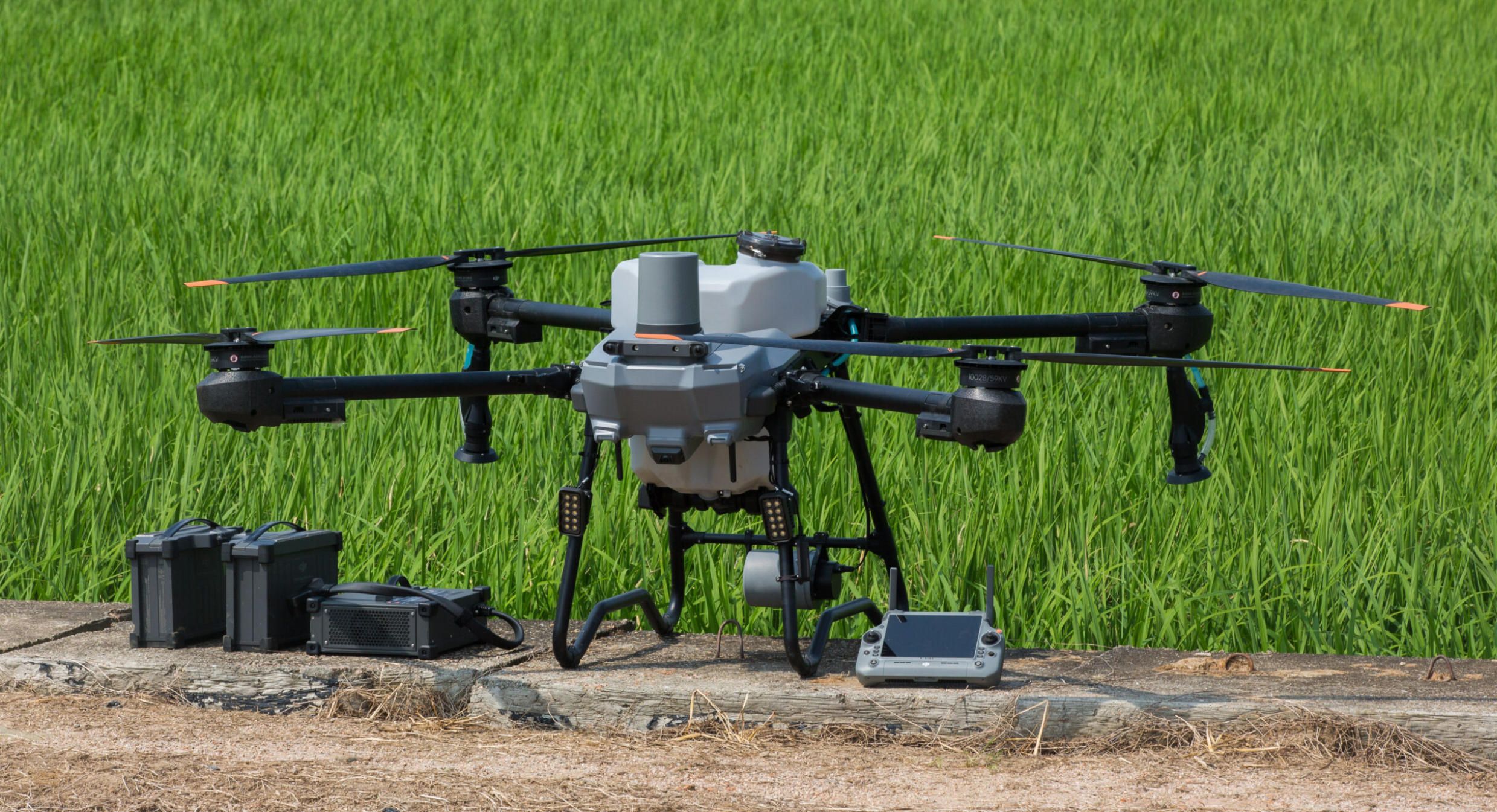
Safety System 3.0 is a significant upgrade from the T25 predecessor. Millimeter-wave radar and a binocular vision system provide multidirectional obstacle sensing, with terrain following capability on slopes up to 50 degrees. For the steep hillside vineyards common in Mosel, Douro, and Côtes du Rhône, this slope tolerance is critical.
The DJI RC Plus controller features a 7-inch high-brightness screen with an 8-core processor, now 16% brighter than the previous generation and equipped with backlit buttons for low-light operations. The DB800 Intelligent Flight Battery charges in approximately 9 minutes using the C8000 charger, enabling continuous operations with a three-battery rotation. The T25P covers approximately 30 acres per hour during spray operations.
The entire system integrates with DJI SmartFarm, providing cloud-based flight logging, as-applied maps, and prescription map support for variable-rate application. For vineyard managers who want a complete, vertically integrated ecosystem from mapping to spraying to data analysis, the T25P within DJI's platform is difficult to beat.
"The T25P is like a Swiss army knife that happens to fly. Map, spray, spread — and it folds up small enough to fit in the back seat." — DJI Agriculture Operator
XAG V40: The Twin-Rotor Rebel
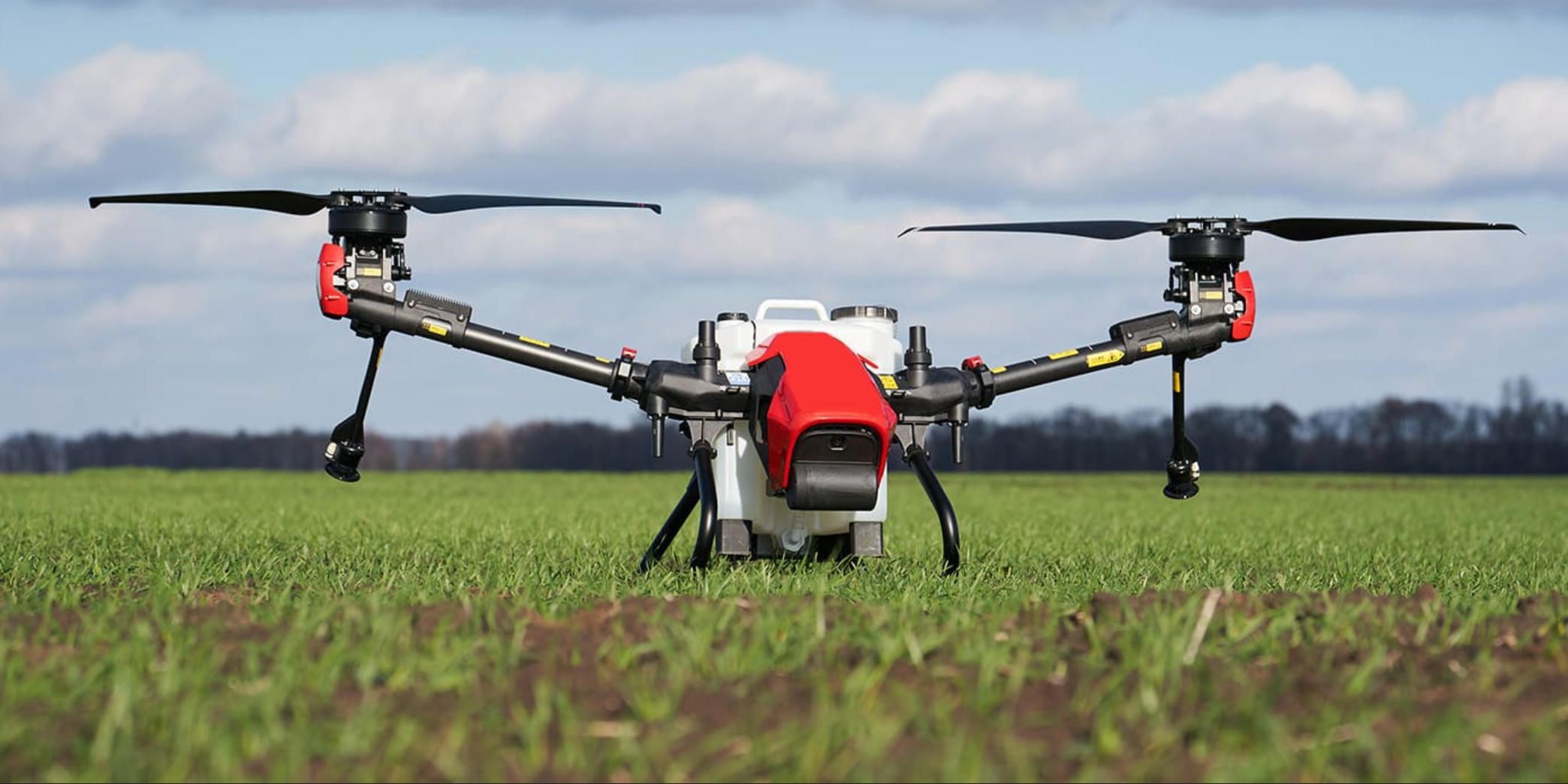
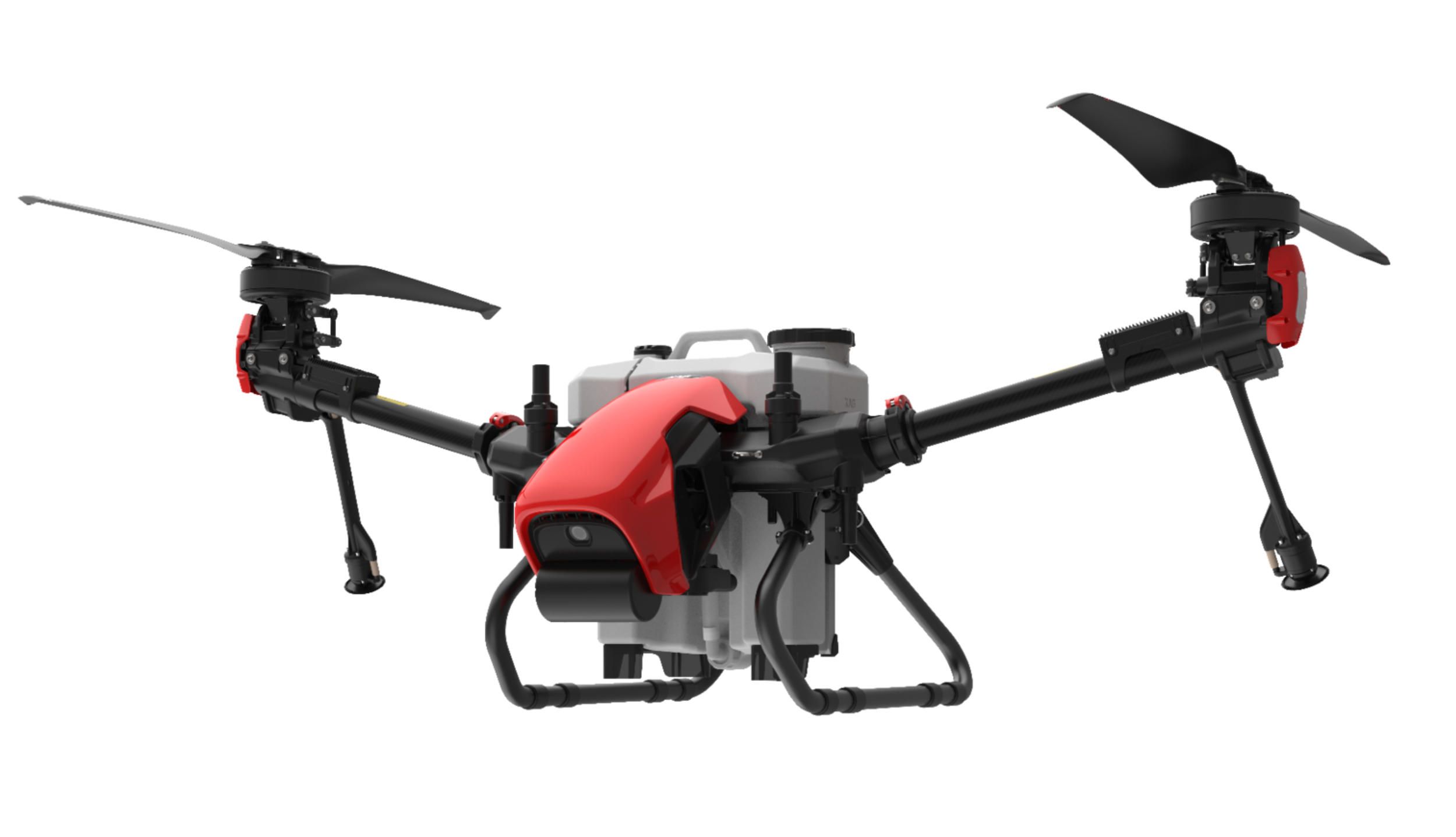
The XAG V40 takes a fundamentally different engineering approach. Where DJI builds on the traditional quadcopter architecture, XAG designed the V40 as the world's first tilting twin-rotor agricultural drone — essentially a bicopter that uses two electronically tilting rotor assemblies instead of four or more fixed rotors. This is not just an engineering curiosity. It has real-world consequences for vineyard operations.
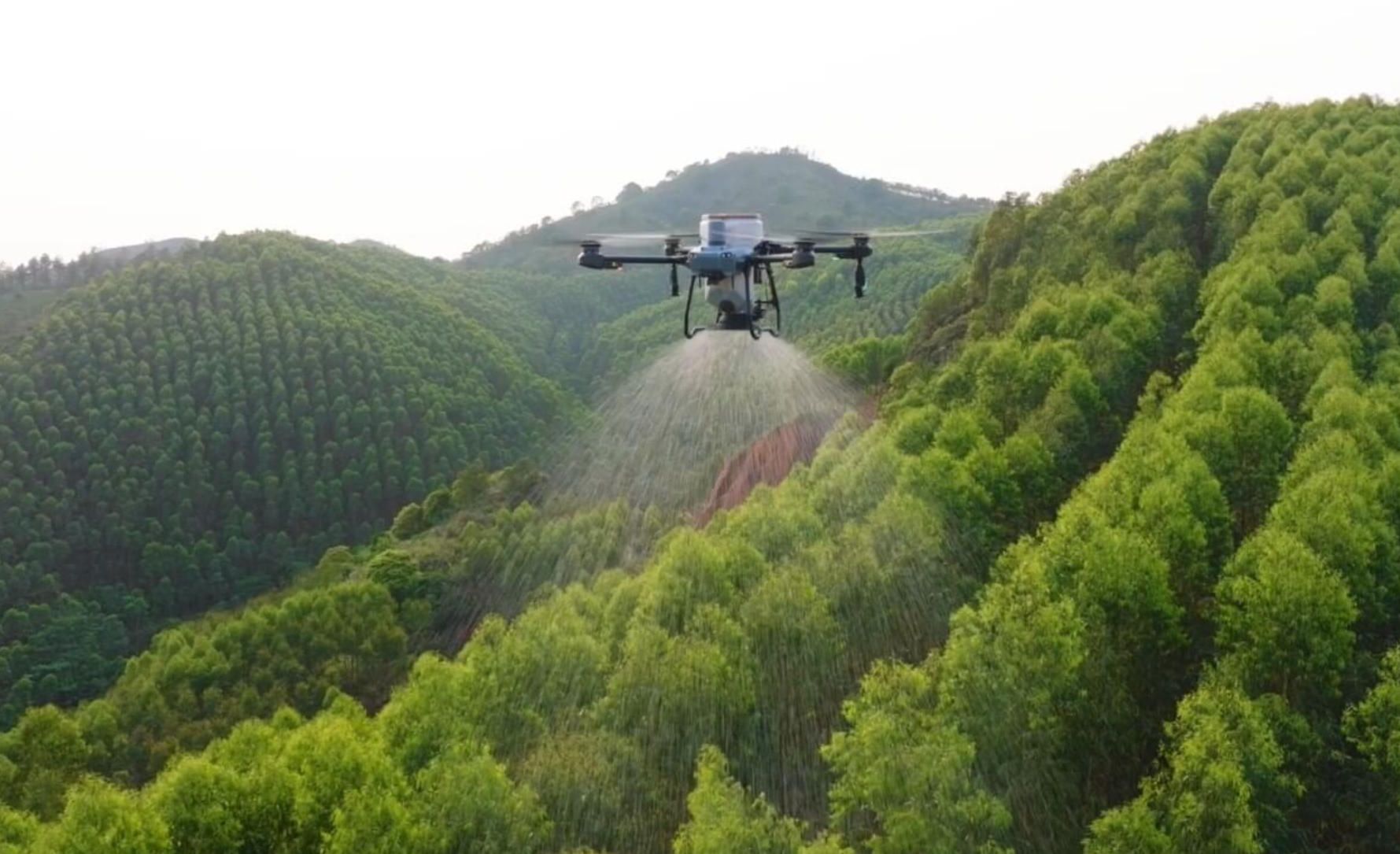
The twin-rotor design generates a more concentrated, focused downdraft compared to multicopter drones. In vineyard spraying, downdraft pattern matters enormously — it determines how well spray droplets penetrate the vine canopy to reach leaves and grape clusters hidden within dense foliage. XAG claims that because each spray nozzle sits directly below its rotor, the resulting airflow pushes spray directly into the canopy rather than scattering it outward. For fungicide applications targeting powdery mildew and downy mildew — diseases that thrive on the undersides of leaves and within dense canopy interiors — this focused penetration can be the difference between effective treatment and wasted product.
The V40 carries a 16-liter liquid tank with a maximum flow rate of 10 L/min and adjustable droplet size from 60 to 400 micrometers. For spreading, a 25-liter granular container handles seeds and fertilizer at up to 40 kg per minute. The effective spray width reaches 10 meters, generated by the concentrated downdraft of the dual rotors.
Structurally, the V40 weighs 29.8 kg ready to fly (including battery and empty tank) and features a carbon-reinforced polymer body with IP67 waterproof rating — meaning it can be submerged in water for 30 minutes and survive. For vineyard operations where drones inevitably get soaked with fungicide residue, this full waterproofing is more than a spec sheet number. Operators can simply hose the entire aircraft down after each session, a practical advantage over drones with lower protection ratings.
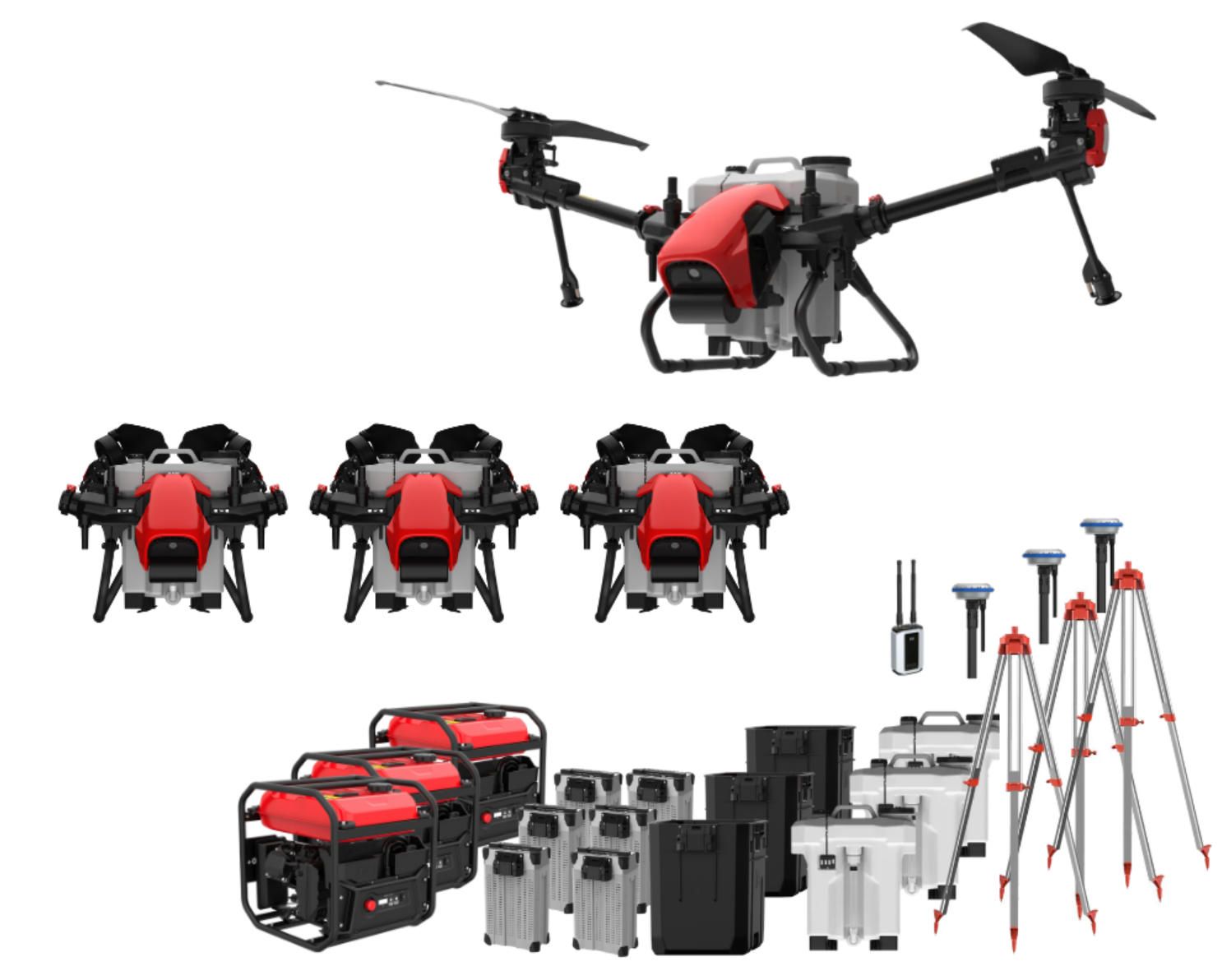
The SuperX 4 Intelligent Control System is XAG's answer to DJI SmartFarm. It combines AI-driven flight algorithms, high-performance propulsion management, and interchangeable task systems — RevoSpray for liquids, RevoCast for granulars, and RealTerra for mapping. The RealTerra system is particularly relevant for vineyards: it uses an HD camera with AI image processing to perform autonomous aerial photography, field boundary recognition, fruit tree identification, map stitching, and 3D modeling. The resulting digital field maps can then drive variable-rate spray prescriptions, so the drone applies more fungicide to areas showing stress and less to healthy sections.
Navigation uses dual-engine RTK centimeter-level positioning with a multi-directional radar matrix including front dynamic radar and terrain radar. The obstacle sensing range reaches 1.5 to 40 meters with a wide field of view (horizontal ±40°, vertical ±45°). The V40 operates with XAG's RC Networking Mode under internet-denied conditions — useful for remote vineyards with poor cellular coverage.
Battery charging uses XAG's SuperCharge system with a water-cooling tank, reaching 30% to 95% charge in approximately 11 minutes. The 962 Wh lithium polymer battery provides approximately 16 minutes of hovering with no load and about 7 minutes with a full payload.
The V40's arms and propellers fold doubly, reducing handling volume by one-third — a meaningful advantage when transporting equipment up narrow vineyard access roads.
"Two rotors instead of four? That's not a drone, that's a drone on a diet. But somehow it sprays better than the big guys." — AgTech Blogger
The Vineyard Showdown: Where Each Drone Excels
For slope operations, both drones are capable but differ in tolerance. The T25P's terrain following works on slopes up to 50 degrees, while the V40's radar-based system handles complex terrain but without DJI's published slope rating. In the steep hillside vineyards of Germany, Portugal, and the Rhône Valley — where slopes routinely exceed 30 degrees — the T25P's validated 50-degree tolerance provides confidence.
Canopy penetration is where the V40 makes its strongest argument. The concentrated downdraft from the twin-rotor design delivers spray more directly into dense vine canopies. For vineyards battling powdery mildew in tight-canopy varieties like Pinot Noir, this focused airflow pattern can improve fungicide coverage on inner leaves and grape clusters.
Mapping and variable-rate intelligence are strong on both platforms. DJI's SmartFarm ecosystem is more mature and widely supported, with a larger network of dealers, training programs, and third-party integrations. XAG's RealTerra system with its AI-driven fruit tree identification and 3D modeling offers a compelling alternative, particularly for operators who want field mapping and spray execution on a single platform without cloud dependency.
Durability in vineyard conditions gives the V40 an edge. Its IP67 rating means complete waterproofing — the drone can be washed directly with water after fungicide operations. The T25P, while designed for harsh agricultural environments and tested extensively for durability, carries a lower ingress protection rating.
Ecosystem accessibility differs significantly. DJI's dealer network, training programs through DJI Academy (now available in 15 countries), and integration with established precision agriculture tools make the T25P easier to adopt for operators already within the DJI ecosystem. XAG offers strong support through its dealer network and has a particularly well-established presence in Asia-Pacific and Oceania markets — including New Zealand, where XAG drones are already working vineyards in Hawke's Bay.
The T25P's optional four-sprinkler configuration with Reverse Directional Spray during manual flight simplifies operations in narrow vineyard rows, eliminating the need for turnaround maneuvers at row ends. This is a small but meaningful convenience feature for vineyard operators who spend their days flying the same row patterns.
Beyond the Vineyard: Where Drone Software Makes the Wine Better
Here is the insight that drone manufacturers do not sell but that vineyard managers increasingly discover: the most valuable output of a vineyard drone is not the spray it delivers but the data it collects. NDVI maps, thermal imagery, canopy volume measurements, and vigor zone classifications — these datasets, when properly processed and integrated with vineyard management systems, transform winemaking decisions.
In Italy's Chianti Classico region, drone teams have used NDVI and thermal data to design precision irrigation systems, recovering from yield losses by mapping vine water stress at row-level resolution. In Bolgheri, vigor maps enabled two-class selective harvesting that produced demonstrably better wines. In California, Kendall-Jackson uses drone imagery to decide which vineyard sections to source for specific wine blends.
But none of this happens automatically. Raw drone imagery needs processing through photogrammetry software, NDVI calculation, georeferencing, and integration with block management databases. Flight plans need optimization for vineyard-specific geometries — row spacing, trellis height, headland width. Real-time data from drone sensors needs visualization dashboards that vineyard managers can actually use on a tablet while walking between rows.
This is exactly what A-Bots.com builds. Custom precision viticulture software that connects drone data to vineyard decisions — from NDVI visualization overlays to automated spray prescription generation, from flight planning optimized for row-based vineyard patterns to mobile dashboards that put actionable insights in the winemaker's hands. Our QA and testing services ensure that these systems perform reliably when it matters most — during the narrow treatment windows when vines need protection and every hour counts.
Choosing Your Vineyard Drone
Choose the DJI Agras T25P if you value a mature ecosystem with extensive dealer support and training, you need validated terrain following on steep slopes, and you want seamless integration with DJI SmartFarm's cloud-based analytics. It is the safer, more established choice — particularly in Europe and the Americas.
Choose the XAG V40 if canopy penetration is your top priority, you operate in wet conditions where IP67 waterproofing matters, and you prefer a modular, AI-driven platform with strong mapping capabilities. Its twin-rotor design is genuinely differentiated, and its presence in Oceania's vineyard market provides real-world validation.
Either way, the drone is only half the story. The software that plans your flights, processes your imagery, and integrates your aerial data with your vineyard management system — that is where precision viticulture becomes precision winemaking. Contact A-Bots.com at info@a-bots.com to discuss how custom drone software can help your vineyard produce better grapes and better wine. With offices in the USA, Ukraine, and Romania, we build technology that works in the field — not just in the demo.
"Great wine starts in the vineyard. And increasingly, the vineyard starts with a drone." — The A-Bots.com Team
Sources:
- MarketsandMarkets, "Agriculture Drones Market — Global Forecast to 2030," October 2025
- DataM Intelligence, "Precision Viticulture Market," January 2026, via openpr.com
- DJI Newsroom, "DJI Agras T100, T70P and T25P Launches Globally," July 15, 2025
- DJI Official, ag.dji.com/t25p — DJI Agras T25P Product Page
- DJI Agriculture, ag.dji.com/case-studies/vineyard-dji-agriculture-solution — Vineyard Solution Guide
- XAG Official, xa.com/en/v40 — XAG V40 Product Page
- XAG News, xa.com/en/news/official/xag/206 — XAG Drones in Vineyards, Hawke's Bay
- New Atlas, "XAG V40 agri-drone uses just two rotors for better performance," November 2021
- Wine Enthusiast, "Are Flying Vineyard Drones Creating Better Wine?"
- International Wine Challenge, "How effective are drones for spraying?" September 2022
- Pix4D, "How are drones making a difference in precision viticulture"
- WSET Global, "Drones, robots and how vineyard technology is getting smarter," 2025
- NuWay Ag, nuwayag.com — DJI T25P Drone Specifications
✅ Hashtags
#VineyardDrones
#PrecisionViticulture
#DJIAgrasT25P
#XAGV40
#DroneSprayingVineyard
#SmartWinemaking
#AgDroneSoftware
Other articles
How to Build a WhatsApp Clone App in 2026 and WhatsApp Clone review The instant messaging market is projected to exceed USD 70 billion by 2034, and demand for custom communication platforms continues to accelerate. This guide covers everything businesses need to know about building a WhatsApp clone app: from core features like end-to-end encryption, real-time messaging, and voice/video calling to the full technology stack powering modern messenger app development. The article reviews six emerging messenger platforms — Bitchat, Session, SimpleX Chat, Element, Threema, and Olvid — analyzing their architecture, privacy models, and market traction. It also details how A-Bots.com, a full-cycle development company with 70+ projects, handles messenger development from strategy through launch, scaling, and QA testing. Cost estimates, common mistakes, monetization strategies, and industry-specific use cases round out the guide.
Dyson WashG1 vs Tineco Floor One S7 Pro Dyson WashG1 and Tineco Floor One S7 Pro may target the same category, but they reflect two different product strategies. This article compares their cleaning hardware, usability, maintenance logic, and mobile app experience to show how premium wet floor cleaners are evolving. Beyond the buying decision, it also explores a bigger market trend: why companion software is becoming a serious competitive advantage in smart home appliances. For brands entering this segment, the comparison highlights what today’s floor washers do well - and what a custom app developed by A-Bots.com could do better.
App Controlled Scent Diffuser: Top 3 Reviewed Pura, AromaTech, Aera The app controlled scent diffuser market is booming, with the global aromatherapy diffuser industry valued at $1.72 billion in 2025 and growing at over 7% annually. This expert review compares the three leading smart fragrance systems — Pura, AromaTech, and Aera — analyzing their companion apps, connectivity approaches, and real user feedback. The article breaks down essential features every app controlled scent diffuser needs, from scheduling and intensity control to smart home integration and OTA firmware updates. Manufacturers looking to build or improve their own connected diffuser product will find a clear roadmap for custom IoT app development with A-Bots.com.
App Controlled Outlet: Tapo P210M vs Eve Energy Outlet The app controlled outlet market is entering a new phase as in-wall smart outlets replace traditional receptacles in American homes. This article delivers a detailed head-to-head comparison of the two leading in-wall app controlled outlet products available in the United States — the TP-Link Tapo P210M and the Eve Energy Outlet. Evaluated through the lens of their companion mobile applications, the comparison covers energy monitoring, scheduling, privacy architecture, Matter integration, and setup experience. Market data from Consegic Business Intelligence and Mordor Intelligence frames the growth opportunity, while A-Bots.com demonstrates how expert IoT app development powers the next generation of connected home devices.
DJI Agras T100 vs Hylio AG-272: Best Heavy-Duty Ag Drones Agricultural drones have evolved from lightweight scouting tools into heavy-duty industrial platforms capable of spraying thousands of acres per week. This in-depth comparison examines two leading heavy-duty models — the DJI Agras T100 with its 100-liter spray tank and advanced LiDAR sensing, and the Hylio AG-272, a Texas-built workhorse offering fleet coordination of up to three drones from a single operator station. The article covers specifications, obstacle avoidance systems, regulatory considerations including NDAA compliance, alternative drone applications beyond spraying, and the critical role of custom software in maximizing drone ROI for modern farming operations.
Top stories

Copyright © Alpha Systems LTD All rights reserved.
Made with ❤️ by A-BOTS