
Home
Services
About us
Blog
Contacts
DJI Agras T100 vs Hylio AG-272: Heavy-Duty Agricultural Drones for Large-Scale Farming
The era of drones hovering above farmland as a novelty is over. Today, agricultural drones are serious industrial tools that spray thousands of acres per week, spread fertilizer with centimeter-level precision, and generate crop health data that feeds directly into farm management platforms. According to MarketsandMarkets, the global agriculture drones market is projected to grow from USD 2.63 billion in 2025 to USD 10.76 billion by 2030, at a CAGR of 32.6%. Grand View Research provides an even bolder estimate, projecting the market to reach USD 21.59 billion by 2033. These numbers reflect a fundamental shift: drones are no longer optional accessories for tech-forward farms. They are becoming core infrastructure for modern agriculture worldwide.
At A-Bots.com, a full-cycle custom software development company, we have been deeply involved in this transformation from the technology side. Our team brings extensive experience in developing drone management software — from flight planning and mission control interfaces to real-time telemetry dashboards, fleet coordination systems, and post-flight analytics platforms. With a technology stack that includes React Native, Python, Django, Node.js, Java, Kotlin, and Swift, and with over 70 successfully delivered projects under our belt, A-Bots.com knows what it takes to build reliable, scalable software for demanding field conditions.
Our portfolio includes complex IoT-driven applications such as the Shark Clean robotic vacuum controller — requiring real-time device communication, sensor data processing, and intuitive user interfaces — and enterprise-grade systems like BSSAuto, a CRM with multi-stage workflows and Telegram integration. These same architectural patterns — real-time data flow, complex state management, multi-user coordination — are exactly what professional drone operations demand. We also provide comprehensive QA and testing services for existing drone software, because when a 180-kilogram aircraft is airborne over a crop field, software reliability is not a preference — it is a requirement.
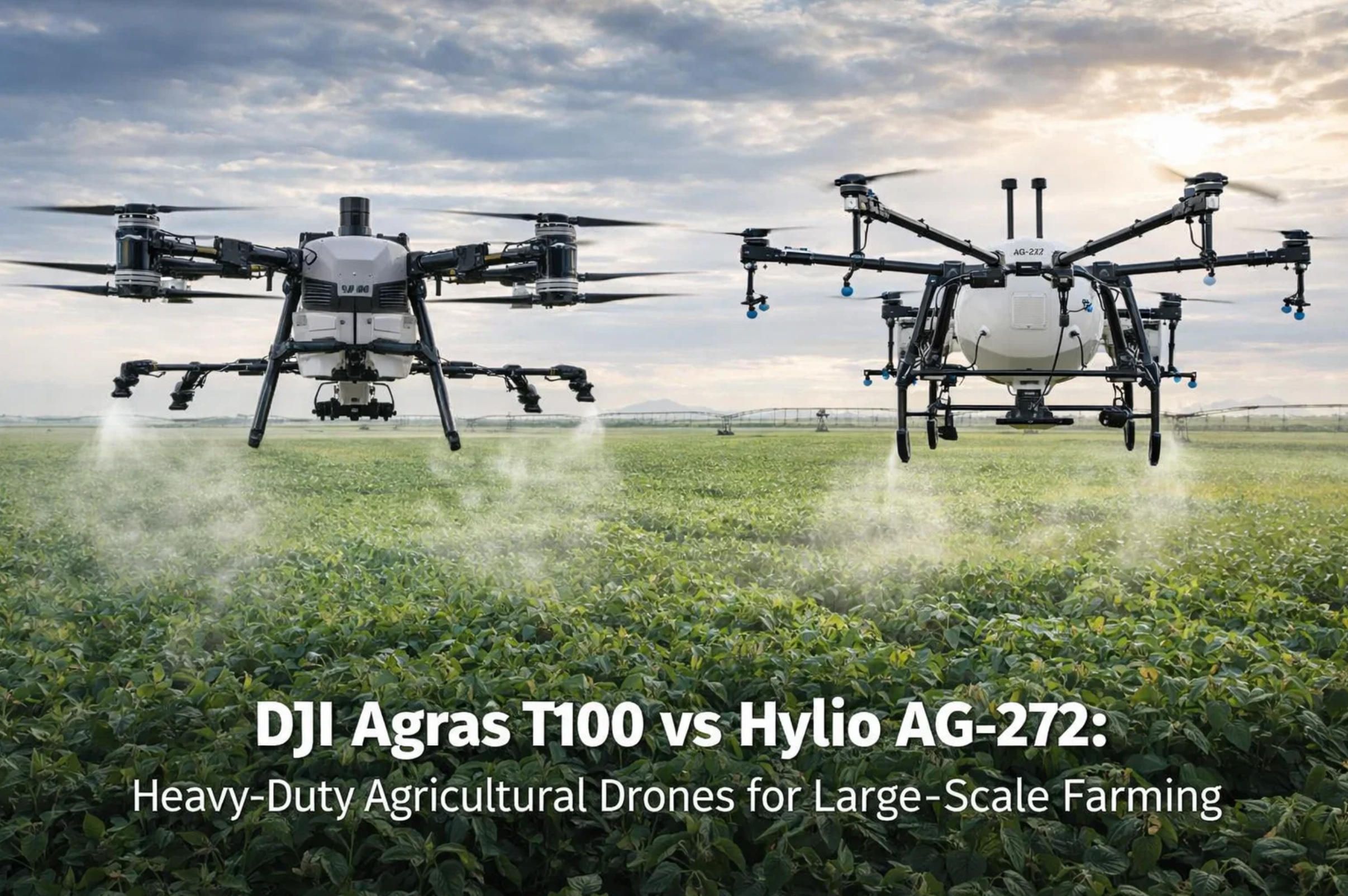
With that expertise as our lens, let us examine two of the most powerful agricultural drones currently available: the DJI Agras T100 and the Hylio AG-272. Both are designed for high-volume, large-acreage operations, but they represent fundamentally different engineering philosophies, ecosystem strategies, and market positions.
"I told my drone to cover 500 acres before lunch. It replied: 'Which lunch — yours or mine? I'll be done by breakfast.'" — Anonymous Ag Pilot
DJI Agras T100: The Chinese Giant Goes Bigger
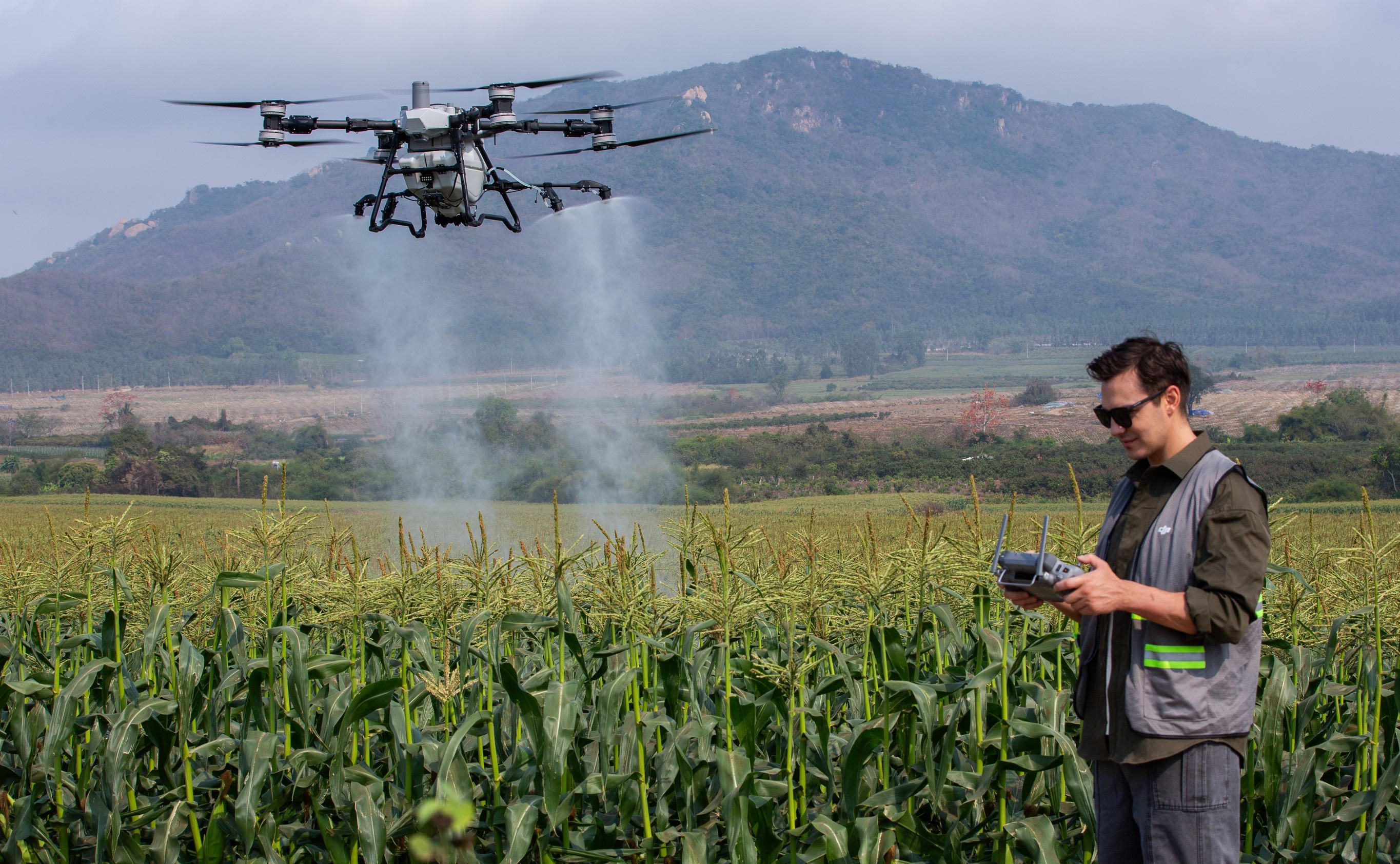
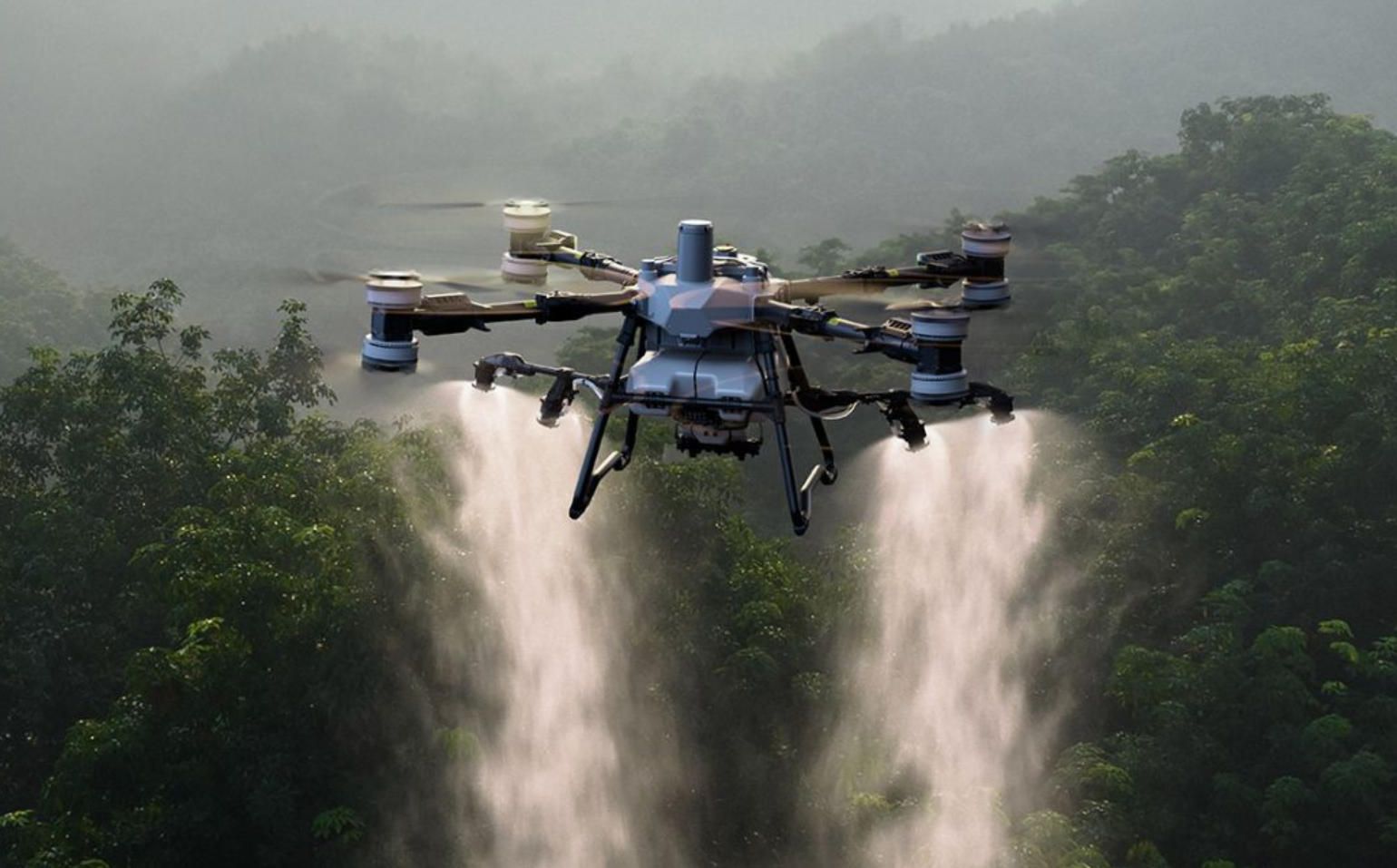
Released globally in July 2025, the DJI Agras T100 is the culmination of twelve years of agricultural drone development by DJI. It is, simply put, the largest and most capable spray drone DJI has ever produced. Where its predecessor, the Agras T50, carried a 40 kg spray payload, the T100 leaps to a maximum payload of 100 liters for spraying, 150 liters for spreading, and up to 100 kg for lifting operations using an integrated winch system.
The spraying system delivers a flow rate of 30 L/min with the standard dual-sprinkler configuration, increasing to 40 L/min when fitted with the optional four-sprinkler kit. The effective spray swath width reaches approximately 13 meters (42.6 feet), and at a 2-gallon-per-acre application rate, operators report coverage of up to 70 acres per hour. For spreading operations, the T100's screw feeder system achieves a maximum flow rate that DJI states is 270% higher than the previous generation, with a maximum spread hopper capacity of 150 liters capable of holding up to 100 kg (220 lbs) of granular material.
The T100 uses a coaxial dual-rotor design with four arms and eight motors driving carbon fiber propellers. This configuration delivers substantial thrust margins and provides built-in redundancy — if one motor in a coaxial pair experiences a fault, the remaining motor can still maintain controlled flight. Maximum operation speed reaches 20 m/s (approximately 45 mph), though this may be limited in certain markets due to local regulations. For example, the maximum speed in the EU is capped at 13.8 m/s.
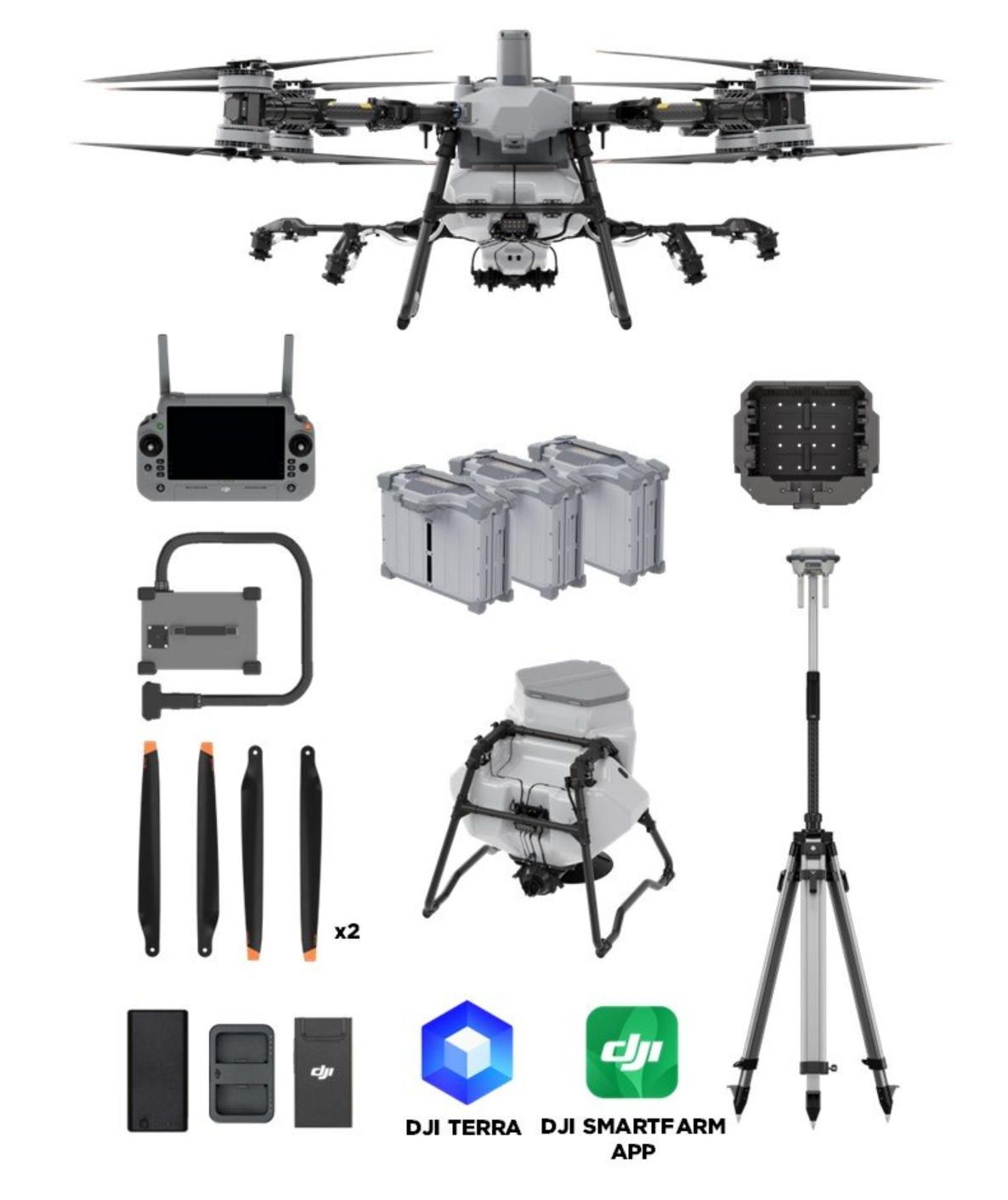
The sensing and safety package on the T100 is the most advanced DJI has deployed on an agricultural platform. A LiDAR sensor emitting 30,000 pulses per second provides centimeter-level terrain mapping. Millimeter-wave radar handles obstacle detection in conditions where optical sensors struggle, such as dust, fog, or low light. The Penta-Vision system — five camera modules — delivers comprehensive visual awareness around the aircraft. Together, these systems enable obstacle detection, automatic route adjustment, terrain following over complex topography, and obstacle memory that allows the drone to remember and avoid previously detected hazards on subsequent flights. DJI reports an 80% improvement in obstacle avoidance performance compared to the predecessor T50.
Battery performance follows the pattern established by the T50 line. Each flight battery weighs approximately 14.7 kg and provides 6 to 10 minutes of flight time depending on payload weight and conditions. Using DJI's recommended charging system, batteries recharge in under 10 minutes. With a three-battery rotation, operators can maintain continuous operations with minimal ground time. The DJI RC Plus controller with its 7-inch high-brightness display provides flight planning, real-time monitoring, and integration with DJI SmartFarm's cloud-based farm management ecosystem.
The modular tank system uses a four-latch quick-swap design, allowing operators to switch between liquid spray tanks, granular spread hoppers, and the lifting winch without tools. This versatility means a single T100 airframe can handle spraying, seeding, fertilizer spreading, and cargo transport across an operation.
Pricing for a ready-to-fly T100 kit in the North American market starts in the range of USD 35,000 to 50,000 depending on configuration, accessories, and dealer packages.
Hylio AG-272: Texas-Built Autonomy at Scale
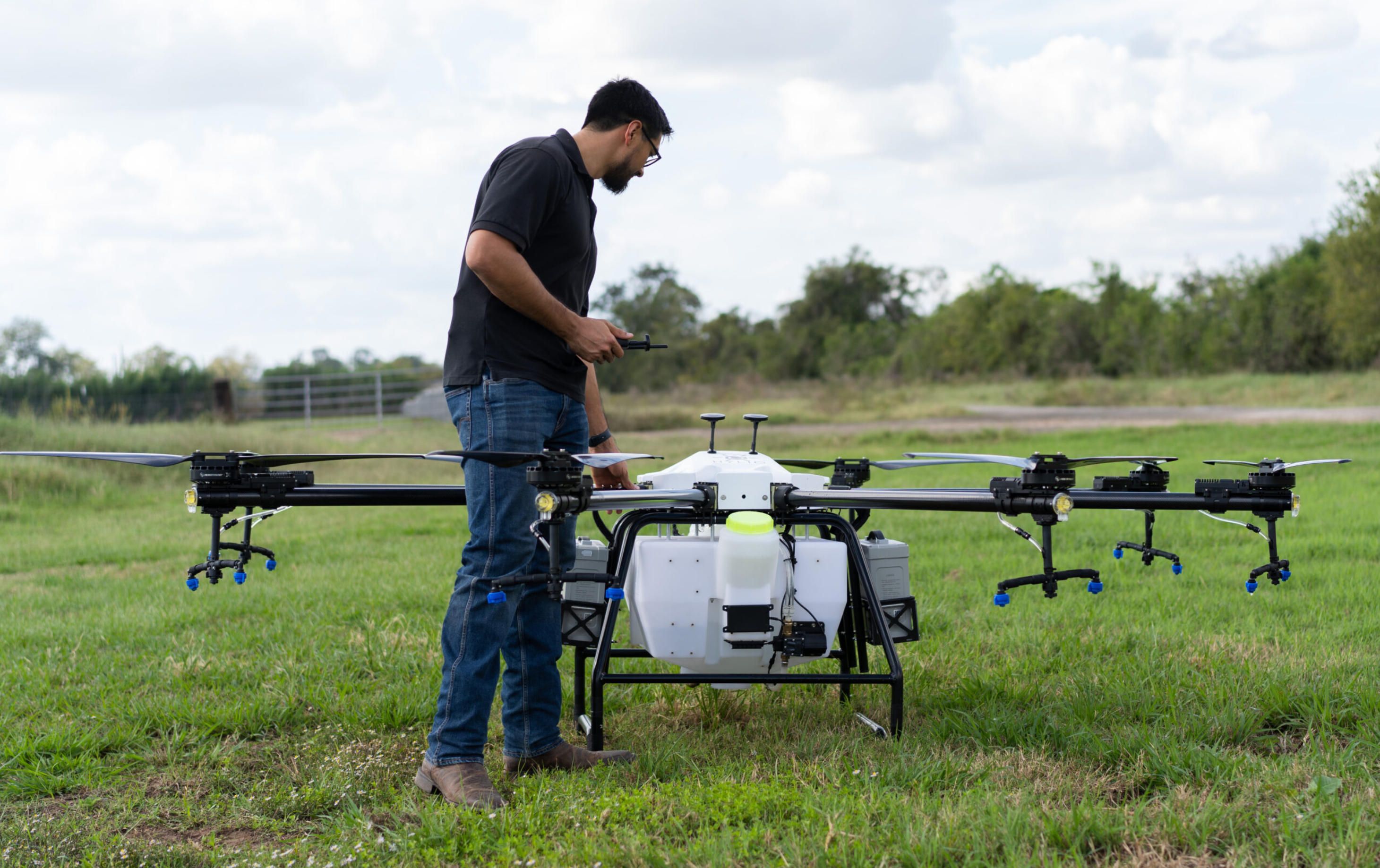
The Hylio AG-272 represents a completely different tradition in agricultural drone design. Designed and manufactured at Hylio's headquarters in Houston, Texas, the AG-272 is an eight-rotor heavy-lift platform built specifically for the realities of North American commercial agriculture — large acreages, demanding regulatory requirements, and operators who need full control over their equipment and data.
The AG-272 carries an 18-gallon (68.2-liter) spray tank with an effective swath width of up to 40 feet (12.2 meters). At a 2-gallon-per-acre application rate, the drone covers up to 50 acres per hour, including downtime for battery swaps and tank refills. The maximum flow rate of 4.0 gallons per minute (15.0 liters per minute) uses TeeJet nozzles — an industry-standard brand familiar to every agricultural applicator — combined with electronic flowmeters for precise application monitoring.
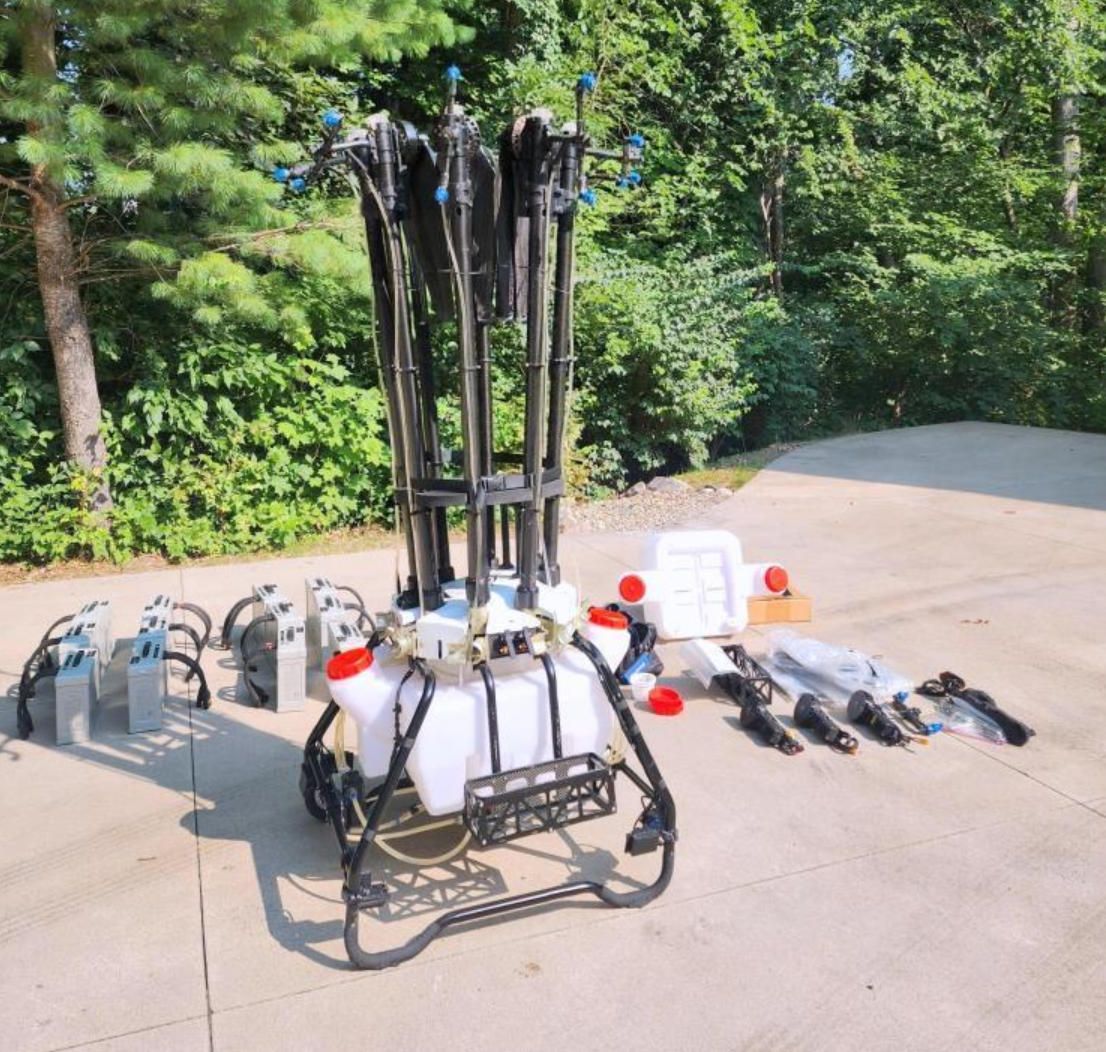
Structurally, the AG-272 is built with aerospace-grade materials for durability under repeated field use. Without batteries, the airframe weighs 53 kg, with a maximum recommended takeoff weight of 181 kg and a combined maximum thrust of 272 kg. The platform uses two 51.8V lithium-polymer batteries simultaneously, delivering a combined 2,175.6 watt-hours. Flight time with a full payload typically runs 10 to 15 minutes, and automatic chargers can replenish a battery pair in about 25 to 30 minutes.
Multiple wide-angle radar sensors are mounted laterally, upward, and downward, providing near-complete spherical obstacle detection coverage. An integrated HD camera streams live FPV video to the Hylio GroundLink Controller — a ruggedized, purpose-built ground station featuring a 13.3-inch Windows-based tablet computer with an integrated 2.4 GHz radio telemetry modem. The system communicates directly with the aircraft without requiring internet connectivity, which is a significant advantage for operations in remote agricultural areas with limited cellular coverage.
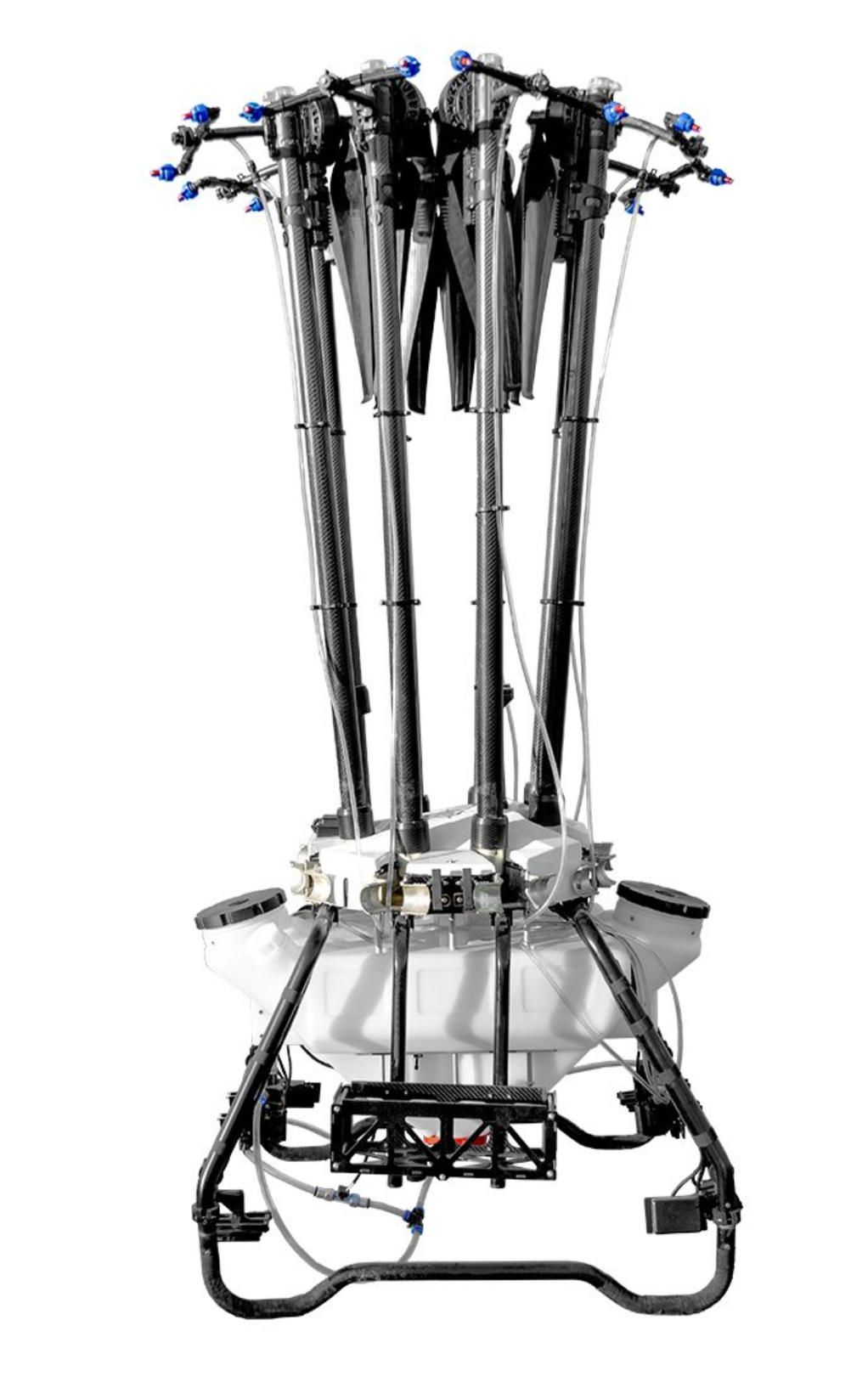
Dual GPS units support RTK correction data for centimeter-level positioning. The foldable frame collapses from operational dimensions of 120 x 120 x 36 inches to a transport-ready 39 x 34 x 82 inches.
The AG-272's defining advantage is its open architecture and fleet management capability. Hylio's proprietary AgroSol ground control software allows a single operator to command up to three drones simultaneously from one ground station. This swarm-capable design dramatically multiplies throughput — three AG-272 drones operating in parallel can theoretically cover 150 acres per hour. AgroSol handles mission planning, autonomous flight execution, real-time telemetry, as-applied mapping, maintenance logging, and cloud-based data storage. Critically, access to AgroSol's core features is included with purchase — there are no recurring subscription fees.
"The best thing about running three drones at once? You finally have a legitimate excuse to stare at three screens and call it work." — Hylio Operator, Texas
For the North American market specifically, the AG-272's regulatory positioning is a major differentiator. The system is fully NDAA-compliant and designed for straightforward FAA Part 137 agricultural aircraft certification. As U.S. policy increasingly restricts Chinese-manufactured drones — with FCC security reviews potentially placing DJI on a restricted list — Hylio's domestic manufacturing, transparent supply chain, and local support infrastructure provide significant long-term certainty for operators investing in commercial spray operations.
The AG-272 also features a modular, field-serviceable design. Motors, arms, nozzles, and other components can be replaced on-site by the operator using the included toolkit, without shipping the drone to a service center. This self-sufficiency dramatically reduces downtime and operating costs over the life of the equipment.
Pricing for the Hylio AG-272 starts at approximately USD 56,000 for the base drone configuration, with complete operational kits (including batteries, chargers, and controller) running higher.
Where These Giants Diverge
Examining the DJI Agras T100 and Hylio AG-272 side by side reveals that while both serve the large-scale agricultural market, they target different operator profiles and operational contexts.
In terms of raw capacity, the T100 holds a clear advantage. Its 100-liter spray tank is nearly 50% larger than the AG-272's 68.2-liter tank, and its 70-acre-per-hour coverage rate significantly exceeds the AG-272's 50 acres per hour. The T100's flow rate of 30 to 40 L/min also surpasses the AG-272's 15 L/min, enabling faster application at higher volumes. For operations where single-drone throughput is the primary metric — particularly in crops like rice, soybeans, or large citrus groves — the T100's capacity advantage is meaningful.
However, the AG-272 counters with fleet scalability. Three AG-272 drones managed by a single operator through AgroSol can match or exceed the T100's coverage rate while providing redundancy — if one drone goes down for maintenance, the other two continue operating. For contract applicators servicing multiple farms, this fleet model is often more operationally resilient than relying on a single high-capacity platform.
The sensing and automation gap is substantial. The T100's LiDAR, millimeter-wave radar, and Penta-Vision system represent the most advanced perception stack available on any agricultural drone today. Its obstacle memory feature, terrain following, and automatic route optimization are powered by years of DJI's investment in autonomous flight algorithms. The AG-272's radar-based obstacle detection is functional and reliable, but it does not match the T100's multi-sensor fusion approach.
Ecosystem and data sovereignty present perhaps the starkest contrast. DJI's SmartFarm platform is a comprehensive, cloud-connected ecosystem — powerful and deeply integrated, but also proprietary. Flight data and operational records flow through DJI's infrastructure. The AG-272's locally controlled, internet-independent operation through AgroSol keeps all data on the operator's hardware, with no cloud dependency and no risk that a geopolitical decision could disable features or restrict platform access.
Battery technology and charging logistics also differ meaningfully. The T100's sub-10-minute charge cycle enables a tighter operational tempo with fewer batteries in rotation. The AG-272's 25-to-30-minute charge time means operators need more battery sets for continuous operations, but the batteries are standard LiPo packs that can be sourced and replaced independently of the manufacturer.
Beyond Spraying: The Expanding Role of Agricultural Drones
One of the most significant trends in precision agriculture is the rapid expansion of drone applications beyond chemical spraying. A study published in the journal Science in late 2025 documented that agricultural drones have spread globally at an unprecedented pace — faster than virtually any previous agricultural technology. Researchers from Michigan State University noted that common drone uses on farms now include spraying, spreading fertilizer, sowing seeds, transporting produce, dispensing fish feed, painting greenhouses, monitoring livestock, mapping field topography and drainage, and measuring crop health.
Both the T100 and AG-272 participate in this expansion, though in different ways. The T100's lifting capability — up to 100 kg via its winch system — opens applications like transporting seed, fertilizer, or supplies to field areas inaccessible to ground equipment, especially during wet conditions when tractor traffic would cause soil compaction. Its multispectral sensing and high-resolution mapping capabilities support detailed crop health analysis, NDVI mapping, and yield forecasting.
The AG-272's platform, meanwhile, has been deployed not only for crop treatment but also for municipal weed control, mosquito abatement for public health agencies, and vegetation management for energy companies along utility corridors. Hylio's open platform approach allows third-party sensor integration, meaning the AG-272 can be adapted with specialized payloads for thermal imaging, multispectral analysis, or environmental monitoring.
Research institutions are exploring even more specialized uses — artificial pollination drones in the Netherlands and Japan, biological pest control through beneficial insect release, and frost protection systems. The International Food Policy Research Institute (IFPRI) has noted that drones performing mechanical tasks can improve efficiency, increase yields, cut energy use compared to tractors, and improve worker safety by reducing direct pesticide exposure.
"First we got tractors, then GPS, then variable rate application. Now my drone does the scouting, the spraying, and the data analysis. At this rate, I'll just be the guy who opens the gate." — Midwestern Farmer
Software Makes the Difference
The most capable drone in the world is only as effective as the software managing it. DJI addresses this with its vertically integrated SmartFarm ecosystem. Hylio addresses it with AgroSol and an open platform philosophy. But neither covers every scenario — farms inevitably encounter integration gaps where the drone platform speaks one data format, the farm management system expects another, and the regulatory reporting system needs a third. Custom software bridges built by experienced teams like A-Bots.com close those gaps, connecting drone telemetry with IoT sensor networks, irrigation controllers, and crop analytics into unified dashboards that drive real agronomic decisions.
Making the Right Choice
The DJI Agras T100 and Hylio AG-272 are both excellent heavy-duty agricultural drones, but they serve different operational philosophies.
Choose the DJI Agras T100 if your priority is maximum single-drone throughput, the most advanced autonomous sensing technology, and you operate in markets with no DJI regulatory restrictions. Choose the Hylio AG-272 if your priority is fleet scalability, NDAA compliance, data sovereignty, and independence from a single manufacturer's ecosystem.
Whichever platform you choose — or even if you operate both — the software that ties your drone operations together will ultimately determine your return on investment. That is where A-Bots.com comes in. Contact us at info@a-bots.com to discuss how custom drone management software, fleet coordination platforms, or drone-to-farm integration solutions can take your precision agriculture operation to the next level. With offices in the USA, Ukraine, and Romania, and a team that has been building complex IoT and mobile solutions for years, we are ready to build the software your drones deserve.
"A drone without good software is just an expensive fan. A drone with great software is the future of farming." — The A-Bots.com Team
---
Sources:
- MarketsandMarkets, "Agriculture Drones Market — Global Forecast to 2030," October 2025
- Grand View Research, "Agriculture Drones Market Size, Share & Trends Analysis Report, 2025–2033"
- DJI Newsroom, "DJI Agras T100, T70P and T25P Launches Globally," July 15, 2025
- DJI Official, ag.dji.com/t100 — DJI Agras T100 Product Page
- Hylio Inc., hyl.io — AG-272 Product Specifications and FAQ
- Frontier Precision, shop.frontierprecision.com — Hylio AG-272 Product Listing
- DSLRPros, "Top 10 Crop Spraying Drones of 2025"
- Michigan State University / MSUToday, "Agricultural drones are reshaping farming," November 2025
- IFPRI, "The global drone revolution in agriculture," October 2025
- Sprayers 101, "DJI Agras T100 – First Impressions," September 2025
- FlyingAg, flyingag.com/products/dji-agras-t100-kit — DJI Agras T100 Kit Specifications
✅ Hashtags
#AgriculturalDrones
#DJIAgrasT100
#HylioAG272
#PrecisionAgriculture
#DroneSprayingTechnology
#FarmDroneSoftware
#SmartFarming
#AgDroneComparison
Other articles
How to Build a WhatsApp Clone App in 2026 and WhatsApp Clone review The instant messaging market is projected to exceed USD 70 billion by 2034, and demand for custom communication platforms continues to accelerate. This guide covers everything businesses need to know about building a WhatsApp clone app: from core features like end-to-end encryption, real-time messaging, and voice/video calling to the full technology stack powering modern messenger app development. The article reviews six emerging messenger platforms — Bitchat, Session, SimpleX Chat, Element, Threema, and Olvid — analyzing their architecture, privacy models, and market traction. It also details how A-Bots.com, a full-cycle development company with 70+ projects, handles messenger development from strategy through launch, scaling, and QA testing. Cost estimates, common mistakes, monetization strategies, and industry-specific use cases round out the guide.
Dyson WashG1 vs Tineco Floor One S7 Pro Dyson WashG1 and Tineco Floor One S7 Pro may target the same category, but they reflect two different product strategies. This article compares their cleaning hardware, usability, maintenance logic, and mobile app experience to show how premium wet floor cleaners are evolving. Beyond the buying decision, it also explores a bigger market trend: why companion software is becoming a serious competitive advantage in smart home appliances. For brands entering this segment, the comparison highlights what today’s floor washers do well - and what a custom app developed by A-Bots.com could do better.
App Controlled Scent Diffuser: Top 3 Reviewed Pura, AromaTech, Aera The app controlled scent diffuser market is booming, with the global aromatherapy diffuser industry valued at $1.72 billion in 2025 and growing at over 7% annually. This expert review compares the three leading smart fragrance systems — Pura, AromaTech, and Aera — analyzing their companion apps, connectivity approaches, and real user feedback. The article breaks down essential features every app controlled scent diffuser needs, from scheduling and intensity control to smart home integration and OTA firmware updates. Manufacturers looking to build or improve their own connected diffuser product will find a clear roadmap for custom IoT app development with A-Bots.com.
App Controlled Outlet: Tapo P210M vs Eve Energy Outlet The app controlled outlet market is entering a new phase as in-wall smart outlets replace traditional receptacles in American homes. This article delivers a detailed head-to-head comparison of the two leading in-wall app controlled outlet products available in the United States — the TP-Link Tapo P210M and the Eve Energy Outlet. Evaluated through the lens of their companion mobile applications, the comparison covers energy monitoring, scheduling, privacy architecture, Matter integration, and setup experience. Market data from Consegic Business Intelligence and Mordor Intelligence frames the growth opportunity, while A-Bots.com demonstrates how expert IoT app development powers the next generation of connected home devices.
DJI Agras T100 vs Hylio AG-272: Best Heavy-Duty Ag Drones Agricultural drones have evolved from lightweight scouting tools into heavy-duty industrial platforms capable of spraying thousands of acres per week. This in-depth comparison examines two leading heavy-duty models — the DJI Agras T100 with its 100-liter spray tank and advanced LiDAR sensing, and the Hylio AG-272, a Texas-built workhorse offering fleet coordination of up to three drones from a single operator station. The article covers specifications, obstacle avoidance systems, regulatory considerations including NDAA compliance, alternative drone applications beyond spraying, and the critical role of custom software in maximizing drone ROI for modern farming operations.
Top stories

Copyright © Alpha Systems LTD All rights reserved.
Made with ❤️ by A-BOTS