
Home
Services
About us
Blog
Contacts
Estimate project
EN

Bluetooth and UWB Item Trackers in 2026: AirTag 2, SmartTag 2, and Tile Pro Compared

Every year, Americans spend a combined 2.5 billion hours searching for misplaced items. Keys vanish into couch cushions, wallets disappear from countertops, and laptops get left behind at coffee shops. The item tracker app industry has responded to this universal frustration with devices so small they fit on a keychain yet powerful enough to pinpoint your belongings across entire cities. With the smart tracker market valued at $856 million in 2025 and projected to reach $2.98 billion by 2035 according to Market Growth Reports, item tracker app development has become one of the fastest-growing segments in consumer IoT.
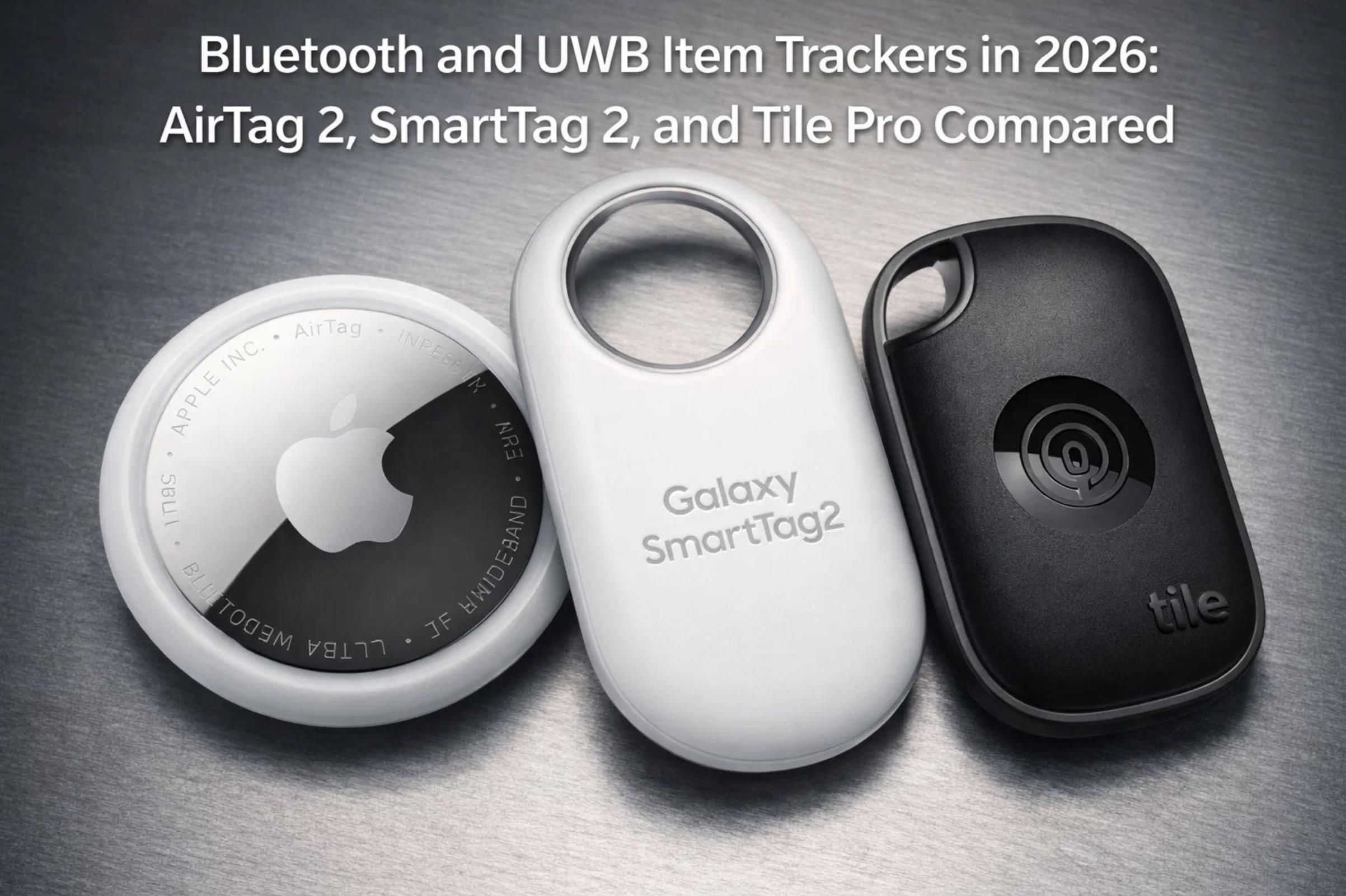
Bluetooth and UWB Item Trackers 2026.jpg

At A-Bots.com, we have spent over a decade building custom mobile applications and IoT solutions for clients who want more than off-the-shelf products. Our portfolio of 70+ completed projects includes the Shark Clean robotic vacuum app, where our team integrated Bluetooth Low Energy communication between a physical device and a cross-platform mobile application. That hands-on experience with BLE protocols, real-time device pairing, and cloud-based telemetry is exactly what tracking app development demands. Whether a hardware startup needs a companion app for a new Bluetooth tracker or an established brand wants to integrate UWB precision finding into its existing ecosystem, A-Bots delivers full-cycle development from concept to App Store release.

Our engineering teams in the USA, Ukraine, and Romania work with React Native, Swift, Kotlin, Java, and Python/Django to build item tracker app solutions that handle everything from BLE signal processing to server-side location aggregation. We understand that launching a tracking device is only half the challenge. The other half is building software that makes the hardware genuinely useful for millions of users.

The current generation of Bluetooth trackers has matured significantly. Devices now combine Bluetooth Low Energy for wide-area crowdsourced detection with Ultra-Wideband radio for centimeter-level precision in close range. Anti-stalking protections have become an industry standard. And the three dominant ecosystems, Apple Find My, Samsung SmartThings Find, and Life360 Tile, are competing fiercely to deliver the most reliable tracking experience. In this article, we examine the technical architecture behind these devices, compare the three leading products available in the United States and Europe, and explore why custom tracking app development represents a major opportunity for businesses entering this space.

How Bluetooth and UWB Tracking Actually Works

Understanding how a Bluetooth tracker locates your lost keys requires a quick dive into two complementary wireless technologies.

Bluetooth Low Energy is the backbone of every item tracker on the market. A BLE-equipped tag periodically broadcasts short radio signals, known as advertising packets, that contain a unique encrypted identifier. These packets consume minimal power, which is why a single CR2032 coin-cell battery can keep a Bluetooth tracker alive for over a year. When your smartphone is within range, typically 30 to 150 meters depending on the device, it picks up these packets and calculates an approximate distance using Received Signal Strength Indication. RSSI-based positioning delivers accuracy of roughly 5 to 10 meters, which is enough to know your bag is somewhere in your apartment but not precise enough to tell you it is under the bed.

"I once spent 20 minutes looking for my keys before realizing they were in the pocket of the jacket I was wearing. A Bluetooth tracker would have saved me from myself."

This is where Ultra-Wideband technology enters the picture. UWB uses extremely short radio pulses across a wide frequency spectrum to measure the time-of-flight of signals between your phone and the tracker. Since radio waves travel at the speed of light, even tiny time differences translate into precise distance measurements. The result is positioning accuracy of 10 to 30 centimeters indoors, enough to tell you exactly which couch cushion is hiding your AirTag. Ultra-Wideband also provides angular information, so your item tracker app can display a directional arrow pointing you straight toward the item. As noted by Mordor Intelligence, Ultra-Wideband technology captured a growing share of the smart tracker market in 2025 and is projected to expand at a 9.57% CAGR through 2031.

The real magic, however, happens through crowdsourced networks. When your Bluetooth tracker moves beyond your personal phone's range, it does not go dark. Instead, every passing smartphone that belongs to the same ecosystem anonymously detects the tracker's BLE signal, encrypts the location data, and forwards it to a cloud server. The owner then sees an updated position on a map without ever knowing which stranger's phone relayed the information. Apple's Find My network leverages hundreds of millions of iPhones, iPads, and Macs worldwide. Samsung's SmartThings Find relies on the Galaxy device user base. And Tile's network combines the Life360 app's 83.7 million monthly active users with Amazon Sidewalk integration through Ring cameras and Echo devices. The size of these crowdsourced networks directly determines how quickly and accurately a lost Bluetooth tracker reports its location back to you.

For companies considering item tracker app development, this architecture presents both opportunities and challenges. Building a BLE companion app is relatively straightforward. However, creating a competitive crowdsourced finding network from scratch requires either massive device adoption or strategic integration with an existing platform like Apple Find My or Google Find My Device. A-Bots has the technical expertise in both BLE SDK integration and cloud backend architecture to help clients navigate these decisions and build item tracker app solutions that leverage existing networks rather than reinventing the wheel. Our tracking app development process covers firmware communication layers, real-time map rendering, and encrypted location relay infrastructure.
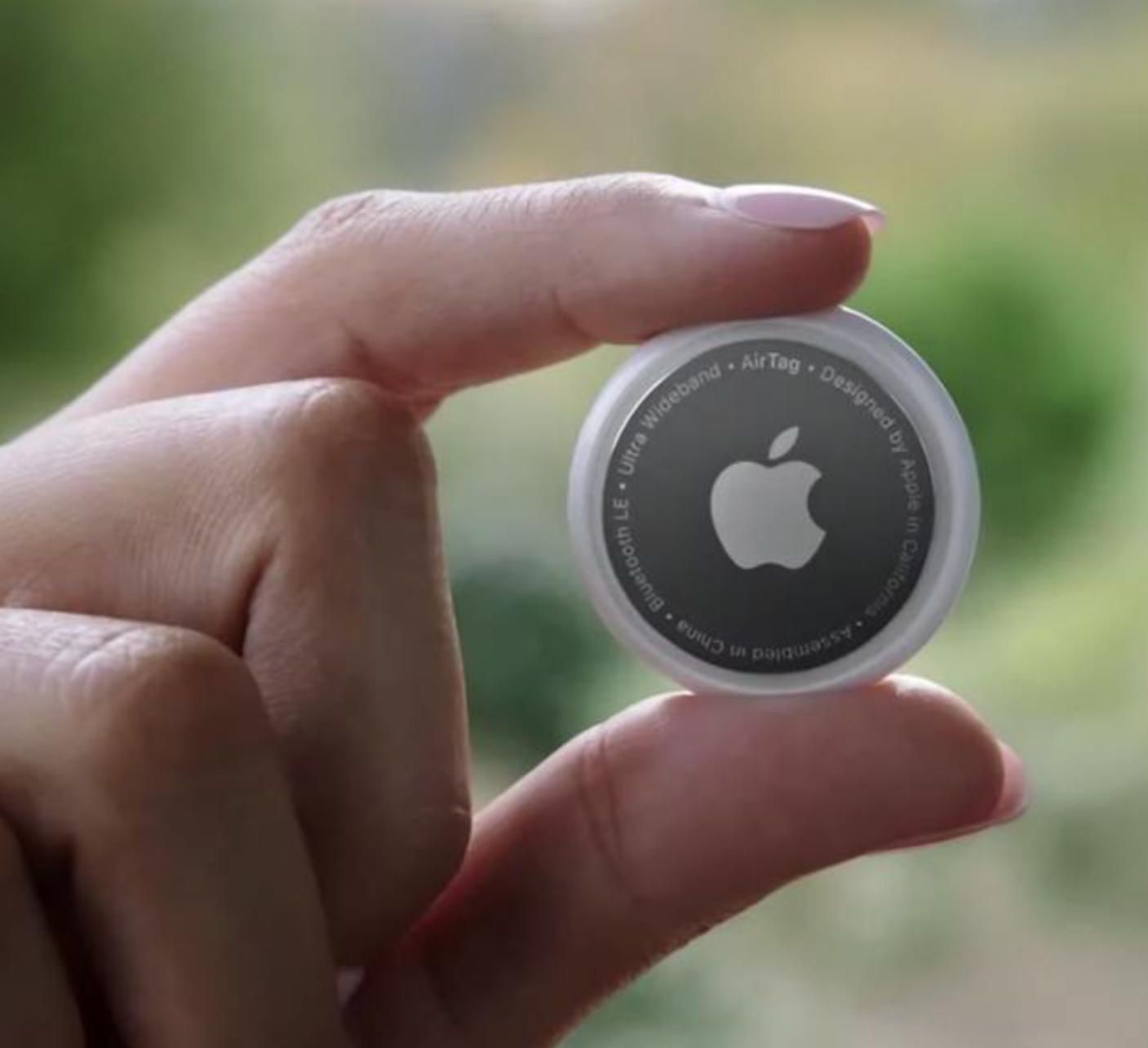
Apple AirTag 2 - tracker.jpg

Apple AirTag 2: The Gold Standard Gets an Upgrade

Apple released the second-generation AirTag in January 2026, marking the first hardware refresh since the original launched in April 2021. At $29 for a single unit or $99 for a four-pack, the price remains unchanged, but the internal improvements are substantial.

The headline upgrade is the U2 Ultra-Wideband chip, which extends Precision Finding range from roughly 15 meters on the original to approximately 60 meters (200 feet) on the AirTag 2. According to MacRumors, the second-generation UWB chip allows Precision Finding to work from 1.5 times further away than before. This means you can get directional guidance toward your tagged item across a large parking lot, an airport terminal, or a warehouse, not just within a single room.

The built-in speaker is 50% louder than the original, which directly addresses the practical problem of hearing an AirTag buried inside a bag in a noisy environment. Apple also redesigned the speaker housing to be more tamper-resistant, a response to reports that bad actors were disabling speakers to use AirTags for covert tracking.

For the first time, Precision Finding works on Apple Watch Series 9 and later, turning your wrist into a tracking device without needing to pull out your iPhone. The AirTag 2 also features more frequent rotation of Bluetooth identifiers, strengthening privacy protections against unwanted surveillance.

The AirTag 2 operates exclusively within Apple's ecosystem. You need an iPhone to set it up and the Find My network to locate it remotely. This item tracker app cannot pair with Android devices, which limits its audience but guarantees access to the largest crowdsourced finding network in the world. The Find My network encompasses hundreds of millions of Apple devices across every continent. Over 50 airlines, including Delta, United, Lufthansa, and Qantas, support Apple's Share Item Location feature for baggage tracking.

The key limitations remain form factor and ecosystem lock-in. The AirTag comes only in a circular pebble shape, requiring third-party accessories for attachment to keychains, collars, or luggage. And if your household includes Android users, they cannot participate in tracking shared items.
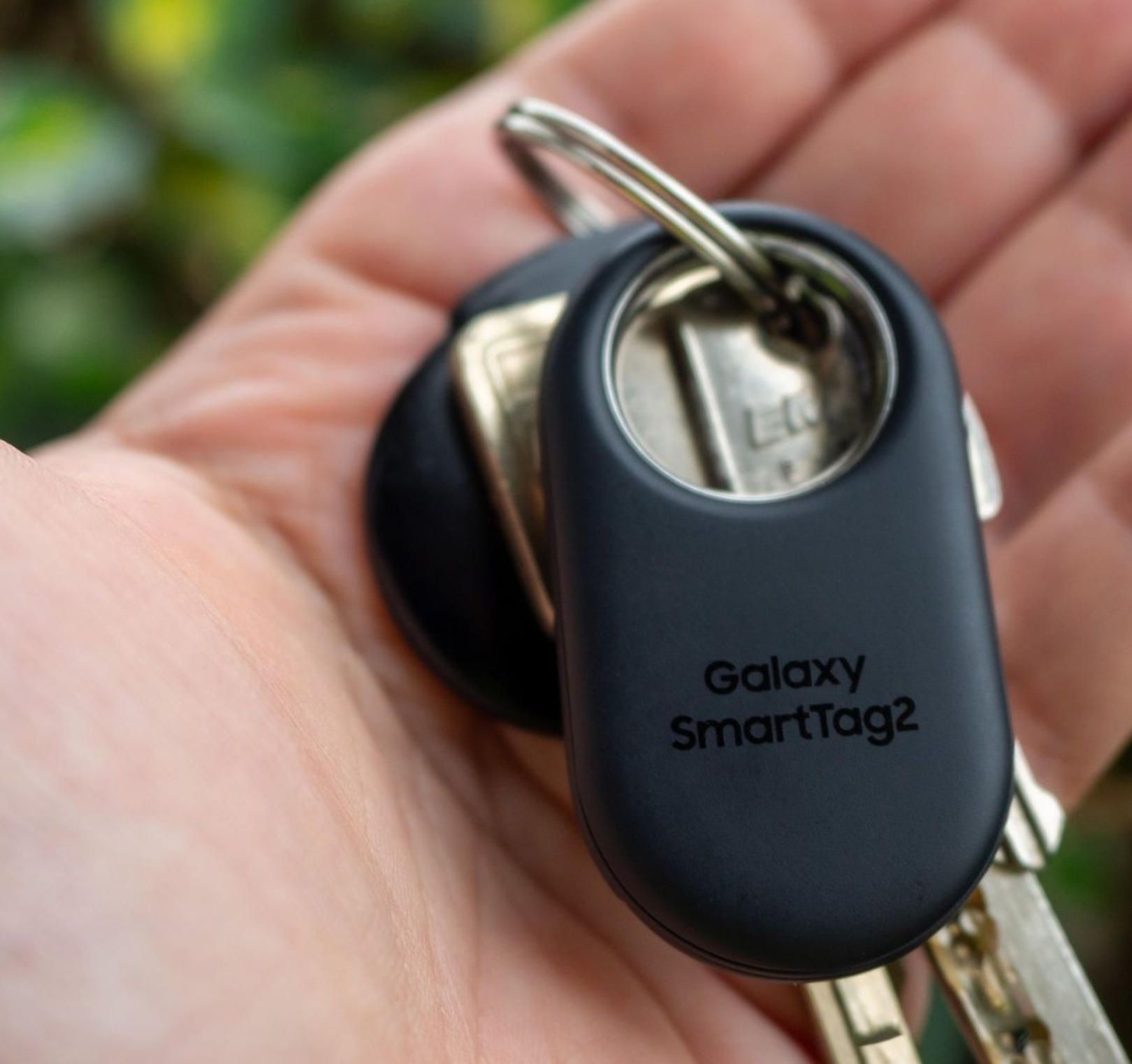
Samsung Galaxy SmartTag 2 - tracker.jpg

Samsung Galaxy SmartTag 2: The Android Powerhouse

Samsung launched the Galaxy SmartTag 2 in October 2023, and it remains the flagship item tracker for the Android ecosystem. Priced at $30 for a single unit or $100 for a four-pack, it combines Bluetooth 5.3 LE with UWB in a single device.

The SmartTag 2 offers a maximum Bluetooth range of 120 meters and features an IP67 dust and water resistance rating, meaning it survives submersion in one meter of water for 30 minutes. This makes it the most durable mainstream Bluetooth tracker available, suitable for outdoor use on bicycles, pet collars, or luggage that might encounter rain.

Battery life is a standout feature. Samsung claims up to 500 days in Normal Mode and up to 700 days in Power Saving Mode using a standard CR2032 battery. As reported by Samsung's official newsroom, the Power Saving Mode more than doubles battery longevity compared to previous Galaxy SmartTag models. This extended lifespan is particularly valuable for set-and-forget applications like tracking a bicycle or a piece of rarely used equipment.

"The best item tracker is the one you forget about — until the moment you desperately need it. Then it becomes the most important device you own."

The design includes an integrated metal loop for direct attachment to keychains, bag zippers, or pet collars without needing a separate accessory. Samsung's Compass View provides UWB-powered directional guidance on compatible Galaxy smartphones, and AR Find overlays tracking arrows on your camera view to guide you visually.

The SmartTag 2 also functions as a smart home controller. A programmable button triggers SmartThings routines, letting you automate lights, locks, or other IoT devices with a single press. This dual functionality as both a Bluetooth tracker and a smart home remote control is unique among competing products.

The primary limitation is platform exclusivity. The SmartTag 2 works only with Samsung Galaxy smartphones and tablets running Android 11 or later. UWB Precision Finding requires a Galaxy phone with built-in UWB hardware, which excludes the base Galaxy S models and the Z Flip series. The SmartThings Find network, while growing, has a smaller device footprint than Apple's Find My network.
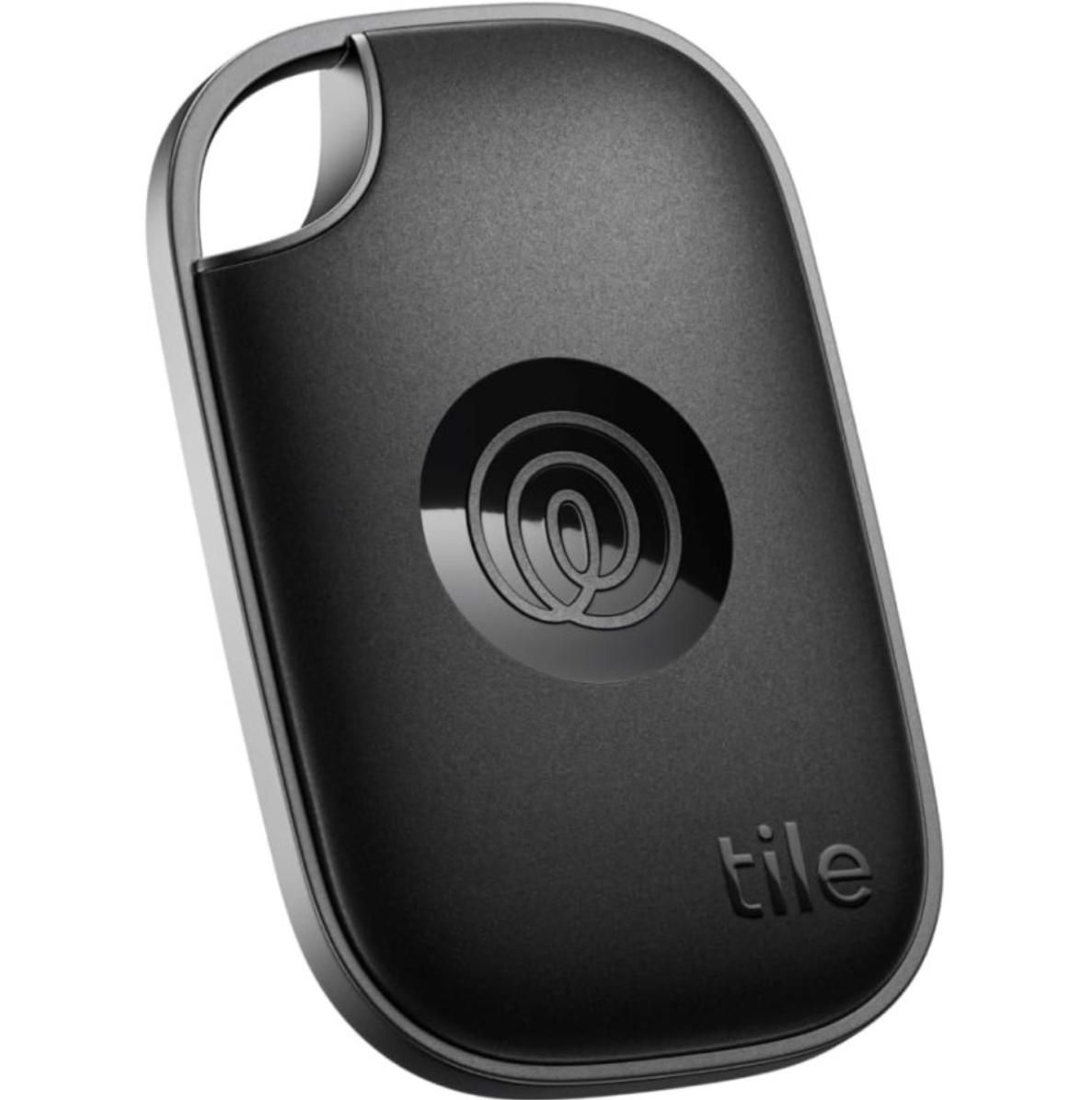
Tile Pro (Life360) - tracker.jpg

Tile Pro (Life360): Cross-Platform Flexibility with a Privacy Asterisk

Tile has been in the Bluetooth tracker business longer than Apple or Samsung, and its latest lineup, launched in September 2024 under parent company Life360, emphasizes cross-platform compatibility and family safety integration.

The Tile Pro leads the range at $35 with an impressive 500-foot (152-meter) Bluetooth range and a 110dB+ alert speaker, the loudest in the industry. This item tracker app integrates fully with the Life360 family safety platform, placing your tracked belongings on the same map as your family members. Life360 reports approximately 83.7 million global monthly active users, with 45.3 million in the United States, providing a substantial crowdsourced detection network.

Tile's unique selling point is Anti-Theft Mode, which hides your Bluetooth tracker from Tile's Scan and Secure detection feature. The intended purpose is to prevent a thief from scanning for and removing a hidden Tile attached to a stolen bicycle or placed inside a stolen bag. Activating Anti-Theft Mode requires ID verification with biometric scanning. According to Life360's official announcement, tiles in Anti-Theft Mode become undetectable by Bluetooth scanning tools, giving users an improved chance of recovering stolen property.

The SOS feature, available on 2024 Tile devices, extends Life360's emergency services to the physical tracker. Pressing the Tile button three times sends an SOS alert with your location to your Life360 Circle and designated emergency contacts. With Gold and Platinum memberships, dispatchers can contact emergency services on your behalf.

Tile's network extends beyond smartphones through Amazon Sidewalk integration. Ring doorbells, security cameras, and Echo smart speakers act as relay points, picking up Tile signals and forwarding location data even when no Tile app user is nearby.

However, significant security concerns have emerged. In September 2025, security researchers reported to Wired that Tile trackers broadcast unencrypted, static MAC addresses and unique IDs. The Electronic Frontier Foundation published a detailed analysis noting that unlike Apple and Google's systems, where location relay data is end-to-end encrypted and only decryptable by the owner, Tile's data appeared to be stored in cleartext on company servers. This means Life360 could theoretically monitor tracker locations continuously. The EFF specifically called out the irony that Anti-Theft Mode, which prevents detection by the Scan and Secure app, could equally serve as a tool for stalkers to avoid having their trackers discovered.

Tile does not support UWB, relying entirely on BLE for proximity detection. It also does not integrate with Apple Find My or Google Find My Device networks, operating exclusively through its proprietary Life360 network.

The DULT Standard: Making Trackers Safer for Everyone

The explosion of Bluetooth tracker adoption brought an uncomfortable side effect: stalking. During an eight-month period in 2021 and 2022, approximately one-third of police department cases mentioning AirTags were related to stalking, according to data cited by multiple news outlets. Bad actors would slip a small Bluetooth tracker into someone's bag, car, or jacket pocket and monitor their movements remotely.

In response, Apple and Google collaborated to create the Detecting Unwanted Location Trackers (DULT) standard, published through the Internet Engineering Task Force. Since May 2024, both iOS (version 17.5+) and Android (version 6.0+) devices automatically alert users when an unrecognized Bluetooth tracker is detected traveling with them over time. The alert appears regardless of which ecosystem the tracker belongs to, as long as it conforms to the DULT specification.

"Designing a perfect anti-theft tracker that never alerts the thief is technically identical to designing a perfect stalking device. The industry had to acknowledge this uncomfortable truth."

As the EFF emphasized in its analysis of the DULT draft, it is fundamentally impossible to build an anti-theft device that hides from thieves without simultaneously creating a tool that hides from stalking victims. The DULT standard represents the industry's consensus that user safety takes priority, even if it means a thief might detect and discard a tracker attached to stolen property.

For companies engaged in tracking app development, DULT compliance is now a baseline requirement. Any new Bluetooth tracker entering the US or European market must implement the standard's advertising protocols, sound-emission requirements, and identifier rotation schedules. A-Bots' engineering team stays current with these evolving specifications, ensuring that client products and their item tracker app components meet regulatory expectations from day one.

Apple's AirTag 2 strengthened its DULT implementation with more frequent Bluetooth identifier rotation. Samsung's SmartTag 2 integrates anti-stalking alerts through the Android system. Tile's approach remains more controversial, as its Anti-Theft Mode deliberately makes tracking devices invisible to detection scans, creating a direct tension with the DULT philosophy.

Real-World Use Cases: From Lost Keys to Stolen Bicycles

The personal item tracking segment dominates the market. According to Mordor Intelligence, personal item tracking accounted for 57.84% of smart tracker market share in 2025. But the use cases extend far beyond keychains and wallets.

Luggage and air travel have become a major adoption driver. More than 50 airlines now support Apple's Share Item Location feature, allowing passengers to track checked bags through the Find My app. After high-profile incidents of lost luggage by major carriers, travelers increasingly attach a Bluetooth tracker to every checked bag as a personal insurance policy.

Bicycle and e-scooter theft prevention represents a growing segment. In the United States, a bicycle is stolen approximately every three minutes according to cycling industry data. E-bikes face even higher risk, with Bike Index's 2025 report finding that electric bikes are roughly three times more likely to be stolen than traditional bicycles. Riders hide AirTags inside handlebars, attach SmartTags under saddles, or stick Tile Stickers inside frame tubes. When a bike disappears, the crowdsourced network often locates it within hours, providing police with GPS coordinates for recovery.

Pet tracking continues to gain traction, with Samsung offering dedicated SmartThings Pet Care features that monitor a pet's walks and alert owners when a tagged collar moves too far from home.

Enterprise asset management in healthcare has accelerated significantly. Hospitals deploy BLE beacons and UWB anchors spaced every 10 to 20 meters to locate medical equipment such as infusion pumps and ventilators, reducing staff search time by up to 70% according to industry analyses.

Each of these use cases presents opportunities for custom item tracker app development. A bicycle security company might need an app that integrates BLE tracking with motion-activated alarms and police report generation. A pet care brand might want GPS and Bluetooth hybrid tracking with health monitoring dashboards. A hospital system might require enterprise-grade positioning with HIPAA-compliant data handling. These are exactly the kinds of specialized IoT mobile applications and tracking app development projects that A-Bots.com builds for clients worldwide.

AirTag 2 vs. SmartTag 2 vs. Tile Pro: Choosing the Right Tracker

Selecting the best Bluetooth tracker depends primarily on your smartphone ecosystem and your specific tracking needs.

If you own an iPhone, the Apple AirTag 2 is the clear winner. The combination of the world's largest crowdsourced Find My network, UWB Precision Finding at up to 60 meters, and seamless ecosystem integration makes it the most reliable tracking device available. The $29 price point with zero subscription fees keeps the total cost of ownership low. The main drawback is the lack of a built-in attachment mechanism, requiring an accessory purchase for anything beyond dropping it into a bag or pocket.

For Samsung Galaxy users, the SmartTag 2 offers the best combination of features and durability. The IP67 rating, 500-day battery life, and integrated attachment loop make it practical for outdoor and rough-use scenarios. UWB Compass View works well on compatible phones, and the smart home control button adds unique value. The limitation is network size, as the SmartThings Find network relies exclusively on Samsung devices rather than all Android phones.

Tile Pro serves users who need a single tracking device that works across both iOS and Android. The 500-foot range and 110dB speaker are industry-leading specs, and Life360 integration adds family safety features. However, the absence of precision directional finding, the security concerns raised by the EFF regarding unencrypted data transmission, and the controversial Anti-Theft Mode make Tile a harder recommendation for privacy-conscious users. Unlike AirTag's Find My network or SmartTag's SmartThings Find, Tile operates on a proprietary network that does not benefit from OS-level integration.

For businesses evaluating the item tracker app ecosystem, an important consideration is which platform to build for. Apple's Find My network certification program allows third-party accessory makers to integrate their products into the Find My app. Google's Find My Device (now Find Hub) similarly supports third-party trackers through its own expansive network. Developing for these platforms means leveraging massive existing networks rather than building a proprietary one. A-Bots has experience with both Apple and Google IoT integration frameworks and can guide clients through the certification and tracking app development process for either ecosystem.

Why Custom Tracking App Development Is a Growing Opportunity

The $856 million smart tracker market is expanding rapidly, but the three dominant players cannot serve every niche. Mordor Intelligence reports that the healthcare segment is growing at 11.31% CAGR, the fastest of any end-user category. Kids and senior safety wearables are advancing at 10.12% CAGR. Enterprise inventory tracking, construction site equipment monitoring, and luxury goods authentication all represent verticals where off-the-shelf trackers fall short and custom tracking app development fills the gap.

Building a competitive item tracker app requires expertise in several technical domains simultaneously. BLE and Ultra-Wideband SDK integration demands deep knowledge of Apple's Core Bluetooth and Nearby Interaction frameworks, Android's Bluetooth LE APIs, and emerging standards like the IEEE 802.15.4ab specification. Server-side architecture must handle millions of anonymous location relays with end-to-end encryption and sub-second latency. The mobile frontend needs to render real-time maps, directional arrows, and geofence alerts while consuming minimal battery on the user's phone. And DULT compliance adds a layer of regulatory engineering that grows more complex as the standard evolves. Each of these layers represents a core competency that professional tracking app development teams must master.

At A-Bots.com, we combine mobile app development expertise in React Native, Swift, Kotlin, and Java with IoT backend engineering in Python/Django and Node.js. Our QA testing team validates Bluetooth connectivity across hundreds of device combinations, and our full-cycle development process covers everything from initial hardware-software architecture through App Store deployment and post-launch support. With offices in the USA, Ukraine, and Romania, we support clients across North American and European time zones.

Whether you are a hardware startup launching your first Bluetooth tracker, an enterprise deploying UWB asset tracking across multiple facilities, or an established brand that needs a white-label item tracker app for your product line, A-Bots has the engineering depth and IoT experience to bring your vision to production.

Ready to build a custom tracker application? Contact our team at info@a-bots.com to discuss your project requirements and get a free technical consultation.


Sources referenced in this article:

  1. Mordor Intelligence — Smart Tracker Market Report (2026)
  2. Market Growth Reports — Smart Tracker Market Analysis
  3. MacRumors — AirTag 2: Everything We Know
  4. Samsung Newsroom — Galaxy SmartTag2 Announcement
  5. Life360 / PRNewswire — New Tile Tracker Line Launch
  6. Electronic Frontier Foundation — Tile Security Analysis
  7. The Verge — Apple and Google DULT Anti-Stalking Alerts
  8. ABI Research — Bluetooth Device Shipments Forecast 2025-2030
  9. IMARC Group — Smart Tracker Market Size and Trends
  10. Pocket-lint — Bluetooth Tracking vs UWB Explained
  11. CNN Underscored — Best Bluetooth Trackers 2026
  12. Bike Index — E-bike Theft Statistics 2025

✅ Hashtags

#BluetoothTracker
#ItemTrackerApp
#UWBTracking
#AirTag2
#SmartTag2
#IoTAppDevelopment
#FindMyNetwork

Other articles

DJI Agras T100 vs Hylio AG-272: Best Heavy-Duty Ag Drones Agricultural drones have evolved from lightweight scouting tools into heavy-duty industrial platforms capable of spraying thousands of acres per week. This in-depth comparison examines two leading heavy-duty models — the DJI Agras T100 with its 100-liter spray tank and advanced LiDAR sensing, and the Hylio AG-272, a Texas-built workhorse offering fleet coordination of up to three drones from a single operator station. The article covers specifications, obstacle avoidance systems, regulatory considerations including NDAA compliance, alternative drone applications beyond spraying, and the critical role of custom software in maximizing drone ROI for modern farming operations.

DJI Agras T25P vs XAG V40: Best Drones for Vineyards Vineyards demand what broadacre farms do not: precision on steep slopes, targeted canopy penetration, and fungicide timing measured in hours. This comparison examines two compact agricultural drones built for exactly these conditions. The DJI Agras T25P brings Safety System 3.0, Orchard Mode with automated 3D flight routes, and terrain following on slopes up to 50 degrees. The XAG V40 counters with a unique twin-rotor design that delivers focused downdraft for superior spray penetration into dense vine canopies, IP67 waterproofing, and AI-powered mapping through its RealTerra system. The article covers real vineyard case studies from Germany, Italy, California, and New Zealand, plus the role of custom drone software in precision winemaking.

ArduPilot Drone Solutions for Agriculture Modern agriculture demands more than manual scouting and uniform input application. This article presents three detailed drone use cases built on the open-source ArduPilot firmware and Mission Planner ground station: multispectral vineyard health monitoring with MicaSense RedEdge-P sensors and terrain-following flight on sloped terrain, variable-rate prescription mapping for broadacre crops using VTOL platforms and RTK GPS, and autonomous livestock headcount verification with onboard AI detection running on NVIDIA Jetson companion computers. Each case specifies the hardware architecture, Mission Planner configuration, and custom software modules developed by A-Bots.com to bridge raw aerial data and actionable farm decisions.

Drone Solutions for Energy Infrastructure Energy infrastructure inspection is shifting from helicopter patrols and climbing crews to automated drone workflows. This article details three production-ready use cases built on ArduPilot firmware and Mission Planner: radiometric thermal inspection of utility-scale solar farms with IEC 62446-3 compliance and AI-powered defect classification, LiDAR-based power line corridor mapping with vegetation clearance analysis and digital twin generation, and BVLOS pipeline surveillance with onboard optical gas imaging and real-time methane leak alerting. Each case specifies hardware architecture, ArduPilot parameters, Mission Planner configuration, and custom software modules developed by A-Bots.com for seamless integration with existing CMMS and regulatory reporting systems.

Ardupilot Drone Solutions: Construction Mining SAR Construction sites, mining operations, and search-and-rescue missions share a common need for frequent, accurate aerial data delivered faster than traditional methods allow. This final article in a three-part series details three production-ready drone use cases built on ArduPilot and Mission Planner: weekly photogrammetric construction progress monitoring with automated BIM overlay and cut-fill volumetrics, mining stockpile and pit progression surveys using RTK-enabled LiDAR with slope stability tracking, and thermal search-and-rescue operations with real-time AI human detection on NVIDIA Jetson companion computers. Each case specifies hardware, firmware parameters, and custom software developed by A-Bots.com.

Top stories

  • food delivery app development

    food ordering startups

    custom food ordering app

    food delivery startups

    Food Delivery and Food Ordering Mobile App Development

    A-Bots.com offers custom food delivery and food ordering mobile app development for startups and restaurants. From UI/UX to testing, we build scalable apps with real-time tracking, secure payments, and AI personalization.

  • apple watch for seniors

    iOS app development company

    apple watch healthcare apps

    watchOS app development

    senior apple watch app

    Apple Watch for Seniors: Custom Apps and Elder-Care Solutions

    Explore how Apple Watch for seniors transforms elder care. Learn how custom watchOS and iOS app development improves safety, health, and independence.

  • unitree G1 programming

    custom software for unitree G1

    humanoid robot

    unitree G1 control

    unitree G1 SDK

    Custom Unitree G1 Programming and Unitree G1 SDK App Development

    Bespoke Unitree G1 programming, SDK integrations and app development. A-Bots.com creates custom robotics software for advanced humanoid solutions.

  • drones show app development company

    app development for swarm of drones

    software development for drones show

    IoT app development company

    Swarm of Drones and Drones Show Software Development Company

    A-Bots.com is a drones show app development company delivering app development for swarm of drones: orchestration servers, ArduPilot Mission Planner workflows, operator-grade mobile apps, safety-first timing, and scalable IoT integrations.

  • farmer app development company

    agritech app development company

    bespoke agriculture application development

    agriculture app development company

    bespoke agro apps

    Farmer App Development Company - Smart Farming Apps and Integrations

    A-Bots.com - farmer app development company for offline-first smart farming apps. We integrate John Deere, FieldView & Trimble to deliver the best farmer apps and compliant farming applications in the US, Canada and EU.

  • counter-drone software

    drone detection and tracking

    LiDAR drone tracking

    AI counter drone (C-UAV)

    Counter-Drone (C-UAV) Visual Tracking and Trajectory Prediction

    Field-ready counter-drone perception: sensors, RGB-T fusion, edge AI, tracking, and short-horizon prediction - delivered as a production stack by A-Bots.com.

  • pet care application development

    custom pet-care app

    pet health app

    veterinary app integration

    litter box analytics

    Custom Pet Care App Development

    A-Bots.com is a mobile app development company delivering custom pet care app development with consent-led identity, behavior AI, offline-first routines, and seamless integrations with vets, insurers, microchips, and shelters.

  • agriculture mobile application developmen

    ISOBUS mobile integration

    smart farming mobile app

    precision farming app

    Real-Time Agronomic Insights through IoT-Driven Mobile Analytics

    Learn how edge-AI, cloud pipelines and mobile UX transform raw farm telemetry into real-time, actionable maps—powered by A-Bots.com’s agriculture mobile application development expertise.

  • ge predix platform

    industrial iot platform

    custom iot app development

    industrial iot solutions

    industrial edge analytics

    predictive maintenance software

    GE Predix Platform and Industrial IoT App Development

    Discover how GE Predix Platform and custom apps from A-Bots.com enable real-time analytics, asset performance management, and scalable industrial IoT solutions.

  • industrial iot solutions

    industrial iot development

    industrial edge computing

    iot app development

    Industrial IoT Solutions at Scale: Secure Edge-to-Cloud with A-Bots.com

    Discover how A-Bots.com engineers secure, zero-trust industrial IoT solutions— from rugged edge gateways to cloud analytics— unlocking real-time efficiency, uptime and compliance.

  • eBike App Development Company

    custom ebike app development

    ebike IoT development

    ebike OEM app solution

    ebike mobile app

    Sensor-Fusion eBike App Development Company

    Unlock next-gen riding experiences with A-Bots.com: a sensor-centric eBike app development company delivering adaptive pedal-assist, predictive maintenance and cloud dashboards for global OEMs.

  • pet care app development company

    pet hotel CRM

    pet hotel IoT

    pet hotel app

    Pet Hotel App Development

    Discover how A-Bots.com, a leading pet care app development company, builds full-stack mobile and CRM solutions that automate booking, feeding, video, and revenue for modern pet hotels.

  • DoorDash drone delivery

    Wing drone partnership

    drone delivery service

    build drone delivery app

    drone delivery software development

    Explore Wing’s and DoorDash drone delivery

    From sub-15-minute drops to FAA-grade safety, we unpack DoorDash’s drone playbook—and show why software, not rotors, will decide who owns the sky.

  • drone mapping software

    adaptive sensor-fusion mapping

    custom drone mapping development

    edge AI drone processing

    Drone Mapping and Sensor Fusion

    Explore today’s photogrammetry - LiDAR landscape and the new Adaptive Sensor-Fusion Mapping method- see how A-Bots.com turns flight data into live, gap-free maps.

  • Otter AI transcription

    Otter voice meeting notes

    Otter audio to text

    Otter voice to text

    voice to text AI

    Otter.ai Transcription and Voice Notes

    Deep guide to Otter.ai transcription, voice meeting notes, and audio to text. Best practices, automation, integration, and how A-Bots.com can build your custom AI.

  • How to use Wiz AI

    Wiz AI voice campaign

    Wiz AI CRM integration

    Smart trigger chatbot Wiz AI

    Wiz AI Chat Bot: Hands-On Guide to Voice Automation

    Master the Wiz AI chat bot: from setup to smart triggers, multilingual flows, and human-sounding voice UX. Expert guide for CX teams and product owners.

  • Tome AI Review

    Enterprise AI

    CRM

    Tome AI Deep Dive Review

    Explore Tome AI’s architecture, workflows and EU-ready compliance. Learn how generative decks cut prep time, boost sales velocity and where A-Bots.com adds AI chatbot value.

  • Wiz.ai

    Voice Conversational AI

    Voice AI

    Inside Wiz.ai: Voice-First Conversational AI in SEA

    Explore Wiz.ai’s rise from Singapore startup to regional heavyweight, its voice-first tech stack, KPIs, and lessons shaping next-gen conversational AI.

  • TheLevel.AI

    CX-Intelligence Platforms

    Bespoke conversation-intelligence stacks

    Level AI

    Contact Center AI

    Beyond Level AI: How A-Bots.com Builds Custom CX-Intelligence Platforms

    Unlock Level AI’s secrets and see how A-Bots.com engineers bespoke conversation-intelligence stacks that slash QA costs, meet tight compliance rules, and elevate customer experience.

  • Offline AI Assistant

    AI App Development

    On Device LLM

    AI Without Internet

    Offline AI Assistant Guide - Build On-Device LLMs with A-Bots

    Discover why offline AI assistants beat cloud chatbots on privacy, latency and cost—and how A-Bots.com ships a 4 GB Llama-3 app to stores in 12 weeks.

  • Drone Mapping Software

    UAV Mapping Software

    Mapping Software For Drones

    Pix4Dmapper (Pix4D)

    DroneDeploy (DroneDeploy Inc.)

    DJI Terra (DJI Enterprise)

    Agisoft Metashape 1.9 (Agisoft)

    Bentley ContextCapture (Bentley Systems)

    Propeller Pioneer (Propeller Aero)

    Esri Site Scan (Esri)

    Drone Mapping Software (UAV Mapping Software): 2025 Guide

    Discover the definitive 2025 playbook for deploying drone mapping software & UAV mapping software at enterprise scale—covering mission planning, QA workflows, compliance and data governance.

  • App for DJI

    Custom app for Dji drones

    Mapping Solutions

    Custom Flight Control

    app development for dji drone

    App for DJI Drone: Custom Flight Control and Mapping Solutions

    Discover how a tailor‑made app for DJI drone turns Mini 4 Pro, Mavic 3 Enterprise and Matrice 350 RTK flights into automated, real‑time, BVLOS‑ready data workflows.

  • Chips Promo App

    Snacks Promo App

    Mobile App Development

    AR Marketing

    Snack‑to‑Stardom App: Gamified Promo for Chips and Snacks

    Learn how A‑Bots.com's gamified app turns snack fans into streamers with AR quests, guaranteed prizes and live engagement—boosting sales and first‑party data.

  • Mobile Apps for Baby Monitor

    Cry Detection

    Sleep Analytics

    Parent Tech

    AI Baby Monitor

    Custom Mobile Apps for AI Baby Monitors | Cry Detection, Sleep Analytics and Peace-of-Mind

    Turn your AI baby monitor into a trusted sleep-wellness platform. A-Bots.com builds custom mobile apps with real-time cry detection, sleep analytics, and HIPAA-ready cloud security—giving parents peace of mind and brands recurring revenue.

  • wine app

    Mobile App for Wine Cabinets

    custom wine fridge app

    Custom Mobile App Development for Smart Wine Cabinets: Elevate Your Connected Wine Experience

    Discover how custom mobile apps transform smart wine cabinets into premium, connected experiences for collectors, restaurants, and luxury brands.

  • agriculture mobile application

    farmers mobile app

    smart phone apps in agriculture

    Custom Agriculture App Development for Farmers

    Build a mobile app for your farm with A-Bots.com. Custom tools for crop, livestock, and equipment management — developed by and for modern farmers.

  • IoT

    Smart Home

    technology

    Internet of Things and the Smart Home

    Internet of Things (IoT) and the Smart Home: The Future is Here

  • IOT

    IIoT

    IAM

    AIoT

    AgriTech

    Today, the Internet of Things (IoT) is actively developing, and many solutions are already being used in various industries.

    Today, the Internet of Things (IoT) is actively developing, and many solutions are already being used in various industries.

  • IOT

    Smart Homes

    Industrial IoT

    Security and Privacy

    Healthcare and Medicine

    The Future of the Internet of Things (IoT)

    The Future of the Internet of Things (IoT)

  • IoT

    Future

    Internet of Things

    A Brief History IoT

    A Brief History of the Internet of Things (IoT)

  • Future Prospects

    IoT

    drones

    IoT and Modern Drones: Synergy of Technologies

    IoT and Modern Drones: Synergy of Technologies

  • Drones

    Artificial Intelligence

    technologi

    Inventions that Enabled the Creation of Modern Drones

    Inventions that Enabled the Creation of Modern Drones

  • Water Drones

    Drones

    Technological Advancements

    Water Drones: New Horizons for Researchers

    Water Drones: New Horizons for Researchers

  • IoT

    IoT in Agriculture

    Applying IoT in Agriculture: Smart Farming Systems for Increased Yield and Sustainability

    Explore the transformative impact of IoT in agriculture with our article on 'Applying IoT in Agriculture: Smart Farming Systems for Increased Yield and Sustainability.' Discover how smart farming technologies are revolutionizing resource management, enhancing crop yields, and fostering sustainable practices for a greener future.

  • Bing

    Advertising

    How to set up contextual advertising in Bing

    Unlock the secrets of effective digital marketing with our comprehensive guide on setting up contextual advertising in Bing. Learn step-by-step strategies to optimize your campaigns, reach a diverse audience, and elevate your online presence beyond traditional platforms.

  • mobile application

    app market

    What is the best way to choose a mobile application?

    Unlock the secrets to navigating the mobile app jungle with our insightful guide, "What is the Best Way to Choose a Mobile Application?" Explore expert tips on defining needs, evaluating security, and optimizing user experience to make informed choices in the ever-expanding world of mobile applications.

  • Mobile app

    Mobile app development company

    Mobile app development company in France

    Elevate your digital presence with our top-tier mobile app development services in France, where innovation meets expertise to bring your ideas to life on every mobile device.

  • Bounce Rate

    Mobile Optimization

    The Narrative of Swift Bounces

    What is bounce rate, what is a good bounce rate—and how to reduce yours

    Uncover the nuances of bounce rate, discover the benchmarks for a good rate, and learn effective strategies to trim down yours in this comprehensive guide on optimizing user engagement in the digital realm.

  • IoT

    technologies

    The Development of Internet of Things (IoT): Prospects and Achievements

    The Development of Internet of Things (IoT): Prospects and Achievements

  • Bots

    Smart Contracts

    Busines

    Bots and Smart Contracts: Revolutionizing Business

    Modern businesses constantly face challenges and opportunities presented by new technologies. Two such innovative tools that are gaining increasing attention are bots and smart contracts. Bots, or software robots, and blockchain-based smart contracts offer unique opportunities for automating business processes, optimizing operations, and improving customer interactions. In this article, we will explore how the use of bots and smart contracts can revolutionize the modern business landscape.

  • No-Code

    No-Code solutions

    IT industry

    No-Code Solutions: A Breakthrough in the IT World

    No-Code Solutions: A Breakthrough in the IT World In recent years, information technology (IT) has continued to evolve, offering new and innovative ways to create applications and software. One key trend that has gained significant popularity is the use of No-Code solutions. The No-Code approach enables individuals without technical expertise to create functional and user-friendly applications using ready-made tools and components. In this article, we will explore the modern No-Code solutions currently available in the IT field.

  • Support

    Department Assistants

    Bot

    Boosting Customer Satisfaction with Bot Support Department Assistants

    In today's fast-paced digital world, businesses strive to deliver exceptional customer support experiences. One emerging solution to streamline customer service operations and enhance user satisfaction is the use of bot support department assistants.

  • IoT

    healthcare

    transportation

    manufacturing

    Smart home

    IoT have changed our world

    The Internet of Things (IoT) is a technology that connects physical devices with smartphones, PCs, and other devices over the Internet. This allows devices to collect, process and exchange data without the need for human intervention. New technological solutions built on IoT have changed our world, making our life easier and better in various areas. One of the important changes that the IoT has brought to our world is the healthcare industry. IoT devices are used in medical devices such as heart rate monitors, insulin pumps, and other medical devices. This allows patients to take control of their health, prevent disease, and provide faster and more accurate diagnosis and treatment. Another important area where the IoT has changed our world is transportation. IoT technologies are being used in cars to improve road safety. Systems such as automatic braking and collision alert help prevent accidents. In addition, IoT is also being used to optimize the flow of traffic, manage vehicles, and create smart cities. IoT solutions are also of great importance to the industry. In the field of manufacturing, IoT is used for data collection and analysis, quality control and efficiency improvement. Thanks to the IoT, manufacturing processes have become more automated and intelligent, resulting in increased productivity, reduced costs and improved product quality. Finally, the IoT has also changed our daily lives. Smart homes equipped with IoT devices allow people to control and manage their homes using mobile apps. Devices such as smart thermostats and security systems, vacuum cleaners and others help to increase the level of comfort

  • tourism

    Mobile applications for tourism

    app

    Mobile applications in tourism

    Mobile applications have become an essential tool for travelers to plan their trips, make reservations, and explore destinations. In the tourism industry, mobile applications are increasingly being used to improve the travel experience and provide personalized services to travelers. Mobile applications for tourism offer a range of features, including destination information, booking and reservation services, interactive maps, travel guides, and reviews of hotels, restaurants, and attractions. These apps are designed to cater to the needs of different types of travelers, from budget backpackers to luxury tourists. One of the most significant benefits of mobile applications for tourism is that they enable travelers to access information and services quickly and conveniently. For example, travelers can use mobile apps to find flights, hotels, and activities that suit their preferences and budget. They can also access real-time information on weather, traffic, and local events, allowing them to plan their itinerary and make adjustments on the fly. Mobile applications for tourism also provide a more personalized experience for travelers. Many apps use algorithms to recommend activities, restaurants, and attractions based on the traveler's interests and previous activities. This feature is particularly useful for travelers who are unfamiliar with a destination and want to explore it in a way that matches their preferences. Another benefit of mobile applications for tourism is that they can help travelers save money. Many apps offer discounts, deals, and loyalty programs that allow travelers to save on flights, hotels, and activities. This feature is especially beneficial for budget travelers who are looking to get the most value for their money. Mobile applications for tourism also provide a platform for travelers to share their experiences and recommendations with others. Many apps allow travelers to write reviews, rate attractions, and share photos and videos of their trips. This user-generated content is a valuable resource for other travelers who are planning their trips and looking for recommendations. Despite the benefits of mobile applications for tourism, there are some challenges that need to be addressed. One of the most significant challenges is ensuring the security and privacy of travelers' data. Travelers need to be confident that their personal and financial information is safe when using mobile apps. In conclusion, mobile applications have become an essential tool for travelers, and their use in the tourism industry is growing rapidly. With their ability to provide personalized services, real-time information, and cost-saving options, mobile apps are changing the way travelers plan and experience their trips. As technology continues to advance, we can expect to see even more innovative and useful mobile applications for tourism in the future.

  • Mobile applications

    logistics

    logistics processes

    mobile app

    Mobile applications in logistics

    In today's world, the use of mobile applications in logistics is becoming increasingly common. Mobile applications provide companies with new opportunities to manage and optimize logistics processes, increase productivity, and improve customer service. In this article, we will discuss the benefits of mobile applications in logistics and how they can help your company. Optimizing Logistics Processes: Mobile applications allow logistics companies to manage their processes more efficiently. They can be used to track shipments, manage inventory, manage transportation, and manage orders. Mobile applications also allow on-site employees to quickly receive information about shipments and orders, improving communication between departments and reducing time spent on completing tasks. Increasing Productivity: Mobile applications can also help increase employee productivity. They can be used to automate routine tasks, such as filling out reports and checking inventory. This allows employees to focus on more important tasks, such as processing orders and serving customers. Improving Customer Service: Mobile applications can also help improve the quality of customer service. They allow customers to track the status of their orders and receive information about delivery. This improves transparency and reliability in the delivery process, leading to increased customer satisfaction and repeat business. Conclusion: Mobile applications are becoming increasingly important for logistics companies. They allow you to optimize logistics processes, increase employee productivity, and improve the quality of customer service. If you're not already using mobile applications in your logistics company, we recommend that you pay attention to them and start experimenting with their use. They have the potential to revolutionize the way you manage your logistics operations and provide better service to your customers.

  • Mobile applications

    businesses

    mobile applications in business

    mobile app

    Mobile applications on businesses

    Mobile applications have become an integral part of our lives and have an impact on businesses. They allow companies to be closer to their customers by providing them with access to information and services anytime, anywhere. One of the key applications of mobile applications in business is the implementation of mobile commerce. Applications allow customers to easily and quickly place orders, pay for goods and services, and track their delivery. This improves customer convenience and increases sales opportunities.

  • business partner

    IT company

    IT solutions

    IT companies are becoming an increasingly important business partner

    IT companies are becoming an increasingly important business partner, so it is important to know how to build an effective partnership with an IT company. 1. Define your business goals. Before starting cooperation with an IT company, it is important to define your business goals and understand how IT solutions can help you achieve them. 2. Choose a trusted partner. Finding a reliable and experienced IT partner can take a lot of time, but it is essential for a successful collaboration. Pay attention to customer reviews and projects that the company has completed. 3. Create an overall work plan. Once you have chosen an IT company, it is important to create an overall work plan to ensure effective communication and meeting deadlines.

  • Augmented reality

    AR

    visualization

    business

    Augmented Reality

    Augmented Reality (AR) can be used for various types of businesses. It can be used to improve education and training, provide better customer service, improve production and service efficiency, increase sales and marketing, and more. In particular, AR promotes information visualization, allowing users to visually see the connection between the virtual and real world and gain a deeper understanding of the situation. Augmented reality can be used to improve learning and training based on information visualization and provide a more interactive experience. For example, in medicine, AR can be used to educate students and doctors by helping them visualize and understand anatomy and disease. In business, the use of AR can improve production and service efficiency. For example, the use of AR can help instruct and educate employees in manufacturing, helping them learn new processes and solve problems faster and more efficiently. AR can also be used in marketing and sales. For example, the use of AR can help consumers visualize and experience products before purchasing them.

  • Minimum Viable Product

    MVP

    development

    mobile app

    Minimum Viable Product

    A Minimum Viable Product (MVP) is a development approach where a new product is launched with a limited set of features that are sufficient to satisfy early adopters. The MVP is used to validate the product's core assumptions and gather feedback from the market. This feedback can then be used to guide further development and make informed decisions about which features to add or remove. For a mobile app, an MVP can be a stripped-down version of the final product that includes only the most essential features. This approach allows developers to test the app's core functionality and gather feedback from users before investing a lot of time and resources into building out the full app. An MVP for a mobile app should include the core functionality that is necessary for the app to provide value to the user. This might include key features such as user registration, search functionality, or the ability to view and interact with content. It should also have a good UI/UX that are easy to understand and use. By launching an MVP, developers can quickly gauge user interest and feedback to make data-driven decisions about which features to prioritize in the full version of the app. Additionally, MVP approach can allow quicker time to market and start to gather user engagement. There are several benefits to using the MVP approach for a mobile app for a company: 1 Validate assumptions: By launching an MVP, companies can validate their assumptions about what features and functionality will be most valuable to their target market. Gathering user feedback during the MVP phase can help a company make informed decisions about which features to prioritize in the full version of the app. 2 Faster time to market: Developing an MVP allows a company to launch their app quickly and start gathering user engagement and feedback sooner, rather than spending months or even years developing a full-featured app. This can give a company a competitive advantage in the market. 3 Reduced development costs: By focusing on the most essential features, an MVP can be developed with a smaller budget and with less time than a full version of the app. This can help a company save money and resources. 4 Minimize the risk: MVP allows to test the market and customer interest before spending a large amount of resources on the app. It can help to minimize risk of a failure by testing the idea and gathering feedback before moving forward with a full-featured version. 5 Better understanding of user needs: Building MVP can also help a company to understand the customer's real needs, behaviors and preferences, with this knowledge the company can create a much more effective and efficient final product. Overall, the MVP approach can provide a cost-effective way for a company to validate their product idea, gather user feedback, and make informed decisions about the development of their mobile app.

  • IoT

    AI

    Internet of Things

    Artificial Intelligence

    IoT (Internet of Things) and AI (Artificial Intelligence)

    IoT (Internet of Things) and AI (Artificial Intelligence) are two technologies that are actively developing at present and have enormous potential. Both technologies can work together to improve the operation of various systems and devices, provide more efficient resource management and provide new opportunities for business and society. IoT allows devices to exchange data and interact with each other through the internet. This opens up a multitude of possibilities for improving efficiency and automating various systems. With IoT, it is possible to track the condition of equipment, manage energy consumption, monitor inventory levels and much more. AI, on the other hand, allows for the processing of large amounts of data and decision-making based on that data. This makes it very useful for analyzing data obtained from IoT devices. For example, AI can analyze data on the operation of equipment and predict potential failures, which can prevent unexpected downtime and reduce maintenance costs. AI can also be used to improve the efficiency of energy, transportation, healthcare and other systems. In addition, IoT and AI can be used together to create smart cities. For example, using IoT devices, data can be collected on the environment and the behavior of people in the city. This data can be analyzed using AI to optimize the operation of the city's infrastructure, improve the transportation system, increase energy efficiency, etc. IoT and AI can also be used to improve safety in the city, for example, through the use of AI-analyzed video surveillance systems. In general, IoT and AI are two technologies that can work together to improve the operation of various systems and devices, as well as create new opportunities for business and society. In the future, and especially in 2023, the use of IoT and AI is expected to increase significantly, bringing even more benefits and possibilities.

Estimate project

Keep up with the times and automate your business processes with bots.

Estimate project

Copyright © Alpha Systems LTD All rights reserved.
Made with ❤️ by A-BOTS

EN