
Home
Services
About us
Blog
Contacts
Estimate project
EN

From Paper Logs to AI Dashcams: The Evolution of Mobile Development Equipment for Truck Drivers

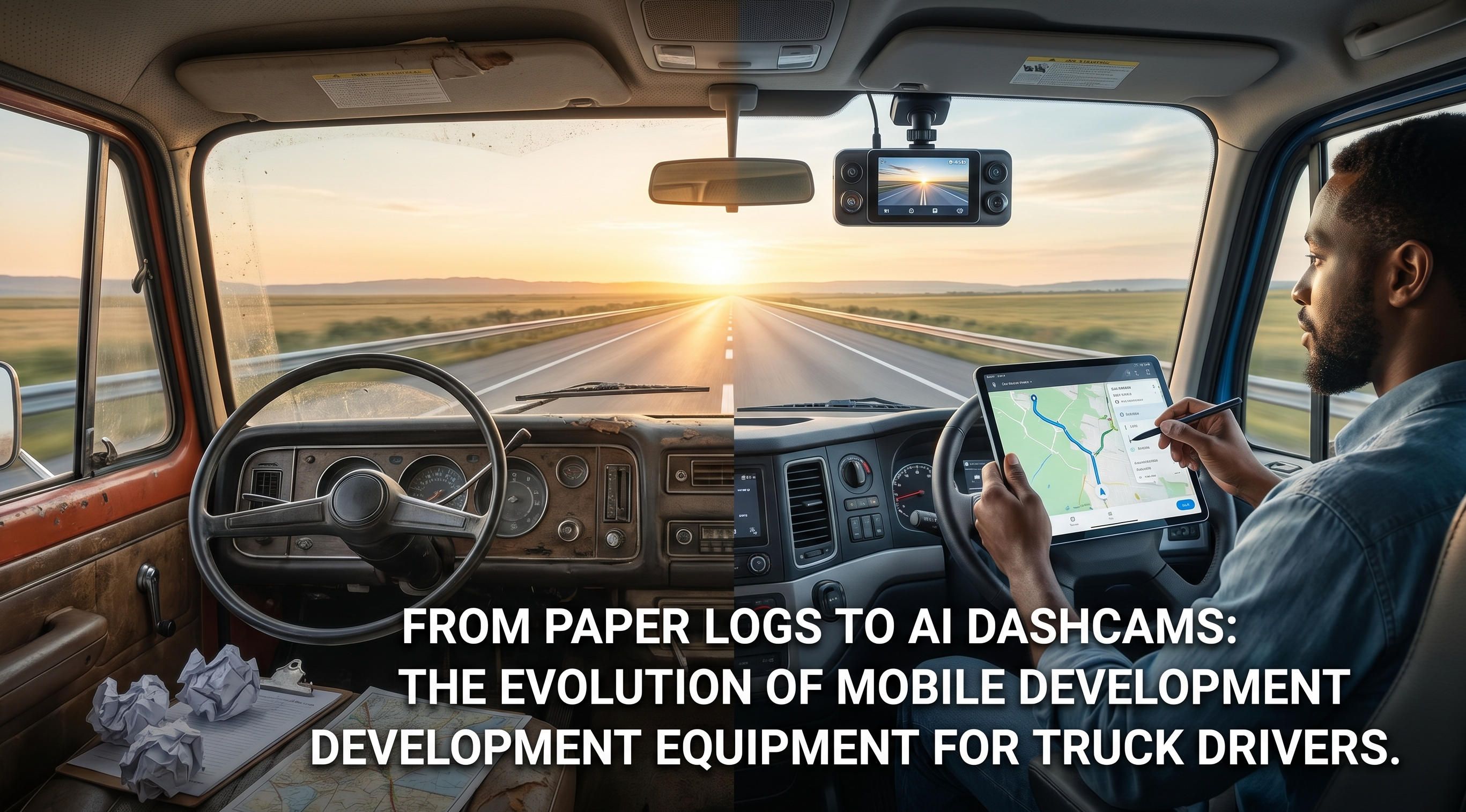
In 1937, the first US Hours of Service rule required commercial drivers to record their duty status by hand in a paper logbook. The driver wrote with a pencil. The carrier filed the page. An auditor, if one ever turned up, leafed through a stack of carbon copies. That system held — with surprisingly few changes — for nearly fifty years. The hardware in the cab was a clipboard.
1.paper-logbook-to-ai-dashcam-trucking-evolution.jpg

Eighty-nine years later, in 2026, the cab is something else entirely. A typical Class 8 tractor is now monitored by an edge-AI dashcam running thirty-plus neural networks at once, an ELD streaming engine data at multi-second resolution, a rugged tablet bridging J1939 to LTE, and a back-office that can predict a starter-motor failure two weeks before the truck refuses to crank. The driver still drives. Almost everything else has changed.

This is article four in a five-part series on mobile development equipment for truck drivers. Article one, "Mobile Development Equipment for Truck Drivers: The Complete 2026 Stack", mapped the current state of the hardware-and-software ecosystem. Article two, "App Development Equipment for Truck Drivers", walked through the off-the-shelf-versus-custom decision. Article three, "Trucking Apps", went deep on FMCSA, IFTA, and eCMR compliance. This article steps back and looks at the arc — where mobile development equipment for truck drivers came from, where it is right now, and where it is heading as edge AI, computer vision, predictive maintenance, and autonomous driving collide in the cab.

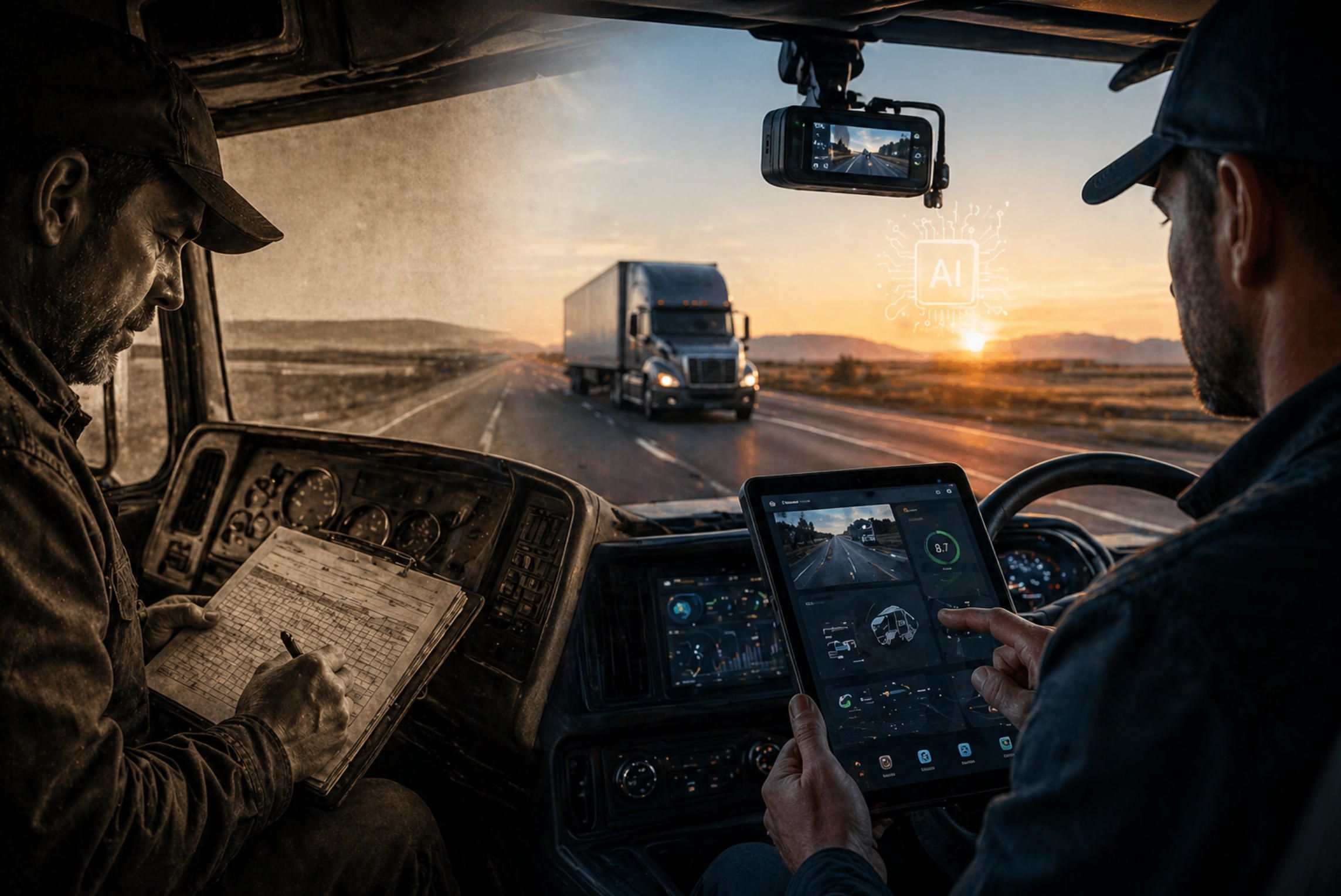
1985: a driver writes "drove 9 hours, slept 7" in a logbook. 2026: a driver's tablet writes "engine oil viscosity diverging from baseline, recommend service in 14 days, also you blinked too long at 03:47." Progress is uneven.
mobile-equipment-truck-drivers-historical-evolution.jpg

Phase One: The Paper Era (1937–1985)

The 1937 Motor Carrier Act gave the Interstate Commerce Commission authority to set HOS rules. The first regulations limited drivers to ten hours of driving per twenty-four-hour period and required the duty-status log. Paper logs stayed essentially unchanged for the next half century. There were practical reasons. Heavy trucks did not generate digital data. There was nothing to record automatically. The carrier's safety culture — and the auditor's diligence — was the only enforcement mechanism that actually applied.

The system had a famous problem. Paper logs were trivial to falsify. Drivers, dispatchers, and carriers under pressure routinely "fixed" hours. The Insurance Institute for Highway Safety published study after study correlating fatigue-related crashes with logbook discrepancies, and the safety community concluded — correctly — that voluntary paper compliance was producing a level of fatigue on the road that the rules were specifically designed to prevent.

The phase ended not with a rule but with a technology. By the early 1980s, electronic engine controls began appearing on heavy trucks. For the first time, the truck itself could tell something about how it had been driven. The hardware floor had moved.

Phase Two: AOBRDs and the Quiet Decade (1986–2014)

In 1986, the IIHS began lobbying the Department of Transportation to mandate electronic recording for all commercial motor vehicles. The trucking industry pushed back. The compromise, codified in 1988 as 49 CFR 395.15, created the Automatic On-Board Recording Device (AOBRD). The AOBRD rule required the device to connect to the engine and capture engine hours, vehicle speed, mileage, and time. It did not require standardized data formats, it did not require roadside data transfer, and it did not require detailed location records.

AOBRDs were, in retrospect, a polite half-step. They proved that the engineering worked. They did not produce the data discipline regulators wanted. After the AOBRD compromise, the question of digital HOS recording effectively went dormant for twelve years.

The Federal Motor Carrier Safety Administration, established in 2000 under the Motor Carrier Safety Improvement Act, made the first attempt to mandate full ELDs in the early 2000s. A federal court vacated the rule in 2004. The second attempt, packaged as Electronic On-Board Recorders (EOBRs), was vacated again on procedural grounds. It took the MAP-21 Act of 2012 — Moving Ahead for Progress in the 21st Century — to give FMCSA the explicit congressional authority to require electronic logging on a meaningful timeline.

What made this phase important for the broader story is that during AOBRD's quiet decade, smartphones happened. By 2010, the device a 1937 driver could not have imagined — a personal computer with an LTE radio, a GPS chip, a high-resolution camera, and an accelerometer, all in a pocket — was selling in the hundreds of millions. When ELD regulation finally arrived, the hardware platform to host it was already in place. The path from "purpose-built embedded recorder" to "ruggedized tablet running an app" became, technically, the obvious one.

trucking-technology-evolution-1937-to-2026.jpg

Phase Three: The ELD Mandate (2015–2019)

The FMCSA Final Rule on ELDs was published in the Federal Register on December 16, 2015. It set a phased compliance schedule. From February 16, 2016 to December 17, 2017, fleets could continue using paper, AOBRDs, or ELDs. From December 18, 2017, all carriers subject to RODS had to use either an AOBRD installed before that date or a self-certified ELD registered with FMCSA. From December 16, 2019, full compliance — every covered vehicle on a registered ELD — became mandatory.

The Final Rule was where mobile development equipment for truck drivers became a regulated product category. Appendix A specified the technical requirements: engine synchronization, location recording at duty-status changes and at 60-minute driving intervals, standardized data-transfer formats, malfunction detection, tamper resistance, six-month back-up retention. Each of those specifications became an engineering bill of materials. Vendors built products to those specifications, and the marketplace that emerged — Samsara, Motive, Geotab, Verizon Connect, BigRoad, EROAD, J.J. Keller, and several dozen smaller registered providers — built the financial base that made everything in the next phase possible.

A 2019 FMCSA report measured the result. Drivers using electronic logs cut their total crash rate by 11.7% and their preventable crash rate by 5.1% compared to drivers in trucks not equipped with electronic logs. The data discipline regulators had wanted since 1986 finally arrived. So did, almost incidentally, a continuous stream of high-resolution truck data — engine hours, mileage, GPS, ignition state — flowing from the cab into cloud platforms that could now do something with it.

That was the moment the next phase started. Almost nobody noticed at the time.

Phase Four: The Telematics Platform Era (2017–2022)

Once the ELD-mandated hardware was installed, fleets had compute, connectivity, and continuous engine data sitting in the cab whether they liked it or not. The unit economics were already paid. The marginal cost of asking the same hardware to do something else was small.

Telematics platforms responded fast. By 2019, fleet management software had moved from "GPS dot on a map" to a layered analytics stack: live vehicle health, driver behavior scoring (harsh braking, cornering, speeding), fuel-burn analytics, idle reporting, route optimization, and back-office integrations into TMS, ERP, and accounting. The fleet management market reflected the shift. Industry research now tracks the fleet management software market at roughly USD 30.1 billion in 2026, on a path to USD 122 billion by 2035 at a 16.9% CAGR (Global Market Insights).

This was also when mobile development equipment for truck drivers stopped being a single device and became a system. The driver app talked to the gateway, the gateway talked to the ECM, the cloud talked to the dispatch console, and increasingly, the dispatch console talked to the customer's portal. The architecture stopped being a logger and became a platform.

The transition created the conditions for the next category to emerge — because once continuous data was a fact of operations, the question stopped being "did it happen" and started being "what is about to happen."
ai-dashcam-edge-computer-vision-truck-cab-2026.jpg

Phase Five: The AI Dashcam Era (2020–Present)

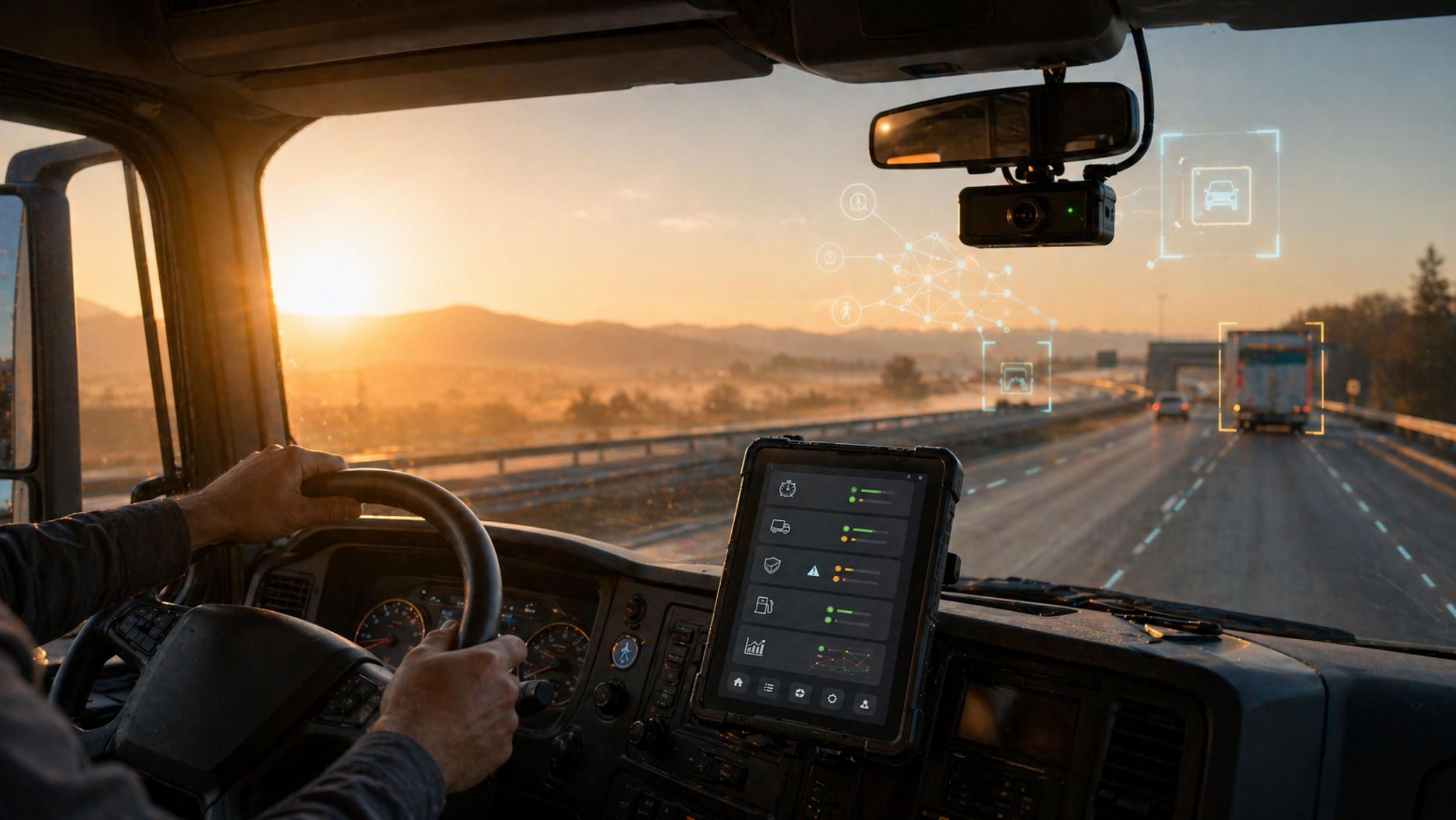
The dashcam category had existed for years before AI made it interesting. Fleets used video for incident reconstruction and driver exoneration. The footage was useful but reactive. The AI inflection arrived when on-device compute became cheap enough to run real neural networks at the edge — inside the dashcam itself — instead of streaming everything to a cloud GPU.

The numbers tell the story. The fleet dashcam market was USD 4.8 billion in 2025 and is projected to reach USD 13.7 billion by 2034 at a 12.4% CAGR (Data Intelo, September 2025). Within that, the Advanced AI Dashcam segment held a 36.8% revenue share in 2025 and is the fastest-growing segment at 16.8% CAGR — meaning the basic-recording end of the market is shrinking in relative terms while the AI end is taking over.

The technical step-change is real. Modern AI dashcams run thirty-plus neural network models simultaneously on dedicated edge silicon. Samsara reports its AI models are trained on more than 180 billion minutes of video and 220 billion miles traveled, with drowsiness detection driven by 17 fatigue indicators. Motive's AI Dashcam Plus runs on a Qualcomm Dragonwing processor with three times the AI throughput of competing devices. Lytx layers what it calls a hybrid Machine Vision + AI + Human Intelligence model that captures more than 100 distinct behavior detections and uses human reviewers as a final risk-scoring layer. Nauto's Predictive Fusion engine combines internal driver-state signals and external road-state signals for predictive collision avoidance.

The independent evidence is also stronger than most software categories ever produce. A Virginia Tech Transportation Institute on-road study, sponsored by Motive but conducted by VTTI, evaluated three vendors across day, twilight, and night conditions and found the Motive AI Dashcam alerted drivers to unsafe behavior 81% of the time, compared to Samsara at 26% and Lytx at 34%. ABI Research's February 25, 2026 Commercial Video Telematics Competitive Assessment ranked Lytx #1 overall (driven by its 100+ behavior detections and hybrid review model), Samsara #2 (purpose-built ecosystem and connected operations integration), Geotab #3 (open platform and global presence), and Motive #4. The vendors are competing on different dimensions, and the buyer can now make a substantive choice.

Two more 2025–2026 developments suggest where the category is going next. In November 2025, Motive launched the AI Omnicam Pro, which adds heart rate variability monitoring as a fatigue indicator — extending AI dashcams from "watching the road" into "watching the driver's physiology." In September 2025, Nauto closed a Series E specifically targeted at sub-2-second predictive collision warnings at 90%+ accuracy, moving AI dashcams from descriptive safety documentation toward genuine accident prevention.

And the insurance market noticed. Commercial fleet insurance carriers — Progressive, Sentry, Zurich Insurance, Liberty Mutual — now offer 8% to 20% premium discounts for fleets running approved dashcam-and-telematics combinations. The January 2026 Lytx-Liberty Mutual partnership made real-time Lytx DriveCam risk scores the primary actuarial input for dynamic premium pricing across 48 US states. Insurance, slow as it is to change, has decided AI dashcams have become a price input.

The result is that mobile development equipment for truck drivers in 2026 is no longer principally a compliance product. The compliance layer is solved. The frontier is safety, prediction, and risk pricing — and that frontier is where the next phase of the category is being built right now.

Phase Six: Predictive Maintenance and Driver Wellness (2024–Present)

The same data infrastructure that made AI dashcams possible turned out to make a second category possible at the same time: predictive maintenance.

Modern Class 3-8 commercial vehicles broadcast hundreds of parameters every second across the J1939 bus — engine temperature, oil pressure, fuel rail pressure, misfire patterns, EGR valve performance, coolant pressure, brake-wear indicators, transmission temperatures, alternator voltage, battery state, tire pressure (where direct TPMS is fitted). Roughly 90% of vehicles manufactured after 2025 ship with embedded telematics that broadcast this stream natively. Aftermarket OBD-II devices ($50–$150 per unit) cover the rest.

What changed is the model layer. Machine learning systems now achieve 85-95% precision in predicting major component failures, with 20-45 days of advance warning, by correlating live sensor patterns against historical failure signatures across very large fleets. Deloitte research puts the operational impact at 25% productivity gains, 70% reduction in unplanned breakdowns, and up to 25% lower maintenance costs (Coruzant, 2026 reporting). The ROI cycle on predictive maintenance is fast — most documented implementations hit measurable savings within 30–90 days, and 2x-4x ROI within 12-24 months.

The market has consolidated quickly enough to be a tell. In March 2024, Bosch announced its acquisition of Uptake, plugging Uptake's predictive AI model into Bosch's Automotive Connectivity Hub data stream. Around the same time, Fullbay acquired Pitstop, fusing predictive AI with shop-management workflows. The pattern is consistent: telematics companies and Tier-1 suppliers are buying predictive AI capability, not building it from scratch, because the model layer is what monetizes the data layer.

The driver-wellness extension is the most recent twist. Motive's AI Omnicam Pro reads HRV (heart rate variability) from the driver's seat. Several pilot programs are now combining wearable biometric data — Fitbit, Garmin, smartwatches — with cab-state telemetry to score fatigue against a driver's individual baseline rather than a population average. The trajectory is unmistakable: the next generation of mobile development equipment for truck drivers will not just monitor the truck, it will monitor the driver in clinical detail. That trajectory raises substantial privacy questions, which the industry has not fully resolved, and which any custom build needs to address explicitly in its data-governance design.

Phase Seven: The Autonomous Overlap (2024–2030)

Running alongside the human-driven evolution is a second track that has now moved out of pilot status: SAE L4 autonomous trucks operating on public roads.

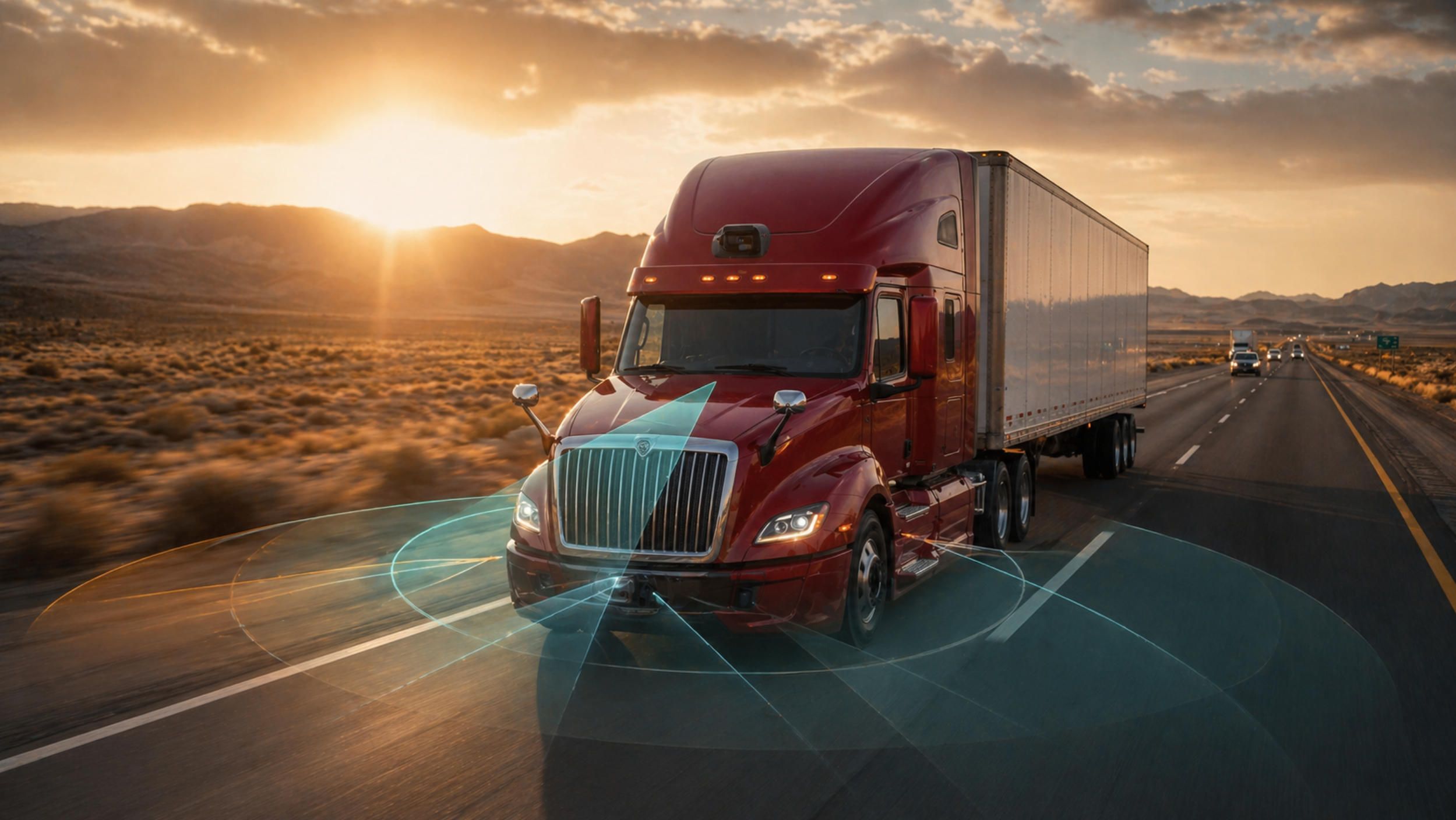
Aurora Innovation began commercial driverless freight service between Dallas and Houston in May 2025 — the first company to operate Class 8 self-driving trucks on US public roads. By January 2026 it had accumulated more than 250,000 driverless miles across ten routes, including a roughly 1,000-mile Fort Worth-to-Phoenix run that exceeds federal HOS limits for any single human driver. Aurora's commercial truck capacity is, per its March 2026 statement, fully committed through Q3 2026. It plans to deploy more than 200 autonomous trucks across the Sun Belt by the end of 2026, and the company has guided publicly toward "a thousand-plus" the year after. PlusAI and Waabi are pursuing similar deployment timelines. Factory-installed autonomous-ready trucks, including a new generation of International LT Series Class 8 and Volvo VNL Autonomous, are entering service in 2026.

For human-driven mobile development equipment for truck drivers, the autonomous overlap is not a replacement story for at least the next decade. The mid-decade reality is mixed-mode operations: human drivers handling first-mile/last-mile and dense urban work, autonomous handling long-haul highway segments, and the dispatch layer coordinating handoffs between them. That coordination layer — driver app, autonomous ops console, customer portal, telematics, ELD-derived state, predictive maintenance, dashcam risk score — is more complex than either pure-human or pure-autonomous, not less. Carriers planning their next-generation platform have to architect for both modes simultaneously.

The autonomous companies themselves have been clear about this. Aurora's launch customers — Hirschbach, Schneider, Werner, FedEx, Ryder, Uber Freight — are not greenfield carriers. They are existing fleets adding autonomy to their operating mix. The platform requirements are additive.
autonomous-truck-sensor-coverage-fleet-platform.jpg

What the Pattern Tells Us

Stepping back, the seven phases form a coherent arc. Each phase made the next phase possible. Paper logs created the regulatory floor. AOBRDs proved the engineering. The ELD mandate forced compute and connectivity into every cab. Telematics platforms turned that compute into operational value. AI dashcams turned the same data infrastructure into safety prediction. Predictive maintenance turned it into asset prediction. Autonomous trucking is now using the same sensor and connectivity stack to remove the driver from select corridors entirely.

A few patterns are durable across the arc.

Hardware floors get reused. Every time the floor moved up — engine ECMs in the 1980s, AOBRDs in the 1990s, ELDs in the 2010s, edge AI silicon in the 2020s — the next category emerged on top of it. The dashcam category did not need new in-cab hardware; it ran on the connectivity that ELDs had already paid for. Predictive maintenance did not need new sensors; it used the J1939 stream that telematics already pulled. Whatever comes next will run on the AI silicon and 5G modems already shipping today.

The driver experience is the binding constraint. Every phase succeeded only when its driver-facing surface was workable in a real cab. The 1937 paper log worked because a pencil works. AOBRDs underperformed because their displays were primitive. ELDs scaled because rugged tablets and consumer-grade smartphones happened in parallel. AI dashcams scale because in-cab nudges (audio plus visual) keep the driver in the loop instead of triggering a back-office investigation later. The next phase will succeed only if the driver's day gets simpler, not more cluttered.

Regulation lags. Insurance leads. The 2026 Lytx-Liberty Mutual partnership — actuarial pricing built on real-time AI dashcam scores — is a more accurate predictor of where the category goes next than any FMCSA rulemaking. The same was true in 1986: insurance industry pressure, not Congress, drove the AOBRD compromise. Carriers planning custom builds should pay close attention to what the major insurance carriers underwrite and discount.

Custom builds increasingly own the integration layer, not the device layer. The hardware (rugged tablets, ELD gateways, AI dashcams, predictive-maintenance sensor packages) is commoditizing fast. Differentiation has moved up-stack to the integration: how the dashcam risk score, the ELD HOS state, the predictive-maintenance alert, the eCMR signature, the autonomous handoff flag, the driver-wellness reading, and the customer-portal visibility get fused into a single coherent operational picture. That fusion is the layer where mobile development equipment for truck drivers earns its keep — and where off-the-shelf platforms have the hardest time competing.

Where A-Bots.com Builds in the Arc

A-Bots.com has spent years building mobile applications that sit between physical hardware and operational data layers — the same architectural pattern this evolution has been moving toward for forty years. The Shark Clean robotic-vacuum app, the LYST cross-platform parser-to-app architecture, and the Scandpay real-time retail mobile platform all share an underlying shape: a mobile front-end that controls or interrogates physical hardware, a backend that fuses sensor streams into operational decisions, and an integration discipline that survives real-world edge cases.

For trucking clients, our role in the seven-phase arc is in the fusion layer described above. We build:

The driver app — React Native with Kotlin/Swift native modules for Bluetooth, background location, J1939 bridges, camera pipelines, and edge AI inference where the project requires it.

The integration layer — Node.js, Django, GraphQL, MQTT, and PostgreSQL on the backend, with bridges into Samsara, Motive, Geotab, Lytx, Nauto, Verizon Connect, fuel-card APIs (Comdata, EFS, WEX, Voyager, TCS), load boards (DAT, Truckstop), and TMS/ERP systems.

The compliance layer — FMCSA Appendix A implementations against the registered-device specification, Part 396 electronic DVIR chains, IFTA jurisdiction-crossing logic, and eCMR capability for European deployments, with the failure-mode QA discipline described in Article 3 of this series.

The forward-looking layer — predictive-maintenance model integration against the J1939 stream, AI dashcam risk-score fusion into the driver's day, autonomous-handoff coordination for carriers running mixed-mode operations, and driver-wellness data governance.

A-Bots.com has completed more than 70 projects across mobile, IoT, web, chatbots, and blockchain, with offices in the United States, Ukraine, and Romania. Most clients stay with us for eighteen months or longer; several past five years. That retention horizon matches the actual life cycle of the platforms we build — and it matches the timescale on which mobile development equipment for truck drivers actually has to be maintained as the category keeps evolving.

What the Final Article Covers

Article 5 closes the series with the architecture deep dive: J1939 PGNs and SPNs, OBD-II PIDs, MQTT topologies, payment-system integrations (Comdata, EFS, WEX, Voyager), load-board APIs (DAT, Truckstop), edge-AI deployment patterns, and the reference architecture A-Bots.com applies when building or hardening mobile development equipment for truck drivers from the protocol layer up. It is the article a CTO or a lead architect can plan a build from without a vendor's sales engineer in the room.

Closing

The clipboard, the AOBRD, the ELD, the rugged tablet, the AI dashcam, the predictive-maintenance model, the autonomous handoff console — they are all the same product, sequenced over eighty-nine years. Each phase carried forward the lesson of the previous one: the data discipline matters, the driver experience matters, and the integration layer is where the operational value lives. The next phase will carry both lessons forward again, on top of compute and connectivity that are already installed in every truck on the road.

If your fleet is planning the next iteration of its mobile development equipment for truck drivers — adding AI dashcam fusion to an existing custom platform, integrating predictive maintenance into the driver app, preparing for autonomous-handoff workflows, or rebuilding the compliance layer against the new FMCSA reality — A-Bots.com is a direct line to an engineering team that has been building this class of system for years. Send the brief, current state, and forward roadmap to info@a-bots.com, and we will come back with a grounded read on where you are in the arc and a realistic plan for the next move.

✅ Hashtags

#TruckingTech
#AIDashcam
#FleetSafety
#PredictiveMaintenance
#AutonomousTrucking
#ELDCompliance
#FleetTelematics
#FleetManagement
#ConnectedVehicle
#MobileAppDevelopment

Other articles

NVIDIA DGX Spark: A $4,699 Supercomputer on Your Desk - Is Personal AI Sovereignty Worth the Price? NVIDIA DGX Spark packs one petaFLOP of AI compute and 128 GB of unified memory into a 1.2 kg desktop box — enough to run 200-billion-parameter models entirely offline. But at $4,699 (now up from $3,999 after a February 2026 price hike), with monthly ownership costs rivaling a ChatGPT Pro subscription and models that still lag behind cloud frontiers, who is this actually for? This deep-dive covers real benchmark data, a full European cost-of-ownership breakdown, the NemoClaw agent stack, the global AI sovereignty trend from Gartner to Vitalik Buterin, head-to-head comparisons with AMD Strix Halo and Mac Studio, and what the next generation of home AI servers will look like.

App Controlled Sauna: Top 3 Models on the US Market 2026 The app controlled sauna has moved from premium novelty to baseline expectation on the US market, with IoT-enabled systems now driving 61% of buyer demand. This expert guide reviews the three models leading the category in 2026 — Harvia Fenix with its AI-adaptive MyHarvia 2 app, HUUM UKU WiFi with its cult-favorite minimalist app, and Sun Home Luminar with its full-spectrum infrared wellness ecosystem — evaluated entirely through the lens of the mobile application. Covers IoT architecture, regulatory requirements under the new ANSI/UL 60335-2-53 standard, and what sauna manufacturers should learn about multi-user access, OTA updates, door-interlock safety, and ecosystem design when building their own custom app controlled sauna platform.

Mobile Development Equipment for Truck Drivers: 2026 Stack This pillar article maps the complete 2026 stack of mobile development equipment for truck drivers across four layers: rugged in-cab hardware (Samsung Galaxy Tab Active5, Panasonic TOUGHBOOK G2, Getac F110-EX, Zebra XSlate R12), sensor electronics (FMCSA-certified ELDs, AI dashcams from Samsara, Lytx, Nauto, and Motive), driver-facing software (HOS, DVIR, IFTA, dispatch, load boards like DAT One and Truckstop Go), and integration plumbing (SAE J1939, OBD-II, MQTT, REST APIs). It also covers the operational details that separate weekend prototypes from production deployments — offline-first behavior, power management, real-device QA, and security — and explains how A-Bots.com builds, extends, and hardens custom driver platforms for trucking carriers of every size.

Off-the-Shelf ELDs vs Custom Fleet Apps: 2026 Decision Off-the-shelf ELDs from Samsara, Motive, and Geotab dominate US trucking for good reason — they work for most fleets. But specialized carriers hit three walls: workflow (drayage, hazmat, auto transport, reefer), API rate limits (Samsara caps HOS logs at 30 req/sec, driver-vehicle assignments at 25 req/sec), and contracts (3-year lock-ins with full remaining balance due on early termination). This article walks through the breakpoints where custom mobile development equipment for truck drivers pays back — fleet size, workflow specialization, integration depth, data ownership — and explains the three delivery modes A-Bots.com runs: full custom platform, integration/extension layer, and QA hardening. Second article in a five-part series.

FMCSA Compliance for Trucking Apps: 2026 Technical Guide Compliance is where trucking apps stop being clever and become legally binding. This technical guide walks through the four regulatory frames that mobile development equipment for truck drivers has to clear in 2026: FMCSA 49 CFR Part 395 (the ELD mandate, with Appendix A section-by-section), Part 396 (including the February 2026 final rule authorizing electronic DVIRs, effective March 23, 2026), IFTA quarterly fuel-tax reporting, and the accelerating eCMR framework in Europe. It maps the software-level failure modes that turn into audit findings — clock drift, engine sync, unassigned driving, offline sync, data-transfer file validity — and explains how A-Bots.com builds compliance-grade systems against Appendix A as acceptance criteria.

Top stories

  • food delivery app development

    food ordering startups

    custom food ordering app

    food delivery startups

    Food Delivery and Food Ordering Mobile App Development

    A-Bots.com offers custom food delivery and food ordering mobile app development for startups and restaurants. From UI/UX to testing, we build scalable apps with real-time tracking, secure payments, and AI personalization.

  • apple watch for seniors

    iOS app development company

    apple watch healthcare apps

    watchOS app development

    senior apple watch app

    Apple Watch for Seniors: Custom Apps and Elder-Care Solutions

    Explore how Apple Watch for seniors transforms elder care. Learn how custom watchOS and iOS app development improves safety, health, and independence.

  • unitree G1 programming

    custom software for unitree G1

    humanoid robot

    unitree G1 control

    unitree G1 SDK

    Custom Unitree G1 Programming and Unitree G1 SDK App Development

    Bespoke Unitree G1 programming, SDK integrations and app development. A-Bots.com creates custom robotics software for advanced humanoid solutions.

  • drones show app development company

    app development for swarm of drones

    software development for drones show

    IoT app development company

    Swarm of Drones and Drones Show Software Development Company

    A-Bots.com is a drones show app development company delivering app development for swarm of drones: orchestration servers, ArduPilot Mission Planner workflows, operator-grade mobile apps, safety-first timing, and scalable IoT integrations.

  • farmer app development company

    agritech app development company

    bespoke agriculture application development

    agriculture app development company

    bespoke agro apps

    Farmer App Development Company - Smart Farming Apps and Integrations

    A-Bots.com - farmer app development company for offline-first smart farming apps. We integrate John Deere, FieldView & Trimble to deliver the best farmer apps and compliant farming applications in the US, Canada and EU.

  • counter-drone software

    drone detection and tracking

    LiDAR drone tracking

    AI counter drone (C-UAV)

    Counter-Drone (C-UAV) Visual Tracking and Trajectory Prediction

    Field-ready counter-drone perception: sensors, RGB-T fusion, edge AI, tracking, and short-horizon prediction - delivered as a production stack by A-Bots.com.

  • pet care application development

    custom pet-care app

    pet health app

    veterinary app integration

    litter box analytics

    Custom Pet Care App Development

    A-Bots.com is a mobile app development company delivering custom pet care app development with consent-led identity, behavior AI, offline-first routines, and seamless integrations with vets, insurers, microchips, and shelters.

  • agriculture mobile application developmen

    ISOBUS mobile integration

    smart farming mobile app

    precision farming app

    Real-Time Agronomic Insights through IoT-Driven Mobile Analytics

    Learn how edge-AI, cloud pipelines and mobile UX transform raw farm telemetry into real-time, actionable maps—powered by A-Bots.com’s agriculture mobile application development expertise.

  • ge predix platform

    industrial iot platform

    custom iot app development

    industrial iot solutions

    industrial edge analytics

    predictive maintenance software

    GE Predix Platform and Industrial IoT App Development

    Discover how GE Predix Platform and custom apps from A-Bots.com enable real-time analytics, asset performance management, and scalable industrial IoT solutions.

  • industrial iot solutions

    industrial iot development

    industrial edge computing

    iot app development

    Industrial IoT Solutions at Scale: Secure Edge-to-Cloud with A-Bots.com

    Discover how A-Bots.com engineers secure, zero-trust industrial IoT solutions— from rugged edge gateways to cloud analytics— unlocking real-time efficiency, uptime and compliance.

  • eBike App Development Company

    custom ebike app development

    ebike IoT development

    ebike OEM app solution

    ebike mobile app

    Sensor-Fusion eBike App Development Company

    Unlock next-gen riding experiences with A-Bots.com: a sensor-centric eBike app development company delivering adaptive pedal-assist, predictive maintenance and cloud dashboards for global OEMs.

  • pet care app development company

    pet hotel CRM

    pet hotel IoT

    pet hotel app

    Pet Hotel App Development

    Discover how A-Bots.com, a leading pet care app development company, builds full-stack mobile and CRM solutions that automate booking, feeding, video, and revenue for modern pet hotels.

  • DoorDash drone delivery

    Wing drone partnership

    drone delivery service

    build drone delivery app

    drone delivery software development

    Explore Wing’s and DoorDash drone delivery

    From sub-15-minute drops to FAA-grade safety, we unpack DoorDash’s drone playbook—and show why software, not rotors, will decide who owns the sky.

  • drone mapping software

    adaptive sensor-fusion mapping

    custom drone mapping development

    edge AI drone processing

    Drone Mapping and Sensor Fusion

    Explore today’s photogrammetry - LiDAR landscape and the new Adaptive Sensor-Fusion Mapping method- see how A-Bots.com turns flight data into live, gap-free maps.

  • Otter AI transcription

    Otter voice meeting notes

    Otter audio to text

    Otter voice to text

    voice to text AI

    Otter.ai Transcription and Voice Notes

    Deep guide to Otter.ai transcription, voice meeting notes, and audio to text. Best practices, automation, integration, and how A-Bots.com can build your custom AI.

  • How to use Wiz AI

    Wiz AI voice campaign

    Wiz AI CRM integration

    Smart trigger chatbot Wiz AI

    Wiz AI Chat Bot: Hands-On Guide to Voice Automation

    Master the Wiz AI chat bot: from setup to smart triggers, multilingual flows, and human-sounding voice UX. Expert guide for CX teams and product owners.

  • Tome AI Review

    Enterprise AI

    CRM

    Tome AI Deep Dive Review

    Explore Tome AI’s architecture, workflows and EU-ready compliance. Learn how generative decks cut prep time, boost sales velocity and where A-Bots.com adds AI chatbot value.

  • Wiz.ai

    Voice Conversational AI

    Voice AI

    Inside Wiz.ai: Voice-First Conversational AI in SEA

    Explore Wiz.ai’s rise from Singapore startup to regional heavyweight, its voice-first tech stack, KPIs, and lessons shaping next-gen conversational AI.

  • TheLevel.AI

    CX-Intelligence Platforms

    Bespoke conversation-intelligence stacks

    Level AI

    Contact Center AI

    Beyond Level AI: How A-Bots.com Builds Custom CX-Intelligence Platforms

    Unlock Level AI’s secrets and see how A-Bots.com engineers bespoke conversation-intelligence stacks that slash QA costs, meet tight compliance rules, and elevate customer experience.

  • Offline AI Assistant

    AI App Development

    On Device LLM

    AI Without Internet

    Offline AI Assistant Guide - Build On-Device LLMs with A-Bots

    Discover why offline AI assistants beat cloud chatbots on privacy, latency and cost—and how A-Bots.com ships a 4 GB Llama-3 app to stores in 12 weeks.

  • Drone Mapping Software

    UAV Mapping Software

    Mapping Software For Drones

    Pix4Dmapper (Pix4D)

    DroneDeploy (DroneDeploy Inc.)

    DJI Terra (DJI Enterprise)

    Agisoft Metashape 1.9 (Agisoft)

    Bentley ContextCapture (Bentley Systems)

    Propeller Pioneer (Propeller Aero)

    Esri Site Scan (Esri)

    Drone Mapping Software (UAV Mapping Software): 2025 Guide

    Discover the definitive 2025 playbook for deploying drone mapping software & UAV mapping software at enterprise scale—covering mission planning, QA workflows, compliance and data governance.

  • App for DJI

    Custom app for Dji drones

    Mapping Solutions

    Custom Flight Control

    app development for dji drone

    App for DJI Drone: Custom Flight Control and Mapping Solutions

    Discover how a tailor‑made app for DJI drone turns Mini 4 Pro, Mavic 3 Enterprise and Matrice 350 RTK flights into automated, real‑time, BVLOS‑ready data workflows.

  • Chips Promo App

    Snacks Promo App

    Mobile App Development

    AR Marketing

    Snack‑to‑Stardom App: Gamified Promo for Chips and Snacks

    Learn how A‑Bots.com's gamified app turns snack fans into streamers with AR quests, guaranteed prizes and live engagement—boosting sales and first‑party data.

  • Mobile Apps for Baby Monitor

    Cry Detection

    Sleep Analytics

    Parent Tech

    AI Baby Monitor

    Custom Mobile Apps for AI Baby Monitors | Cry Detection, Sleep Analytics and Peace-of-Mind

    Turn your AI baby monitor into a trusted sleep-wellness platform. A-Bots.com builds custom mobile apps with real-time cry detection, sleep analytics, and HIPAA-ready cloud security—giving parents peace of mind and brands recurring revenue.

  • wine app

    Mobile App for Wine Cabinets

    custom wine fridge app

    Custom Mobile App Development for Smart Wine Cabinets: Elevate Your Connected Wine Experience

    Discover how custom mobile apps transform smart wine cabinets into premium, connected experiences for collectors, restaurants, and luxury brands.

  • agriculture mobile application

    farmers mobile app

    smart phone apps in agriculture

    Custom Agriculture App Development for Farmers

    Build a mobile app for your farm with A-Bots.com. Custom tools for crop, livestock, and equipment management — developed by and for modern farmers.

  • IoT

    Smart Home

    technology

    Internet of Things and the Smart Home

    Internet of Things (IoT) and the Smart Home: The Future is Here

  • IOT

    IIoT

    IAM

    AIoT

    AgriTech

    Today, the Internet of Things (IoT) is actively developing, and many solutions are already being used in various industries.

    Today, the Internet of Things (IoT) is actively developing, and many solutions are already being used in various industries.

  • IOT

    Smart Homes

    Industrial IoT

    Security and Privacy

    Healthcare and Medicine

    The Future of the Internet of Things (IoT)

    The Future of the Internet of Things (IoT)

  • IoT

    Future

    Internet of Things

    A Brief History IoT

    A Brief History of the Internet of Things (IoT)

  • Future Prospects

    IoT

    drones

    IoT and Modern Drones: Synergy of Technologies

    IoT and Modern Drones: Synergy of Technologies

  • Drones

    Artificial Intelligence

    technologi

    Inventions that Enabled the Creation of Modern Drones

    Inventions that Enabled the Creation of Modern Drones

  • Water Drones

    Drones

    Technological Advancements

    Water Drones: New Horizons for Researchers

    Water Drones: New Horizons for Researchers

  • IoT

    IoT in Agriculture

    Applying IoT in Agriculture: Smart Farming Systems for Increased Yield and Sustainability

    Explore the transformative impact of IoT in agriculture with our article on 'Applying IoT in Agriculture: Smart Farming Systems for Increased Yield and Sustainability.' Discover how smart farming technologies are revolutionizing resource management, enhancing crop yields, and fostering sustainable practices for a greener future.

  • Bing

    Advertising

    How to set up contextual advertising in Bing

    Unlock the secrets of effective digital marketing with our comprehensive guide on setting up contextual advertising in Bing. Learn step-by-step strategies to optimize your campaigns, reach a diverse audience, and elevate your online presence beyond traditional platforms.

  • mobile application

    app market

    What is the best way to choose a mobile application?

    Unlock the secrets to navigating the mobile app jungle with our insightful guide, "What is the Best Way to Choose a Mobile Application?" Explore expert tips on defining needs, evaluating security, and optimizing user experience to make informed choices in the ever-expanding world of mobile applications.

  • Mobile app

    Mobile app development company

    Mobile app development company in France

    Elevate your digital presence with our top-tier mobile app development services in France, where innovation meets expertise to bring your ideas to life on every mobile device.

  • Bounce Rate

    Mobile Optimization

    The Narrative of Swift Bounces

    What is bounce rate, what is a good bounce rate—and how to reduce yours

    Uncover the nuances of bounce rate, discover the benchmarks for a good rate, and learn effective strategies to trim down yours in this comprehensive guide on optimizing user engagement in the digital realm.

  • IoT

    technologies

    The Development of Internet of Things (IoT): Prospects and Achievements

    The Development of Internet of Things (IoT): Prospects and Achievements

  • Bots

    Smart Contracts

    Busines

    Bots and Smart Contracts: Revolutionizing Business

    Modern businesses constantly face challenges and opportunities presented by new technologies. Two such innovative tools that are gaining increasing attention are bots and smart contracts. Bots, or software robots, and blockchain-based smart contracts offer unique opportunities for automating business processes, optimizing operations, and improving customer interactions. In this article, we will explore how the use of bots and smart contracts can revolutionize the modern business landscape.

  • No-Code

    No-Code solutions

    IT industry

    No-Code Solutions: A Breakthrough in the IT World

    No-Code Solutions: A Breakthrough in the IT World In recent years, information technology (IT) has continued to evolve, offering new and innovative ways to create applications and software. One key trend that has gained significant popularity is the use of No-Code solutions. The No-Code approach enables individuals without technical expertise to create functional and user-friendly applications using ready-made tools and components. In this article, we will explore the modern No-Code solutions currently available in the IT field.

  • Support

    Department Assistants

    Bot

    Boosting Customer Satisfaction with Bot Support Department Assistants

    In today's fast-paced digital world, businesses strive to deliver exceptional customer support experiences. One emerging solution to streamline customer service operations and enhance user satisfaction is the use of bot support department assistants.

  • IoT

    healthcare

    transportation

    manufacturing

    Smart home

    IoT have changed our world

    The Internet of Things (IoT) is a technology that connects physical devices with smartphones, PCs, and other devices over the Internet. This allows devices to collect, process and exchange data without the need for human intervention. New technological solutions built on IoT have changed our world, making our life easier and better in various areas. One of the important changes that the IoT has brought to our world is the healthcare industry. IoT devices are used in medical devices such as heart rate monitors, insulin pumps, and other medical devices. This allows patients to take control of their health, prevent disease, and provide faster and more accurate diagnosis and treatment. Another important area where the IoT has changed our world is transportation. IoT technologies are being used in cars to improve road safety. Systems such as automatic braking and collision alert help prevent accidents. In addition, IoT is also being used to optimize the flow of traffic, manage vehicles, and create smart cities. IoT solutions are also of great importance to the industry. In the field of manufacturing, IoT is used for data collection and analysis, quality control and efficiency improvement. Thanks to the IoT, manufacturing processes have become more automated and intelligent, resulting in increased productivity, reduced costs and improved product quality. Finally, the IoT has also changed our daily lives. Smart homes equipped with IoT devices allow people to control and manage their homes using mobile apps. Devices such as smart thermostats and security systems, vacuum cleaners and others help to increase the level of comfort

  • tourism

    Mobile applications for tourism

    app

    Mobile applications in tourism

    Mobile applications have become an essential tool for travelers to plan their trips, make reservations, and explore destinations. In the tourism industry, mobile applications are increasingly being used to improve the travel experience and provide personalized services to travelers. Mobile applications for tourism offer a range of features, including destination information, booking and reservation services, interactive maps, travel guides, and reviews of hotels, restaurants, and attractions. These apps are designed to cater to the needs of different types of travelers, from budget backpackers to luxury tourists. One of the most significant benefits of mobile applications for tourism is that they enable travelers to access information and services quickly and conveniently. For example, travelers can use mobile apps to find flights, hotels, and activities that suit their preferences and budget. They can also access real-time information on weather, traffic, and local events, allowing them to plan their itinerary and make adjustments on the fly. Mobile applications for tourism also provide a more personalized experience for travelers. Many apps use algorithms to recommend activities, restaurants, and attractions based on the traveler's interests and previous activities. This feature is particularly useful for travelers who are unfamiliar with a destination and want to explore it in a way that matches their preferences. Another benefit of mobile applications for tourism is that they can help travelers save money. Many apps offer discounts, deals, and loyalty programs that allow travelers to save on flights, hotels, and activities. This feature is especially beneficial for budget travelers who are looking to get the most value for their money. Mobile applications for tourism also provide a platform for travelers to share their experiences and recommendations with others. Many apps allow travelers to write reviews, rate attractions, and share photos and videos of their trips. This user-generated content is a valuable resource for other travelers who are planning their trips and looking for recommendations. Despite the benefits of mobile applications for tourism, there are some challenges that need to be addressed. One of the most significant challenges is ensuring the security and privacy of travelers' data. Travelers need to be confident that their personal and financial information is safe when using mobile apps. In conclusion, mobile applications have become an essential tool for travelers, and their use in the tourism industry is growing rapidly. With their ability to provide personalized services, real-time information, and cost-saving options, mobile apps are changing the way travelers plan and experience their trips. As technology continues to advance, we can expect to see even more innovative and useful mobile applications for tourism in the future.

  • Mobile applications

    logistics

    logistics processes

    mobile app

    Mobile applications in logistics

    In today's world, the use of mobile applications in logistics is becoming increasingly common. Mobile applications provide companies with new opportunities to manage and optimize logistics processes, increase productivity, and improve customer service. In this article, we will discuss the benefits of mobile applications in logistics and how they can help your company. Optimizing Logistics Processes: Mobile applications allow logistics companies to manage their processes more efficiently. They can be used to track shipments, manage inventory, manage transportation, and manage orders. Mobile applications also allow on-site employees to quickly receive information about shipments and orders, improving communication between departments and reducing time spent on completing tasks. Increasing Productivity: Mobile applications can also help increase employee productivity. They can be used to automate routine tasks, such as filling out reports and checking inventory. This allows employees to focus on more important tasks, such as processing orders and serving customers. Improving Customer Service: Mobile applications can also help improve the quality of customer service. They allow customers to track the status of their orders and receive information about delivery. This improves transparency and reliability in the delivery process, leading to increased customer satisfaction and repeat business. Conclusion: Mobile applications are becoming increasingly important for logistics companies. They allow you to optimize logistics processes, increase employee productivity, and improve the quality of customer service. If you're not already using mobile applications in your logistics company, we recommend that you pay attention to them and start experimenting with their use. They have the potential to revolutionize the way you manage your logistics operations and provide better service to your customers.

  • Mobile applications

    businesses

    mobile applications in business

    mobile app

    Mobile applications on businesses

    Mobile applications have become an integral part of our lives and have an impact on businesses. They allow companies to be closer to their customers by providing them with access to information and services anytime, anywhere. One of the key applications of mobile applications in business is the implementation of mobile commerce. Applications allow customers to easily and quickly place orders, pay for goods and services, and track their delivery. This improves customer convenience and increases sales opportunities.

  • business partner

    IT company

    IT solutions

    IT companies are becoming an increasingly important business partner

    IT companies are becoming an increasingly important business partner, so it is important to know how to build an effective partnership with an IT company. 1. Define your business goals. Before starting cooperation with an IT company, it is important to define your business goals and understand how IT solutions can help you achieve them. 2. Choose a trusted partner. Finding a reliable and experienced IT partner can take a lot of time, but it is essential for a successful collaboration. Pay attention to customer reviews and projects that the company has completed. 3. Create an overall work plan. Once you have chosen an IT company, it is important to create an overall work plan to ensure effective communication and meeting deadlines.

  • Augmented reality

    AR

    visualization

    business

    Augmented Reality

    Augmented Reality (AR) can be used for various types of businesses. It can be used to improve education and training, provide better customer service, improve production and service efficiency, increase sales and marketing, and more. In particular, AR promotes information visualization, allowing users to visually see the connection between the virtual and real world and gain a deeper understanding of the situation. Augmented reality can be used to improve learning and training based on information visualization and provide a more interactive experience. For example, in medicine, AR can be used to educate students and doctors by helping them visualize and understand anatomy and disease. In business, the use of AR can improve production and service efficiency. For example, the use of AR can help instruct and educate employees in manufacturing, helping them learn new processes and solve problems faster and more efficiently. AR can also be used in marketing and sales. For example, the use of AR can help consumers visualize and experience products before purchasing them.

  • Minimum Viable Product

    MVP

    development

    mobile app

    Minimum Viable Product

    A Minimum Viable Product (MVP) is a development approach where a new product is launched with a limited set of features that are sufficient to satisfy early adopters. The MVP is used to validate the product's core assumptions and gather feedback from the market. This feedback can then be used to guide further development and make informed decisions about which features to add or remove. For a mobile app, an MVP can be a stripped-down version of the final product that includes only the most essential features. This approach allows developers to test the app's core functionality and gather feedback from users before investing a lot of time and resources into building out the full app. An MVP for a mobile app should include the core functionality that is necessary for the app to provide value to the user. This might include key features such as user registration, search functionality, or the ability to view and interact with content. It should also have a good UI/UX that are easy to understand and use. By launching an MVP, developers can quickly gauge user interest and feedback to make data-driven decisions about which features to prioritize in the full version of the app. Additionally, MVP approach can allow quicker time to market and start to gather user engagement. There are several benefits to using the MVP approach for a mobile app for a company: 1 Validate assumptions: By launching an MVP, companies can validate their assumptions about what features and functionality will be most valuable to their target market. Gathering user feedback during the MVP phase can help a company make informed decisions about which features to prioritize in the full version of the app. 2 Faster time to market: Developing an MVP allows a company to launch their app quickly and start gathering user engagement and feedback sooner, rather than spending months or even years developing a full-featured app. This can give a company a competitive advantage in the market. 3 Reduced development costs: By focusing on the most essential features, an MVP can be developed with a smaller budget and with less time than a full version of the app. This can help a company save money and resources. 4 Minimize the risk: MVP allows to test the market and customer interest before spending a large amount of resources on the app. It can help to minimize risk of a failure by testing the idea and gathering feedback before moving forward with a full-featured version. 5 Better understanding of user needs: Building MVP can also help a company to understand the customer's real needs, behaviors and preferences, with this knowledge the company can create a much more effective and efficient final product. Overall, the MVP approach can provide a cost-effective way for a company to validate their product idea, gather user feedback, and make informed decisions about the development of their mobile app.

  • IoT

    AI

    Internet of Things

    Artificial Intelligence

    IoT (Internet of Things) and AI (Artificial Intelligence)

    IoT (Internet of Things) and AI (Artificial Intelligence) are two technologies that are actively developing at present and have enormous potential. Both technologies can work together to improve the operation of various systems and devices, provide more efficient resource management and provide new opportunities for business and society. IoT allows devices to exchange data and interact with each other through the internet. This opens up a multitude of possibilities for improving efficiency and automating various systems. With IoT, it is possible to track the condition of equipment, manage energy consumption, monitor inventory levels and much more. AI, on the other hand, allows for the processing of large amounts of data and decision-making based on that data. This makes it very useful for analyzing data obtained from IoT devices. For example, AI can analyze data on the operation of equipment and predict potential failures, which can prevent unexpected downtime and reduce maintenance costs. AI can also be used to improve the efficiency of energy, transportation, healthcare and other systems. In addition, IoT and AI can be used together to create smart cities. For example, using IoT devices, data can be collected on the environment and the behavior of people in the city. This data can be analyzed using AI to optimize the operation of the city's infrastructure, improve the transportation system, increase energy efficiency, etc. IoT and AI can also be used to improve safety in the city, for example, through the use of AI-analyzed video surveillance systems. In general, IoT and AI are two technologies that can work together to improve the operation of various systems and devices, as well as create new opportunities for business and society. In the future, and especially in 2023, the use of IoT and AI is expected to increase significantly, bringing even more benefits and possibilities.

Estimate project

Keep up with the times and automate your business processes with bots.

Estimate project

Copyright © Alpha Systems LTD All rights reserved.
Made with ❤️ by A-BOTS

EN