
Home
Services
About us
Blog
Contacts
Wellington App Development: Building Custom Mobile Solutions for New Zealand's Creative Capital
When businesses in Wellington need sophisticated mobile applications that combine technical excellence with creative innovation, they're looking for development partners who understand both the technology landscape and the unique character of New Zealand's capital. A-Bots.com brings over 70 completed projects and partnerships spanning 1.5 to 5+ years to Wellington's thriving tech ecosystem, offering comprehensive mobile app development, web development, IoT solutions, and quality assurance services tailored for the local market.

Wellington's position as both a government center and creative technology hub creates distinctive opportunities for mobile application development. From supporting the world-renowned film and visual effects industry to enabling fintech innovations and smart city initiatives, the demand for custom Wellington app solutions continues to grow. A-Bots.com specializes in developing applications that address these specific industry needs, whether you're a startup requiring a minimum viable product or an established enterprise seeking to digitally transform your operations.
The company's approach to Wellington app development emphasizes versatility and technical depth. Whether clients need native iOS and Android applications, cross-platform solutions using React Native or Flutter, or complex backend systems integrating with existing enterprise infrastructure, A-Bots.com's development team delivers production-ready code. Beyond development, the company provides comprehensive testing services including functional testing, performance optimization, security audits, and user experience evaluation to ensure every Wellington app meets the highest quality standards before launch.
For Wellington businesses operating in regulated industries such as finance, healthcare, or government services, A-Bots.com offers expertise in building compliant, secure applications that meet New Zealand's data protection requirements and industry-specific regulations. The development process incorporates security best practices from the initial architecture phase through deployment, with particular attention to authentication systems, data encryption, and secure API integration.
A-Bots.com recognizes that successful mobile applications extend beyond the initial release. The company provides ongoing maintenance, feature expansion, and performance optimization to ensure Wellington app solutions remain competitive as market conditions evolve and user expectations increase. This long-term partnership approach has resulted in client relationships spanning multiple years, with some partnerships extending beyond five years of continuous collaboration.
Whether you're developing a consumer-facing application to reach Wellington's 434,000 metropolitan residents, building internal tools to streamline business operations, or creating specialized software for niche markets within New Zealand's creative and technology sectors, A-Bots.com provides the technical expertise and project management capabilities to bring your vision to production. The company's portfolio spans healthcare applications, agricultural IoT systems, financial technology platforms, e-commerce solutions, and enterprise business tools across diverse industries.

Wellington: New Zealand's Technology and Creative Capital
Wellington stands as New Zealand's capital city and third-largest urban center, with a population of 209,800 in the city proper and 433,900 across the wider metropolitan area as of June 2025. Located on the southwestern tip of the North Island, Wellington serves as the nation's political, cultural, and increasingly, technological heart. The city's economy has evolved from its traditional government and service sector base to embrace innovation, with the technology industry now contributing NZ$23.8 billion to the national GDP and maintaining a remarkable 22% annual growth rate over the past decade.
The capital earned its "Wellywood" nickname through its prominent role in global film production, anchored by companies like Wētā FX, Park Road Post-Production, and Stone Street Studios. This creative foundation has expanded into broader technology sectors including software development, fintech, gaming, and digital services. Wellington houses major technology companies such as Xero, the cloud-based accounting software provider with $1.34 billion in trailing twelve-month revenue and a market capitalization of $13.8 billion, demonstrating the city's capacity to nurture globally competitive technology businesses.
Wellington's ranking as the 46th leading financial center globally in the 2024 Global Financial Centres Index reflects its sophisticated business environment and digital infrastructure. The city consistently ranks among the world's most liveable cities, tying with Tokyo for fourth place in the 2021 Global Livability Ranking and receiving top marks from Deutsche Bank for both liveability and environmental quality. This quality of life attracts talent from across New Zealand and internationally, creating a skilled workforce that supports the technology sector's continued expansion.
The capital's geographic concentration of government agencies, financial institutions, creative studios, and technology startups creates unique opportunities for Wellington app developers. Applications serving government operations, financial services, tourism management, creative production workflows, and smart city initiatives all find natural markets within Wellington's compact urban environment. The city's embrace of digital innovation, exemplified by its award-winning Digital Twin Model for climate change adaptation planning, signals a forward-looking approach to technology adoption that benefits application developers.

Mobile Market Dynamics in New Zealand
New Zealand's mobile ecosystem provides a mature, sophisticated market for Wellington app developers. The country recorded 3.31 million international visitor arrivals in 2024, representing an 11.8% increase from 2023, with these visitors contributing to mobile app usage for tourism, hospitality, and service discovery applications. Mobile traffic accounts for 56.91% of all web traffic in New Zealand as of November 2024, underscoring the primacy of mobile platforms for reaching consumers and business users.
The operating system distribution in New Zealand shows Android commanding approximately 53% market share, with iOS holding just under 47% as of 2023. This relatively balanced split between platforms means Wellington app developers must consider both ecosystems when planning consumer-facing applications, though the specific target audience may justify a platform-specific approach for certain business applications. The smartphone market in New Zealand generated NZ$647.51 million in revenue during 2025, with projections indicating 1.61% annual growth through 2030.
New Zealand hosts 563 active mobile app developers on Google Play, who have collectively published 1,934 applications. While this represents a small fraction of the global app ecosystem, it reflects a concentrated, specialized development community. New Zealand apps average 342,020 downloads, with 51% of publishers releasing applications on both Google Play and the Apple App Store. This cross-platform approach maximizes market reach within New Zealand's relatively small population of 5.2 million people.
The most popular applications in New Zealand include a mix of international platforms and locally developed solutions. New World (a supermarket chain app), Trade Me (New Zealand's leading marketplace), Air NZ (the national carrier's travel app), and Z App (a fuel and convenience retailer) demonstrate that Wellington app developers can achieve significant market penetration by addressing specific local needs. These success stories prove that well-executed applications tailored to New Zealand users can compete effectively against international platforms.
For Wellington app developers, understanding the local mobile landscape means recognizing opportunities in underserved niches. While international applications dominate categories like social media and general productivity, specialized applications serving New Zealand's agricultural sector, tourism industry, government services, and unique retail environments offer paths to market success. A-Bots.com's experience developing applications across diverse industries positions the company to identify and capitalize on these opportunities for Wellington-based clients.

Film Industry and Visual Effects Applications
Wellington's film industry represents one of the most distinctive sectors for specialized Wellington app development. Wētā FX, formerly Weta Digital, stands as one of the world's premier visual effects and computer animation companies, with approximately 2,000 employees and $430 million in revenue for the year ending March 2024. Founded by Peter Jackson, Richard Taylor, and Jamie Selkirk in 1993, the company has created visual effects for some of cinema's highest-grossing films, including the Lord of the Rings trilogy, the Avatar series, and numerous Marvel productions. The complexity of modern VFX workflows demands sophisticated Wellington app solutions that connect artists, coordinators, and technical staff across projects.
Production management represents a critical need for film studios operating in Wellington. A specialized Wellington app could streamline call sheet distribution, track shooting schedules, manage equipment inventory, coordinate transportation logistics, and facilitate communication between departments. With multiple productions often running simultaneously across Wellington's studio facilities, efficient coordination through mobile applications prevents scheduling conflicts and ensures resources are allocated effectively. Real-time updates through a Wellington app enable production managers to respond quickly to weather changes, equipment failures, or other disruptions that affect shooting schedules.
The technical demands of modern visual effects production create opportunities for Wellington app solutions that streamline production workflows, manage asset libraries, facilitate remote collaboration, and optimize rendering processes. With Wētā FX working on projects like Avatar: Fire and Ash and establishing expanded operations in Melbourne, the company's distributed production model requires robust mobile and web applications to coordinate work across multiple locations. A Wellington app designed for VFX studios could enable artists to review work-in-progress remotely, allow production managers to track project milestones, and help technical directors to monitor rendering farm utilization. These Wellington app capabilities all contribute to efficient VFX production.
Asset management represents another critical Wellington app opportunity within the film industry. VFX studios maintain vast libraries of 3D models, textures, reference footage, and completed shots that need organization and rapid retrieval. A Wellington app with robust search capabilities, version control, and collaborative tagging helps artists find necessary assets quickly. Integration with existing digital asset management systems through a Wellington app interface provides mobile access to studio libraries, enabling artists to reference materials from anywhere. Such a Wellington app would particularly benefit Wellington's distributed workforce, as many VFX artists work remotely or across multiple studio locations.
Review and approval workflows consume significant time in film post-production. A Wellington app dedicated to shot review could streamline this process by enabling directors, producers, and VFX supervisors to view shots on mobile devices, add frame-specific notes, approve or request revisions, and track version histories. Real-time notifications through the Wellington app ensure that artists receive feedback promptly, reducing iteration cycles. For Wellington's international productions, a Wellington app supporting review workflows accommodates reviewers across different time zones, accelerating approval processes that might otherwise wait for synchronized schedules.
Park Road Post-Production, another pillar of Wellington's film infrastructure, has worked on blockbusters including The Adventures of Tintin, District 9, The Hobbit trilogy, and The Last Samurai. Stone Street Studios provides four massive sound stages and comprehensive production facilities. These companies, along with smaller production houses and independent filmmakers, require Wellington app solutions for production scheduling, call sheet distribution, equipment management, shot logging, and post-production coordination. A Wellington app tailored to film production workflows could address these needs while accommodating the unique requirements of New Zealand's film industry. Mobile access through a Wellington app enables on-set teams to update status information in real time, improving coordination between production and post-production departments.
Talent management presents another Wellington app opportunity for the film industry. Wellington's pool of actors, extras, crew members, and technical specialists require coordination for auditions, bookings, availability tracking, and payment processing. A Wellington app connecting talent with production companies could streamline casting processes, enable digital contract signing, facilitate schedule coordination, and provide centralized communication channels. For international productions filming in Wellington, a Wellington app that helps navigate work visa requirements, accommodation arrangements, and local services adds substantial value for incoming cast and crew.
Wellington's designation as a UNESCO City of Film and its reputation as the global center for practical effects and props through Wētā Workshop create additional Wellington app opportunities. Tourism applications that guide visitors through filming locations, augmented reality experiences that overlay film scenes onto real locations, and marketplace applications connecting film crews with local service providers all leverage Wellington's film heritage. The city welcomes approximately 169,000 international tourists annually, many drawn by its connection to beloved film franchises, creating a significant market for film tourism-focused Wellington app solutions. A dedicated Wellington app for film tourism could provide GPS-guided tours, behind-the-scenes content, exclusive interviews with filmmakers, and booking systems for studio tours and experiences.
Location scouting represents a specialized Wellington app niche within the film sector. A Wellington app that catalogs filming locations, provides accessibility information, documents permit requirements, tracks weather conditions, and facilitates communication between location scouts and property owners would streamline pre-production planning. Wellington's diverse landscapes, from urban streetscapes to coastal vistas to forested valleys, make the city attractive for varied filming needs, and a comprehensive Wellington app mapping these locations benefits both local and international productions.

The gaming and animation sectors, closely related to film production, also thrive in Wellington. PikPok, one of New Zealand's oldest and largest gaming studios, has achieved over 500 million downloads for its titles. Dinosaur Polo Club's Mini Metro and Mini Motorways have attracted over 10 million players globally, more than double New Zealand's entire population. These success stories demonstrate Wellington's capability to produce globally competitive digital entertainment products and suggest opportunities for Wellington app solutions supporting game development workflows, community engagement, and live operations management. A Wellington app designed for game developers could integrate project management tools, bug tracking systems, analytics dashboards, and player feedback collection into a unified mobile interface.
Community management for gaming represents a vital Wellington app opportunity. Successful games require ongoing engagement with player communities through forums, social media, in-game events, and customer support. A Wellington app tailored to gaming community managers could consolidate communication channels, provide sentiment analysis of player feedback, enable rapid response to player issues, and facilitate community events. For Wellington's game studios, many of which operate live service games requiring constant player engagement, a Wellington app streamlining community management tasks improves both player satisfaction and operational efficiency.
Game testing and quality assurance creates additional Wellington app opportunities. Testers need efficient methods to document bugs, capture screenshots and videos, categorize issues by severity, track reproduction steps, and communicate with development teams. A mobile-first Wellington app for game testing enables testers to report issues directly from their devices, whether testing mobile games on the actual target hardware or capturing issues from console and PC games. Integration with bug tracking systems ensures that Wellington app-reported issues flow directly into development workflows without manual transcription.

Fintech and Financial Services Applications
Wellington's position as a leading financial center in the Asia-Pacific region, ranked 46th globally by the 2024 Global Financial Centres Index, creates substantial opportunities for fintech-focused Wellington app development. Xero Limited exemplifies Wellington's fintech success, having grown from a startup founded by Rod Drury and Hamish Edwards in 2006 into a publicly traded company serving small businesses across 180+ countries. The company's recognition among CNBC's World's Top 250 Fintech Companies for 2024 in the Business Process Solutions category underscores Wellington's capacity to nurture world-class financial technology companies. For developers creating Wellington app solutions in the fintech space, Xero's success provides both inspiration and a model for building globally scalable products from a Wellington base.
Xero's June 2025 agreement to acquire US company Melio for up to $3 billion represents one of New Zealand's largest technology acquisitions and demonstrates Wellington-based companies' ability to compete on the global stage. The acquisition aims to double Xero's U.S. revenue by 2028 through integrated accounting and payment functionalities. This growth trajectory creates opportunities for Wellington app developers to build complementary services, integrations, and specialized tools within Xero's ecosystem, much as thousands of third-party applications already extend the platform's capabilities. A Wellington app that integrates seamlessly with Xero's API could serve accountants, bookkeepers, or specific industries with specialized workflow requirements not addressed by Xero's core functionality.
Beyond Xero, Wellington hosts numerous financial services firms, accounting practices, and fintech startups requiring custom Wellington app development. Applications for invoice financing, expense management, tax compliance, financial reporting, and business analytics all find ready markets among Wellington's business community. The city's concentration of accounting professionals and financial advisors creates demand for Wellington app tools that improve client service delivery, automate routine tasks, and provide real-time financial insights to business owners. A Wellington app designed specifically for New Zealand's accounting industry could address unique requirements around GST filing, PAYE management, and financial year-end procedures that differ from international accounting practices.
Mobile accounting represents a growing segment within Wellington app development. Business owners increasingly expect to manage finances from their smartphones, reviewing cash flow, sending invoices, approving expenses, and monitoring key metrics without desktop access. A Wellington app focused on mobile-first financial management could differentiate itself through superior mobile user experience, offline functionality for users with intermittent connectivity, and deep integration with New Zealand banking systems. For Wellington's entrepreneurs and small business operators, a Wellington app that simplifies financial management reduces the need for dedicated bookkeeping staff or expensive accounting software.
Banking and insurance companies operating in Wellington require mobile applications that balance robust functionality with stringent security requirements. New Zealand's regulatory environment, including compliance with the Privacy Act 2020 and industry-specific regulations, demands that financial applications implement strong authentication, data encryption, and audit logging. A-Bots.com's experience developing secure applications for regulated industries ensures Wellington app solutions meet these compliance requirements while delivering user-friendly experiences.
The rise of digital payments, contactless transactions, and peer-to-peer transfer systems creates additional opportunities for fintech applications serving the Wellington market. With 53% of New Zealand mobile users on Android and 47% on iOS, successful payment applications must support both platforms and integrate with local payment infrastructure including EFTPOS, Paymark, and major banks' proprietary systems. Applications that simplify payment collection for small businesses, enable split payments for shared expenses, or facilitate business-to-business transactions address real needs within Wellington's business ecosystem.
Investment management, wealth advisory, and personal finance applications also serve Wellington's affluent professional population. The city's high median income and concentration of government workers, technology professionals, and creative industry employees creates a market for applications that help users track portfolios, plan for retirement, optimize tax efficiency, and achieve financial goals. These applications require sophisticated data visualization, secure integration with financial institutions, and personalized recommendations based on individual circumstances.
Tourism and Hospitality Applications
Wellington's tourism sector contributes approximately NZ$1.3 billion to the regional economy annually, accounting for 9% of full-time equivalent employment. The city welcomed over 157,000 international arrivals through Wellington Airport in 2023, representing a 68% increase from 2022 and demonstrating strong post-pandemic recovery. International tourists spent $424.7 million in Wellington during the year ending March 2023, with domestic visitors contributing an additional $1.12 billion, creating substantial opportunities for tourism-focused Wellington app solutions. These visitor spending patterns indicate strong demand for Wellington app services that enhance the tourist experience, streamline bookings, and facilitate discovery of local attractions and services.
Australia represents the largest source market for Wellington tourism, sending over 210,000 visitors annually who spend approximately NZ$334 million. The United Kingdom, United States, Germany, Canada, China, Japan, and South Korea also contribute significant visitor numbers. These international tourists seek Wellington app solutions that facilitate trip planning, provide real-time information about attractions and events, enable bookings for accommodations and activities, and offer navigation assistance throughout their Wellington visit. A comprehensive Wellington app for international visitors could address language barriers, currency conversion, local transportation guidance, and emergency contact information, providing value throughout the visitor journey from pre-arrival planning through departure.
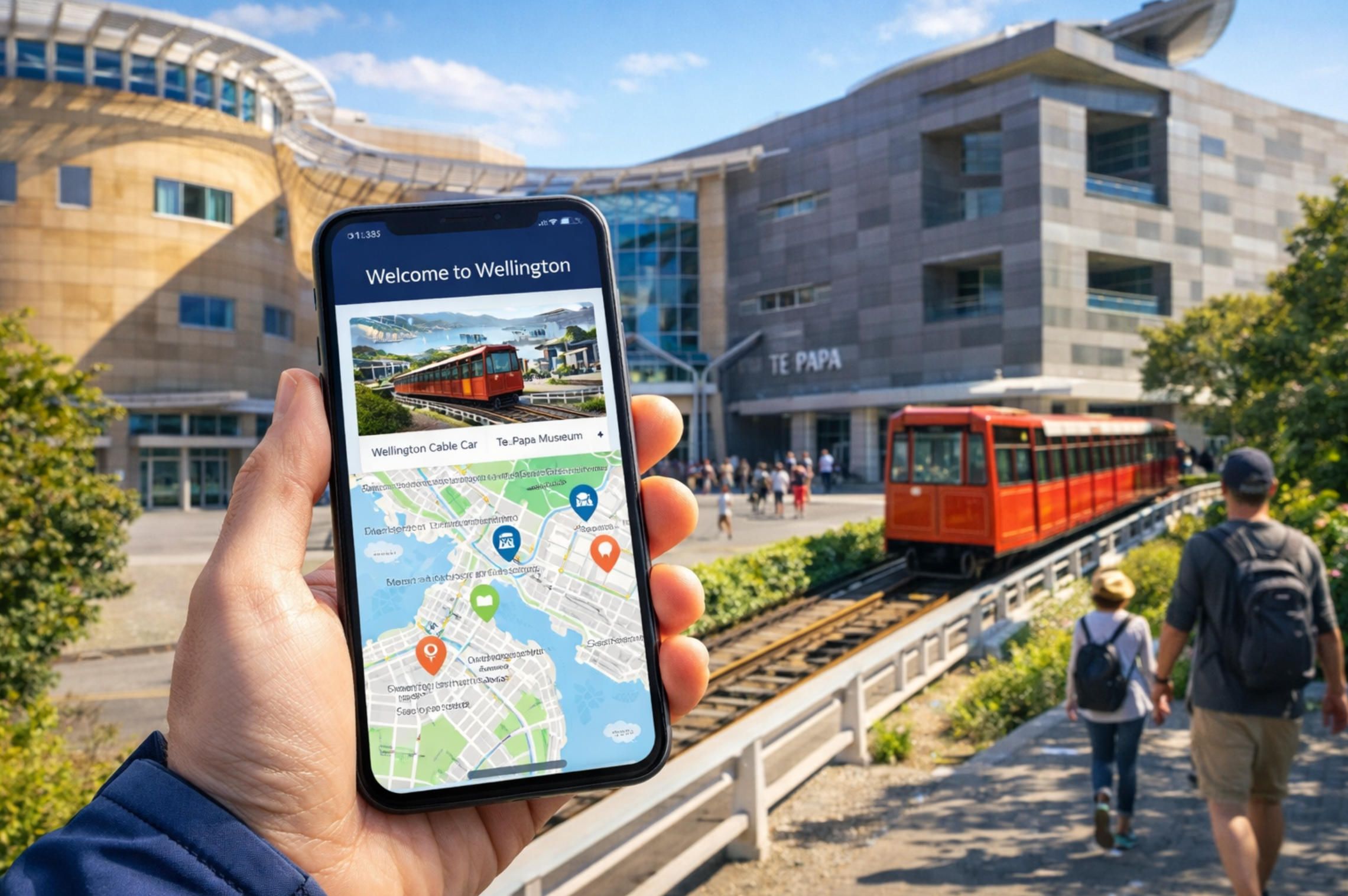
Major tourism attractions including Te Papa Tongarewa (New Zealand's national museum, attracting around 1.5 million visitors annually), the Wellington Cable Car (nearly 1 million passengers per year), and Zealandia (the urban eco-sanctuary receiving over 100,000 annual visitors) could benefit from dedicated Wellington app features or integrations with comprehensive Wellington tourism platforms. A Wellington app offering virtual tours enables prospective visitors to preview attractions before committing to visits, while augmented reality features enhance on-site experiences. Audio guides delivered through a Wellington app reduce equipment costs for attractions while providing visitors with device-free exploration using their own smartphones. Interactive maps within a Wellington app help visitors navigate large attractions like Te Papa, highlighting special exhibitions and directing them to facilities.
The hospitality sector, including hotels, restaurants, bars, and cafes, requires Wellington app solutions for reservation management, table booking systems, mobile ordering, payment processing, and customer loyalty programs. Wellington's reputation for its vibrant food and coffee culture, particularly in precincts like Cuba Street and Newtown, creates opportunities for Wellington app solutions that help visitors discover hidden gems, read authentic reviews from locals, and navigate the city's diverse culinary landscape. A Wellington app that curates dining experiences based on user preferences, dietary restrictions, and location could differentiate itself from generic international platforms by incorporating deep local knowledge and relationships with Wellington establishments.
Loyalty and rewards programs represent a valuable Wellington app feature for hospitality businesses. A Wellington app that enables restaurants, cafes, and attractions to offer digital loyalty cards, accumulate points, redeem rewards, and receive personalized offers based on past visits encourages repeat patronage. For tourists, a Wellington app consolidating loyalty programs across multiple businesses simplifies the experience compared to carrying physical cards or managing multiple single-business applications. Integration of payment capabilities within a Wellington app enables seamless transactions while tracking loyalty status.
Event management represents another critical Wellington app opportunity within the tourism sector. Wellington's busy cultural calendar includes CubaDupa (a street festival celebrating arts and culture), Wellington On a Plate (a food and drink festival attracting over 100,000 attendees across multiple weeks), the New Zealand International Arts Festival, and numerous film festivals capitalizing on the city's "Wellywood" heritage. A Wellington app that aggregates event information enables ticket purchases, provides venue maps, offers scheduling features to avoid conflicts, facilitates social sharing, and collects feedback helps both event organizers reach audiences and attendees maximize their festival experiences.
Real-time event updates through a Wellington app address Wellington's variable weather conditions, which can affect outdoor events. Push notifications inform attendees of schedule changes, venue modifications, or cancellations due to Wellington's famously strong winds. For large events with multiple simultaneous activities, a Wellington app helps attendees navigate programming, discover lesser-known performances or exhibits, and connect with other attendees sharing similar interests. Post-event features within a Wellington app maintain engagement with attendees, promoting future events and building long-term relationships between festivals and their audiences.
Short-term rental management, popular in tourist cities globally, presents opportunities for Wellington app development addressing the specific needs of property owners and guests. A Wellington app designed for short-term rental hosts could streamline check-in processes using smart lock integration, provide automated messaging for pre-arrival instructions and local recommendations, handle maintenance request tracking, facilitate cleaning schedule coordination, and enable dynamic pricing based on demand patterns. For guests, a Wellington app offering comprehensive property information, local area guides, activity booking, concierge services, and direct host communication enhances the rental experience while reducing the burden on hosts to field repetitive questions.
Integration with major booking platforms including Airbnb, Booking.com, and Expedia through a Wellington app enables property managers to synchronize calendars, manage listings, and consolidate messaging across platforms. Wellington's short-term accommodation market faces increasing regulation, and a Wellington app that helps hosts maintain compliance with registration requirements, tax obligations, and safety standards provides substantial value. Automated reporting features within a Wellington app simplify tax filing and demonstrate regulatory compliance to local authorities.
Transportation applications addressing Wellington's unique geography and public transit system provide value to both residents and visitors. The city's compact downtown, extensive bus network operated by Metlink, and commuter rail connections to surrounding areas like Lower Hutt, Porirua, and Upper Hutt create opportunities for Wellington app solutions that integrate real-time transit information, trip planning across multiple modes of transport, and mobile ticketing. Wellington's hilly terrain and exposure to strong winds (earning it the nickname "Windy Wellington") make weather-aware routing and real-time condition updates particularly valuable features within a Wellington app. A transportation-focused Wellington app could alert users to service disruptions, suggest alternative routes when buses run behind schedule, and provide crowding information to help commuters choose less congested services.
The Wellington Cable Car, connecting Lambton Quay with the Botanic Garden and serving nearly 1 million passengers annually, represents an iconic transportation mode that could benefit from a dedicated Wellington app feature. Real-time wait times, schedule information, ticket purchasing, and tourist information about landmarks visible during the journey could all enhance the Cable Car experience through a Wellington app. For visitors unfamiliar with the service, a Wellington app explaining how to use the Cable Car and highlighting attractions at both terminals removes barriers to trying this unique transport option.
Ride-sharing and taxi services operate throughout Wellington, and a Wellington app aggregating multiple services allows users to compare pricing and availability across providers. Wellington's relatively small size means that point-to-point transportation costs remain manageable, but a Wellington app that provides price estimates before booking helps users make informed choices. Integration with payment systems within a Wellington app eliminates the need for cash transactions, particularly valuable for international visitors unfamiliar with New Zealand currency.
Cycling represents an increasingly popular transportation mode in Wellington, supported by expanding bike lane infrastructure and e-bike availability. A Wellington app for cyclists could provide route planning accounting for Wellington's notorious hills, indicate bike lane availability, locate bike parking facilities, track elevation profiles for routes, and integrate with bike-sharing systems. Weather integration within a Wellington app helps cyclists plan around Wellington's windy conditions, which can make cycling challenging or dangerous during severe wind events. For recreational cyclists, a Wellington app mapping scenic routes, difficulty ratings, and points of interest encourages exploration of Wellington's coastline and green spaces.

Smart City and Government Services
Wellington City Council's innovative approach to digital transformation, exemplified by its Digital Twin Model for climate change adaptation, positions Wellington as a leader in smart city initiatives. The project, which won $1 million in the Bloomberg Philanthropies Global Mayors Challenge and received gold in the Tech Innova category at the inaugural Seoul Smart City Awards, uses powerful data-driven visual storytelling to help communities understand and respond to climate change impacts including sea level rise and extreme weather events.
The Digital Twin Model enables Wellington residents to interact with climate scenarios on their own devices, exploring adaptation options and providing feedback on proposed responses. This collaborative approach to city planning creates opportunities for Wellington app developers to build citizen engagement platforms, data visualization tools, and decision support systems that make complex urban planning challenges accessible to non-technical audiences. Applications that translate scientific data and planning options into intuitive, interactive experiences help cities like Wellington implement more inclusive, community-informed policies.
Wellington's Smart Wellington program brings together government agencies, NGOs, civic technology groups, and citizens to address urban challenges through technology. The initiative focuses on improving system-wide outcomes through coordinated action and shared understanding of the city's needs. Applications supporting this collaborative model might include platforms for community feedback collection, tools for coordinating multi-stakeholder projects, systems for tracking initiative progress, and dashboards presenting city performance metrics to the public.
Government service delivery increasingly moves to digital channels, creating demand for Wellington app solutions that enable citizens to interact with city services through their smartphones. Applications for reporting infrastructure issues (potholes, damaged streetlights, graffiti), applying for permits and licenses, accessing library services, registering for recreation programs, and paying utility bills improve convenience for residents while reducing administrative costs for the city. Wellington's tech-savvy population and high smartphone penetration make mobile-first service delivery particularly effective.
The concentration of national government agencies in Wellington creates additional opportunities for specialized government applications. While security requirements and procurement processes for national government systems present challenges, the potential scale and impact of successful government applications make this a valuable market segment. Applications that improve inter-agency coordination, enhance public service delivery, or increase government transparency align with New Zealand's commitment to accessible, efficient governance.
Emergency management and public safety applications serve critical needs in Wellington, which faces natural disaster risks including earthquakes and tsunamis due to its location on major fault lines. Applications that provide early warning alerts, evacuation route guidance, emergency contact information, and recovery resources help residents prepare for and respond to emergencies. Integration with Wellington's emergency management systems and Civil Defence infrastructure ensures information accuracy and timeliness.
Parking management represents a practical application of smart city technology. Applications like ParkMate, already popular in New Zealand, provide real-time information about parking availability, enable digital payment for parking meters, and send reminders before parking sessions expire. A Wellington app addressing the specific characteristics of the city's parking infrastructure, including street parking, council-operated parking buildings, and private facilities, could improve the parking experience while increasing revenue collection efficiency.
Environmental monitoring applications leverage sensors and data collection systems to provide real-time information about air quality, water quality, noise levels, and other environmental factors. Wellington's commitment to environmental sustainability, reflected in its Te Atakura First to Zero Climate Change Strategy, creates demand for applications that help residents and businesses track their environmental impact and make informed choices to reduce emissions and resource consumption.
Business and Enterprise Applications
Wellington's service-based economy, with emphasis on finance, business services, and government, creates substantial demand for enterprise applications that improve operational efficiency and enable digital transformation. Professional services firms including accounting practices, legal offices, consulting companies, and marketing agencies require applications for client relationship management, project tracking, time and expense recording, document management, and billing. A Wellington app tailored to professional services workflows could address these needs while accommodating the collaborative, knowledge-intensive nature of service delivery.
Supply chain and logistics applications serve businesses importing goods through Wellington's port or distributing products across the lower North Island. Applications that provide real-time shipment tracking, automate customs documentation, optimize delivery routes, and integrate with warehouse management systems improve efficiency and reduce costs. Wellington's position as a distribution hub for the lower North Island makes logistics optimization particularly valuable for businesses serving this market.
Human resources and workforce management applications address the needs of Wellington's diverse employers, from government agencies with thousands of employees to small startups with handful of staff. Applications for recruitment, onboarding, performance management, learning and development, and employee engagement help organizations attract and retain talent in Wellington's competitive labor market. Integration with payroll systems like Xero Payroll ensures comprehensive workforce management capabilities.
Real estate and property management applications serve Wellington's dynamic property market. The city's central business district continues evolving with new commercial developments, while residential property development addresses housing demand across the metropolitan area. Applications for property search and discovery, virtual property tours, tenant screening, lease management, maintenance coordination, and rent collection streamline operations for property managers while improving experiences for tenants and prospective buyers.
Construction and building applications address the needs of Wellington's construction industry, which faces ongoing demand for earthquake strengthening of older buildings, new residential development, and commercial construction projects. Applications for project management, on-site documentation, safety compliance tracking, equipment management, and subcontractor coordination help construction companies deliver projects on time and within budget while maintaining safety standards.
Healthcare applications serve Wellington's medical community, including public hospitals, private clinics, specialist practices, and allied health providers. Applications for appointment scheduling, patient record access, telehealth consultations, prescription management, and health monitoring improve patient care while reducing administrative burden on healthcare providers. New Zealand's health sector reforms and increasing adoption of digital health records create opportunities for applications that enhance interoperability and patient engagement.
Education applications address the needs of Wellington's educational institutions, including Victoria University of Wellington, Massey University's Wellington campus, numerous primary and secondary schools, and private training providers. Applications for course management, student engagement, assignment submission, grade tracking, and parent communication support both traditional classroom instruction and distance learning. The COVID-19 pandemic accelerated adoption of educational technology, creating sustained demand for applications that enhance learning outcomes.
IoT and Connected Device Applications
Wellington's technology sector increasingly encompasses Internet of Things solutions connecting physical devices with cloud-based applications and data analytics. Agricultural applications represent a significant opportunity, as the wider Wellington region includes productive farmland supporting dairy, sheep, beef, and horticultural operations. IoT applications that monitor soil conditions, track livestock health, automate irrigation systems, and optimize resource usage help farmers increase productivity while reducing environmental impact.
Smart building applications serve Wellington's commercial and residential property sectors, enabling building managers to monitor energy consumption, automate lighting and climate control, track maintenance requirements, and optimize space utilization. Wellington's earthquake risk and the resulting focus on building resilience create opportunities for applications that monitor structural health, detect damage after seismic events, and coordinate emergency response. Integration with building management systems and adherence to New Zealand building codes ensures these applications provide reliable, compliant solutions.
Industrial IoT applications serve Wellington's manufacturing and processing sectors, though these represent a smaller portion of the city's economy compared to services. Applications that monitor equipment condition, predict maintenance needs, optimize production schedules, and track quality metrics improve operational efficiency and reduce downtime. Wellington's proximity to the Hutt Valley, which hosts more industrial activity than the central city, expands the potential market for industrial applications.
Environmental monitoring IoT applications align with Wellington's sustainability commitments and smart city initiatives. Applications that collect data from air quality sensors, water quality monitors, weather stations, and other environmental sensors provide valuable information for both public authorities and private citizens. Wellington's coastal location and exposure to weather extremes make environmental monitoring particularly relevant for applications supporting climate adaptation and emergency preparedness.
Fleet management applications serve businesses operating vehicle fleets in Wellington and surrounding areas, including delivery services, transportation companies, and service businesses like plumbing and electrical contractors. Applications that track vehicle location, monitor driver behavior, optimize route planning, schedule maintenance, and manage fuel consumption help fleet operators reduce costs while improving service quality. Integration with telematics hardware and GPS systems ensures accurate, real-time data collection.
Development Considerations for Wellington Applications
Creating successful Wellington app solutions requires understanding both technical requirements and local market dynamics. Applications must perform reliably across New Zealand's mobile networks, including coverage in Wellington's hilly terrain and areas with challenging reception. Optimization for varying connection speeds ensures applications remain functional when users have limited bandwidth, particularly important for visitors using international roaming or residents in areas with suboptimal coverage.
Localization extends beyond language translation to encompass New Zealand cultural norms, business practices, and regulatory requirements. Applications handling payments must support New Zealand dollars and integrate with local payment processors. Date and time handling must accommodate the New Zealand time zone (UTC+12 or UTC+13 during daylight saving). Applications dealing with addresses need to understand New Zealand postal codes and address formats. References to local landmarks, organizations, and cultural touchstones make applications feel native rather than imported.
Accessibility compliance ensures Wellington app solutions serve all users, including those with disabilities. New Zealand law requires that government services be accessible, and best practices suggest extending accessibility considerations to all applications. Features like screen reader compatibility, adjustable text sizes, high contrast modes, and keyboard navigation benefit users with visual, motor, or cognitive impairments while often improving the experience for all users.
Privacy compliance requires adherence to New Zealand's Privacy Act 2020, which establishes principles for collecting, using, and protecting personal information. Applications must obtain appropriate consent for data collection, provide transparency about how information will be used, enable users to access and correct their data, and implement security measures protecting against unauthorized access. For applications serving international users or operated by international companies, additional regulations like GDPR may apply.
Security considerations are paramount for Wellington app development, particularly for applications handling financial information, personal data, or sensitive business information. Secure authentication using industry-standard protocols, encryption of data both in transit and at rest, secure API design, and regular security audits protect user information and maintain trust. For applications in regulated industries like finance or healthcare, additional security controls may be mandatory.
Performance optimization ensures applications remain responsive even as user bases grow and feature sets expand. Efficient database queries, appropriate caching strategies, optimized image and media handling, and modular architecture all contribute to applications that feel fast and reliable. Wellington's relatively small population means many applications will serve modest user bases, but successful applications may need to scale as they expand to other New Zealand cities or international markets.
Testing across devices and operating systems ensures Wellington app solutions work reliably for all users. With New Zealand's roughly balanced split between Android and iOS, both platforms require thorough testing. Support for older device models and OS versions extends reach to users who haven't upgraded to the latest hardware, though this must be balanced against the maintenance burden of supporting legacy platforms.
Integration with existing systems represents a common requirement for business and enterprise applications. Many Wellington organizations use established software for accounting (often Xero), customer relationship management, project management, and other business functions. Applications that integrate smoothly with these existing tools provide more value and face fewer adoption barriers than standalone solutions requiring duplicate data entry or workflow changes.
Quality Assurance and Testing Services
Beyond development, comprehensive testing ensures Wellington app solutions meet quality standards before reaching users. A-Bots.com provides full-spectrum testing services addressing functional correctness, performance under load, security vulnerabilities, and user experience quality. For clients with existing applications requiring quality validation, these testing services operate independently of the development work.
Functional testing verifies that applications behave as specified, with all features working correctly across supported devices and platforms. Test cases derived from requirements documentation ensure complete coverage of application functionality. Regression testing after updates confirms that new features or bug fixes haven't introduced unintended issues. Automated testing frameworks enable efficient execution of test suites, while manual testing addresses scenarios requiring human judgment.
Performance testing evaluates how applications behave under various load conditions, identifying bottlenecks that could degrade user experience. Load testing simulates multiple concurrent users to verify the application maintains responsiveness under typical usage patterns. Stress testing pushes applications beyond normal capacity to identify failure modes and recovery behavior. For Wellington app solutions expecting variable usage patterns, like tourism applications experiencing seasonal peaks, performance testing validates that infrastructure scales appropriately.
Security testing identifies vulnerabilities that could expose user data or enable unauthorized access. Penetration testing simulates attacks against applications to discover security weaknesses. Code review identifies common security flaws like SQL injection vulnerabilities, cross-site scripting risks, or insecure data storage. For applications handling sensitive information or operating in regulated industries, security testing often follows specific frameworks or compliance requirements.
Usability testing evaluates whether applications deliver intuitive, efficient user experiences. Test participants representing target user groups attempt to complete typical tasks while observers note difficulties, confusions, or inefficiencies. A/B testing compares alternative designs or features to determine which approach yields better outcomes. For Wellington app solutions serving diverse user groups, including both tech-savvy professionals and less technical audiences, usability testing ensures interfaces accommodate varying skill levels.
Compatibility testing verifies applications work across the range of devices, operating systems, screen sizes, and browsers that users employ. With fragmentation particularly pronounced in the Android ecosystem, testing across multiple device manufacturers and Android versions ensures consistent behavior. iOS testing, while simpler due to Apple's more controlled ecosystem, still requires validation across multiple iPhone and iPad models and iOS versions.
Accessibility testing evaluates compliance with accessibility guidelines and ensures applications serve users with disabilities. Automated tools identify many common accessibility issues, but manual testing with assistive technologies like screen readers provides insight into the actual experience of users with visual impairments. Testing with users who have disabilities offers the most authentic evaluation of accessibility.
Localization testing verifies that Wellington app solutions correctly handle New Zealand-specific requirements including currency formatting, date and time display, address validation, and cultural appropriateness of content. For applications supporting multiple languages, localization testing ensures translations are accurate, complete, and properly displayed within user interfaces.
The Path Forward for Wellington App Development
Wellington's evolution as a technology and creative center positions the city for continued growth in application development and digital innovation. The combination of government stability, established creative industries, growing fintech sector, and quality of life attracting skilled professionals creates an environment where technology businesses can thrive. For businesses operating in Wellington or targeting the capital's markets, custom applications provide competitive advantages through operational efficiency, enhanced customer experiences, and new revenue opportunities.
The city's commitment to smart city initiatives, climate adaptation, and digital government services signals ongoing demand for applications addressing public sector needs. Private sector opportunities span financial services, tourism and hospitality, creative production, professional services, and emerging sectors like IoT and gaming. Wellington's compact geography and concentrated business community facilitate rapid feedback and iteration, enabling application developers to refine products based on real user input.
International opportunities extend the market beyond Wellington's metropolitan population. Applications proven in Wellington can expand to other New Zealand cities, then potentially to Australian markets sharing similar regulatory environments and cultural contexts. The success of companies like Xero demonstrates that applications developed in Wellington can achieve global reach when they address universal business needs with superior execution.
Technology partnerships and ecosystem collaboration amplify individual companies' capabilities. Wellington's technology sector, while smaller than Auckland's, benefits from close connections between companies, shared infrastructure, and knowledge transfer through meetups, conferences, and industry associations. Organizations like Wellington NZ, NZTech, and sector-specific groups provide networking opportunities and advocacy supporting the technology community's growth.
For businesses evaluating whether to build a Wellington app, key considerations include the specific problem being solved, the target user base, competitive alternatives, monetization strategy, and required ongoing maintenance. Applications addressing clear user needs with defensible differentiation stand the best chance of success. Understanding the local market's characteristics, including New Zealand's modest population requiring careful market sizing, helps establish realistic expectations for adoption and revenue.
A-Bots.com's comprehensive approach to Wellington app development addresses the full lifecycle from initial concept through ongoing operation. Requirements analysis and planning establish clear project scope and technical architecture. Iterative development with regular client feedback ensures the final product matches expectations. Thorough testing validates quality before launch. Post-launch support addresses issues quickly while planning future enhancements maintains competitiveness as markets evolve.
Whether your Wellington app addresses consumer needs in tourism and hospitality, business requirements in professional services or finance, government objectives in service delivery or citizen engagement, creative industry workflows in film or gaming, or emerging opportunities in IoT and smart city applications, A-Bots.com provides the technical expertise and project execution capabilities to transform concepts into production-ready solutions. The company's track record across diverse industries and application types, combined with quality assurance capabilities ensuring applications meet the highest standards, positions A-Bots.com as a comprehensive development partner for Wellington businesses.
Conclusion: Building Wellington's Digital Future
Wellington's unique combination of government centrality, creative industry excellence, financial services sophistication, and technological innovation creates a distinctive environment for mobile application development. The city's compact size facilitates close collaboration between developers and clients, while its globally connected technology sector ensures access to best practices and emerging trends. For businesses seeking to leverage mobile applications for competitive advantage, Wellington offers both opportunity and challenge.
The opportunity lies in addressing specific local needs with applications tailored to Wellington's markets, whether serving the film industry's production workflows, the fintech sector's drive for efficiency, the tourism industry's experience enhancement, or government agencies' service delivery mandates. Success in Wellington can serve as a foundation for broader expansion across New Zealand and into international markets, following the pattern established by companies like Xero that began in Wellington and achieved global reach.
The challenge involves navigating New Zealand's modest population, which requires careful market sizing and realistic revenue projections. Applications targeting Wellington specifically address a metropolitan population of approximately 434,000, while New Zealand-wide applications serve around 5.2 million people. This scale necessitates either business models with healthy unit economics or plans for international expansion to achieve venture-scale outcomes. For many businesses, however, applications serve internal operational needs or specific market niches where the total addressable market size is appropriate.
A-Bots.com's experience developing applications across industries, geographies, and technical platforms positions the company to guide Wellington businesses through the development process. From initial concept validation through design, development, testing, and launch, the company provides end-to-end services eliminating the need to coordinate multiple vendors. For businesses with existing applications requiring quality assurance, testing services operate independently to validate functionality, performance, security, and user experience.
The future of Wellington app development will likely see increasing sophistication in areas like artificial intelligence integration, augmented and virtual reality experiences, IoT connectivity, and blockchain-based solutions. Wellington's technology community, supported by institutions like Victoria University of Wellington's school of engineering and computer science, continues producing skilled developers and innovative entrepreneurs. Government support through initiatives like the Digital Technologies Industry Transformation Plan and research funding provides additional momentum to the sector's growth.
For businesses ready to explore how a Wellington app could advance their objectives, A-Bots.com offers consultations to discuss requirements, evaluate technical approaches, and outline development roadmaps. Whether you need a consumer application reaching Wellington's residents and visitors, a business tool improving operational efficiency, a specialized solution for creative or professional services, or testing services validating existing applications, A-Bots.com brings technical depth and project management expertise to deliver results. Contact A-Bots.com to discuss how custom application development or comprehensive quality assurance services can support your Wellington business objectives and digital transformation initiatives.
✅ Hashtags
#WellingtonAppDevelopment
#NewZealandMobileDev
#WellingtonTech
#CustomAppDevelopment
#WellywoodTech
#NZFintech
#WellingtonStartups
#MobileAppNZ
#WellingtonInnovation
Other articles
ShiftPulse Shift Scheduling & Quick Swap App Development for Small Service Teams ShiftPulse is a custom shift scheduling and quick swap platform designed for small service teams that depend on reliable coverage. This article explains why spreadsheets and group chats fail at enforcing roles, location rules, and staffing minimums, and how a purpose-built workflow prevents risky swaps, overtime surprises, and last-minute coverage gaps. You will see a realistic MVP scope a 5 - 8 developer team can deliver: employee mobile apps, a manager dashboard, swap requests and approvals, push notifications, and basic check-in/out time tracking. A-Bots.com can build and scale this platform to match your operations.
EQ.6 vs LatteGo 5500: Coffee Quality, Milk Convenience, and the App Gap Siemens EQ.6 and Philips LatteGo 5500 sit in the same bean-to-cup category, but they win for different people. This comparison breaks down daily ownership friction, espresso intensity and customization, milk foam results, and the hidden cost of maintenance over months of use. You’ll learn which machine suits a “strong coffee and repeatability” routine and which one favors “milk convenience and low-effort cleaning.” Finally, we explain why a companion app is becoming a baseline expectation for premium coffee machines - and how A-Bots.com can build that app layer end-to-end.
IoT Solutions for Agriculture in Saudi Arabia Saudi Arabia confronts severe water scarcity with agriculture consuming 88% of freshwater while per capita water availability reaches only 89.5 cubic meters annually. IoT solutions combining soil moisture sensors, smart irrigation controllers, and mobile applications enable precision farming reducing water consumption 20-30%. A-Bots.com develops custom agricultural apps integrating multiple sensor types, automated control systems, weather forecasting, and analytics platforms. The Saudi AgriTech market expands from $274 million in 2025 to $553.6 million by 2032 at 10.6% CAGR, driven by Vision 2030 food security objectives and government investments exceeding $9.8 billion.
Drone App Development Saudi Arabia Saudi Arabia's drone market is projected to reach $1,448.0 million by 2030, with commercial applications growing at 30.83% annually. A-Bots.com specializes in custom drone software development and drone app development for Saudi Arabia's unique operational requirements. Our expertise includes ArduPilot and Mission Planner customization, from-scratch application development, and comprehensive testing services. We deliver solutions for 14 critical applications across Saudi Arabia including oil and gas pipeline inspection, NEOM smart city infrastructure, Hajj crowd management, precision agriculture, construction monitoring, and emergency response systems. Whether you need to customize existing drone platforms or develop entirely new software solutions, A-Bots.com provides expert drone app development tailored to Saudi Arabia's Vision 2030 objectives and regulatory compliance requirements.
Best Food Delivery App in Riyadh Riyadh's food delivery market is experiencing explosive growth, projected to reach $15.12 billion by 2030. This comprehensive guide analyzes the best food delivery app in Riyadh platforms including HungerStation, Jahez, KeeTa, Talabat, Mrsool, ToYou, and Careem NOW. A-Bots.com specializes in developing custom food delivery applications tailored for Saudi Arabian market requirements, offering both new platform development and quality assurance testing for existing systems. Learn about essential technical features, security requirements, cultural localization, and competitive strategies that define successful food delivery platforms in Riyadh. Whether you're choosing a platform as a consumer or developing a new solution, this analysis provides expert insights into one of Saudi Arabia's most dynamic technology sectors.
Top stories

Copyright © Alpha Systems LTD All rights reserved.
Made with ❤️ by A-BOTS