
Home
Services
About us
Blog
Contacts
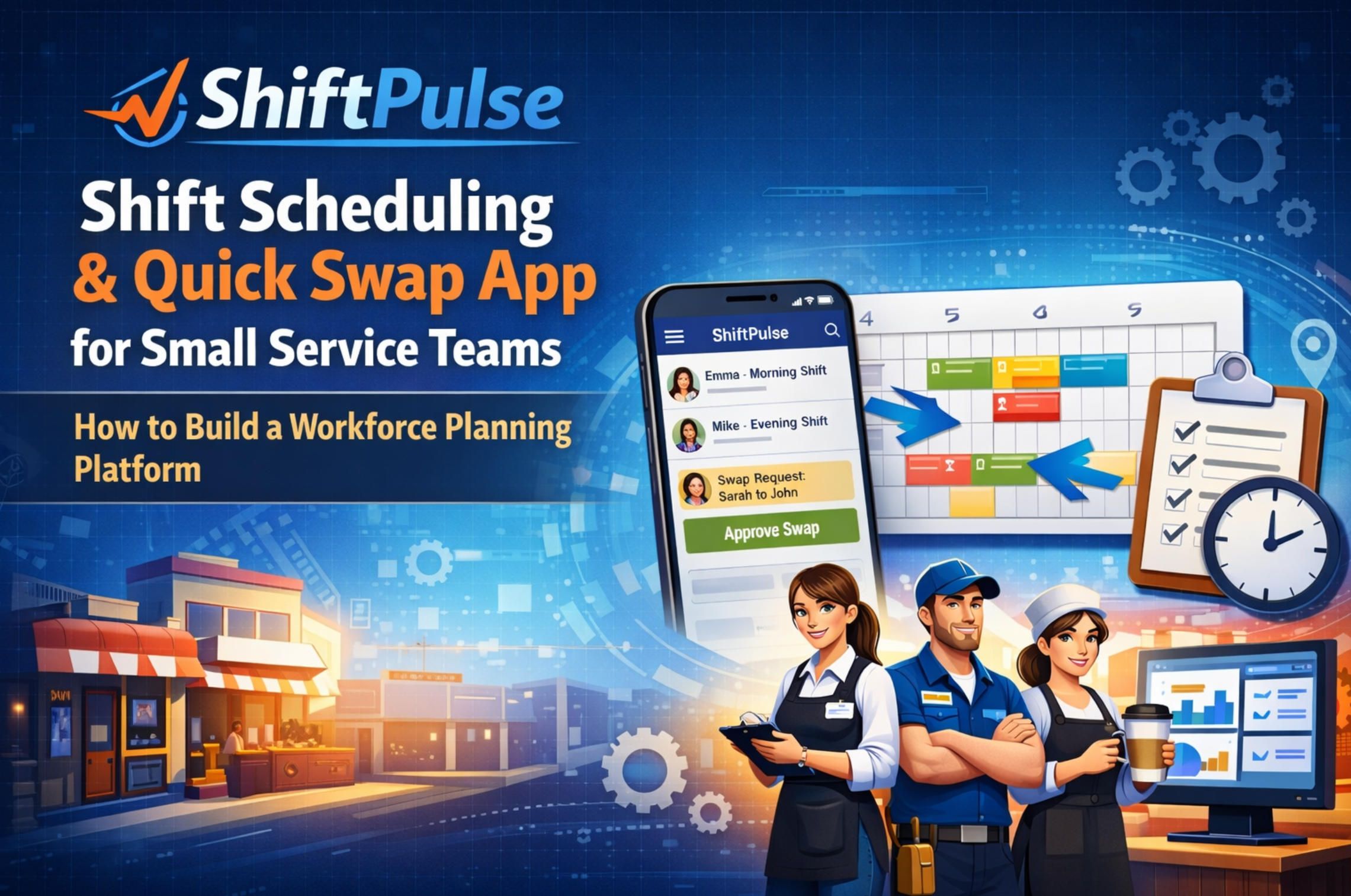
ShiftPulse: Shift Scheduling & Quick Swap App for Small Service Teams - How to Build a Workforce Planning Platform
Small service teams live and die by coverage: one missed shift in a cafe, salon, cleaning crew, or repair shop can cascade into longer wait times, lost sales, negative reviews, and burned-out staff. Yet scheduling is still often managed through spreadsheets, group chats, and last-minute phone calls - systems that cannot enforce roles, minimum staffing rules, location constraints, or approvals. A custom shift scheduling and quick-swap app turns staffing into a controlled workflow: employees see their shifts, confirm availability, request swaps in seconds, and managers approve changes with full visibility. A-Bots.com can design and build this kind of tailored workforce planning platform - mobile app plus admin dashboard - shaped around how your team actually operates.
The real bottleneck is not publishing a schedule; it is handling change without chaos. People get sick, transport fails, personal emergencies happen, and shifts must be covered fast. In manual systems, “quick swaps” become a negotiation thread that managers must monitor, validate, and document - often too late. A custom app can encode rules that prevent risky decisions: only qualified staff can cover certain roles, maximum hours per week are enforced, overtime risk is flagged, and multi-location conflicts are blocked automatically. A-Bots.com implements these constraints directly in the scheduling logic so swaps are fast for employees, safe for the business, and auditable for management.
The payoff is measurable: higher coverage rate, fewer last-minute cancellations, lower manager time spent on coordination, and more stable service quality across locations. With the right notification and approval flows, teams can close staffing gaps before they hit the customer experience. ShiftPulse-style functionality also creates a clean data layer for time tracking and performance analytics later, without forcing payroll complexity into the MVP. A-Bots.com can deliver an MVP that includes shift planning, swap requests, approvals, and notifications - and then extend it with time tracking, payroll integrations, and KPI reporting as the business scales.

Section 1. The Problem: Why Small Service Teams Lose Money on Scheduling Chaos
Small service businesses do not fail because they lack talent; they fail because coverage breaks. In cafes, salons, cleaning crews, and repair shops, one missing person can trigger a chain reaction: longer queues, slower turnaround, missed upsells, refunds, and stressed staff who start cutting corners. The painful part is that the underlying cause is rarely “staff attitude.” It is process. When schedules are managed via spreadsheets, paper notes, or chat threads, the business has no reliable way to enforce who is supposed to be where, in what role, and under what constraints. A schedule becomes a suggestion rather than an operational contract.
Manual scheduling also creates a hidden tax on managers. Every week they rebuild the same logic from scratch: which location needs which roles, who is qualified for what, who requested time off, who is approaching overtime, and who has a recurring constraint (kids, commuting, school). Then reality happens: someone is sick, a shift runs long, or demand spikes. The manager is forced into real-time dispatch mode - calling, texting, and negotiating coverage while trying to keep the service running. That coordination overhead is not “administration”; it is lost capacity that could have been spent on customers, sales, quality control, or training.
The true bottleneck is not publishing a schedule - it is handling change safely and quickly. “Can you cover my shift?” sounds simple, but in a real operation it is constrained: not everyone can do every role, some shifts require minimum headcount, certain tasks need certification or experience, and swapping can accidentally create violations (too many consecutive hours, insufficient rest time, crossing locations with impossible travel time). In a chat-based workflow, these constraints live in people’s heads, so mistakes are inevitable. The business either accepts risk or slows everything down with manual approvals and constant back-and-forth.
Generic calendars and basic workforce tools often fail because they model time, not operations. A calendar does not understand role-based coverage, skill matrices, staffing minimums, or location dependencies. It does not surface “coverage risk” when a key person drops out. It cannot prevent a swap that looks fine on the surface but creates overtime costs or leaves another shift uncovered. Without those controls, managers overcompensate by overstaffing, keeping “backup” people on standby, or relying on the same reliable employees until burnout becomes turnover.
No-show and late-arrival dynamics amplify the problem. In small teams, a single no-show can remove 25 - 50% of available capacity for that hour. Unlike large enterprises, there is no buffer. Customers experience it immediately: longer waits, rushed service, or cancelled appointments. Over time, that instability becomes reputational damage - and the acquisition cost to replace churned customers is typically higher than the cost of preventing the staffing gaps in the first place.
Finally, manual processes destroy visibility. Owners often cannot answer basic operational questions with confidence: Which roles are consistently understaffed? Which location has the highest swap rate? How much manager time is spent on last-minute coverage? What is the real attendance rate by day of week? Without a structured scheduling layer, the business cannot improve what it cannot measure. The result is reactive management and recurring chaos - even when demand and staffing levels are otherwise healthy.
This is why a purpose-built shift planning and quick-swap workflow is not a “nice app”; it is operational infrastructure for small service teams. The goal of Section 1 is to establish that the problem is systemic: fragmented scheduling channels, unmanaged change, and missing enforcement of operational constraints. Once those are clear, the solution is obvious: a unified platform that treats shifts as structured objects with roles, rules, approvals, and real-time notifications - so coverage becomes predictable and the business stops bleeding time and revenue.

Section 2. The App Blueprint: Roles, Workflows, MVP Scope, and Business Controls
A shift planning app only becomes valuable when it treats “a shift” as more than a calendar block. In small service operations, each shift has constraints: role requirements, location coverage, qualifications, labor rules, and approval workflows. The blueprint below frames ShiftPulse as a practical two-sided product - a mobile app for employees and shift leads, plus a web admin dashboard for managers and owners - backed by a rule-aware scheduling engine. This is exactly the type of custom operational system A-Bots.com can build: focused MVP first, then scalable extensions as the business grows.
Roles and Permissions (Keep It Strict, Keep It Fast)
A workable MVP typically needs four roles:
Employee
- views upcoming shifts, confirms availability
- requests a swap, offers to cover, accepts assignments
- checks in and checks out for time tracking
- receives push alerts about urgent coverage gaps
Shift Lead (optional but useful in small teams)
- can approve simple swaps within their team
- can broadcast “need coverage” messages to eligible staff
- can mark attendance exceptions (late arrival, left early)
Manager
- builds schedules, publishes shifts, assigns roles
- approves swap requests and exceptions
- monitors coverage risks and overtime alerts
- manages staff profiles, roles, and locations
Owner / Admin
- sets business rules and labor policies
- accesses analytics and audit trails
- controls multi-location settings and billing tiers
- configures integrations (payroll, messaging) later
The product rule is simple: employees must be able to solve 80% of swap needs self-serve, while managers retain approval control for risk and compliance.
Core Objects (The Data Model That Prevents Chaos)
ShiftPulse needs a minimal but correct domain model:
Location
- address, opening hours, local rules
- staffing templates per day type (weekday, weekend)
Role
- cashier, barista, technician, stylist, assistant, cleaner, etc.
- role requirements (certification flag, seniority level)
Employee Profile
- assigned roles, skill level, preferred locations
- availability patterns and time-off requests
- labor constraints: max weekly hours, minimum rest time (if needed)
Shift
- date, start/end time, location, role(s)
- required headcount per role (e.g., 1 lead + 2 staff)
- status: Draft, Published, Covered, At Risk, Completed
Swap Request
- offered shift, reason (optional), requested replacement window
- eligible candidates list (role-qualified, not conflicting)
- approval state: Pending, Approved, Rejected, Expired
Time Tracking Entry
- check-in/out timestamps
- exception flags: late, no-show, early leave
Audit Log
- who changed what and when (critical for trust)
This is the foundation for “rules-first” scheduling. The UI can be simple, but the data must be correct from day one.

Employee Experience (Design for Speed Under Stress)
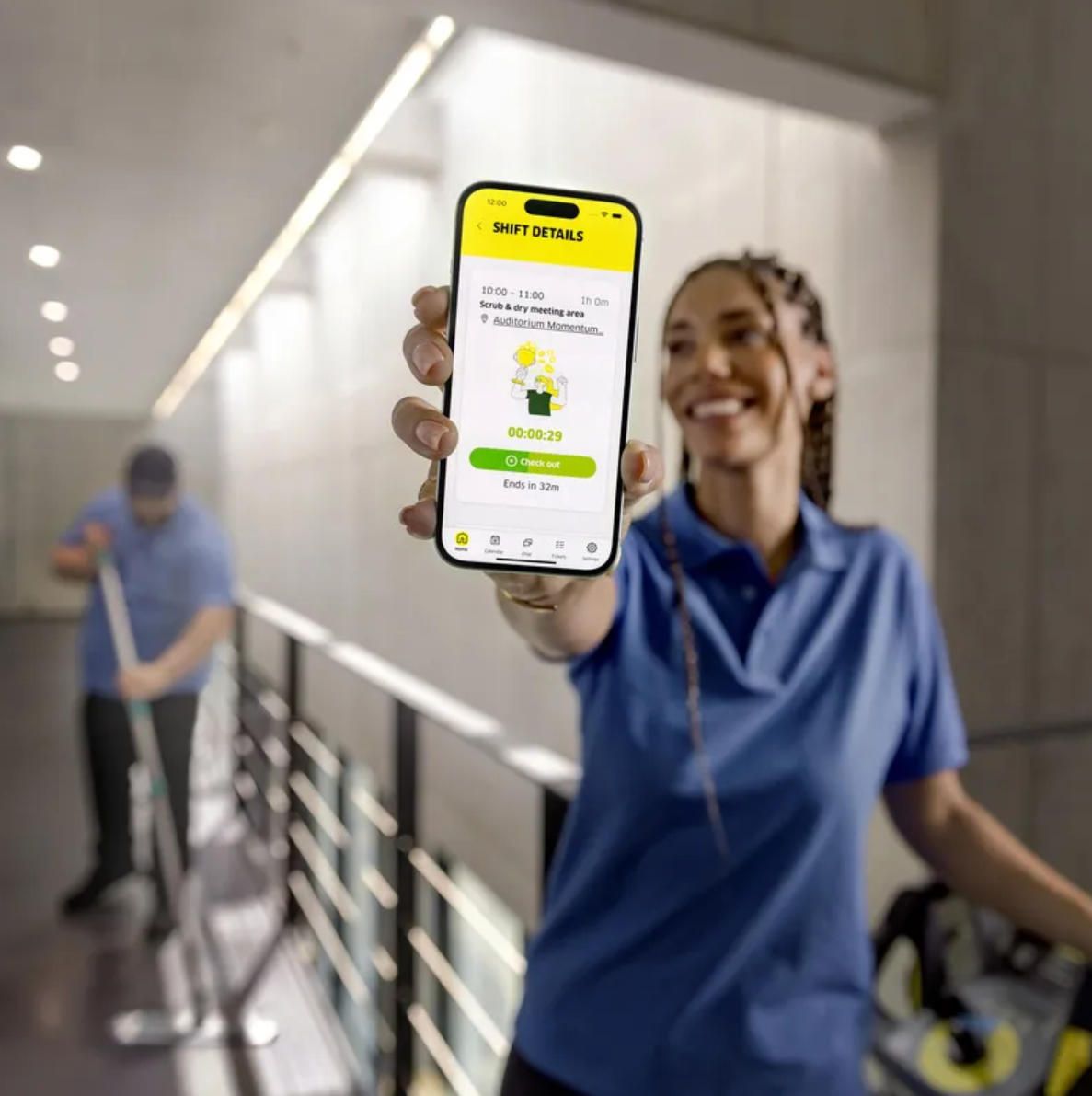
The employee app must make the “I can’t make it” moment safe and fast:
- Schedule view
- clean list and calendar view with location and role labels
- one-tap “confirm shift” to reduce uncertainty
- Request a swap
- choose the shift
- the system auto-filters eligible coworkers based on role + conflicts
- employee can request: “swap with someone” or “give away shift”
- Cover a shift
- browse open shifts (only those they are qualified for)
- accept coverage request, with instant manager notification if approval is required
- Notifications that matter
- urgent coverage alerts only to eligible staff
- confirmation notifications when swaps are approved
- reminders before shift start
- Check-in/out
- simple time tracking that can work with QR code at location or a PIN
- optional geo-check-in can be added later, but MVP should avoid complexity
The guiding principle is to remove negotiation from chats and replace it with controlled workflows.
Manager Dashboard (Where Reliability Is Enforced)
Managers need a command center that reduces admin time rather than adding more tools:
Schedule builder
- weekly grid view by location and role
- templates for recurring schedules (same staffing every Monday)
- drag-and-drop adjustments and bulk publishing
Coverage controls
- minimum staffing rules per role and per hour
- “coverage risk” highlights when a required role is unfilled
- conflict detection: double-booked employees, overlaps, unavailable staff
Swap approvals
- review pending swaps with context: role match, hours impact, conflicts
- approve or reject with one click
- automatic assignment updates and notifications
Time and attendance
- daily view of check-ins, late arrivals, no-shows
- exception notes for payroll later
- export-ready data format (v2 integration)
Broadcast and escalation
- send “need coverage” to eligible staff only
- escalation logic: after 15 minutes, notify the next eligibility tier (optional)
A strong dashboard is what turns a scheduling app into an operational platform.
Business Rules (The Guardrails That Prevent Bad Swaps)
This is where most “simple scheduling” tools fail. In ShiftPulse, swaps and assignments should be governed by configurable policies:
Role qualification enforcement
- only employees with the correct role/skill can cover
Labor constraint checks (lightweight MVP)
- flag overtime risk when weekly hours exceed a threshold
- prevent obvious conflicts (overlaps, insufficient rest if configured)
Location constraints
- prevent impossible travel time between locations
- limit coverage to assigned locations unless manager overrides
Approval requirements
- some swaps auto-approve if all rules pass
- others require manager approval (e.g., key roles, overtime risk)
Minimum staffing
- do not allow swaps that leave a shift under the required headcount
These rules protect the business without forcing manual micromanagement.
MVP Scope (Realistic for a 5 - 8 Developer Team)
A practical MVP targets the core loop: publish schedule - handle swaps - maintain coverage - track attendance.
MVP deliverables:
- employee mobile app (iOS/Android, often Flutter for speed)
- manager web dashboard
- backend with scheduling logic, swaps workflow, and notifications
- roles and permissions
- shift templates and publishing flow
- swap requests, approvals, and coverage board
- check-in/out time tracking (basic)
- audit logs and basic analytics (coverage rate, swap rate, attendance)
What to postpone to v2 (to keep the MVP clean and dependable):
- payroll provider integrations (Gusto, ADP, etc.)
- advanced compliance per jurisdiction and complex break rules
- KPI systems, bonus automation, performance reviews
- AI-driven auto-scheduling optimization
- full geo-fencing and anti-fraud tooling
This roadmap keeps scope controlled while still delivering immediate operational value.

Analytics That Actually Help (Not Vanity Metrics)
In small service teams, analytics should answer operational questions:
- coverage rate by location and role
- swap frequency and reasons (optional)
- late/no-show rate by day/time
- overtime risk trend
- manager time saved proxies (swap automation rate)
Even basic analytics becomes a management advantage because most small teams operate blind.
Why This Should Be Custom - And Why A-Bots.com
Off-the-shelf tools often force rigid workflows: either too simple to enforce roles and coverage rules, or too enterprise-heavy for a small team to adopt. A custom ShiftPulse-style platform can match your exact operating model: the roles you use, the locations you run, the approvals you require, and the constraints you cannot violate. A-Bots.com can build the MVP as a product-grade system - fast employee UX, manager dashboard built for real operations, a rule-aware scheduling engine, and a scalable backend - then evolve it with payroll integrations and optimization features as your business scales across teams and locations.
✅ Hashtags
#ShiftSchedulingApp
#WorkforceManagement
#QuickShiftSwap
#EmployeeScheduling
#StaffingSoftware
#TimeTrackingApp
#ServiceBusinessOps
#ManagerDashboard
#MobileAppDevelopment
#FlutterDevelopment
#CustomSoftware
#SchedulingPlatform
#NoShowReduction
#ABots
Other articles
Building Shawarma Roulette - A Social Discovery Success Story This comprehensive case study explores how Dubai app development companies are solving real-world social challenges through innovative mobile applications. The article examines the development of Shawarma Roulette, a location-based social discovery app that transforms Dubai's iconic street food culture into spontaneous friendship opportunities. Through detailed analysis of the 5-month development process, technical architecture, matching algorithms, and user experience design, readers gain insights into professional app development methodology. The story demonstrates how A-Bots.com and similar Dubai-based development companies combine technical expertise with cultural understanding to create applications that serve Dubai's unique multicultural market. Featuring real statistics on Dubai's thriving digital economy, food delivery market growth, and startup ecosystem, this article provides valuable perspective for entrepreneurs, investors, and businesses considering custom mobile app development in the UAE.
Weekend Desert Crew - Connecting Desert Adventurers Through Custom Mobile Technology This comprehensive case study explores how Dubai app development companies are revolutionizing outdoor adventure experiences through custom mobile technology. The article examines Weekend Desert Crew, an innovative coordination app that transforms Dubai's desert camping from logistically impossible to accessible reality for thousands of residents and tourists. Through detailed analysis of the 6-month development process, offline-first architecture, real-time location tracking, safety-critical systems, and matching algorithms, readers gain insights into professional app development methodology for complex outdoor applications. Featuring real user stories, technical challenges, business model strategies, and viral growth tactics, this article demonstrates how A-Bots.com and similar Dubai-based development companies solve genuine human problems through thoughtful technology. Includes comprehensive statistics on Dubai tourism, desert safari market, and outdoor recreation trends shaping the UAE's adventure tourism sector.
Expat Docs App to Solve the Document Crisis for 11 Million UAE Residents Managing document expiration dates in the UAE is a universal challenge for the 11.06 million expatriates who make up 88.5% of the country's population. Missing a single deadline—Emirates ID, residence visa, passport, or driving license—can trigger fines exceeding AED 3,500, travel disruptions, and legal complications. This article explores how A-Bots.com, a Dubai-based mobile app development company, created Expat Docs: a simple yet critical document expiry tracker. Using intelligent reminders, OCR scanning, dependency alerts, and family account management, the app solved a problem affecting millions. Learn how straightforward technology addressing real-world problems creates genuine value, and discover A-Bots.com's approach to building practical, reliable mobile applications that improve expatriate life.
Inventory Management App Development Managing inventory with spreadsheets costs businesses thousands of dollars annually through errors and inefficiency. Research shows over 80% of spreadsheets contain mistakes, while retail shrinkage reached $132 billion globally in 2024. A custom inventory management app with barcode scanning eliminates manual data entry errors, provides real-time stock visibility, and automates low-stock alerts. This comprehensive guide covers essential features including barcode scanning, multi-location tracking, and system integrations. Development costs range from $10,000 for basic solutions to $100,000+ for enterprise systems, with typical ROI of 120-190% and payback periods under 8 months. A-Bots.com delivers custom inventory solutions tailored to your specific workflow requirements.
Virtual Queue & Smart Booking App for Private Clinics, Beauty Salons, and Repair Pros This article explains how a virtual queue and smart time-slot booking app can eliminate scheduling chaos for private clinics, beauty salons, and independent repair professionals. You will learn why generic calendars fail in real service operations, and how a purpose-built scheduling engine handles service durations, buffers, specialist availability, and shared resources. We outline a realistic MVP that a 5 - 8 developer team can deliver, including customer mobile apps and an admin dashboard with reminders, confirmations, and optional deposits to reduce no-shows. A-Bots.com can design and build this custom booking platform to match your workflow and scale.
Top stories

Copyright © Alpha Systems LTD All rights reserved.
Made with ❤️ by A-BOTS