
Home
Services
About us
Blog
Contacts
App Development New Zealand: How to Build a Mobile Product That Wins in the Kiwi Market
Every year, New Zealand's digital economy grows faster than the national average, and businesses that invest in app development New Zealand are seeing the results. With over 70% of Kiwis actively using mobile applications for shopping, banking, and daily communication, the demand for custom mobile solutions has never been stronger. The country's tech sector now contributes NZ$23.8 billion to GDP — roughly 8% of the entire national economy — according to the NZTech Key Metrics Report 2024. That figure alone tells you where the market is heading.
At A-Bots.com, we specialize in full-cycle mobile app development, from initial strategy and product definition to deployment on iOS and Android. With more than 70 completed projects, long-term client relationships (some exceeding five years), and deep expertise in React Native, Swift, Java, Kotlin, and cross-platform frameworks, we help businesses turn ideas into working products. Whether you need a custom-built mobile application for the New Zealand market or professional QA testing of an existing one, A-Bots delivers the technical depth and project management discipline that complex digital products demand. Our team handles mobile development, web platforms, chatbot integration, blockchain solutions, and IoT applications — the full technology stack that modern businesses require.
Why New Zealand Is a Prime Market for Mobile Applications
The numbers behind app development New Zealand paint a compelling picture. According to DataReportal's Digital 2025 report, there were 6.03 million cellular mobile connections active in New Zealand in early 2025 — equivalent to 115% of the total population. Internet penetration stands at 96.2%, with 5.03 million individuals online. This is not a market where you hope people will find your app. This is a market where people are already on their phones, actively looking for better digital experiences.
New Zealand's ICT market was valued at US$19.8 billion in 2024, according to data published by the International Trade Administration (trade.gov), with an expected annual growth rate of approximately 10%. The technology sector is the country's third-largest export industry, accounting for nearly 11% of total exports. More importantly for businesses considering app development New Zealand, the country serves as an ideal testbed for digital products — a tech-savvy population that embraces new technologies quickly, combined with a regulatory environment that demands quality.
The ICT market size stood at USD 16.28 billion in 2025 and is projected to reach USD 25.53 billion by 2030, advancing at a 9.42% CAGR, according to Mordor Intelligence. Hyperscale infrastructure investments by Microsoft, AWS, and Google have lowered latency and addressed data-residency concerns, making it easier than ever to deploy high-performance applications in the region. For any company exploring app development New Zealand, these infrastructure improvements translate directly into faster load times, better user experiences, and stronger competitive positioning.

The Kiwi Mobile User: What the Data Tells You
Understanding local users is critical to successful app development New Zealand. The country's mobile landscape has some distinctive characteristics that shape how apps should be designed and built.
Apple dominates the premium segment, holding nearly 50% of the smartphone market. Android captures the rest through a wider range of devices from Samsung, Huawei, Oppo, and Xiaomi. This split has practical implications for development strategy. If your target audience skews toward business professionals and urban consumers, iOS-first development may make sense. If you need maximum reach across demographics and regions, cross-platform development using frameworks like React Native or Flutter offers the best cost-to-coverage ratio.
New Zealand's three major mobile providers — Spark, Vodafone, and 2degrees — are actively expanding 5G coverage, particularly in urban centers. The rollout of 5G connectivity opens new opportunities for app development New Zealand in areas like real-time video streaming, augmented reality, IoT integration, and edge computing. Applications that seemed impractical just two years ago are now entirely viable on New Zealand's improving network infrastructure.
The Privacy Act 2020 is another factor that directly affects app development New Zealand. Any organization collecting personal information through a mobile application must comply with thirteen Information Privacy Principles governing data collection, storage, use, and disclosure. The Act has extraterritorial scope — it applies to any overseas organization doing business in New Zealand, regardless of where the data is collected or where the company is located. Mandatory breach notification requirements mean that sloppy data handling is not just a reputational risk but a legal one, with fines reaching NZ$10,000 for individuals and NZ$50,000 for organizations.
For development teams, this means privacy-by-design is not optional. At A-Bots, compliance considerations are built into the architecture from day one, not patched in after launch. Our QA processes include security testing and data-handling audits that help clients meet their obligations under New Zealand's privacy framework.
Key Industries Driving App Development New Zealand
Several sectors in New Zealand present particularly strong opportunities for mobile application development. Each has unique technical requirements, regulatory considerations, and user expectations.
Agritech and Precision Farming
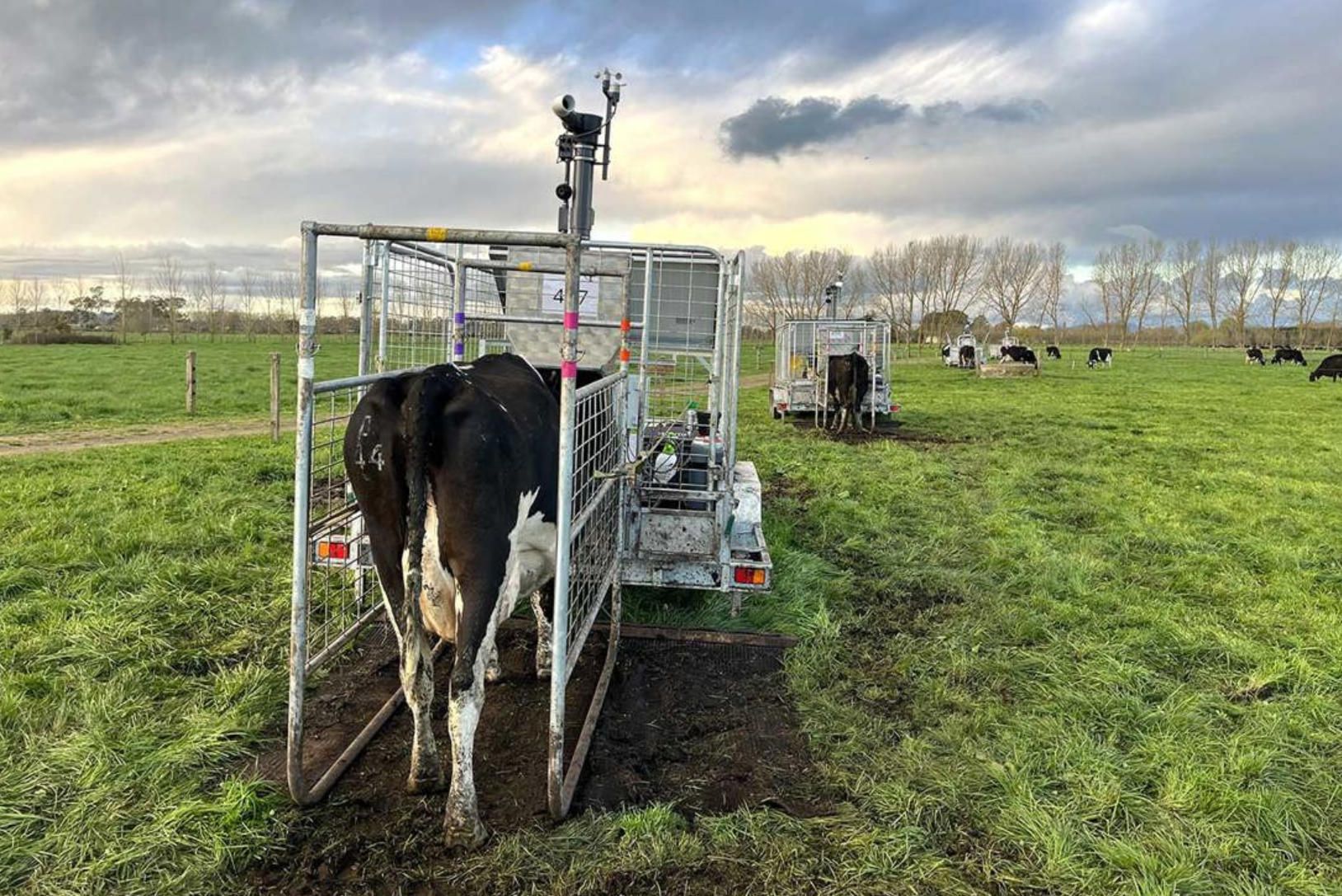
Agriculture remains the backbone of New Zealand's economy, and agritech is rapidly becoming one of the country's most promising technology sectors. According to Tracxn, there are 343 agritech startups operating in New Zealand, with 50 having received funding. The sector generates NZ$1.7 billion in revenue, and BCG's 2025 report identifies agritech as New Zealand's most immediate opportunity for technology-driven growth.
Mobile applications in this space handle everything from livestock monitoring and virtual fencing to crop management, weather integration, and supply chain tracking. The success of companies like Halter — which uses solar-powered GPS collars managed through a smartphone app to handle over 200,000 cattle across three countries — demonstrates the scale of opportunity in agritech app development New Zealand.
Custom agricultural apps require integration with GPS hardware, real-time sensor data processing, offline functionality for remote areas with limited connectivity, and robust data analytics dashboards. This is exactly the kind of complex, multi-layered project where A-Bots excels — our experience with IoT applications, real-time data systems, and cross-platform mobile development makes us a strong technical partner for agritech ventures.

Fintech and Digital Payments
New Zealand's fintech sector is experiencing significant growth, driven by consumer demand for mobile banking, digital wallets, and contactless payment solutions. Startups like Centrapay are building modern payment networks that challenge traditional card-based systems. The country's well-regulated financial environment provides a stable foundation for fintech app development New Zealand.
Mobile fintech applications must meet strict security standards, including encryption, multi-factor authentication, PCI DSS compliance for payment processing, and integration with banking APIs. At A-Bots, our blockchain development capabilities (Python, Solidity, C++) complement our mobile expertise, enabling us to build fintech solutions that incorporate distributed ledger technology, smart contracts, and secure transaction processing.
Healthtech and Telehealth
Healthtech is New Zealand's biggest secondary technology sector, generating NZ$1.8 billion in revenue with a five-year compound annual growth rate of 10%, according to New Zealand Trade and Enterprise (NZTE). The pandemic accelerated telehealth adoption, and mobile health applications are now standard tools for patient management, remote diagnostics, and health data collection.
App development New Zealand in the healthcare sector must comply with the Health Information Privacy Code in addition to the Privacy Act 2020. Applications handling patient data require end-to-end encryption, secure authentication, audit trails, and careful management of data sovereignty requirements. New Zealand's Biometrics Processing Privacy Code, expected to come into force in 2025, will add additional requirements for apps using biometric data such as fingerprint or facial recognition.
A-Bots provides the technical depth needed for healthtech projects — from HIPAA-aware architecture patterns to secure API integrations with existing health systems. Our testing services ensure that healthcare applications meet both functional requirements and regulatory compliance standards before they reach users.
Tourism and Hospitality
New Zealand's tourism industry is a natural fit for mobile app development. Navigation, booking, real-time transport information, activity recommendations, and multilingual support are all features that tourists expect from modern mobile applications. Location-based services, offline map functionality, and integration with payment systems create complex technical requirements that demand experienced development teams.

What App Development New Zealand Actually Costs
Understanding cost is essential for planning any mobile project. Based on current market data, app development New Zealand costs range significantly based on complexity and scope.
Simple applications with basic features — calculators, informational displays, basic data entry — typically start from NZD 40,000. These are suitable for MVPs or proof-of-concept projects where the goal is to validate an idea before committing to full-scale development.
Moderate applications with user authentication, payment processing, real-time data synchronization, and third-party API integrations generally fall in the NZD 80,000 to NZD 150,000 range. This category includes most business-to-consumer applications, loyalty programs, and internal enterprise tools.
Complex applications with advanced features like AI-powered analytics, AR/VR experiences, IoT device integration, real-time streaming, or blockchain-based transactions can exceed NZD 300,000. These are enterprise-grade solutions that require sophisticated architecture, extensive testing, and ongoing optimization.
Post-launch maintenance typically adds 15-20% of the initial development cost annually. Marketing budgets — critical for app visibility — should be planned separately, with NZD 1,000 to NZD 5,000 as a starting range for digital campaigns and App Store Optimization (ASO).
One strategic approach to managing costs in app development New Zealand is the MVP (Minimum Viable Product) methodology. Rather than building every feature at once, you launch with core functionality, gather real user feedback, and iterate. This approach reduces upfront financial risk while getting your product to market faster. A-Bots regularly guides clients through MVP planning, helping them prioritize features that deliver the highest business value first.
Working with an international development partner like A-Bots can provide significant cost advantages while maintaining — and often exceeding — the quality standards expected in the New Zealand market. Our distributed team model combines competitive rates with deep technical expertise across the full development lifecycle.
Native vs. Cross-Platform: Choosing the Right Approach
One of the most consequential decisions in app development New Zealand is choosing between native and cross-platform development.
Native development — building separate codebases in Swift for iOS and Java/Kotlin for Android — delivers maximum performance, full access to device capabilities, and the best possible user experience on each platform. The trade-off is cost: maintaining two separate codebases effectively doubles development effort and ongoing maintenance requirements.
Cross-platform development using frameworks like React Native or Flutter allows teams to write a single codebase that deploys to both iOS and Android. This approach can reduce development time by up to 40%, making it particularly attractive for startups and businesses with budget constraints. Modern cross-platform frameworks have matured significantly, delivering near-native performance with responsive designs and fluid animations.
At A-Bots, React Native is our primary cross-platform framework — we have built numerous production applications using it, including high-profile projects like the LYST brand clothing aggregator and the Scandpay retail shopping solution. Our native development capabilities in Java, Kotlin, and Swift are equally strong, and we help clients choose the right approach based on their specific requirements, budget, and long-term plans.
For most businesses entering app development New Zealand, cross-platform development offers the best balance of cost, speed, and quality. Native development makes more sense when the application requires heavy use of platform-specific features, maximum graphical performance, or deep hardware integration — common requirements in gaming, AR/VR, and certain IoT applications.

Regulatory Compliance and Data Sovereignty
Navigating regulatory requirements is a critical component of successful app development New Zealand. Beyond the Privacy Act 2020, several other regulatory frameworks affect mobile application development.
The Consumer Guarantees Act ensures that digital products meet acceptable quality standards, providing legal recourse for users if applications fail to perform as advertised. The Fair Trading Act prohibits misleading or deceptive conduct in trade, which applies to app descriptions, marketing claims, and in-app purchase mechanisms.
Data sovereignty is an increasingly important consideration. New Zealand's proximity to Australia and its strong trade relationships mean that many applications need to handle cross-border data transfers. The Privacy Act includes specific provisions for overseas transfers of personal information, requiring that receiving organizations maintain comparable privacy protections. The European Commission confirmed in January 2024 that New Zealand's data protection safeguards remain adequate under GDPR standards, facilitating data flows between the EU and New Zealand.
For businesses engaged in app development New Zealand, compliance is not a one-time checkbox — it requires ongoing attention to regulatory changes, security updates, and privacy audits. A-Bots integrates compliance testing into our QA processes, ensuring that applications meet current requirements and are structured to accommodate future regulatory changes.
The Role of AI, IoT, and Emerging Technologies
The most exciting frontier in app development New Zealand lies at the intersection of mobile applications and emerging technologies.
Artificial intelligence is transforming how apps operate across every industry. From personalized recommendation engines in retail to predictive maintenance algorithms in manufacturing, AI-powered features are becoming standard expectations rather than competitive advantages. New Zealand's government has published guidelines on responsible AI, and the Privacy Commissioner has issued specific guidance on applying Information Privacy Principles to AI tools. This regulatory clarity gives businesses confidence to invest in AI-enabled app development New Zealand projects.
The Internet of Things represents another major opportunity. Spark New Zealand's IoT platform has surpassed 2 million connected devices, and the market for IoT applications spans city infrastructure management, dairy farming, transport and logistics, horticulture, smart metering, and asset management. Mobile apps serve as the primary interface for IoT systems, and building effective IoT applications requires expertise in hardware integration, real-time data processing, and secure device communication protocols.
A-Bots has direct experience with IoT app development — our Shark Clean project involved building a mobile application for controlling robotic vacuum cleaners, integrating React JS, Java, and Swift to deliver a seamless user experience across platforms. This kind of hardware-software integration expertise is exactly what IoT-focused app development New Zealand projects demand.
Blockchain technology is finding practical applications beyond cryptocurrency, particularly in supply chain verification, digital identity management, and smart contracts. New Zealand's agricultural export sector — where provenance and traceability are critical for premium pricing — is a natural fit for blockchain-enabled mobile applications. Our blockchain development team works with Python, JavaScript, Solidity, and C++ to build decentralized solutions that integrate with mobile frontends.

Testing: The Make-or-Break Phase
No discussion of app development New Zealand is complete without addressing quality assurance. Testing is where many projects succeed or fail, and it deserves the same strategic attention as development itself.
Effective mobile app testing covers multiple dimensions: functional testing to verify that every feature works as specified, performance testing to ensure the app handles expected load levels, security testing to identify vulnerabilities before malicious actors do, usability testing to validate the user experience, and compatibility testing across the fragmented landscape of devices and operating systems in the New Zealand market.
A-Bots offers comprehensive QA services that can be engaged independently of development. If you have an existing application that needs professional testing, our QA team can conduct thorough evaluations covering functionality, performance, security, and compliance. We provide detailed reports with prioritized findings and actionable recommendations — whether the fix is a simple UI adjustment or a fundamental architectural change.
For companies already invested in app development New Zealand, independent QA provides an objective assessment of product quality. Internal development teams often develop blind spots about their own code; external testing brings fresh perspectives and catches issues that internal processes miss.
Why Partner With A-Bots for App Development New Zealand
Choosing the right development partner is arguably the most important decision in any mobile project. Here is what sets A-Bots apart for businesses targeting the New Zealand market.
First, experience at scale. With more than 70 completed projects spanning mobile apps, web platforms, chatbots, blockchain solutions, and IoT systems, we have encountered and solved the technical challenges that trip up less experienced teams. Our client retention speaks for itself — most clients work with us for at least 1.5 years, and several partnerships have exceeded five years.
Second, full-cycle capability. From strategy and product definition through development, testing, deployment, and ongoing maintenance, A-Bots manages every phase of the product lifecycle. This eliminates the coordination overhead and communication gaps that plague projects split across multiple vendors.
Third, technical versatility. Our stack covers React Native, Java, Kotlin, Swift, Node.js, React JS, Django, Python, Solidity, and C++ — giving us the flexibility to choose the right tools for each project rather than forcing every problem into a single framework. For app development New Zealand projects that require IoT integration, blockchain functionality, or chatbot capabilities alongside mobile development, this breadth of expertise is a significant advantage.
Fourth, quality-first culture. Flexibility and quality are at the core of our work, and we take direct responsibility for the satisfaction of end users with the software we build. Our QA processes are rigorous, our documentation is thorough, and our project management is transparent.
Fifth, cost efficiency. Working with A-Bots gives New Zealand businesses access to world-class development talent at competitive international rates, without sacrificing communication quality or project oversight. Our distributed team model has been refined across years of international client engagements.
Getting Started With Your New Zealand App Project
Whether you are a startup validating an idea, an established business expanding into mobile, or an enterprise modernizing legacy systems, the path to successful app development New Zealand starts with clear thinking about your goals, your users, and your budget.
A-Bots offers a free project estimation that covers technical feasibility, recommended technology stack, timeline projections, and cost ranges. Our strategy and product definition phase helps you transform a rough concept into a fully viable product with clear goals and a structured roadmap.
If you already have an application that needs improvement, our QA and testing services provide independent assessment and actionable recommendations. We can identify performance bottlenecks, security vulnerabilities, compliance gaps, and user experience issues — then either fix them ourselves or provide your internal team with the information they need.
The New Zealand market rewards businesses that invest in quality digital products. With the right development partner, app development New Zealand is not just a cost center — it is a strategic investment in customer engagement, operational efficiency, and competitive advantage.
Ready to build? Visit a-bots.com to start a conversation about your project. Our team of business and technology experts is ready to translate your vision into a concrete result.
Sources:
- NZTech, "Tech Sector Key Metrics Report 2024" — technewzealand.org.nz
- DataReportal, "Digital 2025: New Zealand" — datareportal.com
- International Trade Administration, "New Zealand — Information and Communication Technology (ICT)" — trade.gov
- Mordor Intelligence, "New Zealand ICT Market Size & Share Analysis" — mordorintelligence.com
- TEKsystems, "New Zealand IT Market Trends 2025" — teksystems.com
- BCG, "Growing Our Advantage in Agritech" (2025) — bcg.com
- New Zealand Trade and Enterprise (NZTE), "Investment opportunities in NZ's tech sector" — nzte.govt.nz
- Office of the Privacy Commissioner, "Privacy Act 2020" — privacy.org.nz
- Tracxn, "Top startups in AgriTech in New Zealand" — tracxn.com
- TIN, "2025 Technology Investment Report" — tin100.com
- Ministry of Business, Innovation & Employment (MBIE), "Digital Technologies Sector Overview" — mbie.govt.nz
- Statista, "IT Services — New Zealand" — statista.com
✅ Hashtags
#AppDevelopmentNewZealand
#MobileAppDevelopmentNZ
#NewZealandTech
#KiwiAppDevelopers
#CustomAppDevelopment
#CrossPlatformAppsNZ
#NZDigitalTransformation
#MobileAppsNewZealand
Other articles
Drone App Development Saudi Arabia Saudi Arabia's drone market is projected to reach $1,448.0 million by 2030, with commercial applications growing at 30.83% annually. A-Bots.com specializes in custom drone software development and drone app development for Saudi Arabia's unique operational requirements. Our expertise includes ArduPilot and Mission Planner customization, from-scratch application development, and comprehensive testing services. We deliver solutions for 14 critical applications across Saudi Arabia including oil and gas pipeline inspection, NEOM smart city infrastructure, Hajj crowd management, precision agriculture, construction monitoring, and emergency response systems. Whether you need to customize existing drone platforms or develop entirely new software solutions, A-Bots.com provides expert drone app development tailored to Saudi Arabia's Vision 2030 objectives and regulatory compliance requirements.
Best Food Delivery App in Riyadh Riyadh's food delivery market is experiencing explosive growth, projected to reach $15.12 billion by 2030. This comprehensive guide analyzes the best food delivery app in Riyadh platforms including HungerStation, Jahez, KeeTa, Talabat, Mrsool, ToYou, and Careem NOW. A-Bots.com specializes in developing custom food delivery applications tailored for Saudi Arabian market requirements, offering both new platform development and quality assurance testing for existing systems. Learn about essential technical features, security requirements, cultural localization, and competitive strategies that define successful food delivery platforms in Riyadh. Whether you're choosing a platform as a consumer or developing a new solution, this analysis provides expert insights into one of Saudi Arabia's most dynamic technology sectors.
Wellington App Development: Custom Mobile Solutions Wellington's position as New Zealand's creative and technology capital creates unique opportunities for mobile app development. A-Bots.com delivers custom Wellington app solutions across diverse sectors including the globally renowned film industry anchored by Weta FX, the thriving fintech ecosystem led by Xero, and Wellington's expanding tourism sector generating NZ$1.3 billion annually. This comprehensive guide explores Wellington app development opportunities in visual effects workflows, financial services platforms, tourism experiences, smart city initiatives, and enterprise applications. With 70+ completed projects and client partnerships spanning 1.5 to 5+ years, A-Bots.com provides full-spectrum services from native iOS and Android development to comprehensive quality assurance testing, positioning Wellington businesses for digital success in New Zealand's capital.
Professional App Development Auckland: IoT, Parking, E-Scooter and Drone Solutions Auckland's technology sector demands sophisticated mobile applications that address unique urban challenges. A-Bots.com delivers professional app development Auckland businesses rely on, with specialized expertise in IoT smart device control, parking management systems, micromobility platforms, and UAV applications. With over 70 completed projects and client relationships spanning 1.5 to 5+ years, the company provides full-cycle development from concept through deployment and ongoing support. A-Bots.com's technical team masters React Native, Swift, Java, and Kotlin to build cross-platform and native applications serving Auckland's $10 billion technology ecosystem. Whether developing consumer-facing apps or enterprise systems, A-Bots.com combines local market knowledge with international development standards to deliver solutions that drive business growth across New Zealand's economic powerhouse.
App Development Christchurch: Custom Mobile Solutions for Canterbury Businesses Christchurch has emerged as New Zealand's innovation hub, with a tech sector contributing $2.4 billion to regional GDP. This comprehensive guide explores app development Christchurch opportunities across key industries including tourism, agriculture, healthcare, and technology. Learn about development costs ranging from $5,000 for simple apps to $300,000+ for complex solutions, platform selection strategies, and the structured development process from discovery to deployment. The article examines how Canterbury businesses leverage mobile applications to serve the region's 96% internet-connected population. A-Bots.com offers custom development and testing services backed by 70+ completed projects and long-term client partnerships spanning over five years.
Top stories

Copyright © Alpha Systems LTD All rights reserved.
Made with ❤️ by A-BOTS