
Home
Services
About us
Blog
Contacts
Parking App Development: Technical Specification for Staffless Smart Parking Solutions
Executive Summary
A-Bots.com specializes in comprehensive parking app development solutions for facilities of any scale—from small private lots to city-wide implementations. This technical specification outlines the complete architecture for developing a staffless parking facility management system with scalable IoT integration, real-time occupancy detection, automated access control, and flexible administrative capabilities.
Our expertise encompasses both hardware integration and custom software solutions, enabling clients to deploy intelligent parking systems with varying levels of automation. Whether implementing a basic 20-space facility or a 2,000-space metropolitan parking network, A-Bots.com delivers tailored solutions that address specific operational requirements, payment models, and user experience goals.
System Architecture Overview
Modern parking applications require integration of multiple technology layers: occupancy detection hardware, communication networks, backend processing systems, mobile applications, and access control mechanisms. A-Bots.com approaches each project by first establishing core requirements, then selecting appropriate technologies from our extensive hardware and software ecosystem.
Core System Components
Occupancy Detection Layer: The foundation of any intelligent parking solution involves determining real-time space availability. A-Bots.com integrates various sensor technologies based on accuracy requirements, budget constraints, and installation environment.
Communication Infrastructure: Modern systems demand reliable data transmission. We implement LoRaWAN, NB-IoT, or traditional network architectures depending on facility layout and connectivity requirements.
Application Layer: Custom mobile applications provide user interfaces for reservation, payment, navigation, and access control, while administrative dashboards enable real-time monitoring and policy management.
Access Control Systems: From digital signage to automated barriers, our solutions include appropriate mechanisms for managing vehicle entry and enforcing parking rules.
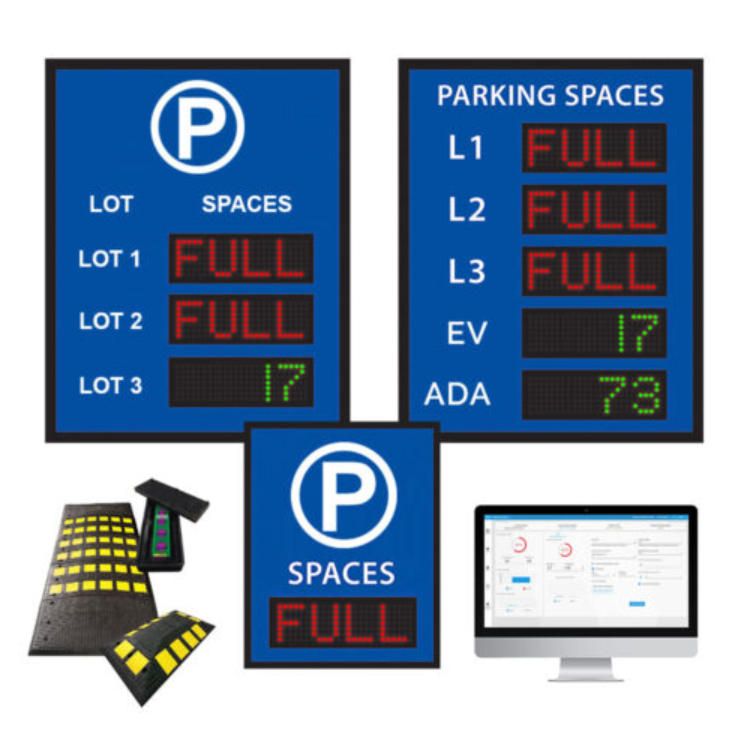
Occupancy Detection Technologies: Technical Specifications
Ground-Mounted IoT Sensors
The most direct approach involves dedicated sensors installed at each parking space. These devices provide individual space monitoring with high accuracy and minimal infrastructure requirements.
Magnetic + Radar Dual-Sensor Configuration
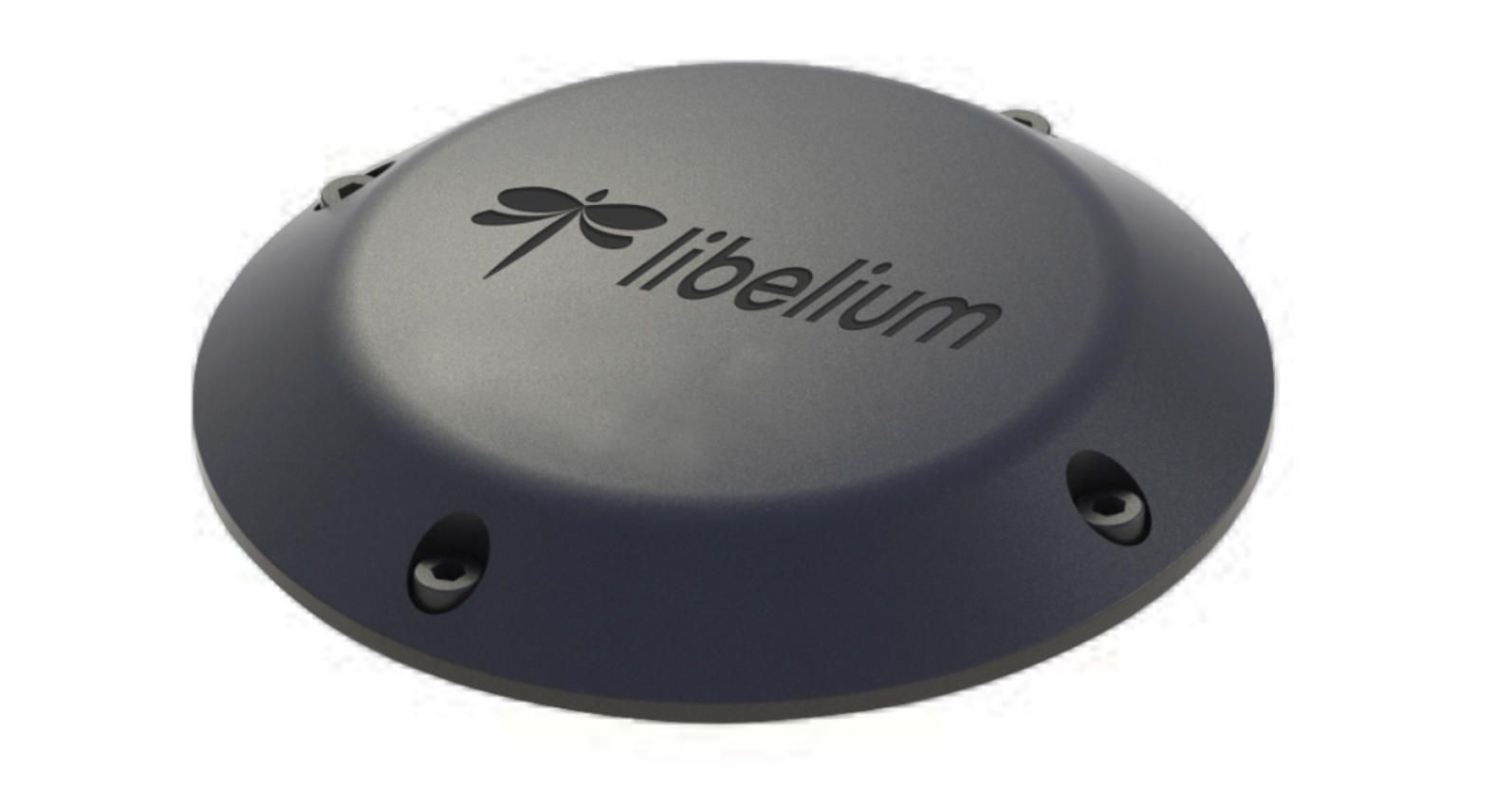
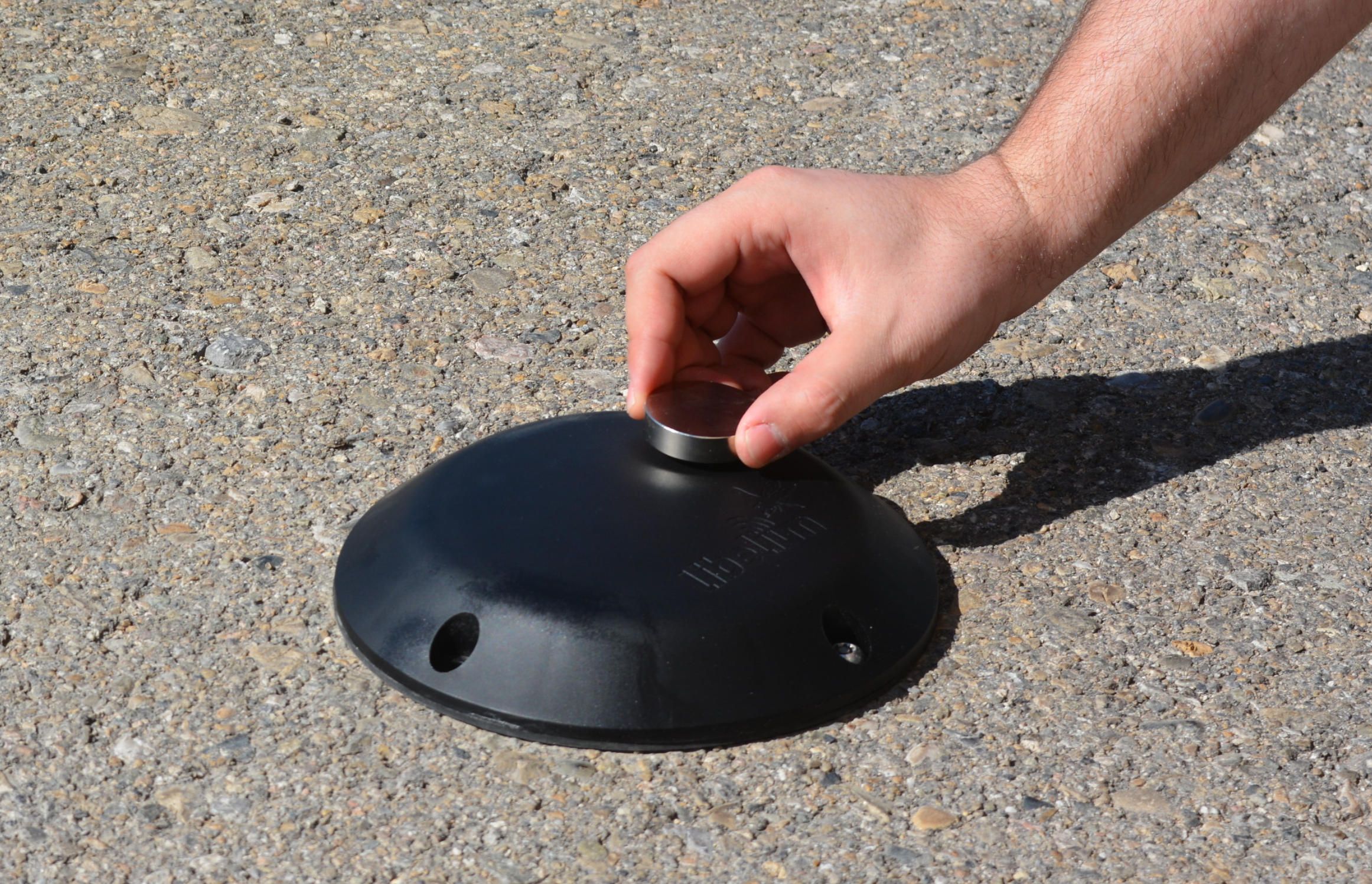
Modern implementations increasingly rely on dual-sensor systems combining magnetic field detection with radar technology. The Libelium Smart Parking Node represents this approach, achieving greater than 99% detection accuracy through complementary sensor fusion. Magnetic sensors detect ferrous vehicle components while radar provides distance measurement resistant to electromagnetic interference.
Key specifications:
- Detection accuracy: 99.6% proven through extensive field testing
- Battery life: Up to 10 years with typical usage patterns
- Communication protocols: LoRaWAN, NB-IoT compatibility
- Operating temperature: -40°C to +85°C for extreme climate deployment
- Installation time: Approximately 30 seconds per sensor using adhesive mounting
- IP68/IK10 rating: Complete waterproofing and vandalism resistance
Alternative Sensor Models
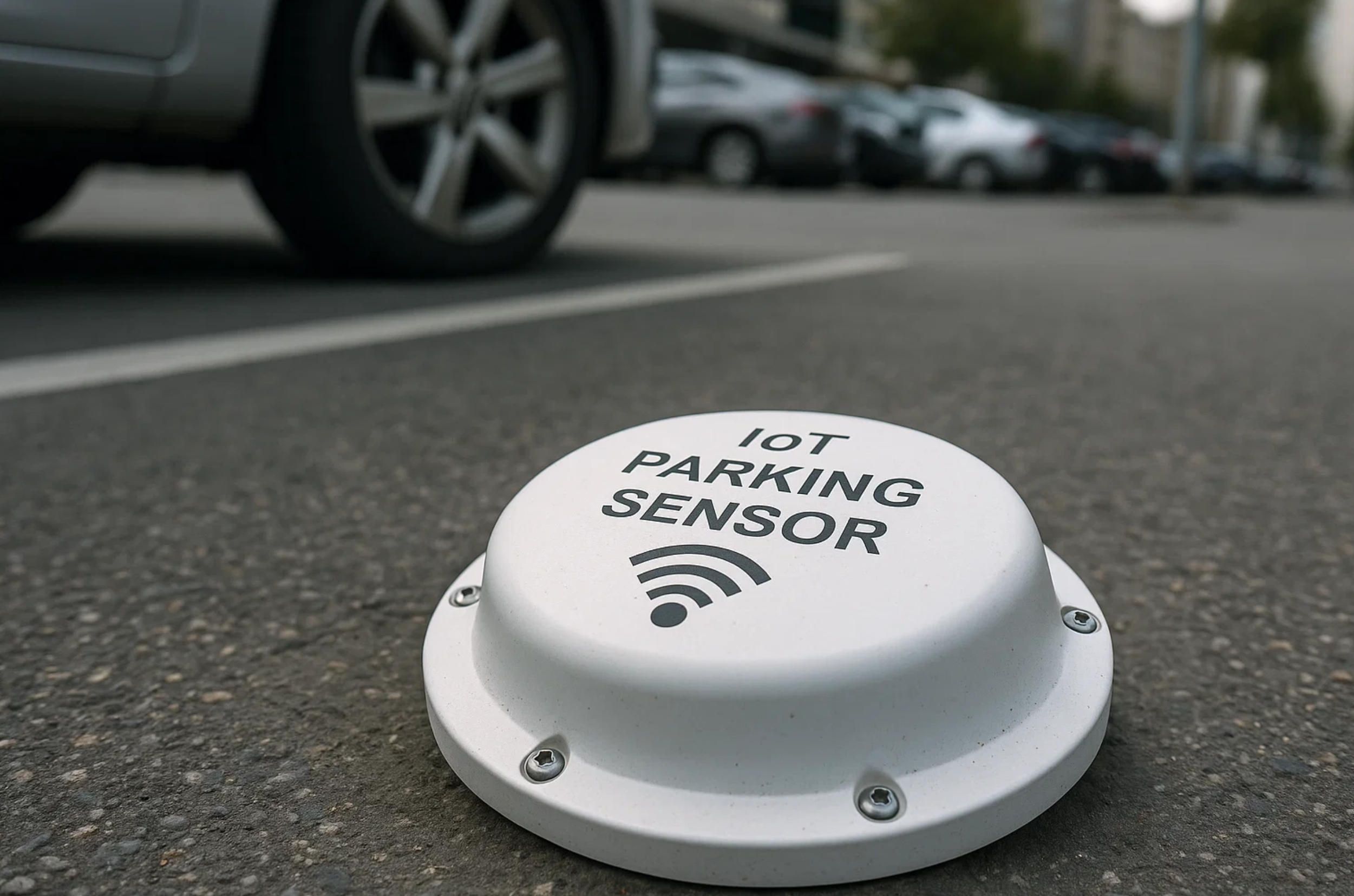
The Nwave Smart Parking Sensor offers LoRaWAN connectivity with 10-mile line-of-sight communication range, enabling deployment across large distributed facilities without extensive gateway infrastructure. The Fleximodo IoT Parking Sensor incorporates magnetometric and nanoradar detection with unique IoT Permit Card pairing capability, allowing vehicle-specific authentication.
The Datakorum PARK Sensor combines radar and magnetic technologies with NB-IoT cellular connectivity, eliminating private network deployment requirements. For projects requiring immediate cellular integration, this solution provides secure mobile communication with real-time data transmission.
Surface-Mounted vs. In-Ground Installation
Project implementation must consider installation methodology. Surface-mounted sensors like the RC4 Sigfox Parking Sensor offer 5-minute installation without civil works, ideal for temporary deployments or facilities where ground penetration is restricted. In-ground sensors provide cleaner aesthetics and reduced vandalism risk, critical for upscale projects.
Camera-Based Detection Systems
Computer vision represents a scalable approach, with single cameras monitoring multiple spaces simultaneously. The Raspberry Pi 4 Model B serves as an economical microcontroller platform capable of real-time vehicle detection across 4-6 parking spaces when paired with appropriate cameras.
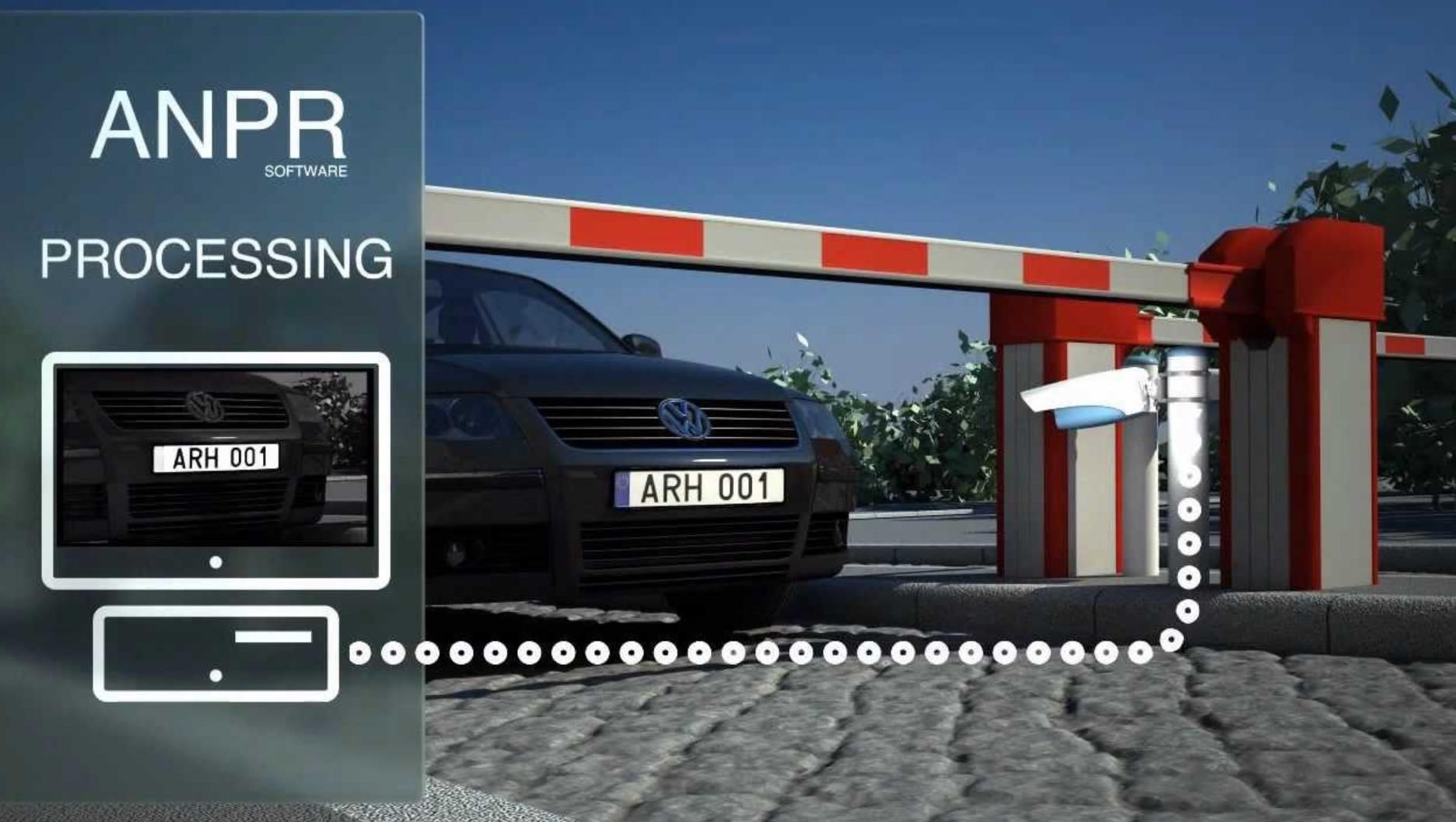
Implementing ANPR (Automatic Number Plate Recognition)
License plate recognition enables automated access control and payment processing. Recent research demonstrates 95% accuracy in daylight conditions, 90% in low-light environments, and 93% for angled plates using Raspberry Pi-based systems with optimized OCR algorithms.
Camera Specifications:
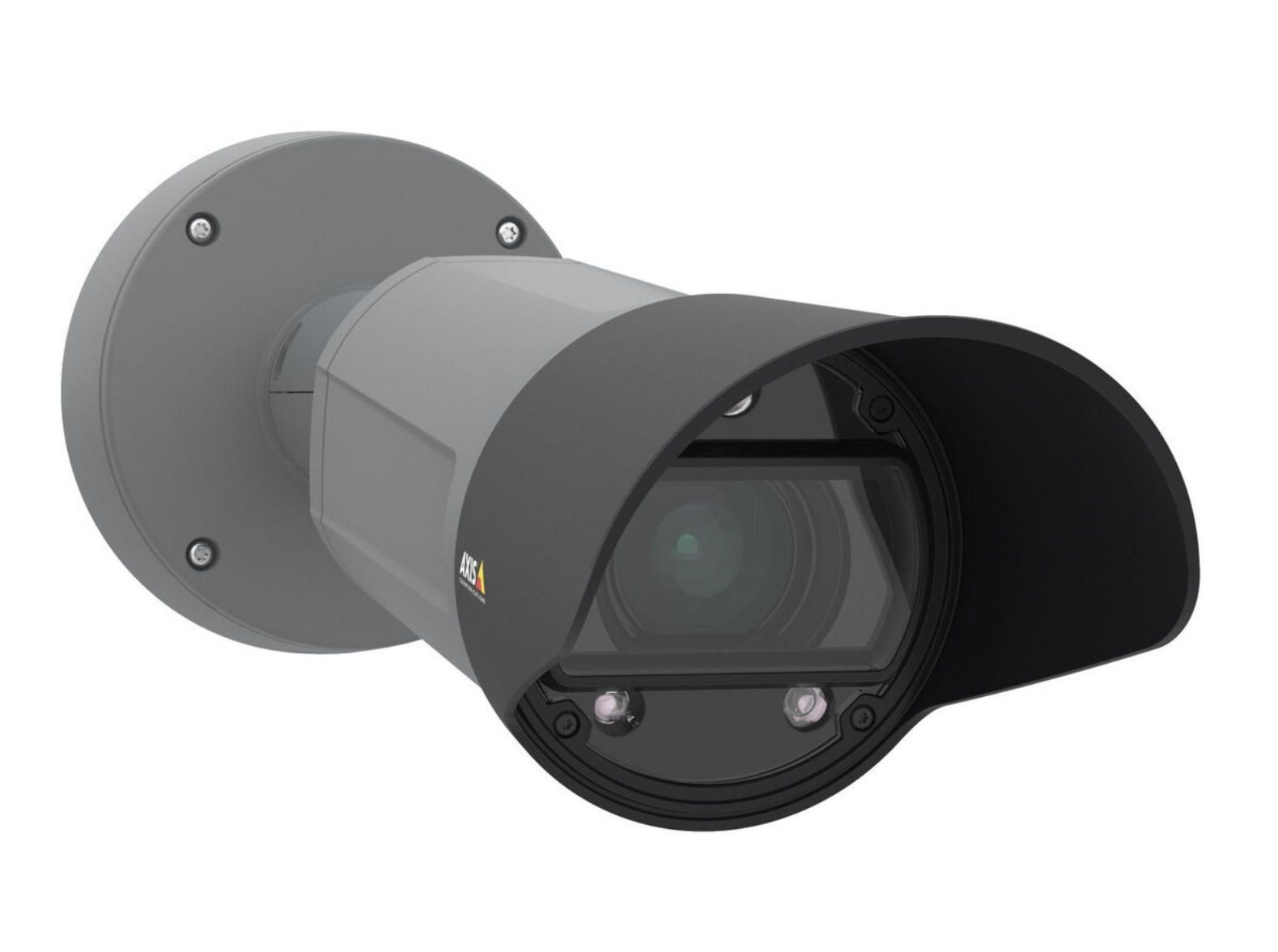
For mobile parking enforcement, the Tattile ANPR Mobile Camera mounts externally on vehicles with onboard OCR processing and WiFi connectivity. Fixed installations benefit from Axis Communications LPR Cameras with in-camera analytics, eliminating external processing requirements. The Parklio ANPR Camera captures 300 frames per second, ensuring zero quality degradation even with fast-moving vehicles.
Standard camera requirements:
- Minimum resolution: 2MP for reliable license plate capture
- Frame rate: 30fps minimum, 300fps optimal for high-traffic scenarios
- HDR capability: Essential for managing headlight glare and variable lighting
- IR illumination: Required for 24/7 operation
- Mounting height: 2.5-4 meters for optimal plate visibility
- Detection range: 1.5-3 meters minimum, up to 10 meters for advanced systems
Hybrid Camera + Sensor Approach
Advanced implementations combine cameras with individual space sensors for dual verification. Research published in Scientific Reports demonstrates that integrating IR sensors with camera systems reduces false positives while maintaining 88% detection accuracy at 3-meter distances. The ESP32 microcontroller manages sensor data communication to the Raspberry Pi processing unit via WiFi or serial connection.
This hybrid architecture is particularly valuable in challenging environments where neither system alone provides sufficient reliability. A-Bots.com recommends this approach for facilities requiring payment enforcement, where detection errors directly impact revenue.
Access Control Implementation
Automated Barrier Systems
Solutions for paid facilities or access-restricted areas require physical access control. Modern barrier technology ranges from simple smartphone-controlled units to high-security anti-ram installations.
Parklio Parking Barrier represents an ideal solution for small-to-medium projects. Key specifications:
- Rise/fall time: 4 seconds for rapid throughput
- Control methods: Smartphone app (Bluetooth Low Energy 50m range), key fob, manual pin
- Load capacity: 9 tons withstand, 4000N horizontal force resistance
- Power: Solar panel rechargeable batteries lasting 12 months per charge
- Vandal-proof safety pin mechanism: Absorbs excessive impact without permanent damage
- Digital key sharing: Temporary access permissions via mobile application
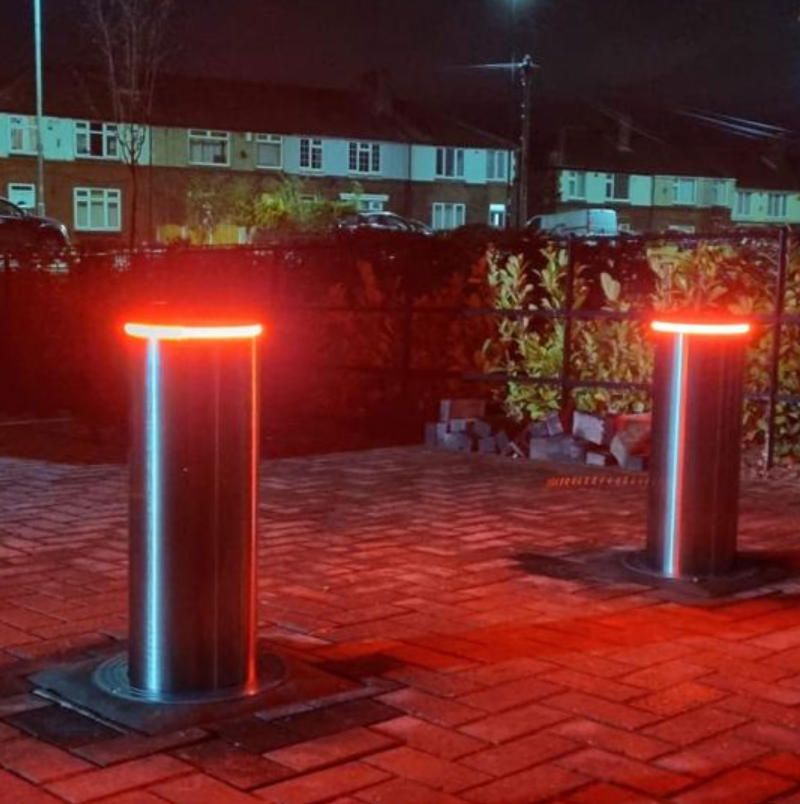
For projects requiring higher security, the FAAC J355 HA Automatic Bollard provides anti-terrorist grade protection:
- Cylinder dimensions: 800mm height, 275mm diameter
- Wall thickness: 7mm steel or 6mm stainless steel construction
- Impact resistance: 16,500 lbs at 28 mph in dual-unit configuration
- Operating time: 6-7 seconds rise/fall
- IP67 protection: Complete weather sealing
- Emergency fast operation: Available for security-critical parking app development
Hydraulic vs. Electromechanical Systems
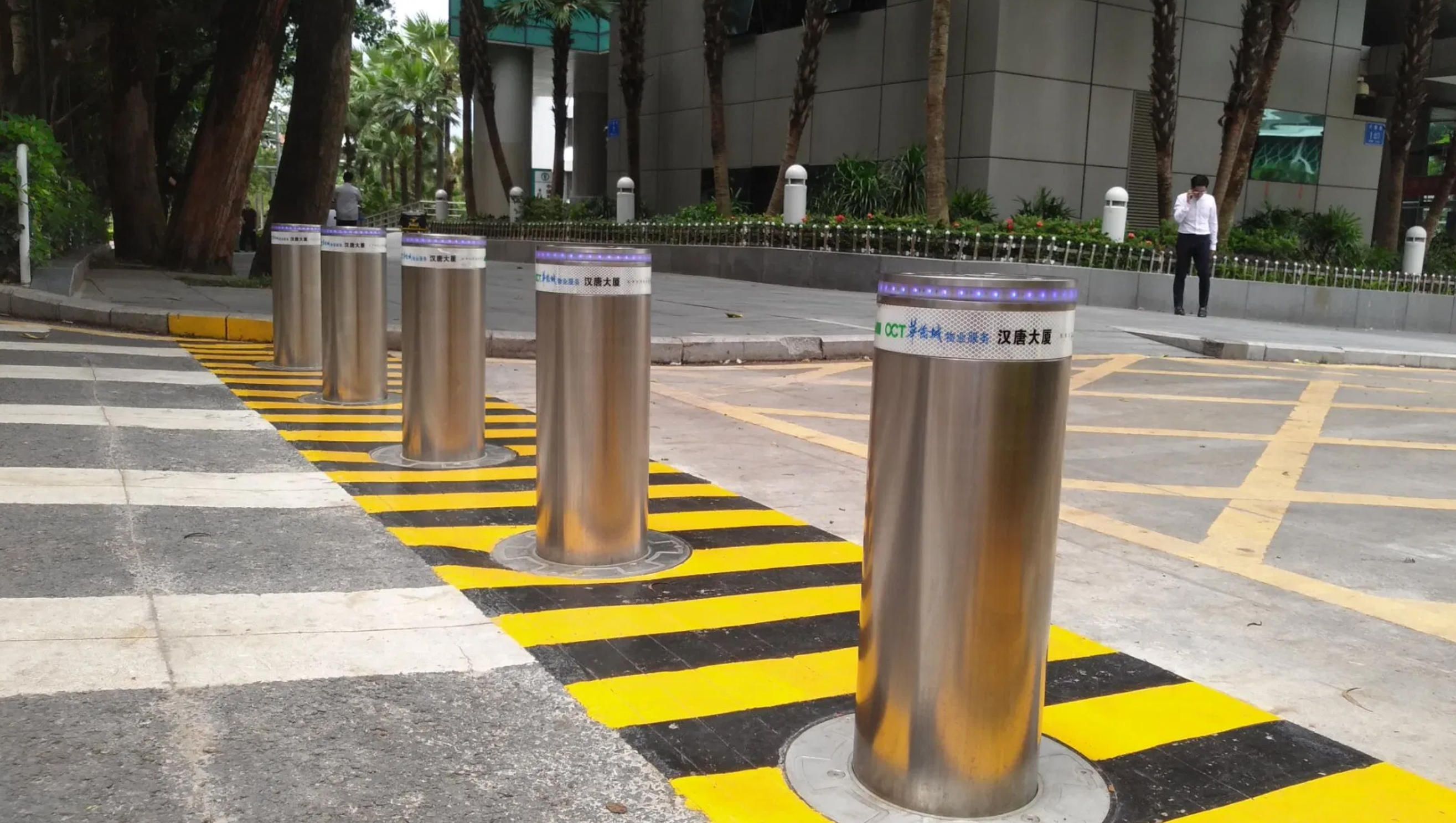
A-Bots.com utilizes hydraulic systems for heavy-duty installations requiring maximum reliability in extreme conditions. The Guangdong Lide Retractable Bollard employs built-in hydraulic technology with 304 stainless steel construction:
- Effective height: 600mm minimum
- Wall thickness: 6mm minimum
- Control voltage: AC220V input, DC24V output
- Control methods: Wireless remote (100m range), wired button, mobile app integration
- Surface finish: Brushed stainless steel with anti-slip gear pattern
Electromechanical alternatives like the Parklio Bollard offer lower maintenance requirements and simplified installation for projects prioritizing operational simplicity over maximum security.
Automated Barrier Gates
For higher-volume applications, traditional barrier gates provide cost-effective access control. The QUIKO ICARUS Series ranges from residential to intensive-use configurations:
- Boom length options: 2m to 8m for various lane widths
- Operating speed: 3-6 seconds full cycle
- Buffer battery backup: Continuous operation during power outages
- Integration capabilities: RFID, ticket systems, ANPR cameras
- Duty cycle: Up to 100% for continuous operation scenarios
Integration with Modern Systems:
Modern barrier systems communicate via Modbus TCP/IP, RS485, or dry contact relays, enabling seamless integration with custom applications. A-Bots.com implements API bridges connecting barrier controllers to cloud-based platforms, ensuring real-time access decisions based on mobile reservations, license plate matching, or payment status.
Visual Guidance Systems
For solutions emphasizing user experience without physical barriers, digital signage provides navigation and enforcement information.
LED Parking Guidance Displays
The Signal-Tech Smart Sign VMS Rebel Display offers full-matrix LED capabilities for projects requiring dynamic messaging:
- Display types: Amber or red monochrome, wide-angle super-bright LEDs
- Visibility: Optimized for direct sunlight readability
- Communication: Ethernet, RS485, or wireless connectivity
- Conformal coating: Environmental protection for outdoor installations
- Content control: Text, symbols, arrows, real-time counts
- Remote management: Centralized software updates across facility
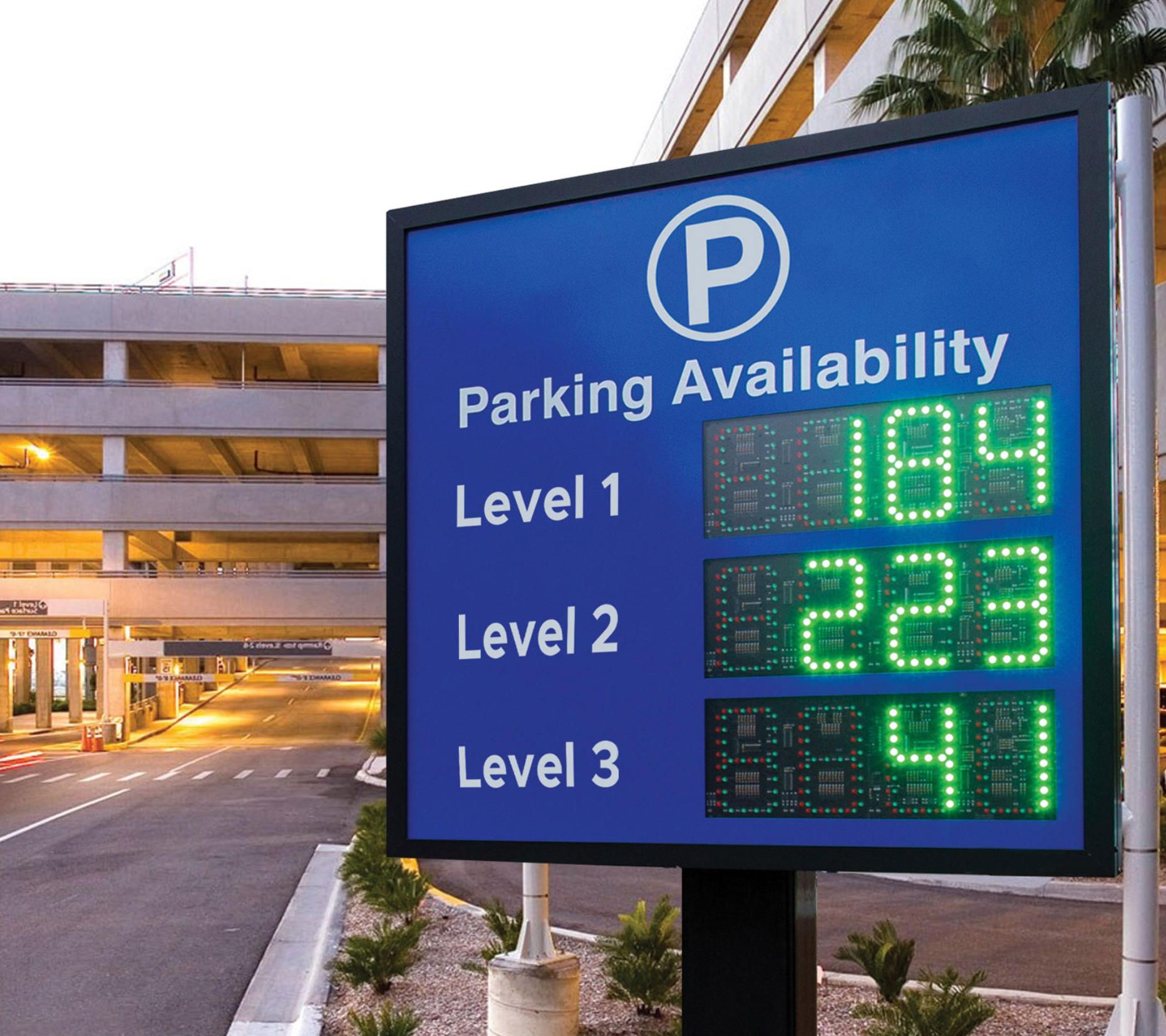
For basic systems, the TAPCO Parking Guidance System provides simplified space-available signage:
- Configuration: Single or double-face mounting
- Display options: Numeric counts, OPEN/FULL status, directional arrows
- Integration: Dry contact relay compatibility with most revenue control systems
- Construction: 5.5" depth aluminum cabinet with integrated access panel
Slot-Level Indicator Systems
Individual space guidance represents the most advanced approach. The Elefine LED Parking Space Guidance Display combines ultrasonic sensors with tri-color LED indicators:
- Space indication: Green (vacant), Red (occupied), Blue (reserved/disabled)
- Sensor type: Ultrasonic occupancy detection per space
- Communication: RS485 bus to central controller
- Display resolution: Configurable 64x32 or 32x16 LED matrix units
- IP54 rating: Indoor/outdoor installation flexibility
This approach reduces search time by 40% according to deployment studies, directly improving user satisfaction and facility throughput.
Scalability Considerations
Small Private Parking (10-50 Spaces)
Parking app development for boutique facilities prioritizes simplicity and cost-effectiveness. A-Bots.com recommends:
Hardware Configuration:
- Surface-mounted IoT sensors (Nwave or RC4) with LoRaWAN gateway
- 1-2 Parklio Barriers or smartphone-controlled bollards
- Single LED space-available sign at entrance
- Optional: Basic ANPR camera for access logging
Software Stack:
- Mobile app: iOS/Android with Bluetooth barrier control
- Admin dashboard: Real-time occupancy monitoring
- Payment integration: Stripe/PayPal for hourly/daily rates
- User management: Simple whitelist/blacklist for authorized vehicles
Development Timeline: 6-8 weeks including hardware installation and app deployment Approximate Investment: $8,000-$15,000 depending on sensor quantity and barrier selection
Medium Commercial Parking (50-200 Spaces)
Mid-scale parking app development introduces automation and analytics requirements:
Hardware Configuration:
- Ground-mounted dual-sensor units (Libelium or Fleximodo) with NB-IoT
- ANPR cameras at 2-4 entry/exit points with Raspberry Pi processing
- Automated barrier gates (QUIKO ICARUS) at main entrances
- LED guidance displays at decision points (TAPCO or Signal-Tech)
- Central server: Intel NUC or similar for local processing
Software Stack:
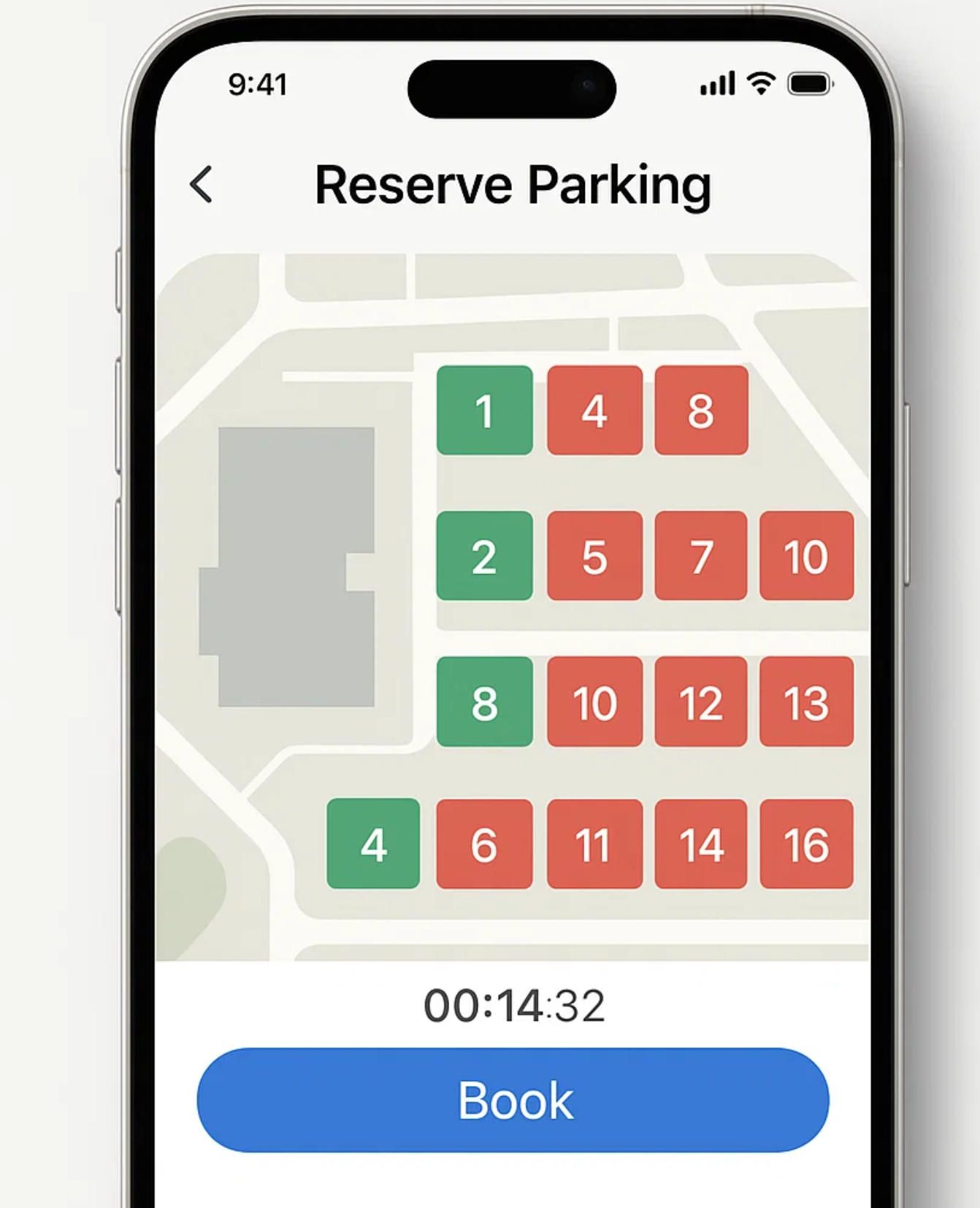
- Mobile app: Full reservation system with navigation
- ANPR integration: Automated entry for pre-registered vehicles
- Payment processing: Multiple payment methods, surge pricing capability
- Analytics dashboard: Peak hour analysis, revenue forecasting, utilization metrics
- API interfaces: Integration with property management or event systems
Development Timeline: 12-16 weeks including sensor network deployment Approximate Investment: $40,000-$120,000 depending on automation level
Large Municipal/Enterprise Parking (200+ Spaces)
City-scale parking app development demands high reliability and advanced features:
Hardware Configuration:
- Comprehensive sensor deployment (Datakorum PARK or equivalent) with cellular connectivity
- Multi-camera ANPR system (Axis Communications) with cloud processing
- High-security bollards (FAAC J355 HA) protecting restricted zones
- Full LED guidance network (Daktronics or Comsight) with dynamic routing
- Redundant server infrastructure with load balancing
Software Stack:
- Native mobile applications with offline capability
- Web portal for pre-booking and account management
- Advanced ANPR: 238+ country license plate recognition
- Dynamic pricing engine: Time-based, event-based, demand-based rate adjustments
- Integration APIs: City traffic management systems, third-party navigation apps
- Real-time analytics: Occupancy forecasting, maintenance alerts, violation detection
- Multi-language support: Internationalized user interface
Development Timeline: 20-32 weeks including phased rollout Approximate Investment: $200,000-$800,000+ depending on facility complexity
Residential Complex Use Case: Fair Distribution System
Parking app development for residential communities addresses unique challenges where traditional paid parking models are inappropriate. Residents require equitable access to limited spaces without monetary transactions.
Rotation-Based Allocation Algorithm
A-Bots.com implements sophisticated allocation algorithms for parking app development in multi-family housing:
Fair Chance Distribution: The system tracks historical parking patterns, ensuring residents who frequently lose the "parking lottery" receive priority in subsequent allocations. If Resident A has missed parking opportunities for three consecutive days, the algorithm increases their priority score for day four.
Time-Blocked Assignments: Parking app development can segment the day into blocks (overnight, daytime, weekend) with separate allocation pools, ensuring those who primarily need evening parking aren't competing with daytime-only residents.
Visitor Management Integration: The parking app development includes temporary permit issuance via the mobile app. Residents request guest passes specifying visit duration, automatically expiring after the designated period. Security receives notifications when visitor permits end.
Reserved Space Management: Parking app development accommodates permanent assignments for disabled residents or premium spaces while maintaining fair distribution of general-use spots.
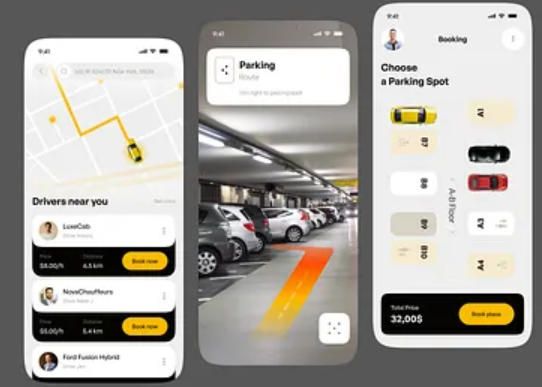
Technical Implementation for Residential Parking App Development
Sensor Configuration: Fleximodo sensors with IoT Permit Card pairing enable vehicle-specific detection. The parking app development knows not just whether a space is occupied, but which resident's vehicle occupies it.
No-Payment Gateway: Unlike commercial parking app development, the system requires no credit card processing. Authentication occurs via resident login tied to unit numbers in the property management database.
Violation Detection: When an unauthorized vehicle occupies a reserved space, the parking app development sends immediate notifications to property management and the authorized resident. The system logs violation duration for enforcement purposes.
Dispute Resolution: The parking app development maintains complete historical logs of allocations, rejections, and space utilization. Property managers access timestamped data resolving resident conflicts over parking fairness.
Administrative Dashboard Requirements:
- Unit-by-unit parking history and allocation fairness metrics
- Configurable rules for priority calculations
- Visitor permit management with automatic expiration
- Violation tracking and enforcement workflow
- Capacity planning tools showing peak demand patterns
- Integration with property management software (Yardi, AppFolio, Buildium)
Scaling Residential Parking App Development
A-Bots.com residential parking app development scales from 20-unit buildings to 500+ unit complexes. The allocation algorithm complexity increases with facility size, but the core fairness principles remain consistent.
Small Buildings (20-50 units): Simple first-come-first-served with manual override capability Medium Buildings (50-150 units): Historical tracking with automated priority adjustments Large Complexes (150+ units): Machine learning optimization considering resident schedules, visitor patterns, and seasonal variations.
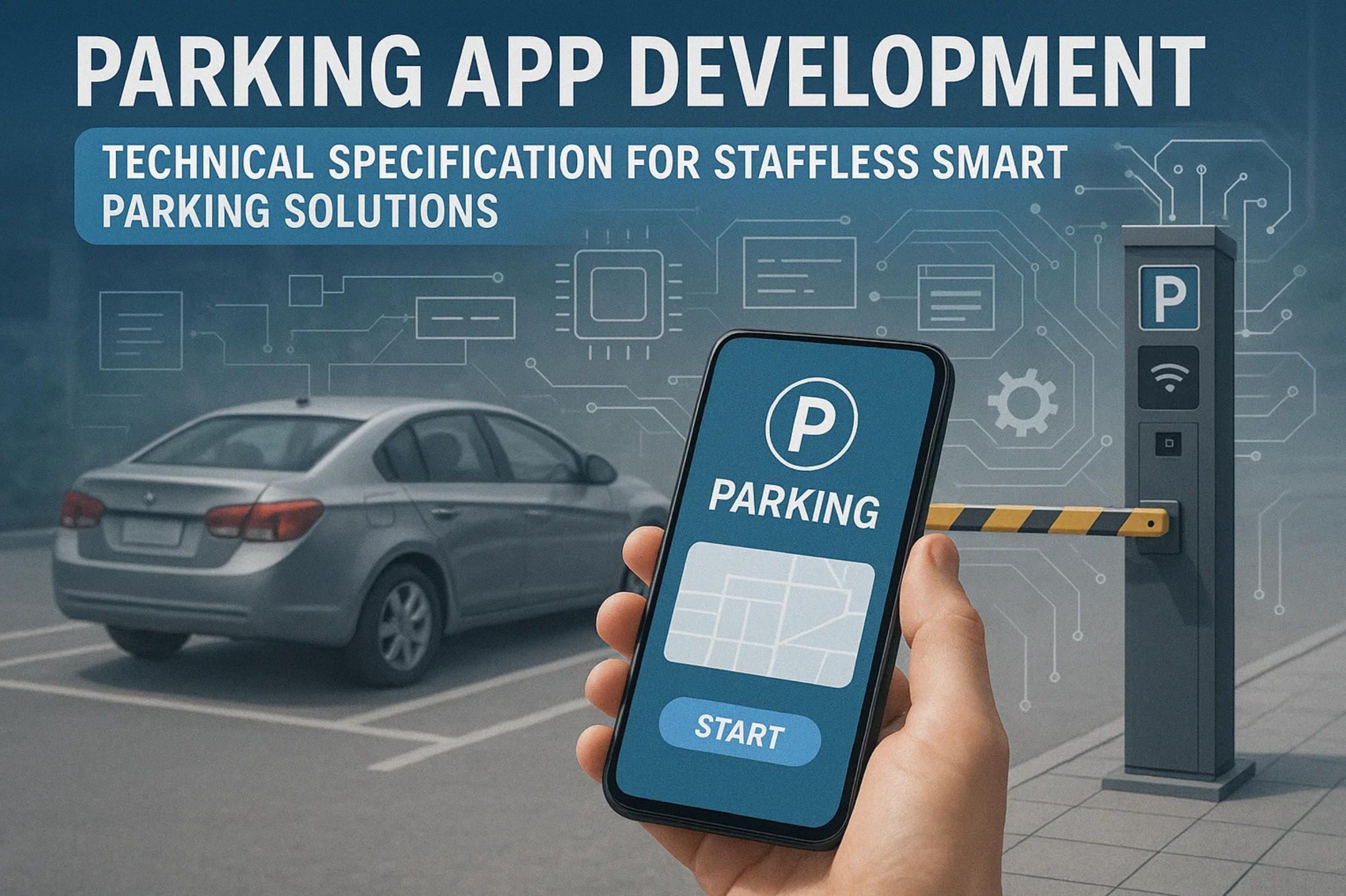
Payment Integration and Revenue Optimization
Commercial parking app development requires sophisticated payment processing beyond simple hourly rates.
Dynamic Pricing Engine
A-Bots.com parking app development implements demand-responsive pricing:
Time-Based Variations: Rates automatically adjust based on day/time, with higher prices during peak hours and special events. The parking app development connects to local event calendars, adjusting pricing when concerts, games, or conferences occur nearby.
Early-Bird Discounts: Reservations made 24+ hours in advance receive discounted rates, helping facility operators forecast demand and optimize resource allocation.
Duration-Based Pricing: The parking app development offers monthly subscriptions, multi-hour passes, or traditional hourly rates with seamless transitions between billing models.
Payment Processing Architecture
Gateway Integration: A-Bots.com parking app development connects with Stripe, Square, PayPal, and regional payment processors. The architecture supports multiple gateways simultaneously, with automatic failover ensuring continuous payment availability.
Pay-by-Plate Technology: ANPR cameras capture license plates at entry. When vehicles exit, the parking app development automatically charges the card associated with that plate. No tickets, no payment terminals, no user interaction required.
Parking Session Management: Users start parking sessions via mobile app when approaching the facility. The parking app development uses GPS geofencing to automatically end sessions when vehicles leave, preventing forgotten session closure and user frustration.
Alternative Revenue Models for Parking App Development
Permit-Based Systems: Monthly/annual permits with different tiers (24/7 access, business hours only, overnight only)
Validation Programs: Business integration where merchants validate parking, with the parking app development processing validation codes and billing merchants for the subsidy
Subscription Packages: Reserved space guarantees with add-on services (car washing, EV charging) bundled into monthly fees
Advanced Features for Parking App Development
Predictive Occupancy Algorithms
Machine learning integration enables parking app development to forecast availability. Historical data combined with real-time feeds (local events, weather, traffic patterns) generate predictions allowing users to plan arrival times when parking will be available.
Implementation requires:
- Minimum 6-12 months historical data collection
- Integration with external data sources (Google Calendar, weather APIs, traffic data)
- TensorFlow or similar ML framework deployment
- Continuous model retraining as patterns evolve
A-Bots.com parking app development includes ML capabilities for facilities wanting cutting-edge predictive features.
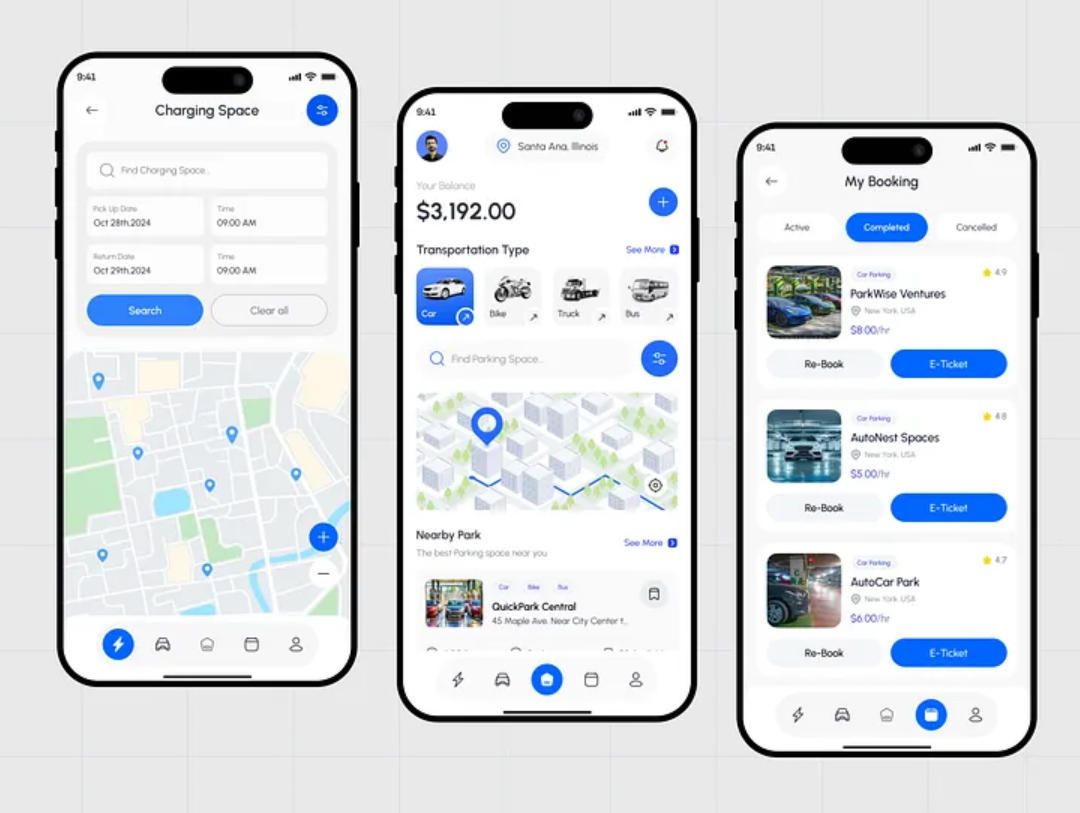
EV Charging Integration
Modern parking app development increasingly incorporates electric vehicle charging management:
Charging Station Reservations: The parking app development allows users to book EV spaces specifically, ensuring charging availability upon arrival.
Dynamic Charging Rotation: When demand exceeds charging station capacity, the parking app development implements rotation policies. After vehicles reach 80% charge or a specified time limit, users receive notifications to move vehicles, freeing charging stations for others.
OCPP Protocol Integration: A-Bots.com parking app development connects with OCPP 1.6J-compliant charging stations, enabling:
- Remote start/stop control
- Real-time charging status monitoring
- Usage-based billing separate from parking fees
- Charging session history and analytics
Supported Charging Networks: The parking app development integrates with ChargePoint, EVgo, and facility-specific charging infrastructure, providing unified management regardless of hardware vendor.
Sustainability Analytics
Environmental-focused parking app development tracks and reports:
- Vehicle miles saved through efficient parking (reduced circling time)
- EV charging utilization and equivalent carbon offset
- Space optimization reducing need for additional parking construction
- Comparison of current vs. previous manual operation carbon footprint
These metrics support corporate sustainability reporting and green building certifications (LEED, BREEAM).
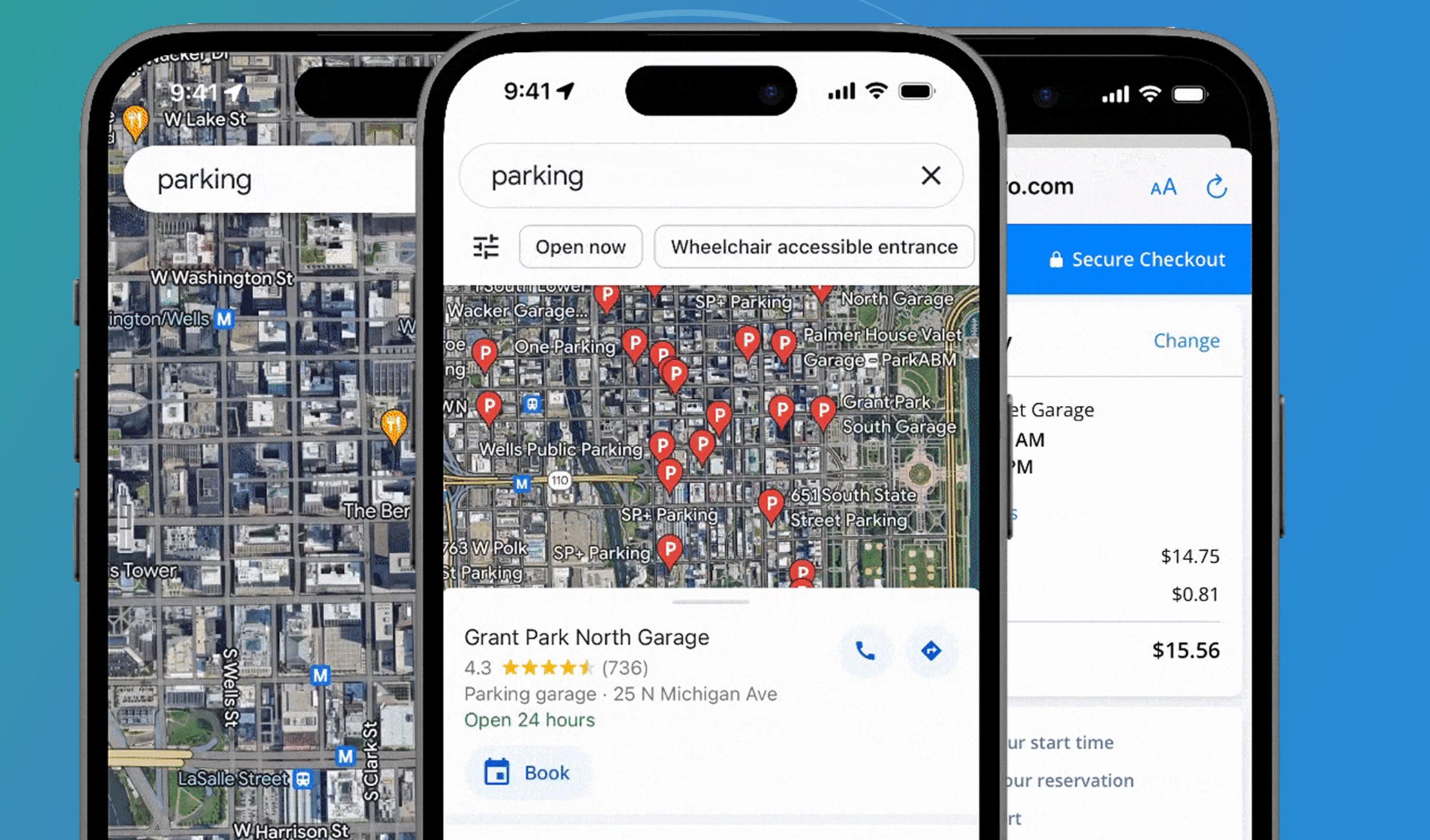
Testing and Quality Assurance for Parking App Development
A-Bots.com parking app development includes comprehensive testing protocols:
Hardware Validation
- Sensor accuracy testing across vehicle types (sedans, SUVs, trucks)
- Extreme temperature and weather condition verification
- Vandalism resistance and physical durability assessment
- Battery life validation under realistic usage patterns
- Communication reliability testing at maximum range
Software Testing
- Mobile app testing on iOS 15+ and Android 11+ devices
- Payment processing with all supported gateways
- ANPR accuracy across license plate formats
- Load testing simulating peak usage scenarios
- Security penetration testing and vulnerability assessment
- Accessibility compliance (WCAG 2.1 Level AA)
Integration Testing
- End-to-end reservation to access control workflow
- Barrier/bollard communication reliability
- Display update latency from sensor detection to signage
- Payment settlement timing and reconciliation accuracy
- Administrative dashboard data accuracy
User Acceptance Testing
- Beta deployment with controlled user group
- Usability testing with diverse demographic representation
- Customer support workflow validation
- Documentation review by non-technical stakeholders
Maintenance and Support
Successful parking app development includes long-term operational considerations:
Hardware Maintenance Schedule
- Quarterly sensor functionality verification
- Annual battery replacement for non-solar units
- Barrier/bollard mechanism lubrication (semi-annual)
- Camera cleaning and focus adjustment (quarterly)
- Display panel inspection and LED replacement as needed
Software Maintenance
- Monthly security patch deployment
- Quarterly feature updates based on user feedback
- Annual major version releases with new capabilities
- Real-time monitoring and alerting for system failures
- 24/7 support availability for critical issues
Warranty Coverage
- Sensors: Typically 2-5 years manufacturer warranty
- Barriers/Bollards: 18 months to 3 years depending on model
- Cameras: 2-3 years with extended warranty options
- Software: Lifetime updates for first year, then annual maintenance contracts
Custom Parking App Development Services
A-Bots.com recognizes that every parking facility has unique requirements. Our parking app development services extend beyond standard implementations:
Custom Algorithm Development: Unique allocation logic for specialized use cases (hospital staff priorities, university faculty vs. student parking, event venue VIP spaces)
Third-Party Integration: Connecting parking app development with existing facility management software, access control systems, or payment processors not in our standard integration library
White-Label Solutions: Complete parking app development under client branding, available in iOS/Android app stores under client accounts
Hybrid Online/Offline Capability: For facilities with unreliable connectivity, parking app development with local caching and synchronization ensures continued operation during network outages
Multi-Language Support: Parking app development localized for international markets with right-to-left language support (Arabic, Hebrew) and character set support (Chinese, Japanese, Korean)
Security and Privacy Considerations
Responsible parking app development addresses data security and user privacy:
Data Protection
- End-to-end encryption for payment information
- Anonymized analytics preserving user privacy
- GDPR compliance for European deployments
- CCPA compliance for California operations
- Secure credential storage using platform-native keystores
Access Control
- Role-based administrative access
- Audit logging of all administrative actions
- Multi-factor authentication for sensitive operations
- Regular security audits and penetration testing
Video/ANPR Data Retention
- Configurable retention periods (typically 30-90 days)
- Automatic purging of old footage
- Redaction capabilities for privacy-sensitive situations
- Compliance with local surveillance regulations
Project Delivery Timeline
Typical parking app development follows this phased approach:
Phase 1: Requirements and Planning (2-3 weeks)
- Facility assessment and measurement
- Hardware selection and specification
- Software requirements documentation
- Budget finalization and contracts
Phase 2: Design and Development (4-12 weeks)
- Mobile app development
- Backend system implementation
- Administrative dashboard creation
- Payment integration setup
- ANPR/sensor integration development
Phase 3: Hardware Procurement and Installation (3-6 weeks)
- Sensor/camera ordering and delivery
- Barrier/bollard installation
- Display mounting and configuration
- Network infrastructure setup
- Power and connectivity verification
Phase 4: Integration and Testing (2-4 weeks)
- System integration testing
- User acceptance testing
- Security assessment
- Performance optimization
- Bug fixes and refinement
Phase 5: Deployment and Training (1-2 weeks)
- Beta user onboarding
- Staff training for administrative functions
- Phased rollout to full user base
- Monitoring and support during initial operation
- Adjustment of algorithms based on real-world usage
Phase 6: Post-Launch Support (Ongoing)
- Bug fixes and patches
- Feature enhancements
- Hardware maintenance
- User support
Total parking app development timeline ranges from 12 weeks for basic implementations to 32+ weeks for complex, large-scale deployments.
Conclusion
A-Bots.com provides end-to-end parking app development services combining IoT hardware, computer vision, mobile applications, and intelligent algorithms. Whether developing a 20-space private lot or a 2,000-space municipal facility, our parking app development approach delivers scalable, maintainable solutions optimized for specific use cases.
Our parking app development philosophy emphasizes:
- Technology-appropriate solutions: Not every facility requires the most expensive sensors or complex algorithms
- Scalability: Systems designed to grow with facility needs
- Integration flexibility: Working with existing infrastructure where possible
- User experience: Intuitive interfaces for both drivers and administrators
- Reliability: Robust hardware and redundant systems ensuring continuous operation
From staffless paid parking lots to sophisticated residential distribution systems, A-Bots.com parking app development combines technical expertise with practical operational understanding. We don't just build applications—we create complete parking management ecosystems tailored to each client's unique requirements, budget, and vision.
For parking app development projects of any scale or complexity, A-Bots.com brings proven expertise, comprehensive hardware knowledge, and custom software capabilities. Contact us to discuss how our parking app development services can transform your parking facility into an intelligent, automated, user-friendly operation.
✅ Hashtags
#ParkingAppDevelopment
#SmartParkingTech
#IoTParkingSensors
#ANPRSystems
#ParkingAutomation
#LoRaWANParking
#ParkingManagement
#AutomatedBollards
#SmartCityParking
#ParkingSolutions
#ContactlessParking
#ParkingInnovation
Other articles
Portland Parking App: Custom Development Solutions for Smart City Infrastructure Portland manages over 20,000 metered parking spaces generating $42.1 million annually, yet faces growing infrastructure challenges. While Parking Kitty serves as the city's official Portland parking app, opportunities exist for enhanced solutions integrating IoT sensors, predictive analytics, and event-specific management. A-Bots.com specializes in custom Portland app development for smart parking systems, delivering scalable solutions for municipalities and private operators. With the smart parking market projected to reach $33.82 billion by 2033, Portland's infrastructure demands comprehensive applications addressing Rose Festival crowds, downtown congestion, and real-time availability guidance that current solutions don't fully provide.
ParkChicago, SpotHero and Custom Parking App Development in Chicago Comprehensive analysis of Chicago's parking application ecosystem, examining ParkChicago's official municipal system managing 36,000 metered spaces and SpotHero's commercial reservation platform serving 300+ cities. Explores custom mobile app development opportunities for parking operators, event venues, and municipalities seeking smart parking solutions. Covers technical architecture including IoT sensor integration, payment processing, license plate recognition, and dynamic pricing algorithms. Analyzes the $587 million U.S. parking meter apps market projected through 2035. Details A-Bots.com's capabilities in developing and testing parking applications for diverse stakeholders from single facilities to citywide networks.
Milwaukee App Development: Industrial Solutions for Manufacturing Hub Milwaukee app development addresses unique challenges in food manufacturing, water technology, and industrial tool management. This comprehensive guide explores mobile solutions for Milwaukee's key industries, from brewery inventory systems to IoT water monitoring platforms. Features detailed analysis of the Milwaukee ONE-KEY app, demonstrating how Milwaukee Tool revolutionized construction equipment management through Bluetooth tracking, remote lockout, and predictive maintenance. A-Bots.com specializes in custom Milwaukee app development, delivering enterprise solutions that integrate seamlessly with existing workflows. The article examines market trends showing mobile app development growing at 22.9% CAGR through 2032, highlighting opportunities for Wisconsin businesses to gain competitive advantages through strategic mobile implementations.
Raleigh App Development Services | Mobile and IoT Solutions 2026 Raleigh app development serves North Carolina's capital city where healthcare institutions, Research Triangle Park enterprises, and universities create diverse opportunities for specialized mobile applications. Duke Health and WakeMed healthcare systems require HIPAA-compliant patient engagement platforms, chronic disease management tools, and telemedicine solutions serving hundreds of thousands of patients annually. Research Triangle Park's 300+ companies employing over 50,000 people demand enterprise collaboration applications, research coordination platforms, and facility management systems. NC State University's 37,323 students need campus navigation, course management, dining services, and wellness applications. A-Bots.com delivers custom Raleigh app development with expertise spanning iOS and Android platforms, backend infrastructure, electronic health record integration, and regulatory compliance. The company's 70+ completed projects demonstrate capabilities across mobile applications, web development, IoT solutions, and blockchain integration. Long-term client relationships spanning up to 5 years ensure sustained technical support beyond initial deployment. Raleigh's emergence as the second-best performing U.S. city drives accelerating demand for sophisticated mobile applications.
Atlanta Mobile Developers: Custom iOS and Android Solutions Atlanta mobile developers at A-Bots.com deliver custom iOS, Android and IoT solutions for FinTech, logistics, and healthcare industries. With 70+ completed projects and client relationships spanning 1.5-5+ years, our team specializes in payment processing applications, transportation tracking systems, and aviation technology serving Atlanta's position as home to 260+ FinTech companies and Hartsfield-Jackson International Airport. We build enterprise-grade applications using React Native, Flutter, Swift, and Kotlin frameworks while providing comprehensive testing services including security audits, performance optimization, and QA validation ensuring applications meet regulatory compliance and user experience standards.
Austin App Development Company | Custom Mobile Apps A-Bots.com Austin has earned its reputation as Silicon Hills, ranking fifth among North American tech markets with nearly 100,000 tech professionals driving innovation across AI, cybersecurity, and mobile development. For businesses seeking an Austin app development company, the city offers unparalleled access to world-class talent, venture capital investment exceeding $2.2 billion in 2024, and a thriving startup ecosystem of 5,500 companies. This comprehensive guide explores why Austin became a tech powerhouse, examines development costs ranging from $10,000 MVPs to $200,000+ enterprise platforms, and highlights industry verticals where local developers excel. Whether you need custom mobile applications, IoT integrations, or comprehensive QA testing, partnering with an experienced Austin app development company like A-Bots.com positions your business for digital transformation success.
Top stories

Copyright © Alpha Systems LTD All rights reserved.
Made with ❤️ by A-BOTS