
Home
Services
About us
Blog
Contacts
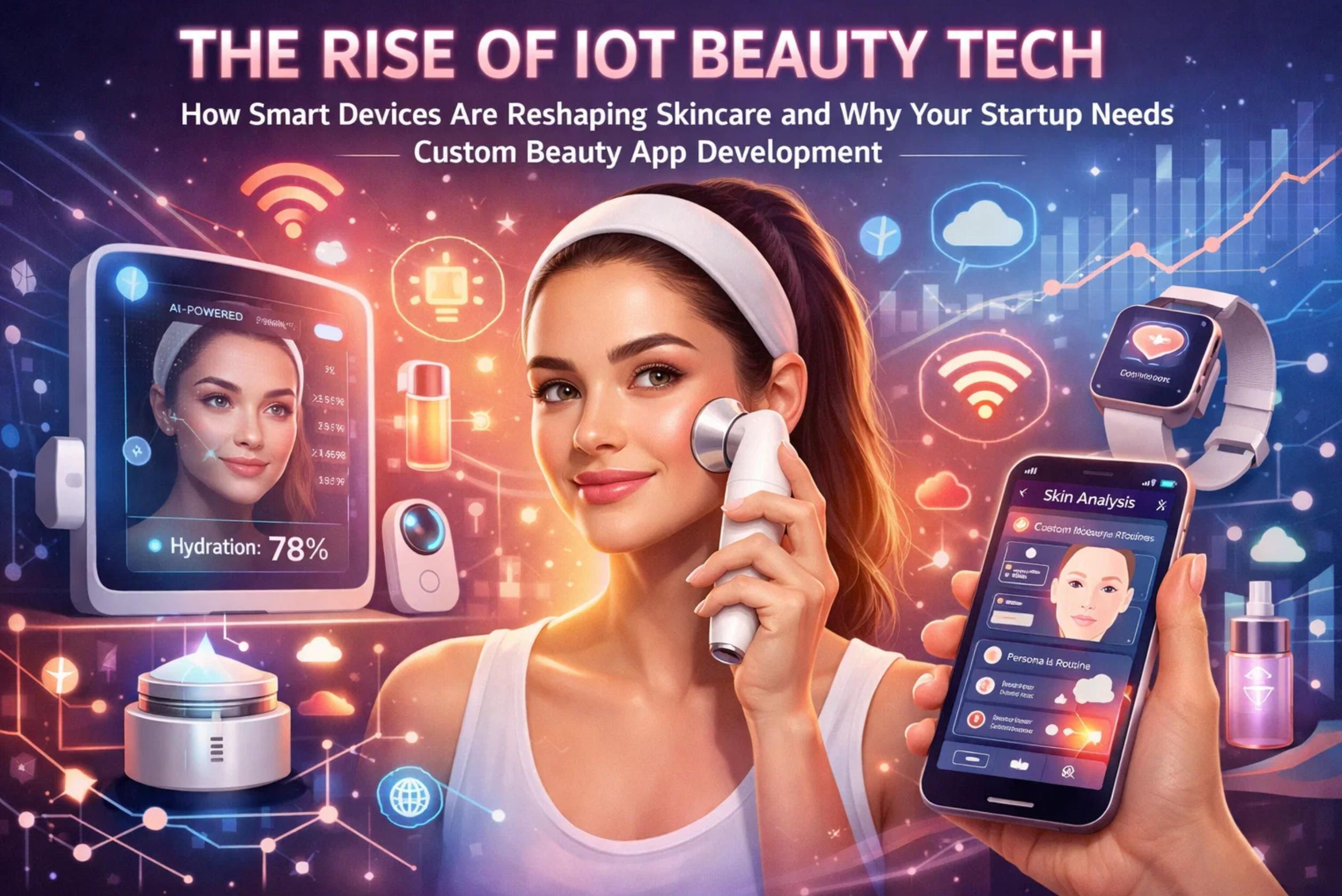
The Rise of IoT Beauty Tech: How Smart Devices Are Reshaping Skincare and Why Your Startup Needs Custom Beauty App Development
The beauty industry has officially entered its science fiction era. Gone are the days when skincare meant slathering some mysterious cream on your face and hoping for the best. Today, your facial device probably has more computing power than the Apollo 11 spacecraft, connects to your smartphone via Bluetooth, and knows more about your skin than your dermatologist. Welcome to the wild world of IoT beauty tech, where silicon meets silicone, and algorithms meet anti-aging.
Your Vision, Our Code: A-Bots.com Makes Beauty Tech Dreams Reality
At A-Bots.com, we have spent over a decade transforming ambitious ideas into polished digital products. With more than 70 successful projects under our belt and client relationships spanning from 1.5 to over 5 years, we understand that beauty app development is not just about writing code. It is about creating experiences that make users feel like they have a personal skincare scientist in their pocket. Whether you are a startup founder with a revolutionary IoT beauty device concept or an established brand looking to digitize your customer experience, our team specializes in building the sophisticated mobile applications and backend systems that power tomorrow's beauty innovations.
Our expertise in IoT integration means we speak fluent Bluetooth Low Energy, understand the intricacies of real-time skin analysis algorithms, and know exactly how to create seamless connections between smart beauty devices and intuitive mobile interfaces. From custom firmware development to cloud-based data analytics platforms, A-Bots.com delivers end-to-end beauty app development solutions that help brands stand out in an increasingly competitive market. We have seen Korean beauty tech companies transform from garage startups into billion-dollar unicorns, and we know what separates successful beauty apps from digital duds.
The beauty tech revolution is not waiting, and neither should you. Whether you need a companion app for your new microcurrent device, an AI-powered skin analysis platform, or a complete e-commerce ecosystem with AR try-on capabilities, A-Bots.com has the technical chops and industry knowledge to bring your vision to life. Our approach to beauty app development combines cutting-edge technology with deep understanding of what makes beauty consumers tick. We do not just build apps; we build the digital experiences that turn first-time users into loyal brand advocates.
The Beauty Tech Gold Rush: A Market Overview That Will Make Your Accountant Smile
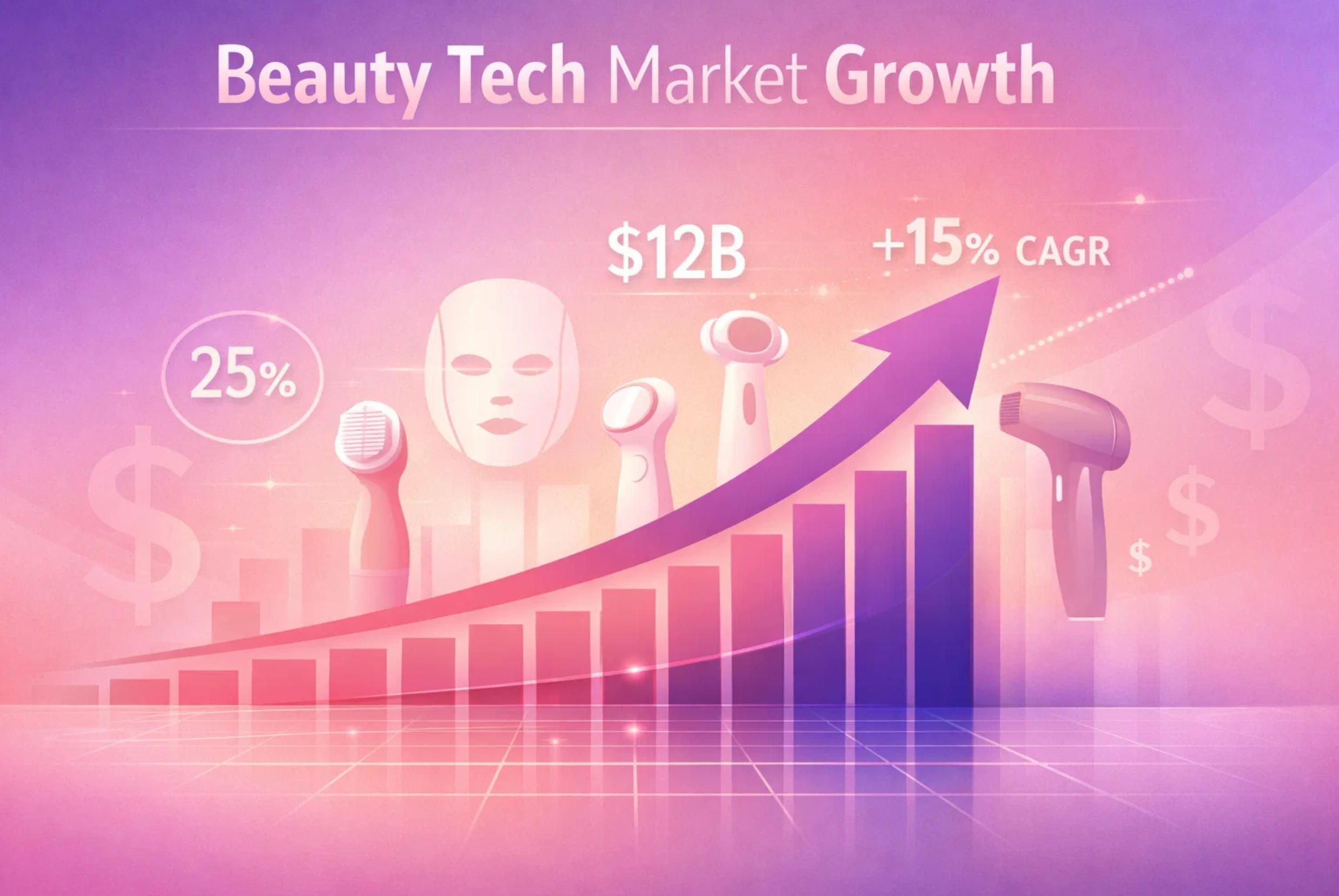
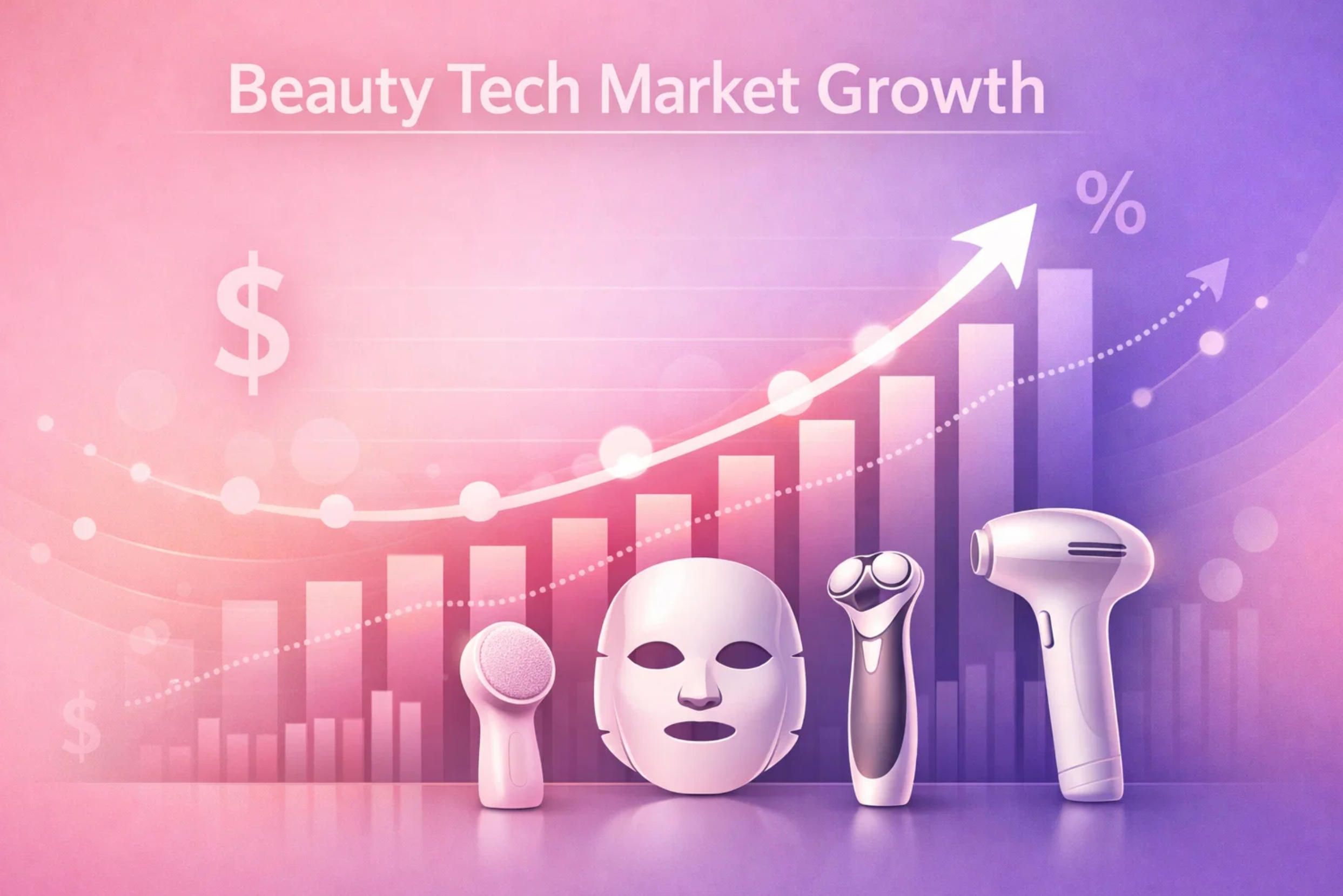
Let us talk numbers, because in the beauty tech world, the numbers are absolutely bonkers. The global beauty tech market reached $68.87 billion in 2024 and is projected to balloon to $129.87 billion by 2029, growing at a compound annual growth rate of 13.1%. If that does not get your entrepreneurial juices flowing, consider this: the smart beauty devices segment alone was valued at $24.5 billion in 2024 and is expected to nearly triple to $57.3 billion by 2033. These are not incremental gains; this is explosive growth territory.
The United States has emerged as the epicenter of this beauty tech tsunami, with the market expected to grow at a CAGR of 16.0% from 2025 to 2030. Skincare devices dominate the landscape, accounting for over 38% of revenue share in 2024. The reason is simple: consumers are willing to pay premium prices for devices that promise professional-grade results in the comfort of their bathrooms. The pandemic accelerated this trend dramatically. When people could not visit their aestheticians, they brought the aesthetician home in the form of LED masks, microcurrent devices, and smart facial cleansers.
The real magic happens when we examine the intersection of beauty and IoT. Connected beauty devices are transforming from novelty items into essential skincare tools. These gadgets do not just perform treatments; they analyze skin conditions, track progress over time, recommend personalized routines, and even order replacement products automatically. This creates unprecedented opportunities for beauty app development, as every smart device needs a brilliant companion app to unlock its full potential.
K-Beauty Takes Over: The TikTok-Fueled Revolution Redefining Global Skincare
If you have not been paying attention to the Korean beauty invasion, now would be an excellent time to start. K-beauty sales in the United States are expected to exceed $2 billion in 2025, representing a jaw-dropping 37% increase from the previous year. While the broader beauty market plods along at single-digit growth rates, K-beauty is operating in an entirely different dimension.
The statistics tell a compelling story. In the first half of 2025, South Korea shipped a record $5.5 billion worth of cosmetics globally, officially surpassing France as the leading cosmetics exporter to the United States. This is not just about sheet masks and snail mucin anymore. Korean beauty companies are leading the charge in beauty app development and smart device innovation, combining centuries-old skincare wisdom with bleeding-edge technology.
TikTok has emerged as the secret weapon in K-beauty's arsenal. Searches for "Korean skin care" on the platform surged 180% year-over-year, and six of the top ten skincare brands by TikTok views growth are K-beauty brands. The hashtag #kbeautymakeup grew 85%, transforming TikTok into the primary discovery platform for beauty trends. This is where beauty app development meets viral marketing, and the results are spectacular.
What makes this particularly relevant for beauty app development is the way Korean brands have embraced technology. Unlike traditional beauty companies that view apps as afterthoughts, K-beauty brands are building entire ecosystems around their connected devices. They understand that creating compelling digital experiences is not just about developing instruction manuals; it is about building communities, tracking results, and creating personalized experiences that keep users coming back.
Meet the Booster Pro: How a Korean Startup Created the iPhone of Skincare Devices
Every industry-changing product has an origin story, and the Medicube Age-R Booster Pro has one of the most impressive in recent beauty tech history. To understand how this device became a viral sensation that helped make its founder a billionaire, we need to go back to 2014, when a young exchange student in California named Kim Byung Hoon decided to pivot from mobile apps to beauty products.
Kim founded APR Corp. in 2014, initially focusing on cosmetics through the AprilSkin brand. The company quickly realized that competing on cosmetics alone in markets like China was a losing battle, as local brands could produce similar products at lower costs. So in 2016, they launched Medicube, and in 2021, made a strategic leap that would change everything: they entered the beauty device market with the Age-R line. This pivot from cosmetics to beauty tech represents a masterclass in beauty app development strategy, recognizing that hardware plus software plus community equals unstoppable growth.
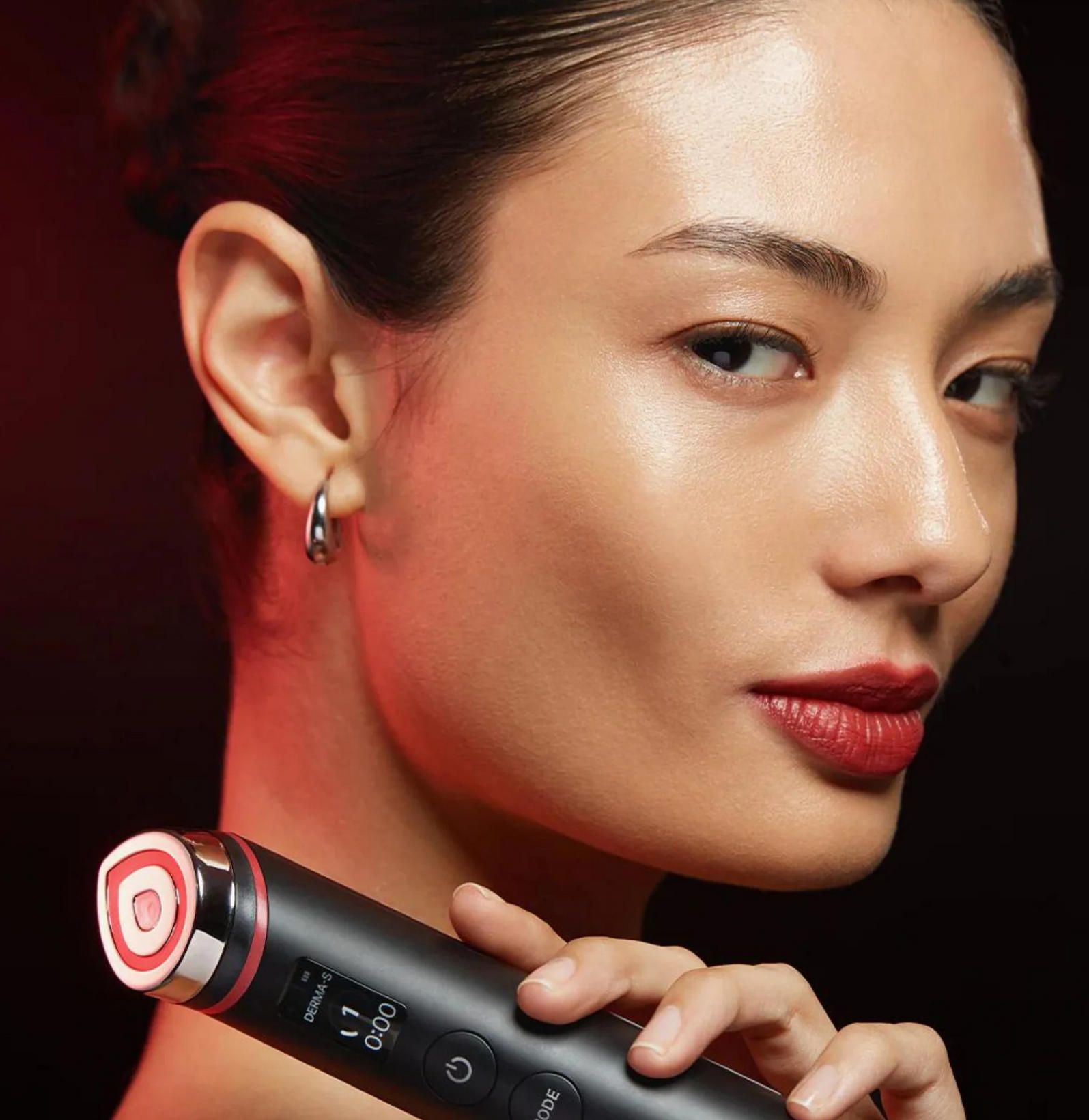
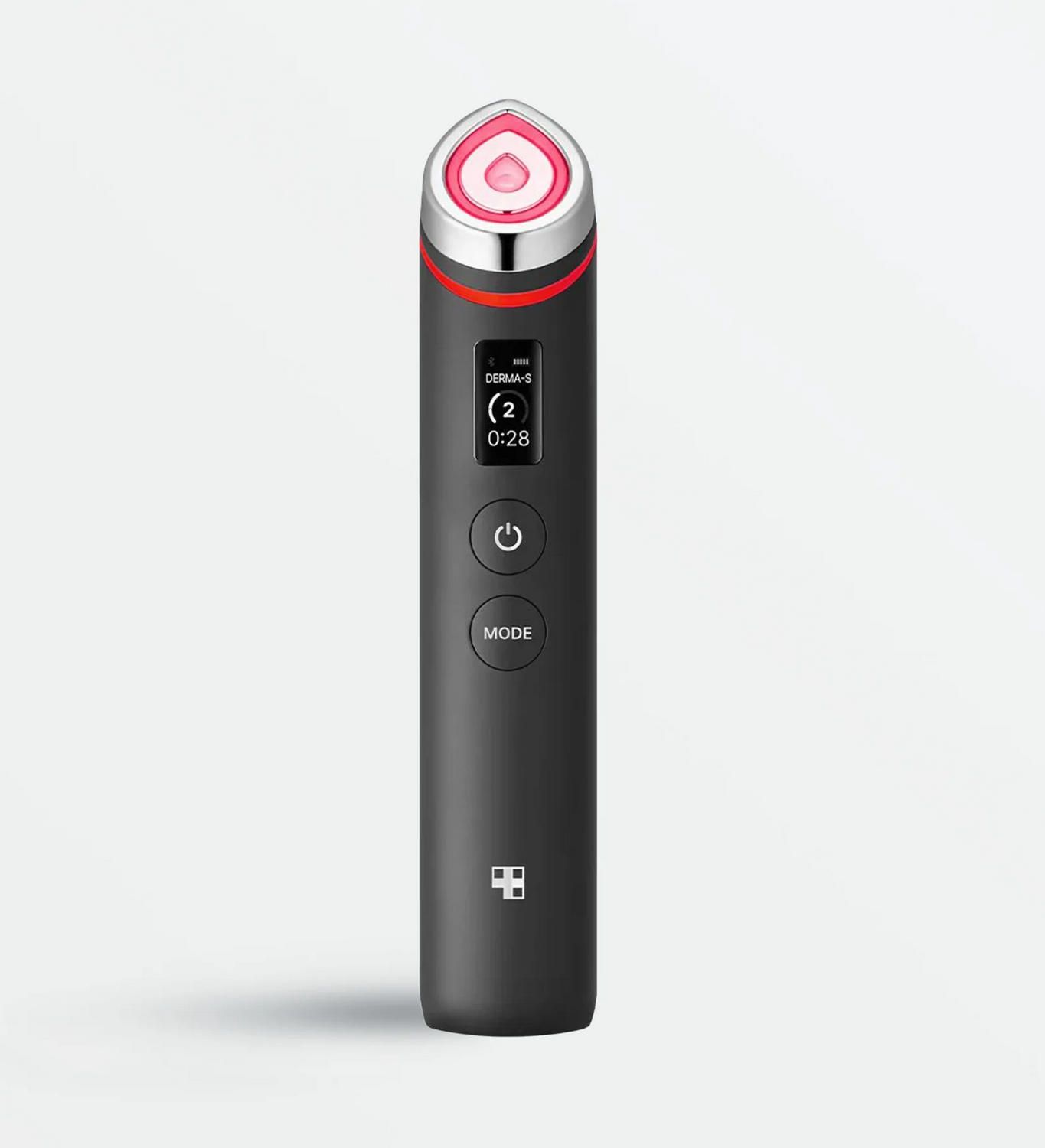
The Age-R Booster Pro, launched in 2023, represents Medicube's seventh beauty device and the culmination of everything the company learned about what consumers actually want. This is not just another facial gadget; it is a 6-in-1 powerhouse that combines electroporation, microcurrent, EMS (electrical muscle stimulation), electric needle technology, LED therapy, and sonic vibrations into a single, elegant device. Each technology serves a specific purpose, from enhancing product absorption to stimulating collagen production to providing non-invasive facial contouring.
What truly sets the Booster Pro apart in the beauty app development landscape is its sophisticated companion application. The AGE-R app connects via Bluetooth and transforms a powerful hardware device into an intelligent skincare ecosystem. Users can create custom treatment routines, follow guided tutorials, track their progress with before-and-after photos, and even connect with other users to share tips and results. The app essentially functions as a personal skincare coach that lives in your pocket, demonstrating exactly why excellence in creating companion apps matters.
The Technology Behind the Magic: Understanding How IoT Beauty Devices Actually Work
Let us get a bit technical, because understanding how these devices work is crucial for anyone interested in beauty app development. The Medicube Age-R Booster Pro operates across four primary modes, each utilizing different combinations of its six core technologies. Understanding these modes helps explain why building apps for such devices requires sophisticated software architecture.
Booster Mode leverages electroporation technology to create temporary passageways in the skin barrier, allowing active skincare ingredients to penetrate up to 20 times deeper than traditional topical application. The device uses precisely calibrated electrical pulses to momentarily increase cell membrane permeability without causing damage. From a development perspective, this mode requires careful tracking of treatment duration, intensity levels, and the specific products being used to ensure optimal results.
MC Mode (Microcurrent) employs low-level electrical currents to stimulate facial muscles and boost ATP production, the cellular energy molecule that powers collagen and elastin synthesis. The currents mimic the body's natural bioelectrical signals, essentially giving your facial muscles a workout without the sweating. For app developers, this creates opportunities to gamify the treatment process, tracking "facial fitness" metrics over time.
Derma Shot Mode utilizes EMS technology with mid-frequency electrical stimulation optimized for facial muscles. Unlike microcurrent which works at the cellular level, EMS causes actual muscle contractions, providing facial contouring effects similar to those achieved through professional treatments. The companion app challenge here involves creating visualizations that help users understand the difference between modes and when to use each.
Air Shot Mode employs needle-free technology that uses electric pulses to create micro-channels in the skin, mimicking the effects of professional microneedling without the pain, downtime, or risk of infection. This mode is particularly effective for improving pore elasticity and skin texture. From a software development standpoint, this requires clear guidance on usage frequency and contraindications, as the technology is more aggressive than the other modes.
The IoT Architecture: What Powers a Smart Beauty Device
For developers and entrepreneurs interested in beauty app development, understanding the technical architecture of IoT beauty devices is essential. The Medicube Age-R Booster Pro exemplifies modern IoT beauty device design, with several key components working in harmony.
At the hardware level, the device contains multiple specialized circuits for each of its six technologies. The electroporation system requires precise pulse generation capable of creating microsecond-duration electrical pulses. The microcurrent system uses lower-frequency alternating currents, while the EMS system requires higher-frequency stimulation patterns. LED arrays deliver specific wavelengths for different therapeutic effects: red light for collagen stimulation, blue light for acne treatment, and green light for brightening.
The communication layer uses Bluetooth Low Energy (BLE) to connect with the companion app. BLE is the de facto standard for building connected beauty apps, offering the perfect balance of low power consumption, sufficient data throughput for real-time device control, and universal smartphone compatibility. The device implements a custom GATT (Generic Attribute Profile) that defines the communication protocol between the hardware and the app.
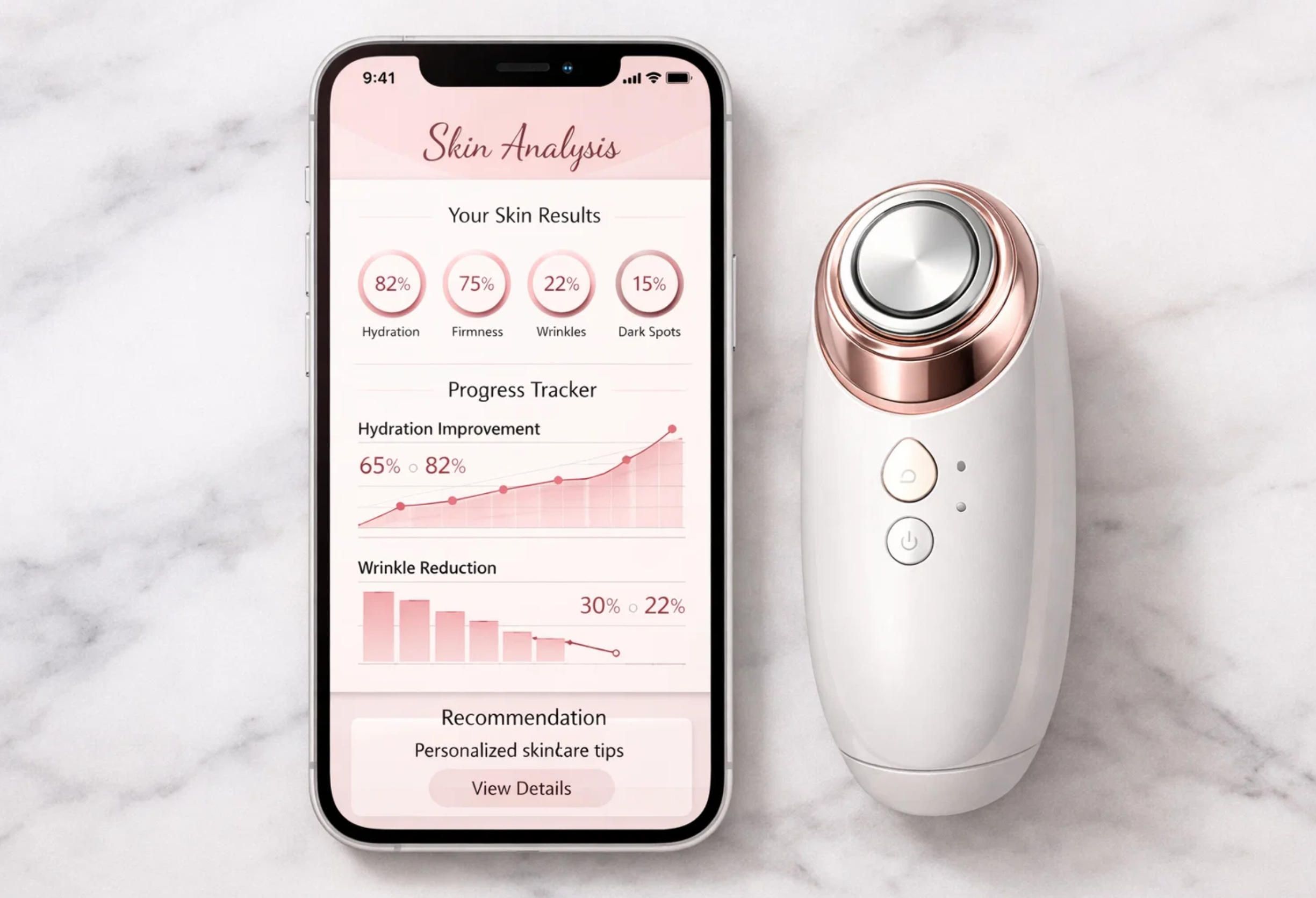
On the software side, the AGE-R app handles device pairing, firmware updates, treatment program management, and progress tracking. The app communicates with cloud servers to enable features like user community interaction, treatment recommendations, and aggregate analytics. This cloud connection is where beauty app development gets interesting, as it enables continuous product improvement through data analysis and over-the-air feature updates.
The Business Model Innovation: Why Hardware Plus Software Equals Billions
APR Corp.'s journey from obscure Korean startup to $6 billion market cap giant offers a masterclass in modern beauty tech business strategy. The company's success demonstrates why excellence in building companion apps is not just a nice-to-have but a fundamental requirement for building lasting value in the beauty tech space.
The magic formula combines high-margin hardware sales with recurring revenue from consumables and digital services. When you purchase a Medicube device for around $210-480 depending on the model, that's just the beginning of your relationship with the brand. The companion app drives users back to purchase skincare products optimized for use with the device, creating a virtuous cycle of engagement and revenue.
TikTok has been instrumental in driving this growth, with Medicube becoming the first K-beauty brand to host a Super Brand Day on TikTok Shop US in March 2025. The brand's TikTok presence has generated over $102 million in total sales, with 33,000+ creators actively promoting their products. This viral marketing success is directly enabled by excellent companion applications, as users naturally share their tracking screenshots and before-and-after photos generated by the app.
The "CEOppa" phenomenon deserves special mention. Kim Byung Hoon, APR's founder, has become a TikTok personality himself, earning the affectionate nickname "CEOppa" (combining "CEO" with the Korean term "Oppa"). This humanization of the brand, combined with sophisticated beauty app development that enables community features, has created emotional connections that transcend typical brand-consumer relationships. Medicube's success shows that building digital beauty experiences must consider not just functionality but also shareability and community building.
Celebrity Endorsements and Viral Moments: The Marketing Rocket Fuel
In late 2023, something remarkable happened: Hailey Bieber posted unprompted about using Medicube's gel mask on social media. This organic celebrity endorsement triggered a chain reaction that would transform APR from a regional player into a global phenomenon. The company did not just get lucky; they had built a product worthy of celebrity attention through meticulous digital development and hardware engineering.
The Hailey Bieber moment opened doors for formal partnerships with even bigger names. In 2024, APR launched major campaigns featuring Kylie Jenner, Kendall Jenner, and Khloe Kardashian. A 15-second TikTok clip of Kylie Jenner using the Booster Pro has racked up millions of views, single-handedly introducing the device to audiences who might never have encountered K-beauty tech otherwise.
These celebrity moments demonstrate why companion apps must include robust social sharing features. When Kylie Jenner uses a beauty device, millions of followers want to replicate her routine. A well-designed companion app makes it easy to share which mode was used, at what intensity, with which products, and for how long. This transforms every celebrity endorsement into a detailed tutorial that drives product adoption.
The retail expansion following this viral success has been equally impressive. Medicube products are now available in Ulta Beauty stores across the United States, with Ulta reporting a 38% increase in K-beauty category sales. This omnichannel success is enabled by sophisticated app development that creates consistent user experiences whether customers discover the brand on TikTok, Amazon, or at their local Ulta.
The Startup Opportunity: Why Now Is the Perfect Time for Beauty App Development Innovation
For entrepreneurs and established brands alike, the current beauty tech landscape presents extraordinary opportunities for those with strong beauty app development capabilities. Several factors are converging to create a perfect storm for innovation.
First, consumer acceptance of beauty tech has reached critical mass. The pandemic broke down psychological barriers to at-home beauty treatments, and users have discovered they actually prefer the convenience and privacy of home-based skincare routines. A recent survey found that 70% of K-beauty sales now happen online, with companion apps serving as the primary interface between brands and consumers.
Second, the technology has matured significantly. Bluetooth Low Energy is now standard on all smartphones, cloud infrastructure costs have plummeted, and AI/ML capabilities are accessible to developers of all sizes. This means that a small team with strong beauty app development skills can create experiences that rival those of major beauty conglomerates.
Third, there is still enormous whitespace in the market. While Medicube and a handful of other brands have shown what's possible, most beauty devices on the market still ship with primitive apps or no apps at all. This creates opportunities for both hardware startups that prioritize app development from day one and software companies that can partner with existing device manufacturers to upgrade their digital experiences.
The most promising areas for innovation include AI-powered skin analysis using smartphone cameras, AR try-on experiences for beauty products, IoT device integration for emerging technologies like LED masks and ultrasonic devices, and community platforms that transform skincare from a solitary activity into a shared experience.
The Technical Deep Dive: What Excellent Beauty App Development Actually Looks Like
Building a companion app for a smart beauty device requires specialized expertise that goes beyond typical mobile development. At A-Bots.com, we have identified several key technical areas that separate successful beauty app development projects from disappointing ones.
Bluetooth connectivity must be absolutely bulletproof. Users have zero patience for devices that fail to pair, disconnect randomly, or lose progress during treatments. This requires deep expertise in the Bluetooth stack, careful handling of edge cases like backgrounding and low battery states, and extensive testing across the fragmented Android ecosystem. The best beauty app development teams build custom BLE simulators to enable automated testing without physical devices.
Real-time data visualization requires thoughtful design. Users need to understand what their device is doing at any given moment, but they also don't want to stare at complicated dashboards while trying to relax during a treatment. Excellent app design balances informativeness with simplicity, often using ambient visualizations that communicate status without demanding attention.
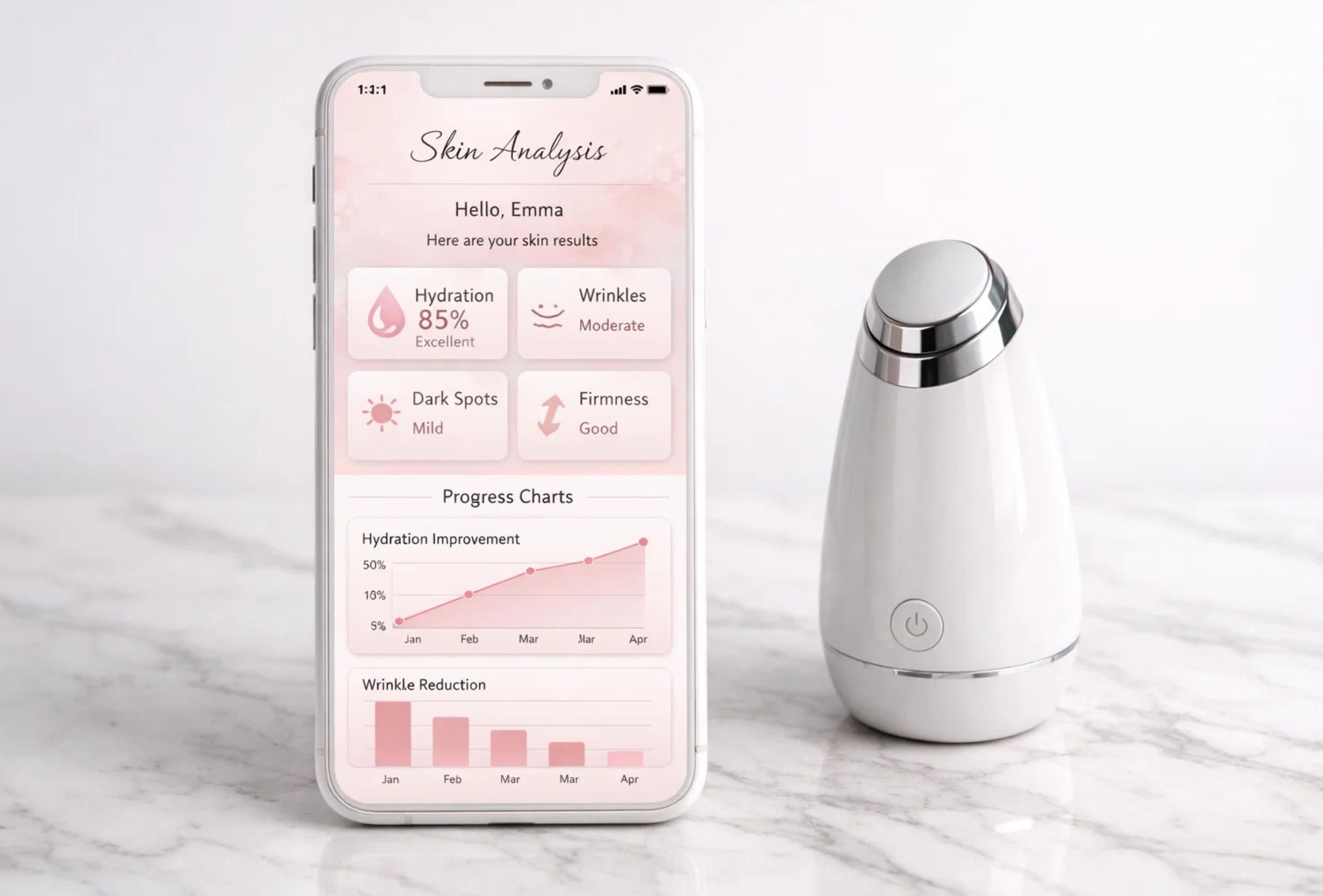
Progress tracking systems must handle the unique challenges of beauty metrics. Unlike fitness apps where progress can be measured objectively through steps or weight, skincare progress is inherently subjective and slow. Excellent companion app design incorporates features like standardized photo capture (with consistent lighting prompts), side-by-side comparison tools, and long-term trend analysis that helps users see changes they might otherwise miss.
Personalization engines are increasingly essential as users expect their beauty apps to learn their preferences and adapt recommendations over time. This requires sophisticated backend systems that can process usage data, combine it with user-reported outcomes, and generate increasingly personalized treatment suggestions. The machine learning pipelines behind these features represent some of the most complex work in building beauty companion apps.
The Regulatory Landscape: What Beauty Tech Startups Need to Know
Any serious discussion of beauty app development must address the regulatory considerations that govern this space. Beauty devices exist in a complex regulatory gray zone between cosmetics and medical devices, with different rules applying depending on the device's claims and capabilities.
In the United States, the FDA regulates devices based on their intended use. A device that simply enhances cosmetic product absorption may be classified as a cosmetic device with minimal oversight. However, a device that claims to treat medical conditions like acne or reduce wrinkles may be classified as a medical device requiring FDA clearance. This distinction has major implications for app development, as the claims made within your app can affect your device's regulatory classification.
The European Union's Medical Device Regulation (MDR) takes a similarly risk-based approach but with generally stricter requirements. Beauty tech companies targeting European markets need to ensure their development process includes appropriate documentation for regulatory compliance. This often requires working with regulatory consultants early in the development process.
For app development specifically, key regulatory considerations include data privacy (particularly if you're collecting health-related information), advertising claims (ensuring app marketing language doesn't make unsupported medical claims), and accessibility requirements (which are becoming increasingly important for consumer-facing applications).
Case Studies: Beauty App Development Success Stories Beyond Medicube
While Medicube represents the most dramatic recent success story, several other companies have demonstrated excellence in building companion apps that offers lessons for the industry.
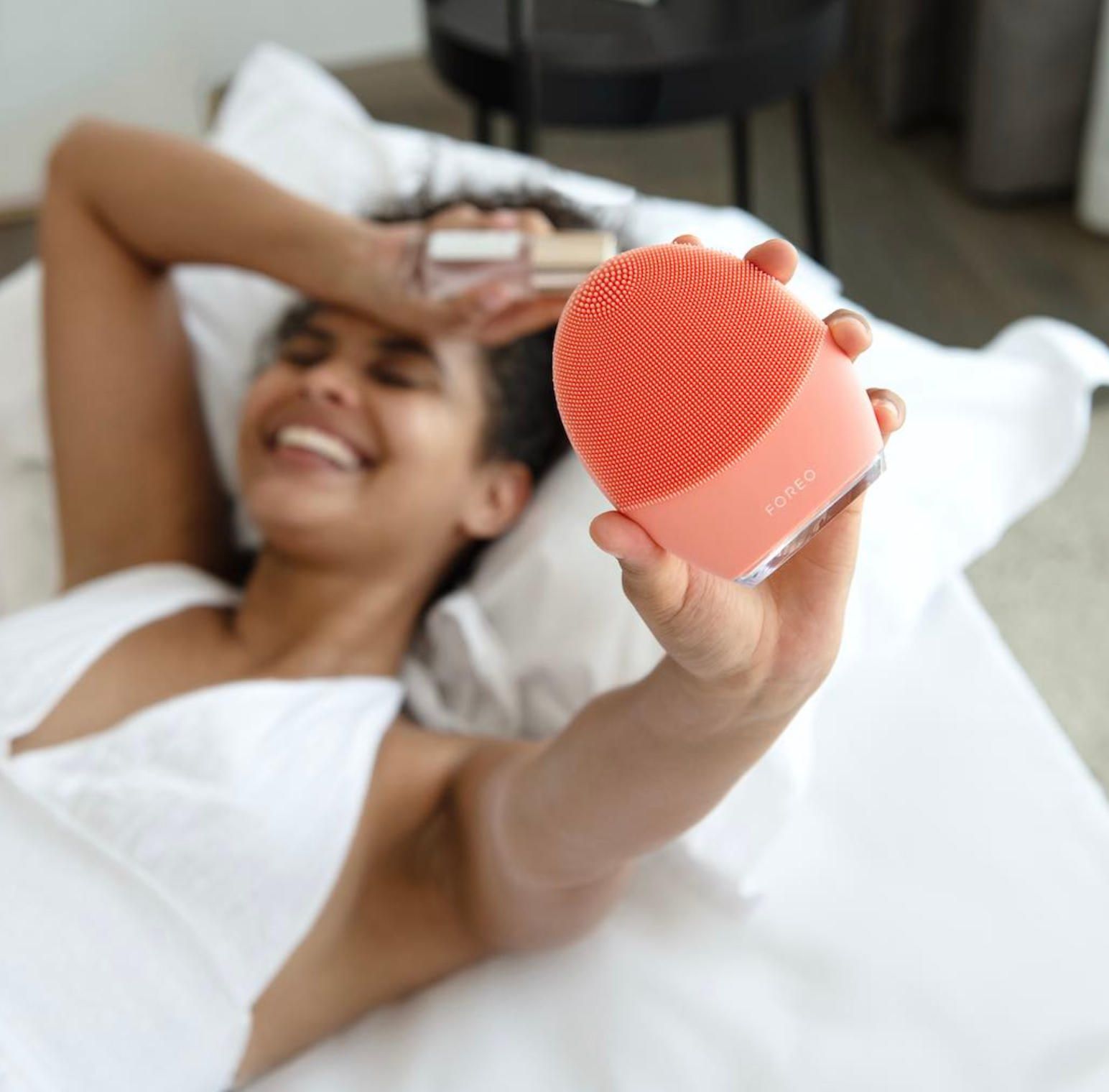
FOREO, the Swedish beauty tech company, pioneered the smart facial cleansing category with its Luna device line. The FOREO For You app exemplifies user-centric app design, offering personalized cleansing routines, progress tracking, and seamless device connectivity. The company has expanded into smart mask treatments with its UFO device, which transforms 20-minute sheet mask treatments into 2-minute spa experiences by combining heating, cooling, LED therapy, and sonic pulsations.
Droplette represents another fascinating case study in app development innovation. Founded by two MIT-trained scientists who were initially trying to solve the problem of painful treatments for a rare skin disease, the company pivoted to consumer skincare when they realized their micro-mist delivery technology could revolutionize how active ingredients penetrate skin. Their companion app manages everything from device pairing to treatment tracking to skincare consultations with licensed estheticians.
L'Oréal has invested heavily in digital beauty platforms through various initiatives. Their Beauty Genius platform provides AI-powered skincare and makeup recommendations, while the Colorsonic device uses app-connected technology to enable salon-quality hair coloring at home. These investments from a major beauty conglomerate validate the strategic importance of app development capabilities.
The Amorepacific Innovation Factory: A Glimpse Into Beauty Tech's Future
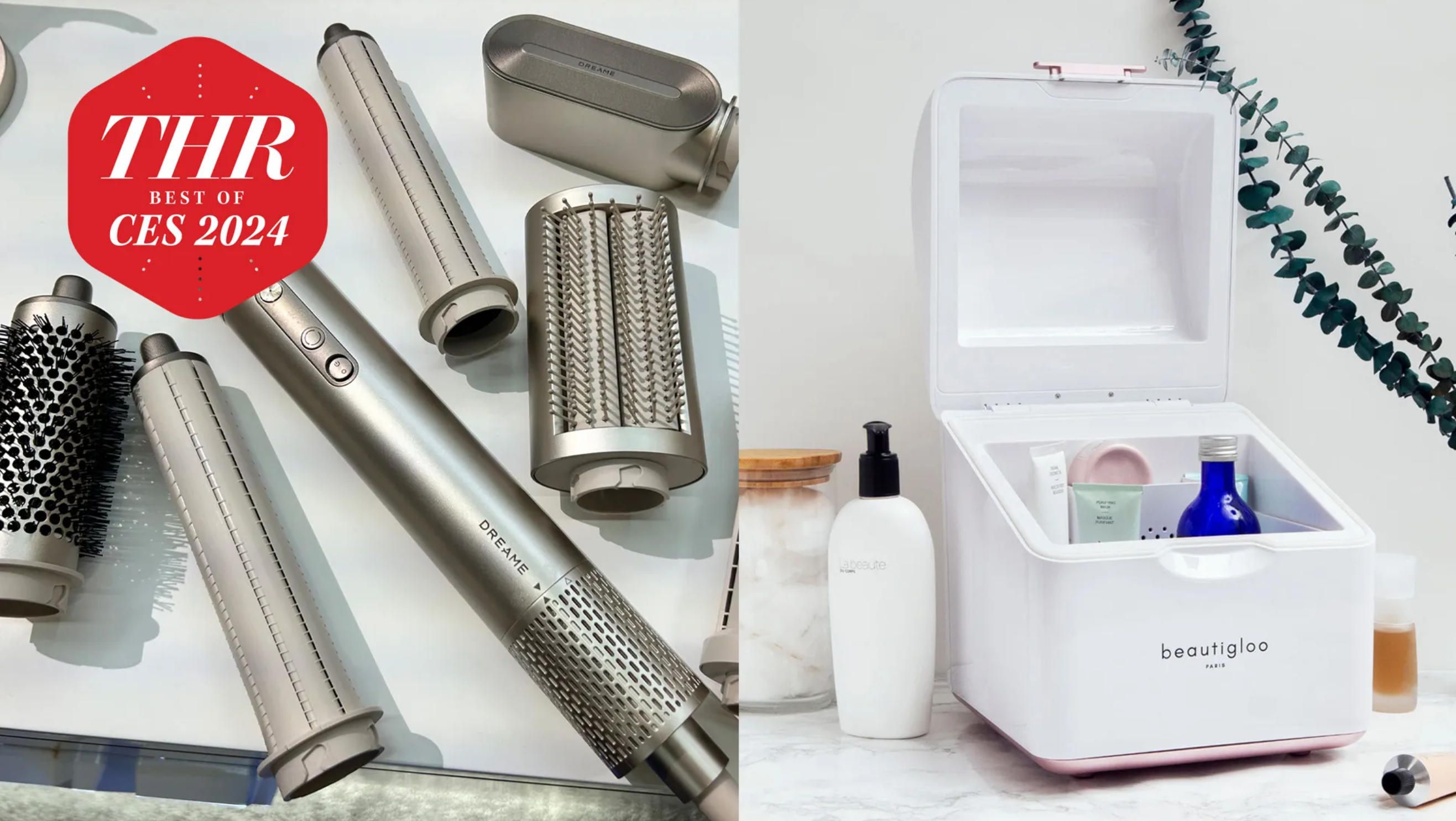
Korean beauty giant Amorepacific deserves special attention for their relentless beauty tech innovation. The company has won CES Innovation Awards for six consecutive years, creating a pipeline of devices that showcase what's possible when serious R&D investment meets excellent digital product development.
Their Lipcure Beam device, honored at CES 2024, combines lip diagnosis, care, and makeup capabilities in a single handheld unit. A precision sensor in the cap instantly detects lip moisture levels and provides diagnostic results, while the brush-like applicator emits customized visible light based on those results to enhance lip care. This level of sophistication requires deeply integrated app systems to manage the diagnostic data, treatment recommendations, and user education.
The company's COSMECHIP device creates customized skincare cosmetics on demand by inserting active ingredient chips. Using microfluidic channel technology, the system combines ingredients in precise proportions to address specific skin concerns. The app development for such a device must manage ingredient inventory, formulation recipes, and personalized recommendation algorithms.
Looking to CES 2026, Amorepacific has unveiled Skinsight, an "electronic skin" platform that combines ultra-thin wearable patches with Bluetooth modules and AI-powered apps for real-time skin aging analysis. This represents the cutting edge of IoT app development, requiring expertise in wearable technology, continuous monitoring systems, and predictive analytics.
Building Your Beauty Tech Startup: A Practical Roadmap
For entrepreneurs ready to enter the beauty tech space, here is a practical roadmap that prioritizes digital product development as a core competency rather than an afterthought.
Start with a genuine insight into consumer pain points. The most successful beauty tech products solve real problems, not imaginary ones. Medicube succeeded because they identified that consumers wanted professional-grade treatments at home, and they built both the hardware and the beauty app development infrastructure to deliver on that promise. Spend time understanding your target users before writing a single line of code.
Prototype your app experience before finalizing your hardware. Too many beauty tech startups design their devices first and then try to bolt on an app later. This backward approach leads to compromised user experiences. Instead, sketch out your ideal app vision and let it inform your hardware requirements. What data does your app need? How should the device communicate status? What treatment parameters should be adjustable via software?
Build for iteration from day one. The beauty of beauty app development (pun intended) is that software can be updated continuously. Design your device firmware and app architecture to support over-the-air updates, A/B testing of new features, and data-driven optimization. The best beauty tech products get better over time as their developers learn from user behavior.
Plan for community from the start. Solo skincare is giving way to social skincare, with users eager to share their routines, results, and recommendations. Your app design should incorporate social features, whether that's simple progress sharing, community forums, or influencer integrations. This social layer is not optional; it's a fundamental driver of growth and retention.
The Cost Equation: What to Budget for Beauty App Development
Understanding the investment required for quality beauty app development helps entrepreneurs plan realistic roadmaps. Costs vary significantly based on scope, but here are some general parameters.
A basic companion app with device connectivity, simple treatment tracking, and minimal cloud features typically costs between $60,000 and $90,000 for initial development. This assumes cross-platform development using frameworks like React Native or Flutter, basic Bluetooth Low Energy integration, and simple backend infrastructure.
A sophisticated project with AI-powered skin analysis, AR features, robust community functionality, and deep IoT integration can range from $110,000 to $160,000 or more. This level of investment is appropriate for companies targeting significant market share and planning to compete with established players like Medicube.
Ongoing costs include cloud hosting (typically $500-5,000 monthly depending on scale), maintenance and bug fixes (budget 15-20% of initial development cost annually), and feature enhancements (varies based on roadmap ambition). Companies that underbudget for ongoing development often see their apps stagnate while competitors advance.
At A-Bots.com, we work with clients at all budget levels to find the right balance between ambition and resources. Sometimes the smartest development strategy is to launch with a minimum viable product and iterate based on user feedback rather than trying to build everything at once.
Testing and Quality Assurance: The Hidden Heroes of Beauty App Development
Rigorous testing is especially critical in companion app development because users interact with these apps during intimate self-care moments. A crash or bug during a facial treatment is far more frustrating than a crash while browsing social media. Quality assurance must be built into every phase of development.
Device compatibility testing is particularly challenging in IoT app development. Unlike apps that run entirely on phones, beauty apps must reliably communicate with physical devices. This requires testing across multiple device firmware versions, handling gracefully when devices have low battery or are out of range, and ensuring consistent behavior across the fragmented Android ecosystem.
Treatment safety testing goes beyond typical software QA. If your app controls a device that delivers electrical stimulation to someone's face, you need to verify that your intensity controls cannot be manipulated to unsafe levels, that treatment timers work correctly, and that the app responds appropriately to abnormal device states.
Usability testing with real users provides insights that no amount of internal testing can match. Watch users actually try to pair your device, follow a treatment routine, and interpret their progress data. Every friction point you discover and eliminate makes your development investment more valuable.
Integration Opportunities: Expanding Your Beauty App Ecosystem
Smart app architecture considers how your app fits into users' broader digital lives. Several integration opportunities can enhance your app's value proposition.
Health and fitness app integrations allow users to correlate skincare outcomes with lifestyle factors like sleep, hydration, and exercise. Apple HealthKit and Google Fit provide standardized APIs for this kind of data exchange. Users increasingly expect their beauty apps to understand that skincare is part of overall wellness.
E-commerce integrations enable seamless replenishment of consumables and discovery of complementary products. Whether you're selling your own products or partnering with retailers, smooth purchasing flows within your app drive revenue and improve user experience.
Social platform integrations make sharing effortless. Users want to post their progress to Instagram, create TikTok content showing their routines, and share results in Facebook groups. App design that facilitates this sharing creates organic marketing opportunities.
Smart home integrations may seem far-fetched, but consider this: users could trigger smart lighting to optimal conditions when starting a treatment, or log skincare activities automatically through IFTTT-style automations. Forward-thinking product development anticipates these possibilities.
The AI Revolution in Beauty App Development
Artificial intelligence is transforming what's possible in building beauty apps, with several applications reaching production readiness.
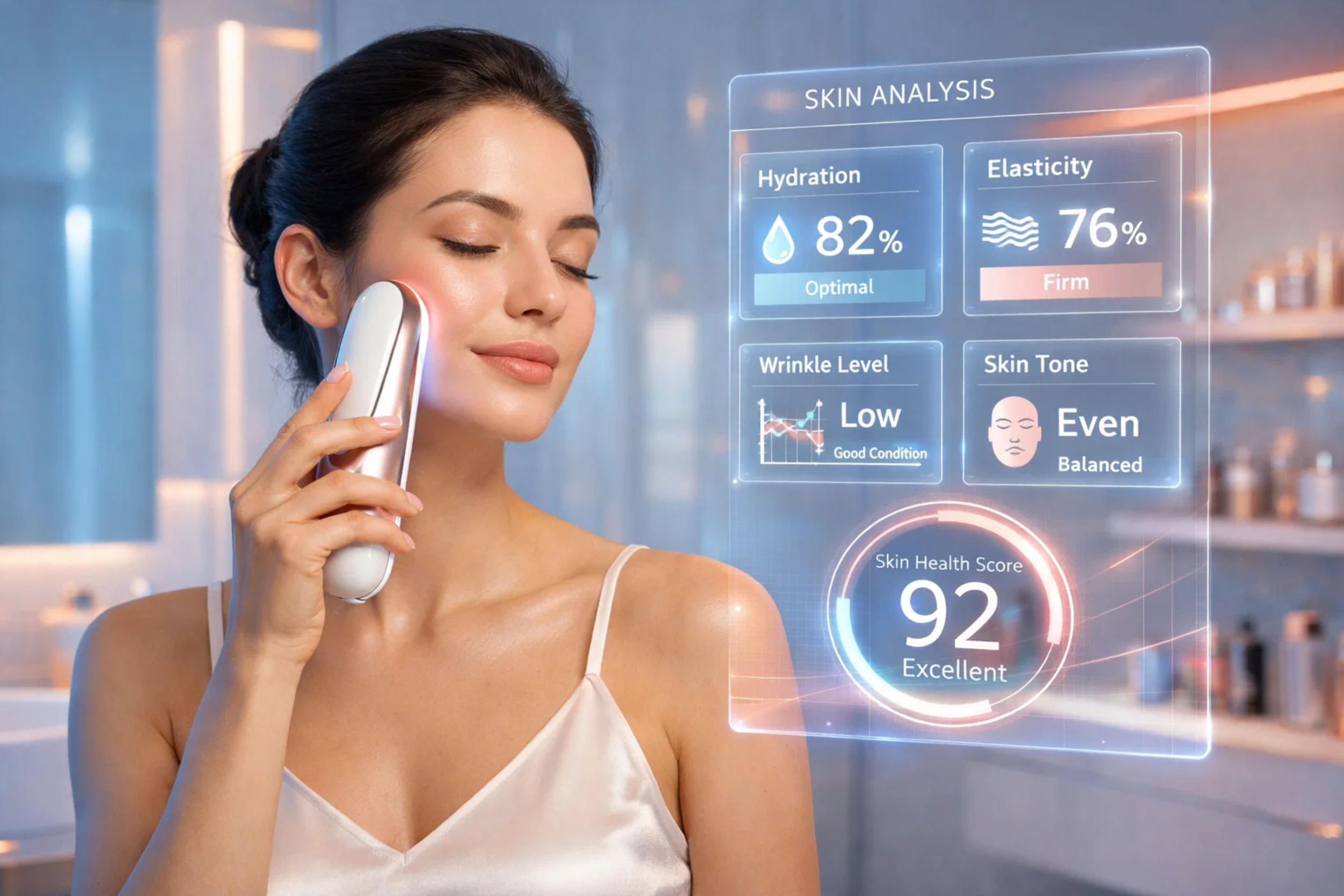
Computer vision for skin analysis has advanced remarkably. Modern ML models can assess skin condition from smartphone photos with accuracy approaching dermatological evaluation for certain metrics. This enables beauty apps to provide personalized recommendations without expensive diagnostic hardware. Training these models requires diverse datasets representing different skin tones, ages, and conditions, and responsible app development considers potential bias in AI recommendations.
Natural language processing powers chatbot interfaces that can answer skincare questions, recommend products, and guide users through routines. These conversational interfaces feel more personal than clicking through menus and can adapt their communication style to user preferences.
Predictive analytics can anticipate user needs based on historical behavior, environmental factors, and community data. Imagine a beauty app that recommends adjusting your routine based on weather forecasts, upcoming travel, or detected stress patterns. This proactive approach to beauty app development transforms apps from passive tools into active skincare partners.
Generative AI is beginning to enable virtual try-on experiences that can show users how they might look with different skincare outcomes or makeup looks. While this technology is still maturing, it represents an exciting frontier for the beauty tech industry.
Privacy and Data Ethics: The Foundation of User Trust
Any serious discussion of building companion apps involves collecting sensitive personal data: photos of users' faces, information about their skin conditions, details about their routines and concerns. Handling this data responsibly is both an ethical obligation and a business necessity.
Transparency about data collection and usage should be built into your app experience, not buried in terms of service that nobody reads. The best development practice includes clear, user-friendly explanations of what data you collect, why you need it, and how it benefits the user.
Data minimization means collecting only what you actually need. Don't harvest information "just in case" it might be useful someday. Users increasingly understand that data has value, and they're becoming more selective about which apps they trust with their information.
Security infrastructure must be robust enough to protect against breaches. Development teams need expertise in secure authentication, encrypted data storage, and regular security audits. A data breach involving users' facial photos and skincare concerns would be devastating for any brand.
Regional privacy regulations like GDPR in Europe and CCPA in California impose specific requirements that your development must address. These include user rights to data access and deletion, consent mechanisms for data processing, and restrictions on certain uses of personal information.
Scaling Globally: Beauty App Development for International Markets
The beauty tech opportunity is global, but successful international expansion requires thoughtful digital product development for different markets.
Localization goes beyond translation. Different markets have different skincare concerns, beauty standards, and usage patterns. Korean users might be familiar with elaborate multi-step routines, while American users might prefer simplicity. Your app development should support these different approaches without alienating either audience.
Regulatory compliance varies by market, as discussed earlier. Your app might need different features enabled or disabled in different regions based on local regulations. Building this flexibility into your app architecture from the start is much easier than retrofitting it later.
Payment processing must accommodate different preferences. Credit cards dominate in the US, but other markets prefer mobile payments, bank transfers, or cash on delivery. If your companion app includes e-commerce features, supporting local payment methods is essential.
Cultural sensitivity matters in beauty. What's considered attractive, what skincare concerns are priorities, and how openly people discuss beauty vary significantly across cultures. Work with local advisors to ensure your app doesn't include tone-deaf elements that could alienate users in important markets.
The Future of Beauty Tech: What's Coming Next
Looking ahead, several trends will shape the next generation of connected beauty apps.
Wearable sensors are moving beyond fitness into beauty. Amorepacific's Skinsight platform, with its ultra-thin skin patches that monitor conditions continuously, points toward a future where connected app ecosystems incorporate data from sensors worn throughout the day. This enables understanding of how environmental factors, stress, and daily activities affect skin health in real time.
Hyper-personalization powered by AI will make generic skincare routines obsolete. Future apps will create truly individualized experiences based on genetic factors, microbiome analysis, lifestyle patterns, and continuous outcome tracking. The app won't just track what you do; it'll predict what will work best for you.
Sustainability features are becoming essential as environmentally conscious consumers demand transparency. App developers will increasingly incorporate carbon footprint tracking, ingredient sourcing information, and guidance on reducing waste. Brands that help users make sustainable choices will win loyalty.
Integration with telehealth will blur the line between beauty apps and medical platforms. Dermatology consultations, prescription skincare, and professional guidance will be accessible through the same interfaces users employ for daily skincare tracking. This convergence requires development teams to understand healthcare compliance requirements.
Conclusion: The Beauty App Development Opportunity of a Lifetime
The transformation of the beauty industry through IoT and smart devices represents one of the most exciting opportunities in consumer technology. Medicube's journey from Seoul startup to global phenomenon demonstrates what's possible when excellent hardware meets excellent beauty app development and smart marketing.
The numbers speak for themselves: a $130 billion market by 2029, K-beauty sales growing at 37% annually, consumers increasingly demanding professional-grade treatments at home. The companies that will capture this opportunity are those that prioritize beauty app development as a core competency rather than treating it as a necessary evil.
For startups, the path forward requires building strong beauty app development capabilities from day one. The winners won't be those with the best hardware alone, but those who create complete experiences where devices, apps, content, and community work together seamlessly.
For established brands, the message is equally clear: invest in beauty app development or risk losing relevance to tech-forward competitors. The brands that dominated beauty for the past century won't necessarily dominate the next one. The future belongs to those who can combine skincare expertise with digital sophistication.
At A-Bots.com, we're ready to help you seize this opportunity. Our team combines deep expertise in IoT integration, mobile development, AI implementation, and cloud architecture with genuine understanding of what makes beauty consumers engage. Whether you're launching a revolutionary new device or upgrading an existing product's digital experience, we have the beauty app development capabilities to make your vision reality.
The beauty tech revolution is happening now. The devices are getting smarter, the apps are getting better, and consumers are getting more demanding. The question isn't whether to invest in beauty app development; it's whether you'll be leading the change or scrambling to catch up.
Let's build something beautiful together.
Ready to transform your beauty tech vision into reality? Contact A-Bots.com today to discuss your beauty app development project. With over 70 successful projects and clients who have trusted us for more than five years, we have the expertise to bring your innovation to market. Visit a-bots.com or reach out to our team to schedule a consultation.
✅ Hashtags
#BeautyAppDevelopment
#IoTBeauty
#BeautyTech
#SmartSkincare
#Medicube
#KBeauty
#SkincareDevices
#BeautyStartup
#MobileAppDevelopment
#ConnectedBeauty
#SkincareTechnology
#BeautyInnovation
#IoTDevices
#DigitalBeauty
Other articles
Seattle App Development: Mobile Apps for Taxi, Sports, Security and Weather This article dives deep into Seattle app development using four familiar local experiences: the Seattle Yellow Cab app, the 710 ESPN Seattle (Seattle Sports 710) app, Hiya’s Seattle-born call security, and a dedicated Seattle weather app. For each category, we unpack what works, where UX and architecture fall short, and how businesses can go beyond “me-too” apps with smarter, more integrated solutions. A-Bots.com is presented as a custom engineering partner that can deliver clone or like-app development—taxi, sports media, voice security, or weather-driven services—designed specifically for the way people live and work in the Puget Sound region.
San Francisco Mobile App Development: 5 Real Apps Reviewed San Francisco leads global mobile innovation, and this expert analysis reveals what makes city apps succeed or fail. A-Bots.com reviews five essential urban applications: parking payment systems handling millions in daily transactions, Flywheel taxi's surprising partnership with Uber, SnapCrap's viral solution to San Francisco's sanitation crisis, MuniMobile's $25.4 million transit platform, and Bay Ferry's marine ticketing system. Drawing from 70+ completed projects, the article provides technical insights into GPS accuracy challenges, payment processing security, real-time data synchronization, and quality assurance testing that ensures applications work reliably in demanding urban environments.
Boise App Development: Mobile Solutions for Idaho's Capital Professional Boise app development guide exploring mobile technology opportunities in Idaho's capital. A-Bots.com delivers comprehensive iOS, Android, and cross-platform solutions backed by 70+ completed projects. Article features in-depth ParkMobile analysis demonstrating parking management applications serving 1 million annual Boise visitors. Examines outdoor recreation app potential supporting $4.8 billion local tourism industry, including Bogus Basin resort and Boise River Greenbelt systems. Explores healthcare technology opportunities with St. Luke's Health System implementing AI-powered patient care solutions. Includes expert quotes from Steve Jobs and Bill Gates, real market statistics, technical implementation details, and business guidance for selecting development partners.
Custom Beauty App Development Services: Learning from Shark Beauty's $20B Market Success Discover how Shark Beauty achieved number 1 market position in skincare devices within 11 months through strategic mobile app development. Learn why beauty technology devices require sophisticated applications for IoT connectivity, AI personalization, and AR features. A-Bots.com provides custom mobile app development services for beauty device manufacturers. With expertise in IoT integration, artificial intelligence, augmented reality, and comprehensive testing, we help beauty tech companies build complete ecosystem solutions.
Sephora Mobile App Success Story: Complete Guide to Beauty App Development in 2026 This comprehensive analysis explores the Sephora mobile app phenomenon and its implications for beauty app development. From humble French origins in 1969 to a global digital powerhouse with over 40 million loyalty members, Sephora transformed beauty retail through strategic technology investments. The article examines Virtual Artist AR capabilities, Beauty Insider program mechanics, target audience demographics, and marketing strategies that drive 80% of North American sales through app-engaged customers. Entrepreneurs and product managers will discover practical frameworks for building competitive beauty applications, including IoT integration opportunities and personalization techniques. A-Bots.com offers custom beauty app development services to bring similar visions to life.
Top stories

Copyright © Alpha Systems LTD All rights reserved.
Made with ❤️ by A-BOTS