Home
Services
About us
Blog
Contacts
Hair Salon App Development: Building an AR-Powered Virtual Try-On Platform with Booking and CRM Integration
The global salon services market reached $247.02 billion in 2024 and is projected to grow to $447.76 billion by 2032, exhibiting a CAGR of 7.79%. Behind these impressive numbers lies a transformation that is reshaping how people discover, choose, and book their hairstylists. The catalyst? Technology that puts the power of choice directly into customers' hands before they ever set foot in a salon chair. Modern hair salon app development is at the heart of this transformation.
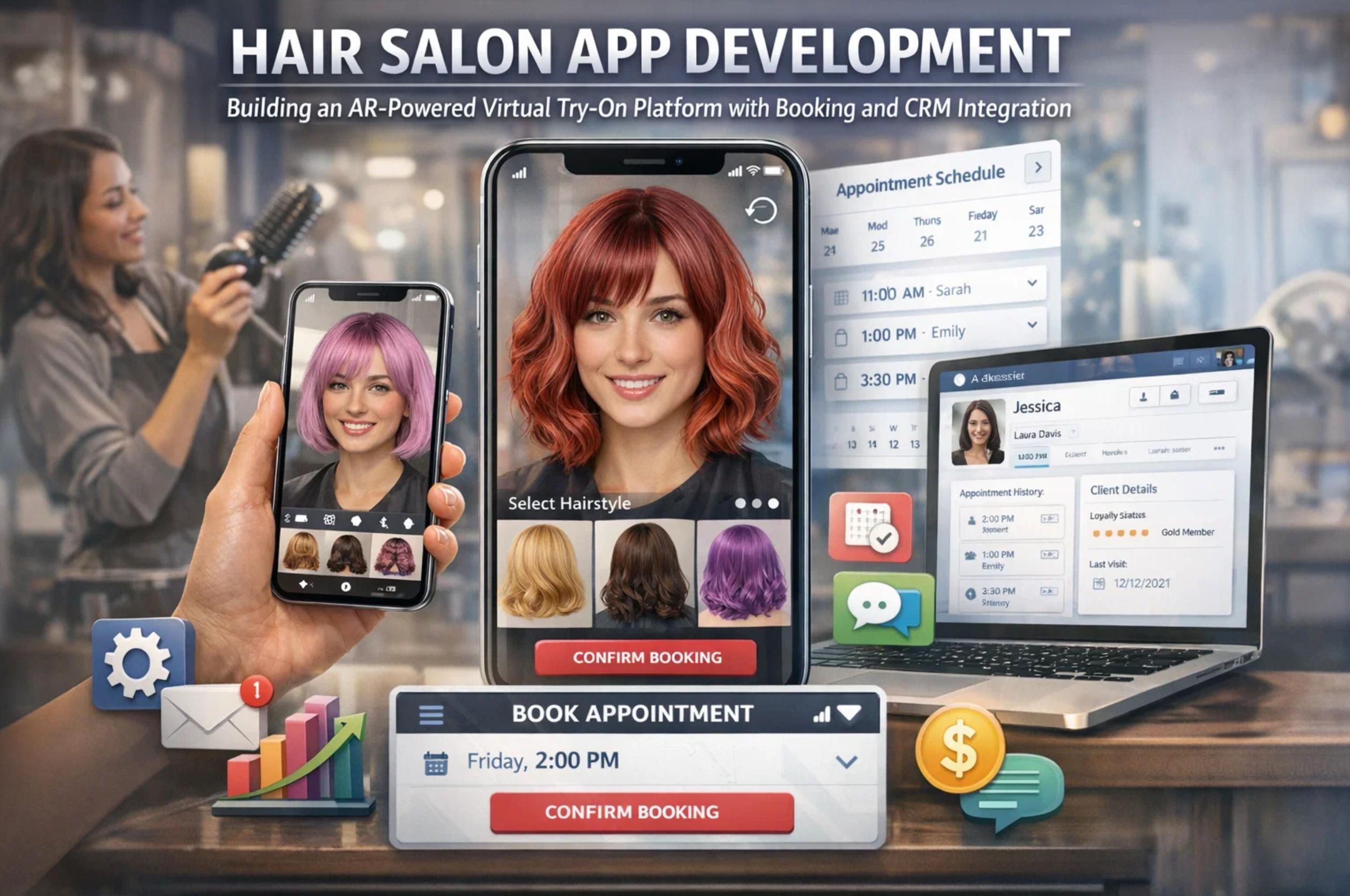
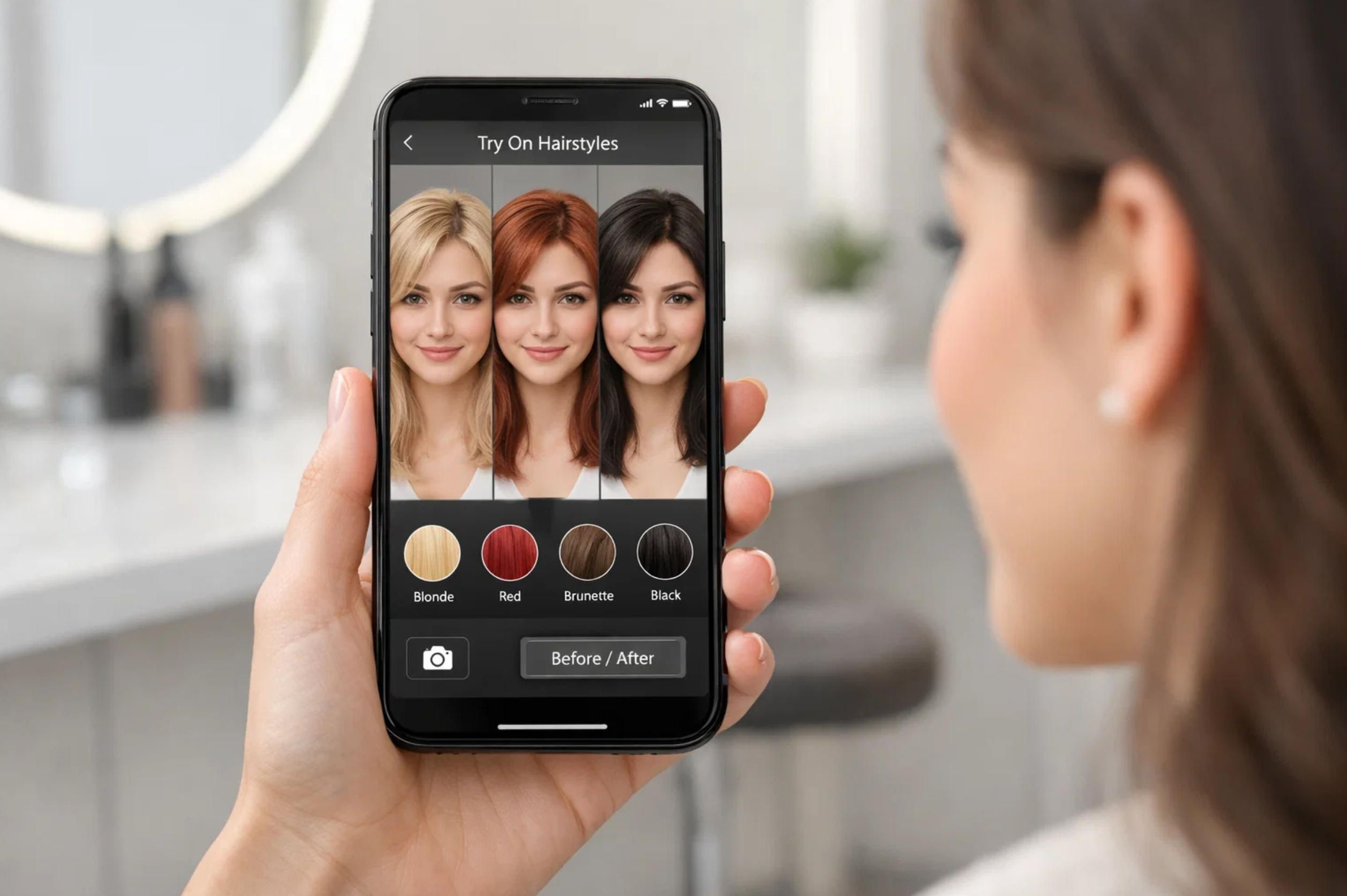
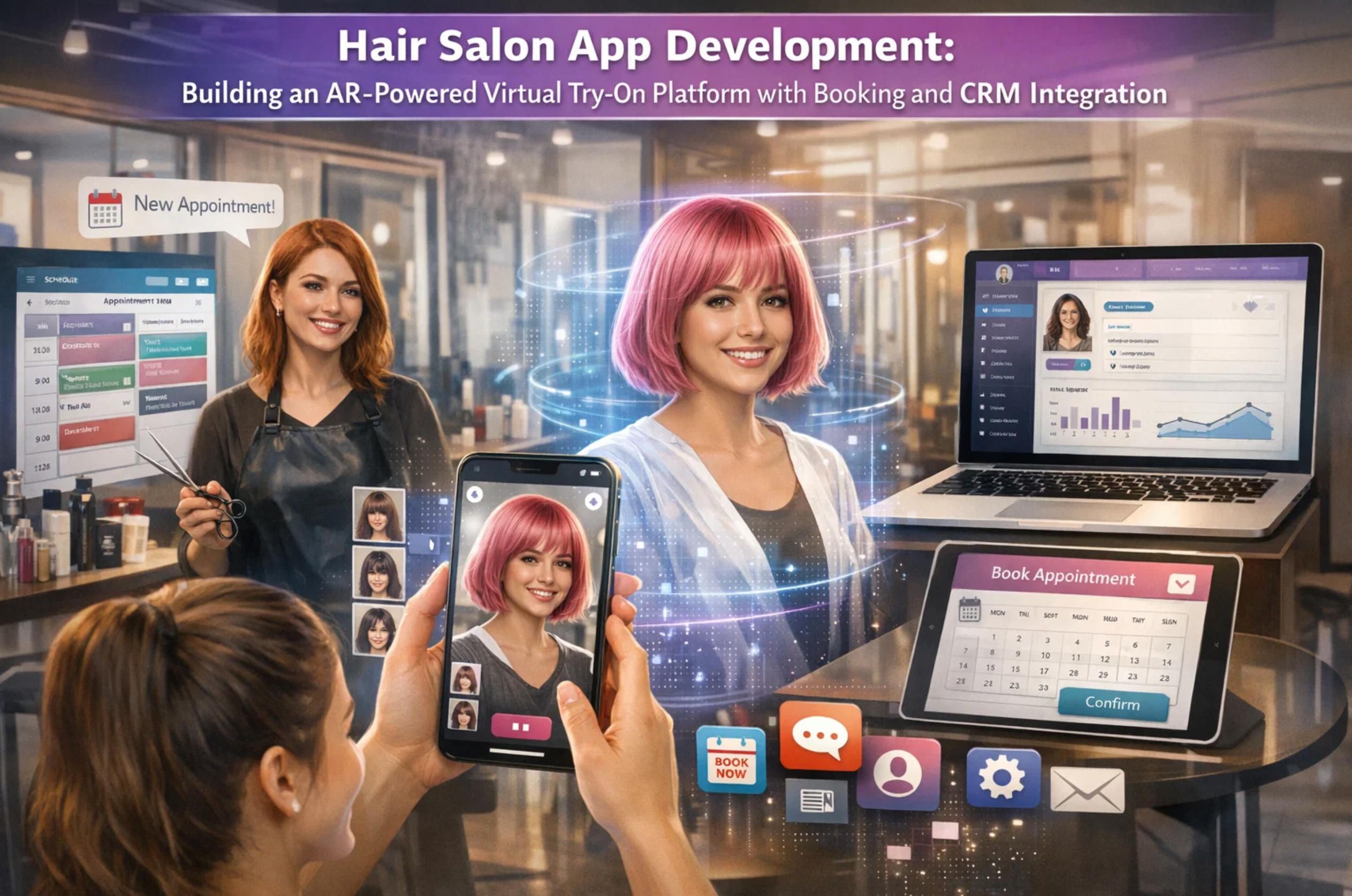
Consider this scenario: a client sits at home, uploads a selfie, and watches as different hairstyles appear on their image in real-time. They swipe through cuts and colors that their preferred salon actually offers, not generic templates from the internet. When they find the perfect look, they tap a button to book an appointment with the specific stylist who specializes in that style. Meanwhile, the salon owner sees the booking appear instantly in their management dashboard, complete with the client's style preference and visit history. This is not a futuristic concept. This is what contemporary hair salon app development delivers today.
The convergence of augmented reality, artificial intelligence, and mobile-first design has created unprecedented opportunities for salons willing to embrace digital transformation. Hair salon app development represents more than a technological upgrade. It represents a fundamental reimagining of the client-stylist relationship, from first discovery through years of ongoing service. Investing in hair salon app development today positions your salon for long-term success in an increasingly digital marketplace.
The Market Opportunity: Why Salon Apps Are No Longer Optional
The United States hair salon market stands at approximately $60.6 billion in 2024, supported by over 1.05 million hair salons serving a population of 335 million people. This translates to roughly 3.14 salons per 1,000 residents. Compare this to Europe, where approximately 400,000 salons serve 450 million people, yielding just 0.89 salons per 1,000 residents. The American market is not just larger, it is 3.5 times more densely competitive on a per-capita basis.
This density creates both challenge and opportunity. With so many choices available, how does a salon stand out? The answer increasingly lies in digital differentiation through professional hair salon app development. According to industry research, 72% of salons have adopted online booking systems, resulting in a 24% increase in appointment bookings through digital platforms. Even more telling, clients who book their first appointment online are approximately twice as likely to return compared to walk-in customers. Hair salon app development has evolved from a nice-to-have feature to a competitive necessity.
The salon software market reflects this shift. Valued at $0.95 billion in 2024, it is projected to reach $3.16 billion by 2033, growing at a CAGR of 14.31%. This growth rate significantly outpaces the broader salon services market, indicating that digital tools are capturing an increasingly large share of industry investment and attention. Forward-thinking salon owners are partnering with experienced salon app development company teams to capitalize on this trend before competitors do.
Why Hair Salon App Development Matters Now
The timing for investment in hair salon app development has never been more favorable. Several converging factors create a perfect storm of opportunity.
First, consumer behavior has shifted permanently toward mobile-first interactions. Approximately 65% of all salon bookings now occur through mobile apps, with 82% of online bookings made through smartphones. Clients expect the same convenience from their salon that they receive from their ride-sharing and food delivery apps. This expectation makes hair salon app development essential rather than optional.
Second, technology costs have decreased dramatically. AR SDKs that once required enterprise-level budgets are now accessible to small and medium businesses. Cloud infrastructure eliminates the need for expensive on-premise servers. Open-source components reduce development time and cost. These economics make hair salon app development feasible for businesses of all sizes.
Third, the competitive landscape increasingly favors digital leaders. Top-earning salons report that nearly 70% of their appointments come through online booking, compared to just 30% for average salons. This booking advantage translates directly to revenue advantage. Hair salon app development has become the primary battleground for market share. Salons that delay hair salon app development risk falling irreversibly behind digital-first competitors.
Understanding the Three-Sided Platform: Clients, Stylists, and Administrators
A comprehensive salon application is not a single product but rather an ecosystem serving three distinct user groups with interconnected needs. Successful hair salon app development requires understanding each perspective and building features that create value across all three. The complexity of hair salon app development lies in balancing these sometimes competing needs.
The Client Experience
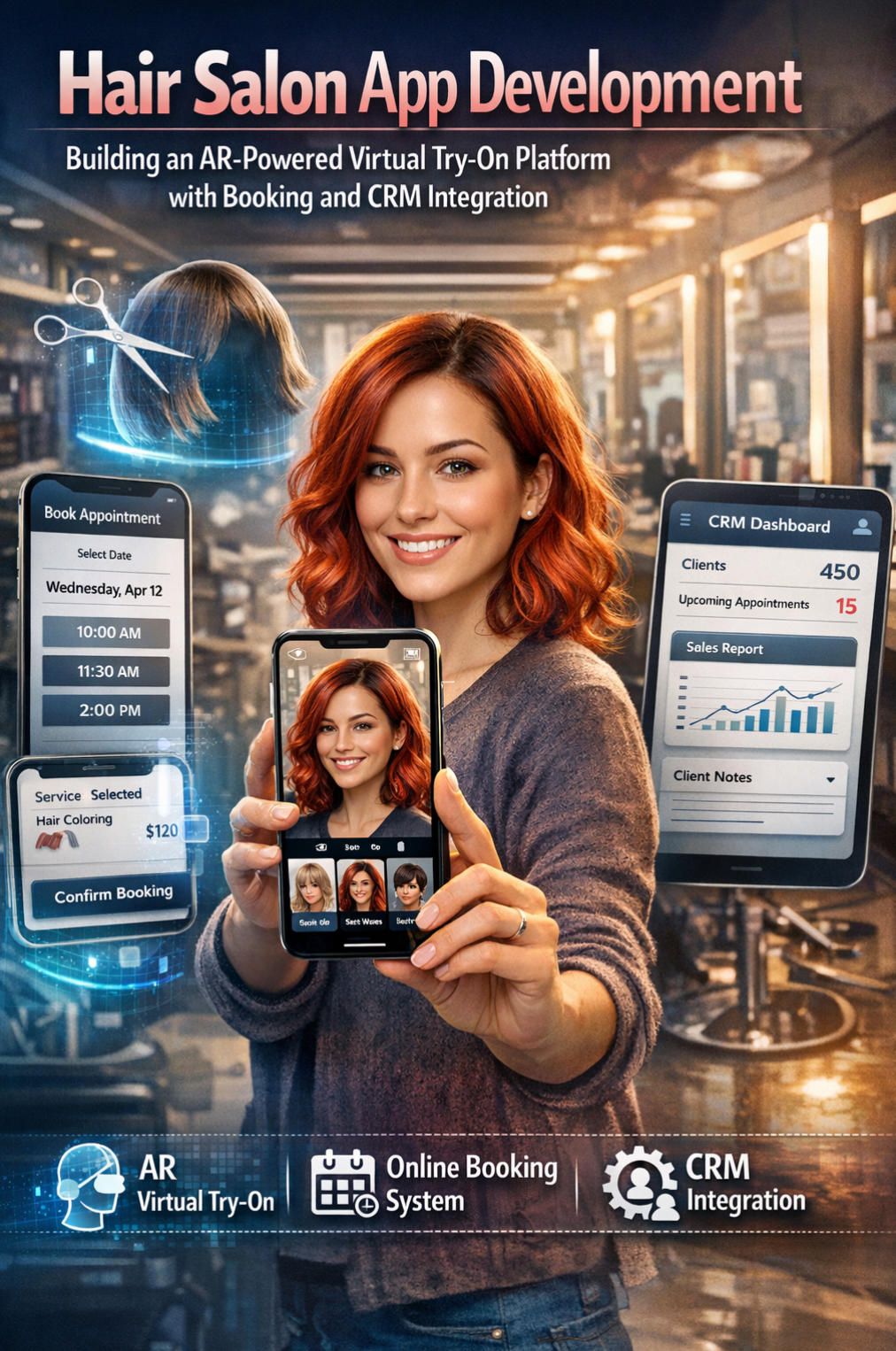
For clients, the primary value proposition centers on visualization, convenience, and confidence. The traditional salon experience carries inherent risk. A client describes what they want, the stylist interprets that description, and the result may or may not match expectations. AR-powered virtual try-on technology, enabled through sophisticated hair salon app development, fundamentally changes this dynamic.
Using advanced hair segmentation algorithms powered by artificial intelligence, modern beauty app development enables real-time hairstyle visualization with remarkable accuracy. Companies like ModiFace, now owned by L'Oréal, and Banuba have developed SDKs that can distinguish individual hair strands, handle complex lighting conditions, and render realistic color variations. L'Oréal reported a 150% increase in virtual try-on usage among consumers, with sessions growing from 40 million in 2022 to over 100 million in 2023. These statistics demonstrate the consumer appetite for features that professional hair salon app development can deliver.
The key differentiator for a salon-specific application is customization. Rather than offering generic hairstyle templates, the app showcases actual styles from the salon's portfolio. A stylist who specializes in balayage can upload photos of their work. A colorist known for vivid fashion colors can showcase their signature looks. When a client tries on these styles virtually, they see exactly what that salon and that stylist can deliver. This level of personalization requires experienced beauty salon app development expertise.
Beyond visualization, clients benefit from seamless booking functionality. Research shows that 46% to 50% of salon bookings occur when salons are physically closed. An app that enables 24/7 booking captures demand that would otherwise be lost to competitors or forgotten entirely. Push notifications remind clients of upcoming appointments, reducing the no-show rate, which averages between 10% and 30% for beauty salons without reminder systems. Automated reminders alone can reduce no-shows by up to 90%. These capabilities represent the minimum expectations for contemporary hair salon app development projects.
The Stylist Dashboard
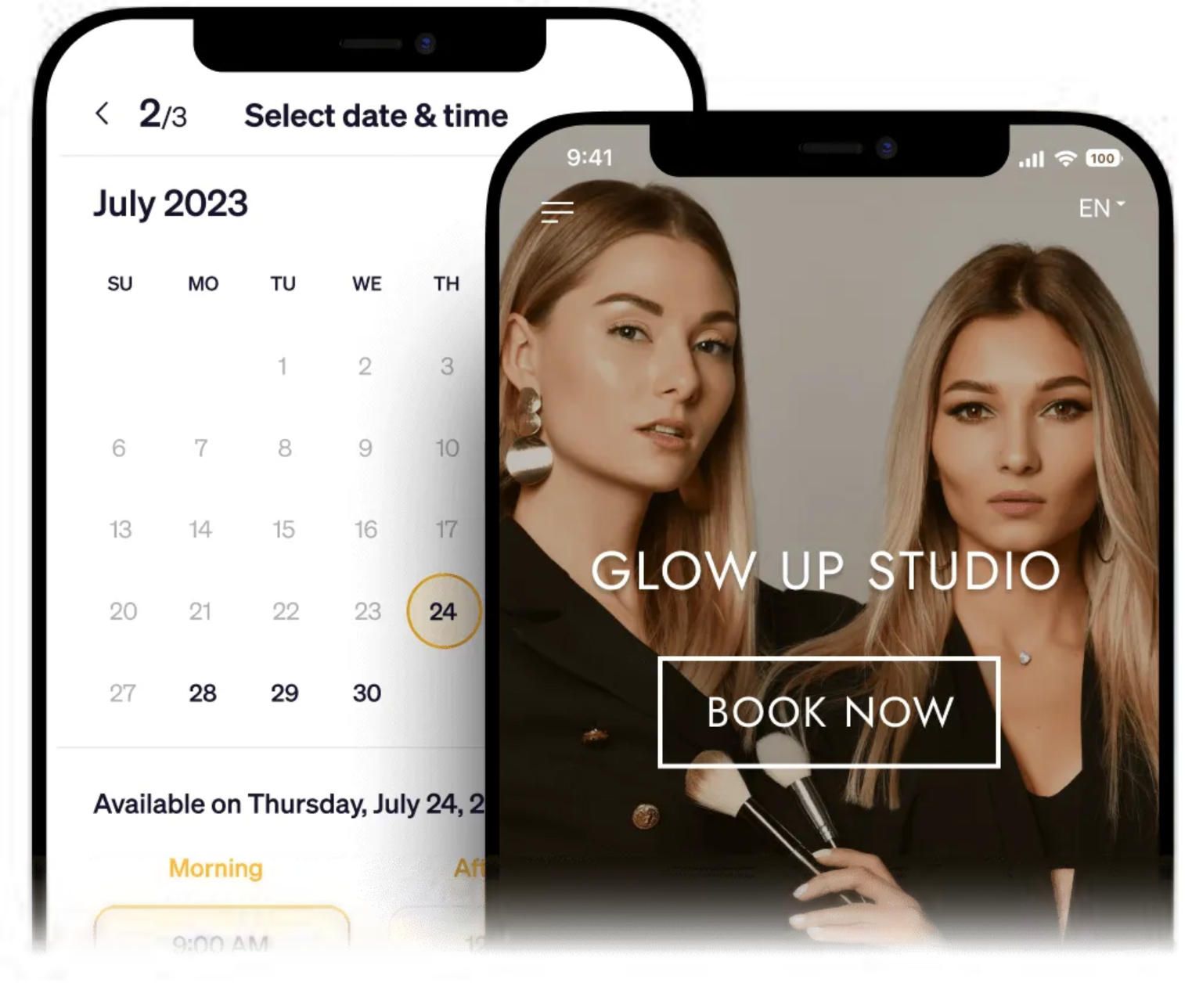
For hairstylists and barbers, effective salon app development services deliver tools that enhance professional reputation and streamline daily operations. The stylist-facing portion of the app typically includes schedule management with real-time visibility into bookings, client preferences, and service history. Comprehensive hair salon app development addresses the specific workflow needs of beauty professionals.
Portfolio management features allow stylists to upload before-and-after photos, creating a visual resume that feeds directly into the client-facing AR try-on system. This creates a virtuous cycle. When a stylist creates excellent work, they document it. That documentation becomes marketing material. Marketing brings new clients. New clients become portfolio opportunities. A salon booking app development company that understands this dynamic builds features to support and accelerate this cycle.
Stylists also benefit from client relationship data. The app stores information about previous visits, including services performed, products used, formulas for color treatments, and any preferences or sensitivities the client mentioned. This institutional memory ensures consistency across visits and enables personalized service even if months pass between appointments. Quality hair salon app development makes this data immediately accessible at the moment of service.
Administrative Control Center
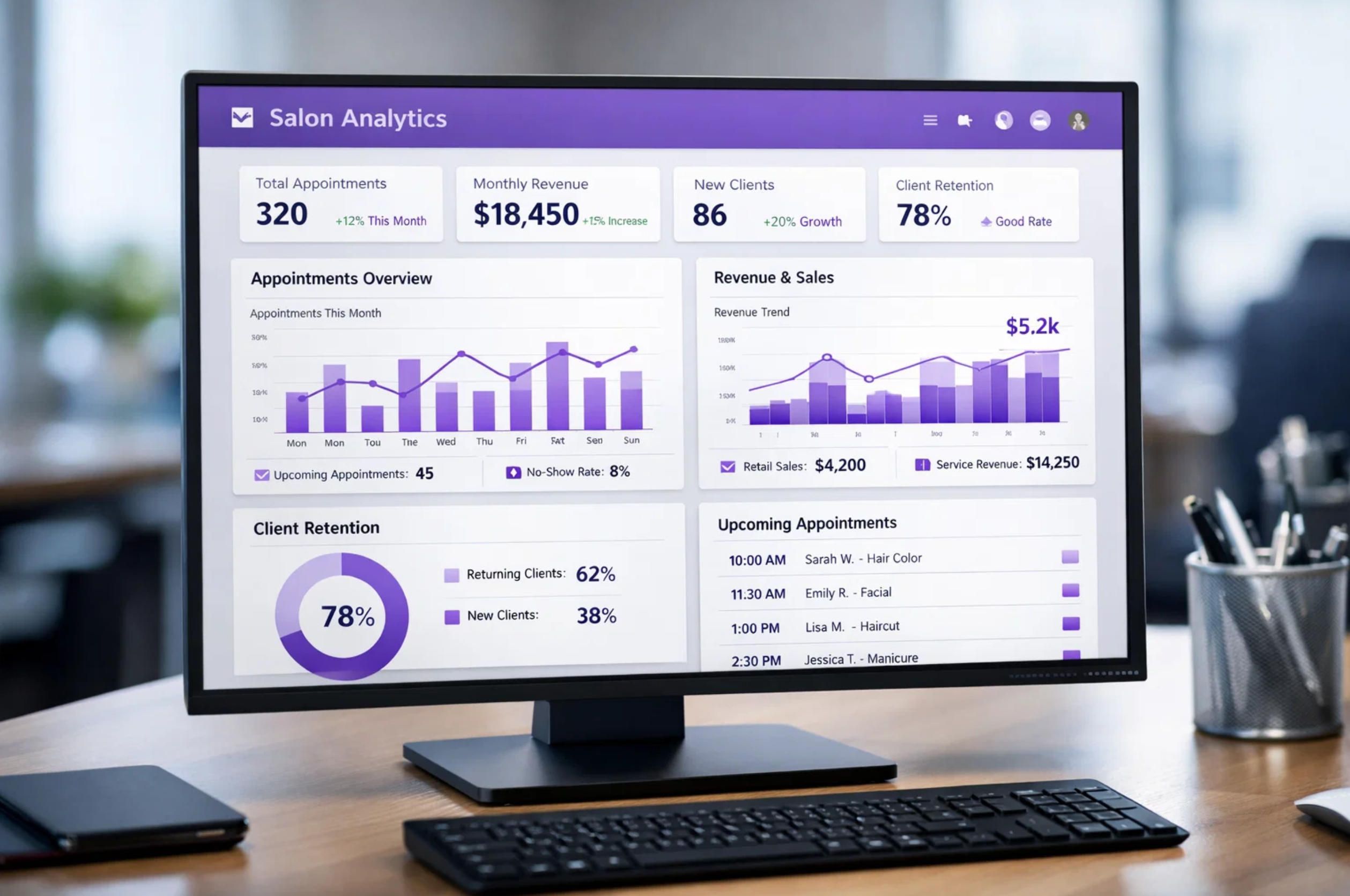
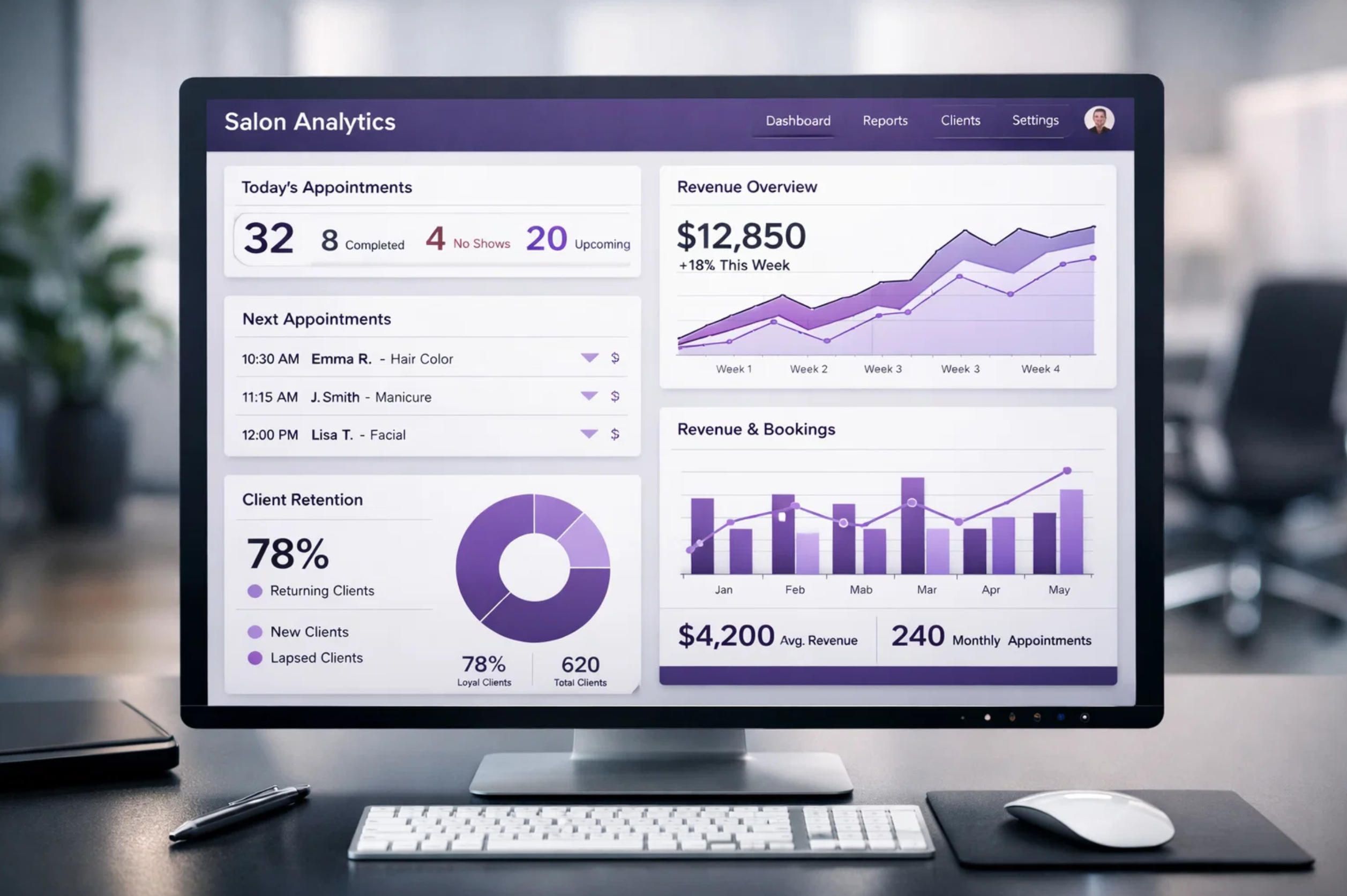
Salon owners and managers require comprehensive oversight across all locations, staff members, and business metrics. The administrative panel typically encompasses staff management including scheduling, performance tracking, and commission calculations. Inventory management tracks product usage against sales, identifying shrinkage or inefficiency. Financial reporting aggregates revenue by service type, stylist, time period, and location for multi-salon operations. Professional hair salon app development delivers all these capabilities in unified, intuitive interfaces.
Customer relationship management functionality enables targeted marketing campaigns based on visit history, service preferences, and engagement patterns. A client who has not visited in 90 days might receive a re-engagement offer. A client who regularly books color services might receive early notification of a new colorist joining the team. Companies that implement CRM systems see a 27% increase in customer retention rates on average. Effective hair salon app development integrates CRM as a core feature rather than an afterthought.
For salon chains and franchise operations, beauty salon app development must accommodate multi-location complexity. Centralized branding with location-specific customization, cross-location booking for traveling clients, and consolidated reporting for ownership groups all require careful architectural consideration. The salon app development company you choose should demonstrate proven experience with multi-unit implementations.
Core Technical Components of Modern Hair Salon App Development
Building a comprehensive salon platform requires integration of multiple technical systems, each presenting its own development challenges and opportunities. Understanding these components helps stakeholders evaluate vendors and set realistic expectations for hair salon app development projects. Thorough technical planning distinguishes successful hair salon app development from failed initiatives.
AR and AI for Virtual Try-On
The virtual try-on feature represents the most technically demanding component of advanced hair salon app development. The system must perform several complex operations in real-time. Face detection identifies the user's face within the camera frame. Hair segmentation distinguishes hair pixels from face, background, and clothing pixels. This is particularly challenging given the variety of hairstyles, colors, lighting conditions, and image qualities the system will encounter.
Once segmentation is complete, the system renders the selected hairstyle onto the detected hair region. This rendering must account for the user's natural hair texture, the lighting in the image, and realistic color interaction with skin tone. Leading SDKs from companies like Banuba utilize neural networks trained on tens of thousands of labeled images to achieve accuracy comparable to human perception. Implementing these capabilities requires specialized hair salon app development expertise.
For a salon-specific application, the technical architecture must also manage a library of custom hairstyles that salon staff can update. This requires a content management system for hairstyle assets, quality control processes to ensure uploaded images meet technical requirements, and synchronization logic to distribute updated content to all app instances. Experienced beauty app development teams build these systems for scalability and ease of maintenance.
Booking and Scheduling Engine
The booking system must handle complex scheduling logic that accounts for service duration, stylist availability, room or station requirements, and buffer time between appointments. A full color service requiring three hours creates different scheduling constraints than a twenty-minute trim. Some services might require specific equipment or products that limit simultaneous bookings. Robust hair salon app development addresses these complexities through flexible, configurable scheduling rules.
Integration with external calendar systems allows stylists to block personal time while maintaining a single source of truth for availability. Real-time synchronization prevents double-booking scenarios that damage client trust and operational efficiency. Quality salon app development services ensure seamless calendar integration across platforms.
Payment processing integration enables deposits at booking time, reducing no-show risk by creating financial commitment. Payment card industry compliance requirements add complexity but also provide opportunity to offer prepaid service packages, gift cards, and loyalty point systems. Secure payment handling is non-negotiable for professional hair salon app development. Every hair salon app development project must address payment security from the earliest design stages.
CRM and Data Infrastructure
The customer relationship management layer aggregates data from every touchpoint. When a client browses hairstyles without booking, that behavior data informs future recommendations. When a stylist notes a product sensitivity, that information persists across future visits with any stylist at any location. When a client leaves a review, sentiment analysis can flag concerns for management attention. Comprehensive hair salon app development treats data as a strategic asset.
Effective salon app development company partners understand that data architecture decisions made early in development constrain or enable features for years afterward. Flexible schema design accommodates evolving business needs. Privacy-preserving practices ensure compliance with regulations like GDPR and CCPA while maintaining the data access necessary for personalization. These considerations distinguish professional hair salon app development from amateur implementations.
USA vs. Europe: A Tale of Two Markets
The hairdressing industry presents fascinating contrasts between American and European markets that inform global hair salon app development strategy.
The European hairdressing sector employs more than one million people across approximately 400,000 salons serving 350 million potential customers. The European Union reported 1.7 million people employed as hairdressers and beauticians in 2019, representing 0.9% of total employment. Cyprus leads with hairdressers comprising 2.3% of employment, while Sweden and Luxembourg sit at just 0.5%.
In the United States, the picture differs substantially. With over 1.05 million hair salons and approximately 1.4 million combined hair and nail salons, the American market is far more fragmented. The Bureau of Labor Statistics projects 5% employment growth for barbers, hairstylists, and cosmetologists between 2024 and 2034, with approximately 84,200 job openings annually. This growth trajectory creates sustained demand for hair salon app development services.
European salons average fewer than three workers, dominated by self-employed hairdressers often working alone. The rise of chair-renting and mobile hairdressing adds complexity, with mobile hairdressers representing up to 23% of the workforce in some EU countries. American salons show greater variation, from single-chair independent operators to major chains like Great Clips, Regis Corporation, and Ulta Beauty.
These structural differences have implications for salon app development services. European solutions may need greater emphasis on individual practitioner tools, mobile service support, and integration with multiple chair-rental locations. American solutions more often require multi-location management, franchise support, and integration with larger corporate systems. Versatile hair salon app development platforms accommodate both market structures. Understanding these regional nuances is essential for any hair salon app development strategy targeting international markets.
A Moment of Levity
A client walks into a salon and asks the stylist: "Can you cut my hair like the picture?" The stylist looks at the phone and says: "Ma'am, that's a photo of a dog." The client replies: "I know! But look how fluffy and happy it looks!"
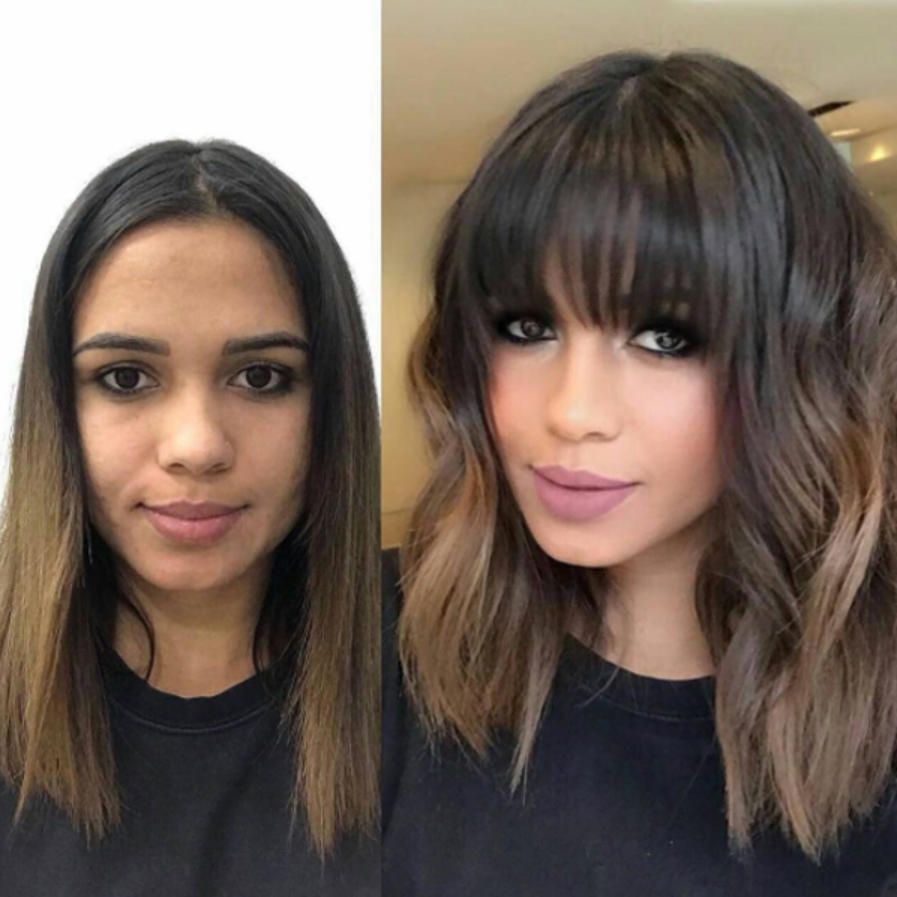
This joke highlights a genuine communication challenge that AR try-on technology actually solves. When clients can see realistic previews of actual hairstyles on their own faces, the gap between expectation and result narrows dramatically. No more photos of celebrities, influencers, or apparently dogs. Just clear visualization of achievable results. Professional hair salon app development makes this clarity possible. This is precisely why hair salon app development with AR capabilities represents such a significant advancement for the industry.
The Economics of No-Shows and How Hair Salon App Development Solves Them
The no-show problem costs the salon industry significant revenue annually. Research indicates that the average no-show rate for beauty salons ranges from 10% to 30%, depending on location, clientele, and management practices. For a salon generating $300,000 in annual revenue, a 15% no-show rate represents $45,000 in lost potential income. Strategic hair salon app development directly addresses this revenue leakage.
Automated appointment reminders represent one of the highest-return features in salon booking app development company portfolios. Studies show that approximately 40% of no-shows occur simply because clients forgot about their appointments. Another 15% experienced emergencies, and 10% had scheduling conflicts they failed to address in time. Properly timed reminders, typically at 48 hours, 24 hours, and 2 hours before the appointment, catch clients at different planning stages and provide multiple opportunities to reschedule rather than simply not appear.
The data supports dramatic improvements. Systems implementing automated reminders report reducing no-shows by 27% to 90%, depending on the baseline rate and implementation quality. AI-driven features like smart rescheduling further improve results by offering alternative times when clients indicate they cannot make their original appointment. These intelligent features distinguish sophisticated hair salon app development from basic booking tools.
Beyond reminders, deposit requirements create financial accountability. When a booking requires a credit card on file with a clear cancellation policy, clients who would otherwise no-show often reschedule instead. The combination of convenience, through easy rescheduling, and consequences, through potential charges, shifts behavior toward reliability. Modern hair salon app development incorporates these psychological principles into user experience design.
Building for Scale: Single Salon to National Chain
Effective beauty app development accommodates growth from single location to multi-unit operation without requiring complete platform replacement. This requires thoughtful architecture from the beginning. Scalable hair salon app development anticipates future growth from day one.
At the data layer, tenant isolation ensures that each salon's information remains separate while enabling aggregation for chain-wide reporting. Location-specific customization allows individual salons to highlight local stylists, neighborhood-appropriate services, and region-specific pricing.
At the user interface layer, consistent branding creates familiar experience across locations while local content provides relevance. A client traveling from New York to Miami can use the same app, see the same brand, and access location-appropriate booking options. This seamless experience requires sophisticated hair salon app development architecture.
At the administrative layer, role-based permissions enable appropriate access at each level. A salon manager sees their location's data. A regional director sees aggregate data across their territory. Corporate leadership accesses system-wide metrics and controls. This hierarchical access model is fundamental to enterprise hair salon app development.
For salon chains evaluating hair salon app development partners, questions about multi-tenant architecture, data isolation, and permission systems reveal whether a vendor has enterprise experience or only single-location implementations. Experienced salon app development company teams readily demonstrate these capabilities. The answers to these questions often determine whether a hair salon app development engagement succeeds or struggles.
Integration Ecosystem: Beyond Standalone Functionality
Modern salon applications rarely operate in isolation. Integration with complementary systems multiplies value. Professional hair salon app development creates connection points with existing business infrastructure.
Point-of-sale integration ensures that bookings, services rendered, and payments reconcile automatically. Manual reconciliation consumes staff time and introduces error risk. When the app and POS share data in real-time, financial accuracy improves while administrative burden decreases.
Marketing platform integration enables sophisticated customer journey automation. When a client books their first appointment, they enter an onboarding sequence. When they complete a service, they receive a review request. When they have not visited in a defined period, they receive a re-engagement campaign. These automations run continuously without staff intervention. Effective hair salon app development builds these integrations as standard features.
Social media integration allows clients to share their virtual try-on images or post-service photos directly from the app. Each share provides organic marketing exposure. Analytics track which content drives engagement and conversion.
Inventory management integration connects service consumption to product ordering. When stylists record products used during services, the system can project inventory needs, automate reorder points, and identify unusual usage patterns that might indicate waste or theft. Comprehensive hair salon app development connects all operational systems. This integration capability showcases the sophistication that professional hair salon app development delivers.
Security and Compliance in Hair Salon App Development
Salon applications handle sensitive personal information including contact details, payment credentials, and potentially health-related data such as allergies or scalp conditions. Responsible salon app development company teams implement security measures appropriate to this sensitivity.
Data encryption protects information both in transit and at rest. Access controls ensure that staff members see only information necessary for their roles. Audit logging creates accountability for data access and modifications. Regular security assessments identify vulnerabilities before exploitation. These protections are fundamental to trustworthy hair salon app development.
Compliance requirements vary by jurisdiction. The California Consumer Privacy Act creates specific obligations for businesses serving California residents. The General Data Protection Regulation applies to any application serving EU residents, regardless of where the business is based. Payment card industry data security standards govern any system that processes credit card information. Professional hair salon app development incorporates compliance by design.
For applications with AR try-on features, additional considerations apply. Facial images represent biometric data under some regulatory frameworks. Clear consent mechanisms, transparent data retention policies, and easy deletion options help maintain compliance while building client trust. Experienced beauty app development teams navigate these requirements routinely.
The Hair Salon App Development Process: From Concept to Launch
Bringing a comprehensive salon application from idea to functioning product requires disciplined execution across multiple phases. Understanding this process helps salon owners evaluate timelines, budgets, and vendor capabilities for hair salon app development projects.
Discovery and planning establish project scope, technical requirements, and success metrics. Stakeholder interviews with salon owners, stylists, and clients reveal pain points and priorities. Competitive analysis identifies market gaps and best practices. Technical assessment determines feasibility and identifies required partnerships, such as AR SDK licensing. Thorough discovery distinguishes successful hair salon app development from troubled projects.
Design and prototyping translate requirements into user experiences. Wireframes establish information architecture and user flows. Visual design applies brand identity and interface patterns. Prototypes enable stakeholder feedback before development investment. Iterative design reduces risk in hair salon app development. This user-centered approach distinguishes professional hair salon app development from rushed implementations.
Development and testing build functional software iteratively. Agile methodologies enable continuous progress visibility and course correction. Quality assurance processes identify defects before they reach users. Performance testing ensures acceptable speed under realistic load conditions. Professional salon app development services include rigorous testing protocols. No hair salon app development project should launch without comprehensive testing.
Launch and iteration release the product while establishing feedback loops for continuous improvement. Analytics reveal actual usage patterns. User feedback identifies enhancement priorities. Regular release cycles deliver ongoing value. Successful hair salon app development continues long after initial launch.
A-Bots.com brings over 70 completed projects and client relationships spanning 1.5 to more than 5 years to hair salon app development engagements. Our expertise spans mobile app development, IoT solutions, web development, and comprehensive testing services. Whether building a complete custom solution, developing specific components for integration with existing systems, or providing quality assurance for in-house development, our team delivers the technical depth and business understanding that salon technology projects require. Our hair salon app development methodology ensures projects deliver on time and on budget. Trust your hair salon app development to a team with proven salon industry experience.
Future Trends in Hair Salon App Development
Several emerging technologies promise to further transform salon app development services in coming years. Forward-thinking hair salon app development incorporates flexibility for these innovations.
Generative AI may enable clients to describe their desired look in natural language, with the system generating potential styles for virtual try-on. Rather than browsing a finite catalog, clients could explore unlimited variations based on their preferences and constraints. This capability represents the next frontier of hair salon app development.
Augmented reality advancements continue improving visualization quality. As smartphone cameras and processors improve, real-time rendering approaches photorealistic quality. Apple Vision Pro and similar devices may eventually enable immersive salon previews. Hair salon app development must remain adaptable to these platform shifts.
Predictive analytics will enable increasingly personalized recommendations. Machine learning models analyzing visit patterns, style choices, and seasonal trends could suggest appointment timing, style updates, and product purchases with high relevance. Data-driven personalization differentiates sophisticated hair salon app development. The ability to leverage client data for intelligent recommendations represents a competitive advantage that basic booking systems cannot match. Advanced hair salon app development transforms raw data into actionable client insights.
Voice interfaces may simplify booking for clients who prefer speaking to typing. Integration with voice assistants like Alexa and Google Assistant could enable hands-free scheduling while clients are busy with other activities. Multi-modal interaction represents an emerging priority for hair salon app development. The most forward-thinking hair salon app development teams are already exploring these voice-enabled capabilities.
Why Choose Professional Hair Salon App Development
Not all hair salon app development is created equal. The difference between amateur implementations and professional solutions often determines whether a salon thrives or struggles with technology adoption.
Professional hair salon app development begins with understanding the unique workflows of beauty businesses. Unlike generic booking applications, purpose-built salon solutions account for the complexity of beauty services. A color appointment requires different scheduling logic than a simple trim. An experienced hair salon app development team anticipates these nuances.
Quality matters in hair salon app development because salons depend on these systems daily. Downtime during peak booking hours costs real revenue. Slow load times frustrate clients and drive them to competitors. Professional hair salon app development includes performance optimization, load testing, and reliability engineering that amateur solutions neglect.
Support and maintenance distinguish professional hair salon app development from one-time implementations. Technology evolves constantly. Operating system updates, security patches, and feature enhancements require ongoing attention. Professional hair salon app development includes long-term support relationships, not just initial delivery.
Scalability separates enterprise-ready hair salon app development from limited solutions. A single salon today might become a chain tomorrow. Professional hair salon app development architectures accommodate growth without requiring complete rebuilds. This foresight saves significant cost and disruption over time.
Choosing Your Hair Salon App Development Partner
Selecting the right partner for hair salon app development determines project success more than any other factor. Several criteria distinguish qualified vendors.
Experience with beauty industry applications matters for hair salon app development. Generic app developers may struggle with industry-specific requirements like appointment duration variability, service dependencies, and stylist specialization. Ask potential hair salon app development partners about their salon portfolio.
Technical capabilities must match project requirements. AR integration, payment processing, CRM functionality, and multi-location management each require specific expertise. Comprehensive hair salon app development demands competence across all these domains.
Communication and project management practices predict collaboration quality. Hair salon app development projects typically span months and require ongoing dialogue between business stakeholders and technical teams. Evaluate how potential partners communicate during the sales process.
Post-launch support ensures hair salon app development investments deliver long-term value. Inquire about maintenance agreements, response times for issues, and processes for feature enhancements. The best hair salon app development relationships continue for years after initial launch.
Cost structures should align with business models. Some hair salon app development vendors charge large upfront fees. Others spread costs through ongoing licensing. Match payment structures to your cash flow realities.
A-Bots.com exemplifies these qualities. Our hair salon app development expertise combines technical depth with beauty industry understanding. We offer flexible engagement models from complete custom development to component building to quality assurance. Our client relationships spanning over five years demonstrate the long-term partnership approach that successful hair salon app development requires.
The MVP Approach: Starting Smart with Hair Salon App Development
For salon owners and entrepreneurs evaluating technology investments, the minimum viable product approach offers a practical path forward. Rather than attempting to build every feature simultaneously, successful projects identify core functionality that delivers immediate value and expand from that foundation. Strategic hair salon app development starts focused and grows intentionally.
A practical MVP for a salon application might include basic booking functionality with calendar integration, automated appointment reminders via SMS and email, a simple gallery of hairstyles without AR overlay, and client profiles with visit history. This foundation delivers measurable value, reduces no-shows, enables after-hours booking, and begins building client data, while validating market demand and generating revenue to fund enhancement. Even basic hair salon app development creates competitive advantage. Starting hair salon app development today, even at a modest scope, positions salons ahead of competitors still evaluating their options.
Subsequent phases might add AR try-on capability, stylist-specific portfolios, loyalty programs, and multi-location support based on demonstrated need and available resources. Phased hair salon app development manages risk while maintaining momentum. This incremental approach allows salons to validate assumptions before committing to larger investments in hair salon app development.
The key insight is that having even a basic MVP is dramatically better than having nothing. Clients increasingly expect digital convenience. Salons without online booking lose customers to competitors who offer it. Salons without reminder systems lose revenue to preventable no-shows. The perfect should not become the enemy of the good. Starting hair salon app development now, even modestly, positions salons ahead of those still waiting.
Conclusion: Meeting Clients Where They Are
The salon industry stands at an inflection point. Traditional service delivery models compete against rising client expectations shaped by digital experiences in every other aspect of their lives. Clients who can book flights, order groceries, and manage finances from their phones expect similar convenience from their salon. Hair salon app development bridges the gap between expectation and reality.
Hair salon app development transforms client acquisition, service delivery, and relationship management. AR-powered virtual try-on reduces the uncertainty that prevents clients from trying new styles. 24/7 booking captures demand whenever it arises. Automated reminders protect revenue from preventable no-shows. CRM capabilities deepen relationships that drive lifetime value. Comprehensive hair salon app development addresses every stage of the client journey.
For salons considering technology investment, the question is not whether to digitize but how quickly and comprehensively to do so. Every month without online booking is a month of lost after-hours demand. Every appointment without a reminder is a risk of no-show loss. Every client interaction without data capture is a missed opportunity for personalization. Hair salon app development resolves each of these gaps.
A-Bots.com stands ready to partner on salon app development company engagements of any scope. From complete platform development to specialized component creation to quality assurance services, we bring proven expertise to every engagement. Our team understands both the technical complexities and business realities of hair salon app development. The salon industry is transforming. The technology exists. The market demand is clear. The only remaining question is who will act first to capture the opportunity.
Client expectations continue rising. Technology capabilities continue advancing. The salons that thrive tomorrow are investing in hair salon app development today. Whether through comprehensive platform development or iterative MVP expansion, the path forward runs through technology that serves clients, empowers stylists, and enables management insight. The transformation has already begun. The only question is whether your salon will lead or follow. Contact A-Bots.com to discuss your hair salon app development vision and take the first step toward digital leadership. Our team is ready to help you explore hair salon app development options tailored to your specific business needs. The future of salon success depends on hair salon app development investment made today.
FAQ: Hair Salon App Development
Q1: What is hair salon app development?
A: Hair salon app development is the process of creating custom mobile and web applications specifically designed for hair salons and beauty businesses. These applications typically include features such as AR virtual try-on for hairstyles, online appointment booking, automated reminders, client management (CRM), stylist scheduling, and administrative dashboards. Professional hair salon app development creates a comprehensive platform serving clients, stylists, and salon owners simultaneously.
Q2: How much does hair salon app development cost?
A: Hair salon app development costs vary significantly based on scope and complexity. A basic MVP with booking and reminders might range from $25,000 to $75,000. A comprehensive solution with AR virtual try-on, multi-location support, and full CRM integration typically ranges from $100,000 to $300,000 or more. Factors affecting cost include number of platforms (iOS, Android, web), feature complexity, third-party integrations, and ongoing maintenance requirements. Contact A-Bots.com for a customized estimate based on your specific needs.
Q3: How long does it take to build a hair salon app?
A: Timeline for hair salon app development depends on project scope. A basic MVP can be delivered in 3-4 months. A full-featured application with AR capabilities, multiple user types, and comprehensive integrations typically requires 6-12 months. The process includes discovery and planning (2-4 weeks), design and prototyping (4-6 weeks), development (8-24 weeks), testing (2-4 weeks), and launch preparation. Agile methodologies allow for incremental releases throughout development.
Q4: What features should a hair salon app include?
A: Essential features for hair salon app development include: online appointment booking with calendar integration, automated SMS and email reminders, client profiles with visit history, service menu with pricing, stylist profiles and availability, and secure payment processing. Advanced features include AR virtual try-on for hairstyles and colors, portfolio management for stylists, loyalty programs, gift cards, inventory management, marketing automation, multi-location support, and comprehensive analytics dashboards.
Q5: How does AR virtual try-on work in salon apps?
A: AR virtual try-on technology in hair salon apps uses artificial intelligence and computer vision to detect the user's face and hair in real-time through the smartphone camera. Hair segmentation algorithms distinguish hair pixels from face, background, and clothing. The system then overlays selected hairstyles or colors onto the detected hair region, accounting for lighting conditions and natural hair texture. Users can see realistic previews of how different styles would look on them before booking an appointment.
Q6: Can a hair salon app reduce no-shows?
A: Yes, effectively designed hair salon apps significantly reduce no-shows. Research shows that approximately 40% of no-shows occur because clients forgot their appointments. Automated reminder systems — typically sending notifications at 48 hours, 24 hours, and 2 hours before appointments — have been shown to reduce no-shows by 27% to 90% depending on the baseline rate. Additional features like deposit requirements and easy rescheduling options further decrease missed appointments.
Q7: Is hair salon app development suitable for small salons?
A: Absolutely. Hair salon app development is valuable for salons of all sizes. Small salons often benefit most from basic features like online booking (capturing after-hours demand), automated reminders (reducing no-shows), and client profiles (enabling personalized service). An MVP approach allows small salons to start with essential features and expand over time as the business grows. The competitive advantage of digital presence applies regardless of salon size.
Q8: What's the difference between generic booking apps and custom hair salon app development?
A: Generic booking apps offer basic scheduling functionality but lack industry-specific features. Custom hair salon app development addresses unique salon workflows including: variable service durations, stylist specializations, color formulas and product preferences, service dependencies (color requiring separate processing time), and station/equipment requirements. Custom solutions also enable salon-specific branding, AR try-on with actual salon portfolio styles, and integrations with existing POS and marketing systems.
Q9: How does hair salon app development support multiple locations?
A: Multi-location hair salon app development requires specialized architecture including: tenant isolation ensuring each location's data remains separate, centralized branding with location-specific customization, cross-location booking for traveling clients, consolidated reporting for chain ownership, role-based permissions at salon, regional, and corporate levels, and synchronized inventory and pricing management. Enterprise-ready hair salon app development platforms accommodate growth from single location to national chain without requiring complete rebuilds.
Q10: What security measures are important in hair salon app development?
A: Critical security considerations for hair salon app development include: data encryption in transit and at rest, secure payment processing compliant with PCI-DSS standards, access controls limiting data visibility by role, audit logging for accountability, regular security assessments, compliance with privacy regulations (GDPR, CCPA), and special consideration for biometric data when AR features capture facial images. Professional hair salon app development incorporates security by design from project inception.
Q11: Can existing salon software integrate with a new app?
A: Yes, professional hair salon app development typically includes integration capabilities. Common integrations include point-of-sale (POS) systems for synchronized transactions, calendar applications (Google Calendar, Outlook), email marketing platforms (Mailchimp, Klaviyo), SMS services (Twilio), payment processors (Stripe, Square), inventory management systems, and social media platforms for content sharing. API-first architecture enables flexible integration with existing business tools.
Q12: How do I choose a hair salon app development company?
A: Key criteria for selecting a hair salon app development partner include: demonstrated experience with beauty industry applications, technical capabilities matching your requirements (AR, payments, CRM), strong communication and project management practices, post-launch support and maintenance offerings, flexible pricing structures aligned with your budget, and positive references from previous clients. A-Bots.com offers over 70 completed projects and client relationships spanning 5+ years.
Q13: What is an MVP approach to hair salon app development?
A: MVP (Minimum Viable Product) approach to hair salon app development involves launching with core features that deliver immediate value, then expanding based on user feedback and business results. A typical salon app MVP includes: basic online booking, automated reminders, simple service menu, and client profiles. This approach validates market demand, generates early revenue, and reduces risk compared to building comprehensive features before launch. Subsequent phases add AR try-on, loyalty programs, and advanced analytics.
Q14: How can AR try-on increase salon bookings?
A: AR try-on features in salon apps increase bookings by reducing decision anxiety. Clients who can visualize exactly how a hairstyle will look on their face are more confident booking new services. L'Oréal reported 150% increase in virtual try-on usage, demonstrating consumer appetite for visualization tools. Additionally, AR try-on enables after-hours engagement — clients browse styles from home and book appointments for styles they've already "tried." This converts casual browsing into actual bookings.
Q15: What ongoing maintenance does a hair salon app require?
A: Hair salon app maintenance includes: operating system updates (iOS and Android release annual updates requiring compatibility testing), security patches addressing newly discovered vulnerabilities, server infrastructure monitoring and scaling, bug fixes identified through user feedback, feature enhancements based on business evolution, third-party integration updates when APIs change, and performance optimization as user base grows. Professional hair salon app development includes ongoing support agreements to address these needs.
✅ Hashtags
#HairSalonAppDevelopment
#SalonApp
#BeautyTech
#ARTryOn
#SalonBooking
#BeautyAppDevelopment
#SalonSoftware
#VirtualTryOn
#SalonCRM
#MobileAppDevelopment
#SalonTech
Other articles
San Francisco Mobile App Development: 5 Real Apps Reviewed San Francisco leads global mobile innovation, and this expert analysis reveals what makes city apps succeed or fail. A-Bots.com reviews five essential urban applications: parking payment systems handling millions in daily transactions, Flywheel taxi's surprising partnership with Uber, SnapCrap's viral solution to San Francisco's sanitation crisis, MuniMobile's $25.4 million transit platform, and Bay Ferry's marine ticketing system. Drawing from 70+ completed projects, the article provides technical insights into GPS accuracy challenges, payment processing security, real-time data synchronization, and quality assurance testing that ensures applications work reliably in demanding urban environments.
Boise App Development: Mobile Solutions for Idaho's Capital Professional Boise app development guide exploring mobile technology opportunities in Idaho's capital. A-Bots.com delivers comprehensive iOS, Android, and cross-platform solutions backed by 70+ completed projects. Article features in-depth ParkMobile analysis demonstrating parking management applications serving 1 million annual Boise visitors. Examines outdoor recreation app potential supporting $4.8 billion local tourism industry, including Bogus Basin resort and Boise River Greenbelt systems. Explores healthcare technology opportunities with St. Luke's Health System implementing AI-powered patient care solutions. Includes expert quotes from Steve Jobs and Bill Gates, real market statistics, technical implementation details, and business guidance for selecting development partners.
Custom Beauty App Development Services: Learning from Shark Beauty's $20B Market Success Discover how Shark Beauty achieved number 1 market position in skincare devices within 11 months through strategic mobile app development. Learn why beauty technology devices require sophisticated applications for IoT connectivity, AI personalization, and AR features. A-Bots.com provides custom mobile app development services for beauty device manufacturers. With expertise in IoT integration, artificial intelligence, augmented reality, and comprehensive testing, we help beauty tech companies build complete ecosystem solutions.
Sephora Mobile App Success Story: Complete Guide to Beauty App Development in 2026 This comprehensive analysis explores the Sephora mobile app phenomenon and its implications for beauty app development. From humble French origins in 1969 to a global digital powerhouse with over 40 million loyalty members, Sephora transformed beauty retail through strategic technology investments. The article examines Virtual Artist AR capabilities, Beauty Insider program mechanics, target audience demographics, and marketing strategies that drive 80% of North American sales through app-engaged customers. Entrepreneurs and product managers will discover practical frameworks for building competitive beauty applications, including IoT integration opportunities and personalization techniques. A-Bots.com offers custom beauty app development services to bring similar visions to life.
IoT Devices Skincare Industry The beauty tech industry is experiencing unprecedented growth, with the global market projected to reach $130 billion by 2029. This comprehensive guide explores how IoT-enabled skincare devices are transforming the industry and why excellence in beauty app development has become essential for success. Using Medicube's remarkable journey from Korean startup to $6 billion powerhouse as a case study, we examine the technical architecture behind smart beauty devices, the role of companion apps in creating seamless user experiences, and practical insights for entrepreneurs entering this space. From Bluetooth connectivity and AI-powered skin analysis to viral TikTok marketing strategies, discover what it takes to build the next generation of beauty technology.
Top stories

Copyright © Alpha Systems LTD All rights reserved.
Made with ❤️ by A-BOTS