
Home
Services
About us
Blog
Contacts
App Development Nashville, TN: Healthcare Technology and Medical IoT Revolution
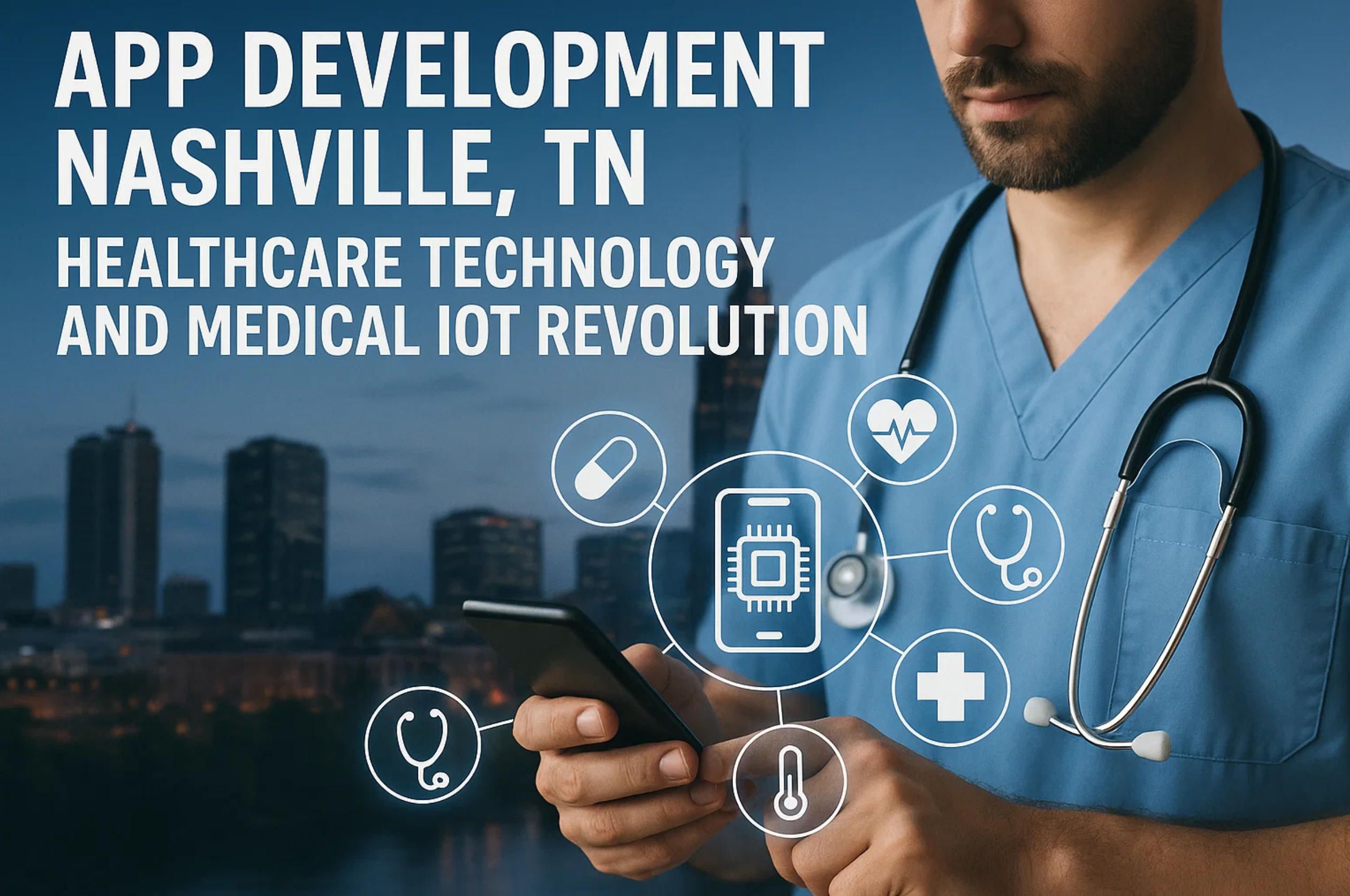
When Oracle Chairman Larry Ellison announced in April 2024 that his company was relocating its world headquarters to Nashville, he made one thing crystal clear: "Nashville is the center of the industry we're most concerned about, which is the healthcare industry." This statement wasn't corporate hyperbole—it was recognition of Nashville's position as America's undisputed Healthcare City, where app development nashville, tn opportunities intersect with the most dynamic healthcare ecosystem in the United States.
Nashville's healthcare technology landscape generates $68 billion annually and supports 332,000 jobs across 900+ companies. For organizations seeking medical technology expertise in Music City, this convergence of healthcare infrastructure and technical innovation creates unprecedented opportunities. From HCA Healthcare's 190 hospitals to Oracle's billion-dollar commitment, Nashville has become ground zero for healthcare mobile applications and medical IoT solutions that are fundamentally transforming patient care delivery.
Nashville's Healthcare Ecosystem: Perfect Storm for Medical Technology Innovation
The concentration of healthcare resources in Nashville creates unique advantages for app development nashville, tn initiatives focused on medical technology. HCA Healthcare, the nation's largest for-profit hospital operator with 316,000 employees and $74.4 billion in trailing twelve-month revenue, maintains its headquarters here. Community Health Systems, LifePoint Health, and Change Healthcare round out a roster of major players that collectively operate thousands of facilities nationwide.
But Nashville's healthcare strength extends far beyond hospital operations. The city hosts 16 publicly traded healthcare companies generating $97 billion in combined global revenue. More significantly for app development nashville, tn opportunities, approximately 500 of these 900 healthcare companies directly touch patients—meaning they actively need mobile applications, IoT devices, and digital health solutions to deliver care, manage operations, and improve outcomes.
The Nashville Health Care Council reports that more than half of all privately-owned hospital beds in the United States are operated by Nashville-area companies. This massive footprint creates constant demand for innovative app development nashville, tn solutions that can scale across hundreds of facilities, thousands of providers, and millions of patients.
Healthcare Mobile App Development Opportunities in Nashville
The healthcare industry's digital transformation has accelerated dramatically since 2020, creating massive demand for specialized app development nashville, tn services. Healthcare mobile applications now encompass patient engagement platforms, clinical decision support tools, care coordination systems, and operational management applications—each requiring deep domain expertise and regulatory compliance knowledge.
Patient engagement represents perhaps the largest opportunity area for app development nashville, tn services. Modern healthcare consumers expect the same digital convenience they experience in other sectors. Appointment scheduling, prescription refills, lab results access, telehealth consultations, and secure messaging with providers have transitioned from nice-to-have features to absolute requirements. Nashville's concentration of healthcare systems creates ideal testing grounds for these applications at scale.
Clinical workflow applications address provider needs directly. Nashville healthcare organizations require app development nashville, tn solutions for electronic health record (EHR) integration, clinical documentation, medication administration verification, diagnostic imaging access, and real-time patient monitoring dashboards. HCA Healthcare alone conducts 32 million annual patient encounters—generating massive volumes of clinical data that demand sophisticated mobile applications for efficient access and analysis.
Care coordination platforms connect healthcare's increasingly complex ecosystem. App development nashville, tn initiatives must address communication between primary care physicians, specialists, hospitals, post-acute facilities, home health agencies, and patients themselves. These applications manage referrals, transfer orders, care plans, discharge instructions, and follow-up protocols across multiple organizations and technology platforms.
Medical IoT Technology Solutions: Nashville's Next Frontier
The global IoT medical devices market reached $106.30 billion in 2025 and projects explosive growth to $971.01 billion by 2034—a compound annual growth rate of 27.97%. This staggering expansion creates unprecedented opportunities for app development nashville, tn providers specializing in Internet of Medical Things (IoMT) solutions.
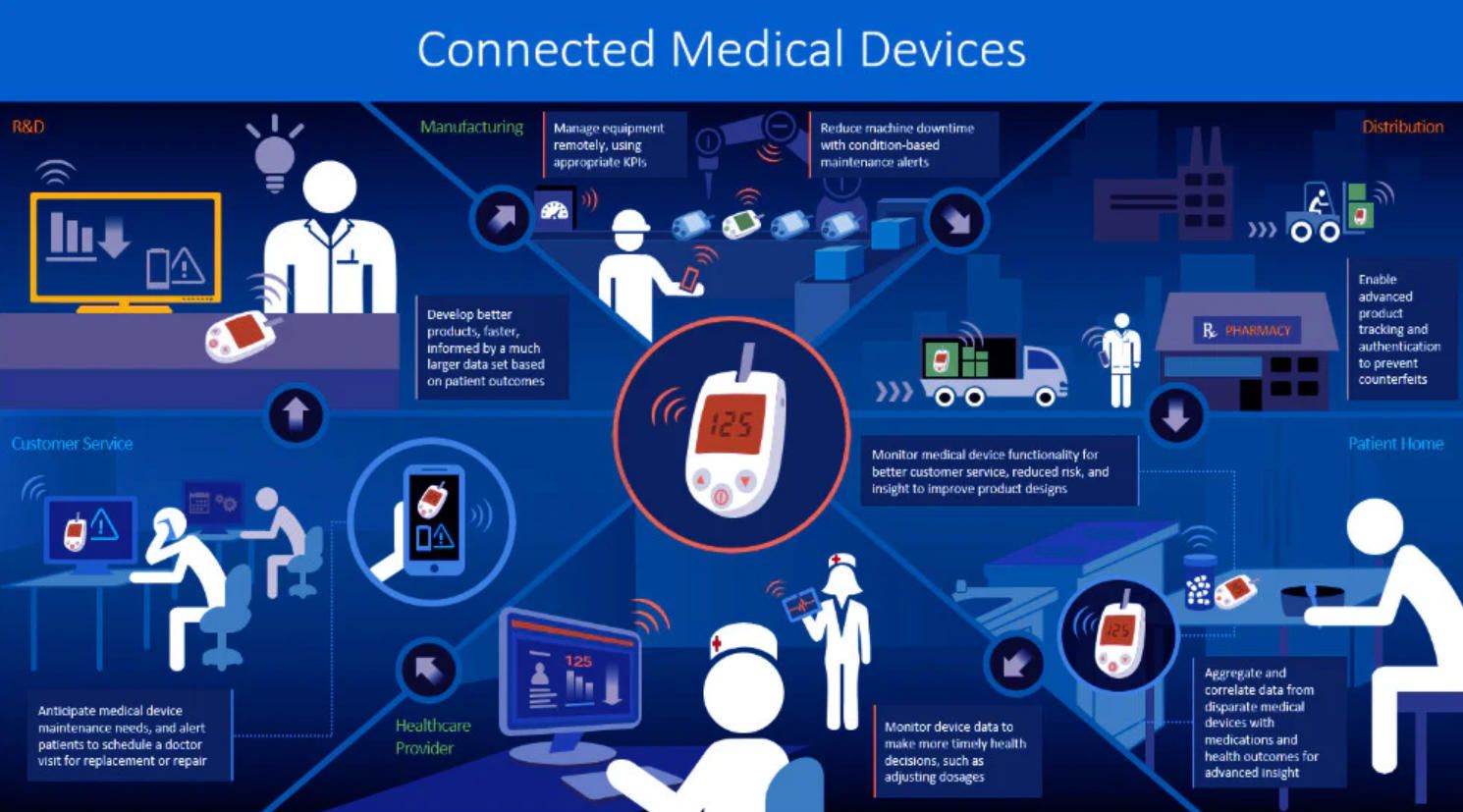
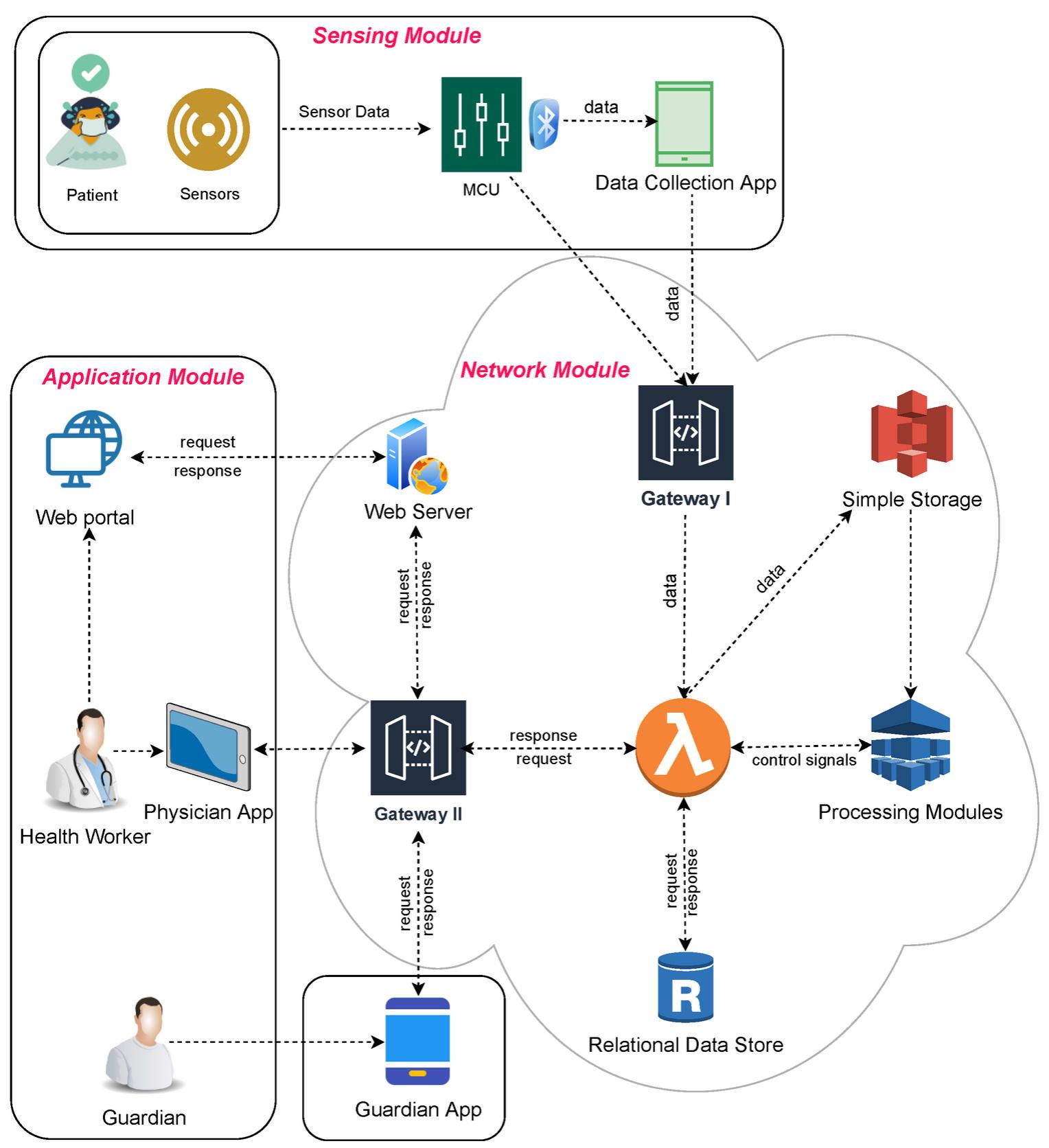
Remote patient monitoring devices constitute the fastest-growing IoT segment. Wearable sensors tracking vital signs, glucose monitors for diabetics, cardiac monitors for heart patients, and pulse oximeters for respiratory conditions all require sophisticated mobile applications to collect, transmit, analyze, and display patient data. Nashville's healthcare organizations recognize that remote monitoring reduces hospital readmissions, catches complications earlier, and improves outcomes while reducing costs—creating strong demand for healthcare IoT expertise in this domain.
Connected medical devices in clinical settings generate equally compelling opportunities. Smart infusion pumps, vital signs monitors, ventilators, dialysis machines, and diagnostic equipment now incorporate IoT capabilities requiring mobile applications for monitoring, configuration, and data integration. HCA Healthcare operates thousands of these devices across its hospital network, necessitating robust app development nashville, tn solutions that ensure reliability, security, and regulatory compliance.
Hospital asset tracking represents another high-value IoT application area. Nashville healthcare facilities must constantly locate wheelchairs, infusion pumps, portable X-ray machines, ventilators, and other mobile equipment. IoT-enabled asset tracking systems using Bluetooth Low Energy (BLE), RFID, or ultra-wideband (UWB) technologies require mobile applications for real-time location monitoring, utilization analytics, and maintenance scheduling.
Environmental monitoring systems protect patient safety and regulatory compliance. Temperature and humidity sensors in medication storage areas, operating room air quality monitors, sterilization equipment validation sensors, and refrigeration unit alerts all transmit data to mobile applications. App development nashville, tn providers working with Nashville organizations must ensure these critical systems meet stringent FDA requirements while maintaining 24/7 reliability.
A-Bots.com brings extensive experience in medical IoT application development and can support Nashville healthcare organizations with custom solutions spanning device connectivity, data analytics, and regulatory compliance. Their IoT app development services address the unique challenges of healthcare environments where reliability, security, and FDA compliance are non-negotiable requirements.
Telemedicine & Remote Patient Monitoring: Digital Health's Front Lines
Approximately 79% of US hospitals have adopted telehealth solutions, with 80% of consumers estimated to use telemedicine services. This widespread adoption creates substantial demand for expertise in video consultation platforms, virtual care coordination tools, and remote monitoring applications.
Nashville's healthcare systems require telemedicine applications supporting synchronous video visits, asynchronous store-and-forward consultations, and remote patient monitoring with IoT device integration. These platforms must seamlessly integrate with existing EHR systems, support multi-party consultations involving specialists, and maintain HIPAA compliance while providing consumer-grade user experiences.
Virtual care platforms extend beyond simple video calls. Modern telemedicine applications incorporate AI-powered symptom checkers, digital triage algorithms, automated appointment scheduling, electronic prescription capabilities, and integration with diagnostic devices like digital stethoscopes and otoscopes. App development nashville, tn providers must architect solutions handling multiple use cases while maintaining clinical workflow efficiency.
Remote patient monitoring applications connect wearable devices, home monitoring equipment, and patient-reported outcomes into comprehensive care management platforms. Healthcare providers receive alerts about concerning trends, patients access their own health data through intuitive dashboards, and care coordinators intervene proactively when patients deviate from care plans. The complexity of integrating multiple device types, managing data security, and creating actionable insights from massive data volumes requires sophisticated app development nashville, tn capabilities.
Hospital Operations & Clinical Workflow Applications
Nashville healthcare organizations require operational efficiency applications addressing staffing, supply chain, revenue cycle, and facilities management challenges. App development nashville, tn solutions in this domain directly impact hospital financial performance and operational effectiveness.
Nurse scheduling applications optimize staffing assignments while managing complex shift preferences, skill requirements, certification expirations, and overtime calculations. Mobile applications enable nurses to view schedules, request shift swaps, document time off, and receive shift reminders. Healthcare systems like HCA, operating thousands of nurses across multiple facilities, require sophisticated app development nashville, tn solutions handling enterprise-scale complexity.
Supply chain management applications track medical supplies, pharmaceuticals, surgical instruments, and equipment from procurement through utilization. Mobile applications support barcode scanning for receiving, inventory cycle counts, par level management, automated reordering, and expiration date tracking. Nashville healthcare organizations handling billions in annual supply expenditures demand robust app development nashville, tn capabilities ensuring accurate inventory data and preventing costly stockouts.
Clinical documentation applications streamline provider workflows. Mobile apps support voice-to-text dictation, standardized documentation templates, clinical decision support alerts, charge capture verification, and quality metrics tracking. Sam Hazen, CEO of HCA Healthcare, emphasizes technology's workforce impact: "I think [technology] can really advance what we need to do with workforce. Fundamentally, what we're trying to do with workforce is extend the reach of the resources that we have—extend the reach of our physicians and how they interact with their patients, extend the reach of our nurses and how they care for our patients."
Facilities management applications address physical plant operations across massive healthcare campuses. Mobile apps support work order management, preventive maintenance scheduling, equipment inspection documentation, environmental monitoring alerts, and energy management. Nashville's large healthcare systems operate millions of square feet requiring comprehensive mobile solutions coordinating maintenance teams, vendors, and regulatory compliance requirements.
Clinical Trial Management & Research Applications
Nashville's healthcare organizations conduct extensive clinical research requiring specialized mobile application solutions. HCA Healthcare's Research Institute operates 43 sites enrolling approximately 3,000 patients in 416 active trials. This research infrastructure demands mobile applications supporting patient recruitment, electronic informed consent, trial protocol adherence, adverse event reporting, and regulatory documentation.
Patient recruitment applications identify eligible trial participants by screening electronic health records against inclusion/exclusion criteria. Mobile apps notify potential participants, schedule screening visits, manage informed consent processes, and track enrollment status across multiple trials simultaneously. Nashville healthcare systems conducting hundreds of concurrent trials require robust development capabilities managing complex regulatory requirements while maintaining patient privacy.
Electronic data capture (EDC) applications replace paper case report forms with mobile data collection tools. Research coordinators use tablet applications to document patient visits, record vital signs, photograph wounds or lesions, administer surveys, and capture medication administration details. Real-time data validation, offline functionality for areas with limited connectivity, and integration with laboratory systems all require sophisticated healthcare technology expertise.
Trial monitoring applications provide oversight across distributed research sites. Mobile dashboards display enrollment progress, protocol deviation alerts, adverse event notifications, and data quality metrics. Research sponsors, principal investigators, and regulatory monitors all access these applications, necessitating role-based security controls and comprehensive audit trails that require experienced healthcare developers familiar with FDA 21 CFR Part 11 requirements.

Testing & QA for Medical Applications: Where Lives Depend on Quality
Healthcare mobile applications demand rigorous testing protocols that far exceed consumer app standards. Healthcare technology providers must implement comprehensive quality assurance processes addressing functional testing, security assessment, performance validation, usability evaluation, and regulatory compliance verification.
Functional testing validates that applications perform intended clinical workflows correctly. Test cases must cover normal operating scenarios, edge cases, error handling, and integration with other systems. For a medication administration application, testing validates proper barcode scanning, dosage calculations, allergy checking, duplicate dose prevention, and documentation recording. A single error in any of these functions could endanger patient safety, requiring exhaustive test coverage that development teams must plan systematically.
Security testing identifies vulnerabilities in authentication, authorization, data encryption, API security, and penetration resistance. Healthcare applications protecting sensitive patient information face constant threats from sophisticated attackers. The February 2024 Change Healthcare cyberattack disrupted payment processing for one-third of US patient transactions, demonstrating healthcare's vulnerability. Comprehensive security testing requires specialized expertise that Nashville healthcare organizations should demand from their technology partners.
Performance testing ensures applications function properly under realistic load conditions. Mobile apps must respond quickly even when thousands of nurses simultaneously document medications during shift changes, when emergency departments experience surge capacity, or when monthly prescription refill requests peak. Load testing, stress testing, and scalability assessment all require infrastructure and expertise that professional development providers must maintain.
Usability testing evaluates whether healthcare providers can effectively use applications during actual clinical workflows. Apps might function perfectly in laboratory conditions yet fail when nurses attempt to use them while simultaneously monitoring multiple patients, responding to alarms, and coordinating with physicians. Observational studies with actual providers in clinical environments identify usability problems before deployment—a critical service that app development nashville, tn teams should offer.
A-Bots.com provides comprehensive testing and quality assurance services specifically designed for healthcare applications. Their testing protocols address functional correctness, security vulnerabilities, performance scalability, and usability challenges ensuring applications meet healthcare's demanding quality standards before deployment.
Regulatory Compliance: Navigating Healthcare's Complex Requirements
Healthcare applications in the United States must comply with HIPAA privacy rules, HIPAA security rules, FDA medical device regulations, state pharmacy board requirements, and numerous additional regulations. This compliance complexity creates substantial barriers for development teams lacking healthcare domain expertise.
HIPAA compliance requirements affect every application accessing, transmitting, or storing protected health information (PHI). Applications must implement encryption for data at rest and in transit, maintain comprehensive audit logs, support user authentication and authorization, enable patient access rights, and incorporate breach notification procedures. Nashville healthcare organizations face potential penalties exceeding $50,000 per violation, creating strong incentives to partner with healthcare technology providers demonstrating HIPAA compliance expertise.
FDA medical device regulations apply to applications performing diagnostic functions, guiding treatment decisions, or controlling medical devices. The FDA's 2021 Digital Health Innovation Action Plan established risk-based regulatory frameworks categorizing applications by their potential patient impact. High-risk applications calculating medication dosages or interpreting diagnostic images require formal FDA clearance, while lower-risk applications face less stringent requirements. Healthcare development teams must accurately assess regulatory classifications and implement appropriate quality management systems.
State regulations add additional complexity. Telemedicine applications must comply with varying state licensing requirements, informed consent standards, and prescribing restrictions. State pharmacy board regulations govern electronic prescription transmission, controlled substance monitoring, and prescription transfer protocols. Mobile apps supporting multi-state operations require expertise navigating this regulatory patchwork.
Interoperability standards including HL7 FHIR, SMART on FHIR, and CMS Interoperability and Patient Access rules now mandate that applications support patient data access and sharing. The 21st Century Cures Act prohibits information blocking, requiring applications to enable patient access to their complete health records. Compliance with these evolving standards requires development providers maintaining current knowledge of regulatory requirements.
Business Case & ROI for Healthcare Mobile Applications
Nashville healthcare organizations evaluating mobile application investments demand clear return on investment justifications. Healthcare technology projects typically range from $150,000 for basic patient engagement applications to $1,000,000+ for comprehensive enterprise platforms integrating with multiple systems.
Operational efficiency improvements generate measurable ROI. Applications reducing nurse documentation time by 30 minutes per shift generate annual savings exceeding $2 million per 1,000 nurses when fully deployed. Supply chain applications preventing medication stockouts eliminate expensive emergency purchases and surgical case cancellations. Scheduling optimization applications reduce premium pay for overtime and agency staffing. These tangible savings often justify technology investments within 12-18 months.
Quality improvement benefits provide additional value. Remote monitoring applications detecting patient deterioration earlier reduce ICU admissions, shorten hospital stays, and prevent complications—each generating thousands in cost savings per case while improving patient outcomes. Medication administration applications with barcode verification reduce adverse drug events, each of which costs hospitals an average of $5,200. These quality improvements simultaneously reduce costs and enhance patient safety.
Revenue cycle improvements support financial performance. Applications streamlining charge capture, reducing claim denials, accelerating payment collection, and improving coding accuracy directly increase net revenue. A 2% improvement in claim submission accuracy across a billion-dollar revenue base generates $20 million annually—easily justifying substantial app development nashville, tn investments.
Patient satisfaction and market positioning create strategic value. Healthcare consumers increasingly select providers based on digital convenience and technological sophistication. Applications enabling online appointment scheduling, text appointment reminders, mobile check-in, and electronic bill payment significantly improve patient experience scores. In competitive healthcare markets like Nashville where multiple large health systems compete for patients, superior digital experiences create meaningful market differentiation.
Apryl Childs-Potter, President of the Nashville Health Care Council, emphasizes technology's strategic importance: "We need technology to solve a lot of the challenges that are happening in our industry, and we need investment to be able to continue to grow those technologies. That investment piece, we are on a great track to attract more of that. But I think that's a big component of what takes us from a really major player to really skyrocketing us to the top in terms of being a market of choice for more of those technology companies."
A-Bots.com Healthcare Technology Solutions
A-Bots.com brings comprehensive expertise in healthcare mobile application development, medical IoT solutions, and quality assurance services specifically designed for Nashville's healthcare ecosystem. Their experience spans patient engagement platforms, clinical workflow applications, remote monitoring systems, and IoT device integration—all implemented with healthcare's demanding regulatory compliance and quality standards.
Custom development services address unique requirements that off-the-shelf solutions cannot accommodate. Nashville healthcare organizations face distinctive operational challenges, legacy system integration requirements, specialized clinical workflows, and strategic differentiation needs requiring tailored app development nashville, tn solutions. A-Bots.com's development methodology emphasizes stakeholder engagement, iterative design, comprehensive testing, and phased deployment minimizing operational disruption while maximizing user adoption.
IoT application development represents a core A-Bots.com competency particularly relevant for Nashville healthcare organizations. Their platform expertise spans device connectivity protocols (Bluetooth LE, Zigbee, LoRaWAN), cloud infrastructure (AWS IoT Core, Azure IoT Hub, Google Cloud IoT), data analytics pipelines, and mobile application interfaces. This comprehensive capability set enables Nashville healthcare systems to implement sophisticated remote monitoring programs, asset tracking systems, and environmental monitoring solutions.
Quality assurance and testing services ensure applications meet healthcare's zero-tolerance standards for errors. A-Bots.com's testing protocols encompass functional validation, security assessment, performance verification, usability evaluation, and regulatory compliance checking. Their healthcare-specific test scenarios address real-world clinical workflows, high-volume data processing, and failure mode handling that generic software testing approaches often miss.
Future Opportunities: Healthcare Technology in Nashville
Nashville's healthcare technology landscape continues evolving rapidly, creating expanding opportunities for innovative mobile solutions. Several emerging trends will drive substantial growth in coming years.
Artificial intelligence integration represents healthcare's most significant technology shift. Applications incorporating AI for diagnostic image analysis, clinical decision support, predictive analytics, and workflow optimization will become increasingly common. Nashville healthcare systems have begun implementing AI at scale—HCA Healthcare's partnership with Google Cloud specifically targets AI-powered applications analyzing their massive patient encounter data. Healthcare technology providers must develop AI/ML expertise to remain competitive.
Value-based care models create demand for population health management applications. As healthcare reimbursement shifts from fee-for-service to value-based contracts, providers require sophisticated tools tracking patient cohorts, identifying care gaps, coordinating interventions, and measuring outcomes. Applications aggregating data from EHRs, claims systems, patient-reported outcomes, and wearable devices enable proactive population health management—a capability requiring advanced medical technology skills.
Social determinants of health (SDOH) screening and intervention represent emerging application areas. Healthcare organizations recognize that housing instability, food insecurity, transportation barriers, and social isolation significantly impact health outcomes. Mobile applications screening patients for SDOH needs, connecting them with community resources, and tracking intervention effectiveness will become standard clinical tools requiring purpose-built healthcare solutions.
Genomic medicine applications will integrate genetic information into clinical care. As genetic testing becomes routine and costs decline, applications interpreting genomic data, matching patients with targeted therapies, and incorporating pharmacogenomic considerations into prescribing workflows will emerge. Nashville's research-intensive healthcare environment creates ideal conditions for pioneering genomic medicine applications requiring sophisticated development capabilities.
Why Nashville's Healthcare Technology Leadership Matters
Oracle's decision to establish its world headquarters in Nashville validates what healthcare industry insiders have recognized for decades: Nashville offers unmatched concentrations of healthcare expertise, operational scale, and collaborative culture. For organizations seeking healthcare technology partners, this ecosystem provides unique advantages.
Access to healthcare domain expertise accelerates application development and improves outcomes. Development teams working in Music City can readily consult with clinicians, healthcare executives, regulatory specialists, and technology vendors—shortening learning curves and avoiding costly mistakes. This knowledge density enables rapid iteration and user-centered design processes that geographically isolated teams cannot replicate.
Healthcare vendor ecosystems facilitate comprehensive solutions. Nashville hosts not only healthcare providers but also pharmacy benefit managers, health IT companies, medical device manufacturers, and professional services firms. Healthcare technology projects frequently require integration with systems from multiple vendors—work that proceeds more efficiently when vendors maintain local presence and established relationships.
Collaborative culture differentiates Nashville's healthcare community. Unlike some markets characterized by fierce competition and information hoarding, Nashville healthcare leaders have historically cooperated on shared challenges, technology standards, and best practice dissemination. The Nashville Health Care Council explicitly fosters this collaboration, creating forums where healthcare executives, technology vendors, and development providers can engage constructively.
Investment capital availability supports innovation and growth. Nearly $4 billion in venture capital has flowed into Greater Nashville healthcare companies since 2005, with investment accelerating in recent years. Well-funded healthcare organizations actively seek innovative app development nashville, tn partners capable of delivering transformative technology solutions.
Getting Started: Selecting Healthcare App Development Partners
Nashville healthcare organizations evaluating technology providers should assess several critical factors ensuring successful partnerships.
Healthcare domain expertise should top the selection criteria. Developers lacking healthcare experience inevitably encounter preventable problems with HIPAA compliance, clinical workflow design, medical terminology, EHR integration, and regulatory requirements. Organizations should verify prospective partners have completed multiple healthcare projects, maintain staff with clinical or healthcare IT backgrounds, and demonstrate current knowledge of regulatory requirements.
Technical capabilities must match project requirements. Healthcare applications increasingly demand skills in cloud architecture, IoT device integration, AI/ML implementation, mobile platform development, security engineering, and data analytics. Healthcare technology providers should demonstrate technical depth across relevant domains through portfolios, certifications, and technical interviews.
Quality assurance processes merit particular scrutiny for healthcare applications. Organizations should evaluate testing methodologies, automation capabilities, security assessment protocols, performance validation approaches, and regulatory compliance verification procedures. Request detailed test plans, sample test cases, and defect metrics from previous healthcare projects.
References from existing healthcare clients provide valuable insights. Speak directly with clinical and IT leaders from organizations where prospective technology partners have completed projects. Ask specific questions about communication effectiveness, schedule adherence, quality outcomes, post-deployment support, and whether they would engage the partner again.
Cultural fit influences project success significantly. Healthcare application development requires close collaboration between technical teams and clinical stakeholders over extended periods. Evaluate whether prospective partners communicate effectively with non-technical audiences, demonstrate patience with healthcare's deliberate decision processes, and show genuine interest in healthcare improvement beyond purely commercial considerations.
Nashville's Healthcare Technology Future
Nashville's healthcare technology leadership will continue strengthening as Oracle's headquarters relocation materializes over coming years. The company's planned $1.35 billion campus accommodating 8,500 employees represents the largest single corporate commitment in Nashville's healthcare technology sector. This investment will catalyze additional growth in healthcare development capabilities, IT services, and medical technology innovation.
Oracle's presence will attract complementary companies. Healthcare technology vendors seeking proximity to Oracle's EHR platform, cloud infrastructure, and technical expertise will establish Nashville offices. This ecosystem expansion creates expanding opportunities for firms providing specialized services to healthcare organizations and technology vendors.
Talent development initiatives will accelerate. Nashville's 20+ higher education institutions increasingly emphasize healthcare technology programs preparing graduates for roles in medical application development, health informatics, and biomedical engineering. Belmont University's new medical school, Vanderbilt's established medical center, and Meharry Medical College collectively train thousands of healthcare professionals annually—many remaining in Nashville to practice and contributing to the city's healthcare expertise density.
Startup formation will intensify. Nashville's proven healthcare operators increasingly launch technology ventures addressing problems they encountered during their corporate careers. These entrepreneurs bring domain expertise, industry relationships, and operational credibility that investors value highly. This entrepreneurial activity creates expanding demand for app development nashville, tn services supporting early-stage companies.
Conclusion: Nashville's Healthcare Technology Opportunity
Nashville has decisively established itself as America's Healthcare City where unprecedented concentrations of healthcare organizations, technology expertise, and capital investment converge. The $68 billion healthcare ecosystem supporting 332,000 jobs creates massive demand for app development nashville, tn solutions addressing patient engagement, clinical workflows, operational efficiency, and medical IoT applications.
The global IoT medical devices market's projected growth from $106 billion in 2025 to $971 billion by 2034 signals extraordinary opportunities for organizations developing connected healthcare solutions. Remote patient monitoring, hospital asset tracking, environmental monitoring, and smart medical devices all require sophisticated mobile applications integrating device connectivity, data analytics, and clinical decision support—capabilities requiring specialized healthcare technology expertise.
Healthcare technology's complexity—spanning HIPAA compliance, FDA regulations, EHR integration, clinical workflows, and mission-critical reliability—creates substantial barriers favoring experienced providers with proven healthcare track records. Organizations seeking healthcare application partners should prioritize domain expertise, comprehensive testing capabilities, regulatory compliance knowledge, and cultural fit alongside technical proficiency.
A-Bots.com stands ready to support Nashville healthcare organizations with comprehensive application development, medical IoT solutions, and quality assurance services specifically designed for healthcare's demanding requirements. Their proven expertise in healthcare applications, commitment to regulatory compliance, and focus on measurable outcomes position them as ideal partners for Nashville healthcare systems pursuing digital transformation.
As Oracle Chairman Larry Ellison observed when announcing his company's headquarters relocation: "Nashville is the center of the industry we're most concerned about, which is the healthcare industry." For organizations seeking app development nashville, tn partners capable of delivering world-class healthcare technology solutions, this statement represents more than corporate positioning—it identifies where healthcare's future is being built, today.
Contact A-Bots.com to discuss how their healthcare mobile application development and medical IoT expertise can support your organization's digital transformation objectives in Nashville's thriving healthcare technology ecosystem.
✅ Hashtags
#NashvilleTech
#AppDevelopment
#HealthcareApps
#MedicalIoT
#HealthTechNashville
#MobileAppDevelopment
#IoTHealthcare
#DigitalHealth
#ConnectedDevices
#HealthInnovation
#NashvilleStartups
#HIPAACompliance
#TelemedicineApps
#WearableHealthTech
#SmartMedicalDevices
#CustomAppDevelopment
#HealthcareIT
#ABots
Other articles
Madison App Development | Custom Mobile Solutions by A-Bots Madison, Wisconsin has emerged as a dynamic technology ecosystem generating $3.5 billion in economic impact with over 24,000 tech jobs. This guide explores Madison mobile app development opportunities across healthtech, biotech, university research, and the rapidly growing startup scene. Discover how Epic Systems, Google, Microsoft, and innovative startups create diverse demands for custom mobile applications. A-Bots.com provides expert Madison app development services including iOS, Android, and cross-platform solutions, plus comprehensive testing and QA. Learn why Madison's unique combination of academic innovation, healthcare leadership, and emerging technologies demands specialized mobile development expertise.
App Development Boulder, Colorado for IoT and Smart Living Boulder, Colorado stands at the crossroads of nature and innovation — where outdoor living meets intelligent technology. This article explores how A-Bots.com supports Boulder’s ecosystem through IoT-driven mobile app development, sustainability platforms, and research partnerships that transform data, devices, and everyday life into one connected experience.
Denver Mobile App Development: Livestock Tech & Sports Apps Denver mobile app development targets unique market opportunities including the National Western Stock Show with 660,000 annual visitors generating $171 million economic impact, and altitude training applications leveraging the city's 5,280-foot elevation. Analysis covers existing solutions, market gaps, and custom development potential for livestock event management, athlete performance tracking, and specialized fitness applications serving Denver's distinctive geographic and economic characteristics.
Top stories

Copyright © Alpha Systems LTD All rights reserved.
Made with ❤️ by A-BOTS